
Introduction
The AI job market in 2026 is full of opportunity, but it is also full of noise. Every week brings a new headline about how artificial intelligence is changing the way we work. Some say AI will take your job. Others say it will create a thousand new ones. The truth sits somewhere in the middle.
Here is what we know for sure. According to the PwC AI Jobs Barometer, jobs that have been "professionalised" by AI are growing twice as fast as other roles and offer 42% higher wage growth. That is a big deal. It means people who learn to work with AI are not just protecting their careers. They are actually advancing faster than everyone else.

But here is the problem. With so many courses, bootcamps, and certifications out there, it is hard to know where to put your time and energy. Should you study AI fundamentals first? Should you take a course AI focused on prompt engineering? Or do you need a full AI engineering course to stay competitive? A resource like mastering practical machine learning for data science in 2026 can help you choose the right starting point. The wrong choice can waste months of effort.
This guide cuts through the confusion. It gives you a clear, evidence-based path to build AI skills that actually matter in 2026. You will learn which areas to focus on, which resources to trust, and how to position yourself for the roles that are growing the fastest.
If you want to stay ahead of these changes, getting daily, reliable updates makes a real difference. That is why we recommend The AI Newsletter Worth Reading from The Deep View.
It delivers clear daily AI updates straight to your inbox so you never miss a major shift.
Let us start with a look at where AI jobs are growing and what that means for your next career move.
Why AI Careers Are Booming: Market Trends and Job Outlook
The opportunity in AI is not just hype. Real numbers back it up. The global AI market is growing fast, and companies are competing for people who can work with these tools. If you are thinking about your next career move, this is the moment to pay attention.
One of the clearest signals comes from the PwC AI Jobs Barometer. It shows that jobs touched by AI are growing twice as fast as other roles and offer 42% higher wage growth. That is not a small difference. It means people with AI skills are getting ahead faster. At the same time, the Indeed Hiring Lab report found that job postings mentioning AI surged by more than 130% in recent years. Even while overall hiring stays flat in many industries, AI-related roles keep climbing.
Which specific roles are growing the fastest? Machine learning engineer, data scientist, and AI product manager all see double-digit growth.
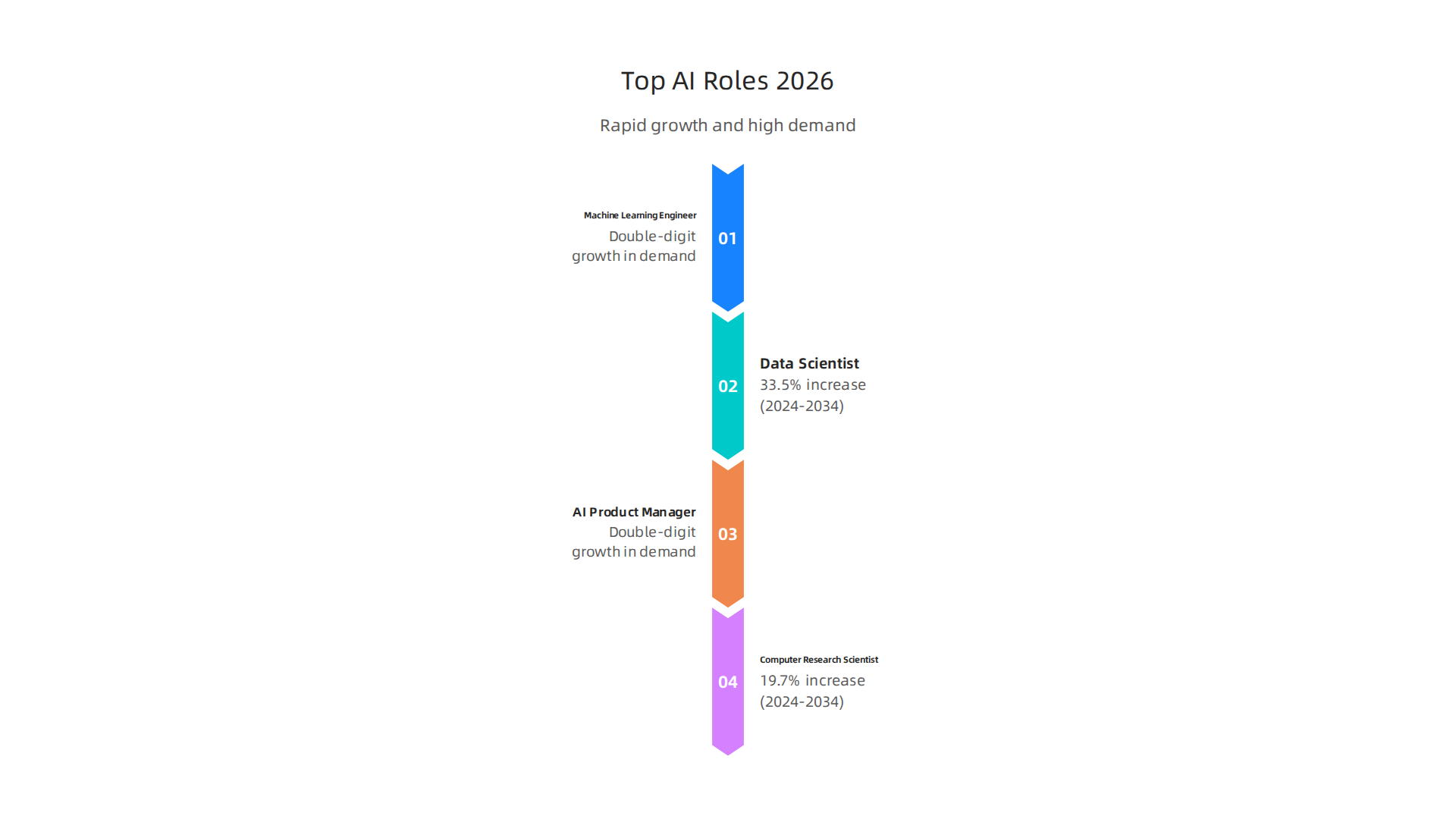
The BLS employment projections for data scientists show a 33.5% increase between 2024 and 2034, making it the fourth-fastest growing occupation in the country. Computer and information research scientists follow closely at 19.7%. These are not small gains. They reflect a lasting shift in how companies build and use technology.
Where are these opportunities located? The demand for AI talent is global, but several countries lead the way. The United States, Canada, the United Kingdom, Germany, and Singapore are the main hotspots. According to the Goldman Sachs AI labor market analysis, around 300 million jobs worldwide are exposed to AI automation. That creates both risk and opportunity. For workers in these regions, building AI skills is one of the smartest career moves you can make.
The trend is clear. Whether you decide to study AI fundamentals, take a focused course AI style, or pursue a full AI engineering course, the market is ready for you. If you want to see how companies are using AI tools today, check out our guide on picking the right top AI platforms for business growth in 2026. It will help you connect the trends you just read about to practical tools you can learn now.
Core Skills Every AI Professional Needs in 2026
Knowing the market trends is helpful. But to actually land one of those high-paying AI jobs, you need the right skills. Employers in 2026 are looking for a mix of technical foundations, specialized knowledge, and soft skills that help you work well with others.
Foundational skills you cannot skip
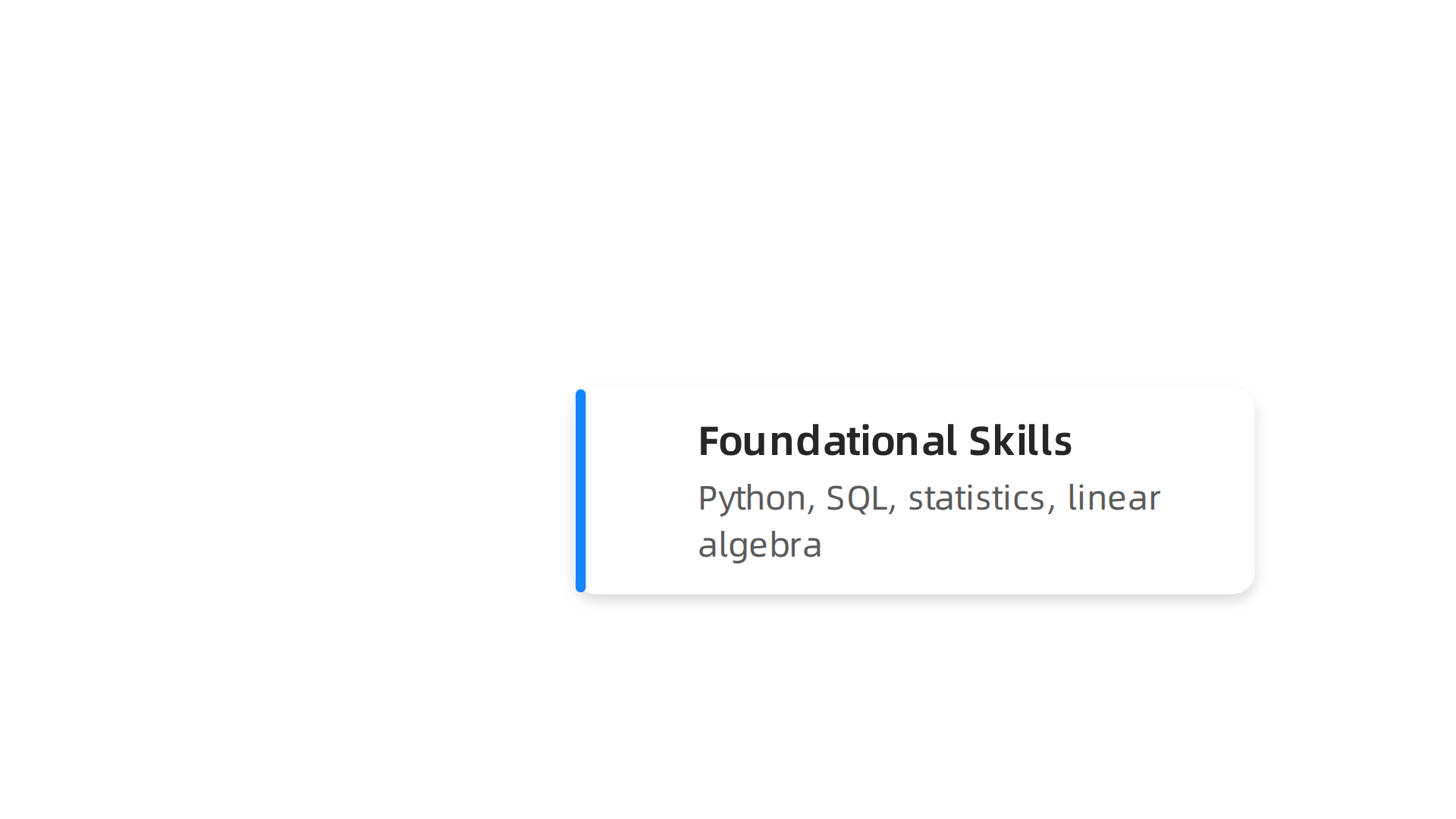
Before you dive into advanced topics, you need a solid base. Python is the main programming language for AI work. You also need a good grasp of statistics, linear algebra, and data wrangling. These let you clean data, build models, and understand results. According to the employer wishlist from TripleTen, Python and SQL are core tools that every AI professional should know. If you are just starting, focus on these first. A good way to build this base is to study AI fundamentals through a structured course AI style.
Specialized skills that stand out
Once you have the basics, you can move into specialized areas. Deep learning, natural language processing (NLP), computer vision, and MLOps are all in high demand. Many companies also want professionals who understand AI ethics and responsible use. Building trust and knowing AI governance are becoming just as important as coding. Depending on your interest, you might choose an AI engineering course that focuses on one of these areas.
The soft skills that make the difference
Technical skills are necessary, but soft skills set you apart. Communication helps you explain model results to non-technical teams. Cross-functional collaboration is key because AI projects involve many departments.

And business acumen lets you connect AI work to company goals. These skills are harder to teach, but they matter a lot in hiring.
Keep building your skill set
The field changes fast. To stay on top of new tools and best practices, it helps to learn continuously. One easy way is to get clear daily updates from The AI Newsletter Worth Reading. It covers the latest AI developments so you can keep your skills current.
If you want to go deeper into a specific area, check out our guide on mastering practical machine learning for data science in 2026. It walks you through the steps to build real ML skills.
Structured Learning Paths: From Beginner to Expert
But where do you actually start? Knowing the skills is one thing. Knowing the order to learn them in is another. A clear learning path helps you move from beginner to expert without getting lost. Here is a simple way to think about your AI journey.
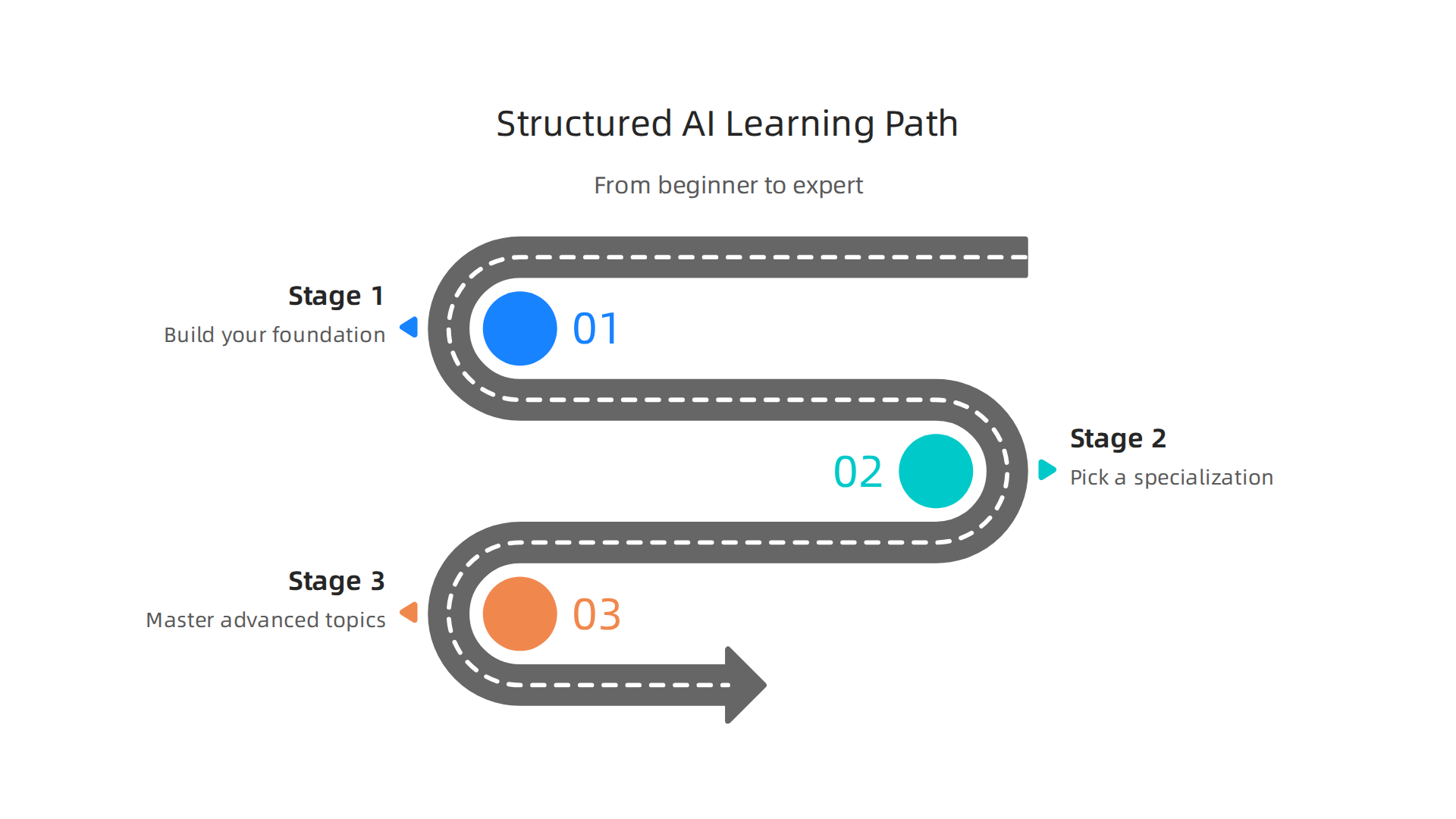
Stage 1: Build your foundation
If you are just starting, focus on the basics first. You need to learn Python programming, basic statistics, and linear algebra. These tools help you clean data, train simple models, and understand what your results mean. A solid foundation is like building a house on good ground. Without it, everything else is shaky. Many beginner-friendly programs are available online. According to DataCamp’s ranking of the best AI courses for 2026, interactive courses with structured paths help people actually finish their training and build real skills. Look for a course that covers Python, data wrangling, and basic machine learning. The key is to practice every day, not just watch videos. If you want a step-by-step plan, consider a structured course AI style that takes you from zero to confident.
Stage 2: Pick a specialization
Once you have the basics, it is time to go deeper. Most professionals choose one area to focus on. Common paths include natural language processing (NLP), computer vision, reinforcement learning, or generative AI. Each area has its own tools and techniques. For example, NLP uses transformers and large language models. Computer vision works with convolutional neural networks. As LinkedIn’s 2026 skills report highlights, employers value depth in areas like NLP and computer vision. If you are interested in building models that see and understand images, check out our guide on how image artificial intelligence works and why your business needs it. It gives you a practical look at this fast-growing field.
Stage 3: Master advanced topics
At the expert level, you stop learning just the tools. You start thinking about bigger problems. How do you make a model scale to millions of users? How do you make sure your AI is safe and ethical? How do you apply AI to a specific industry like healthcare or finance? These are the questions experts answer every day. They work on scalable architectures, AI safety, and domain-specific applications. Building trust is now considered one of the most valuable AI skills. According to Computerworld’s guide on AI skills for 2026, trust and AI sovereignty are hot topics that every expert needs to understand. If you want to reach this level, you also need to stay current with research and new tools. One easy way to keep learning is to get clear daily updates from The AI Newsletter Worth Reading. It covers the latest AI breakthroughs so you can keep your knowledge fresh.
No matter where you start, the key is to take one step at a time. Begin with your foundation, then specialize, then aim for mastery. The field is growing fast, and there has never been a better time to learn.
Top Online Courses and Certifications for AI Jobs
Now that you know the skills and the order to learn them, the next question is: which courses and certifications actually help you land a role? The market is full of options, but not all of them carry the same weight with employers.
Let’s look at what is worth your time and money in 2026.
The big learning platforms
Major platforms like Coursera, edX, Udacity, and Fast.ai offer reputable specializations that employers recognize.
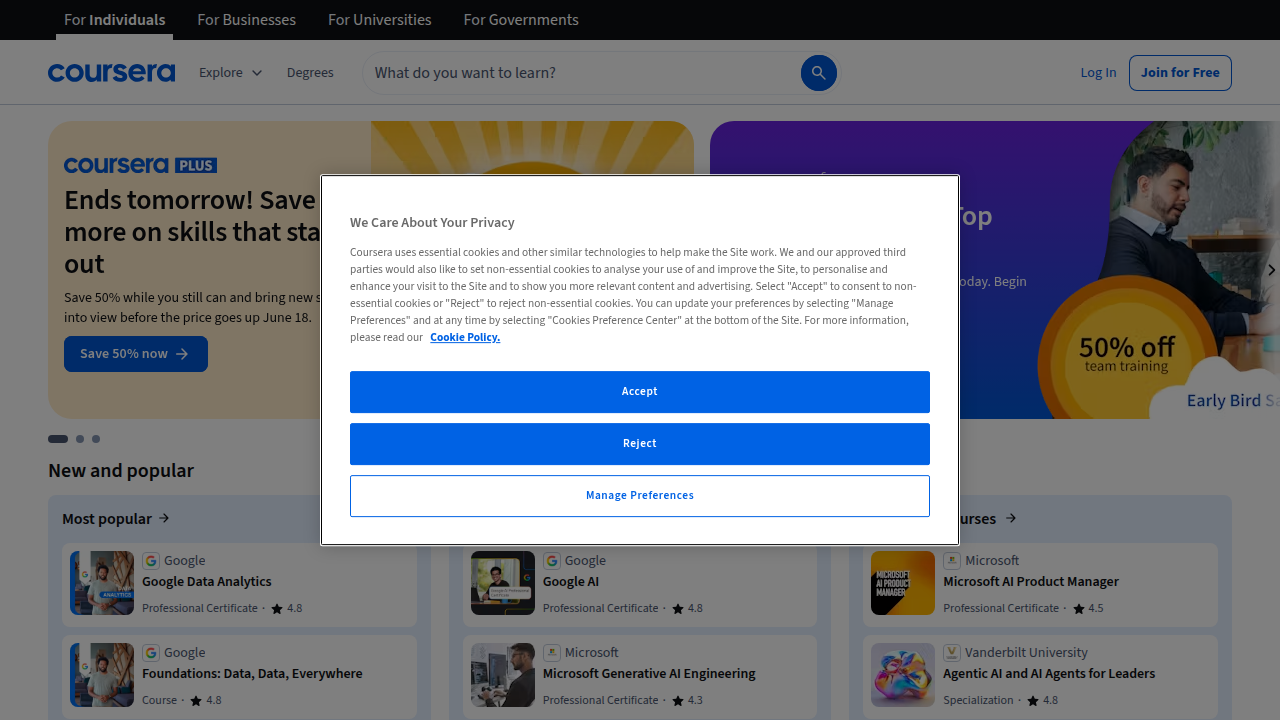
Each has strengths for different goals. Coursera partners with top universities. Udacity focuses on nanodegrees with real projects. Fast.ai gives you a practical, code-first approach for free.
According to DataCamp’s ranking of the best AI courses in 2026, the best all-around option is DataCamp’s Associate AI Engineer for Developers track.
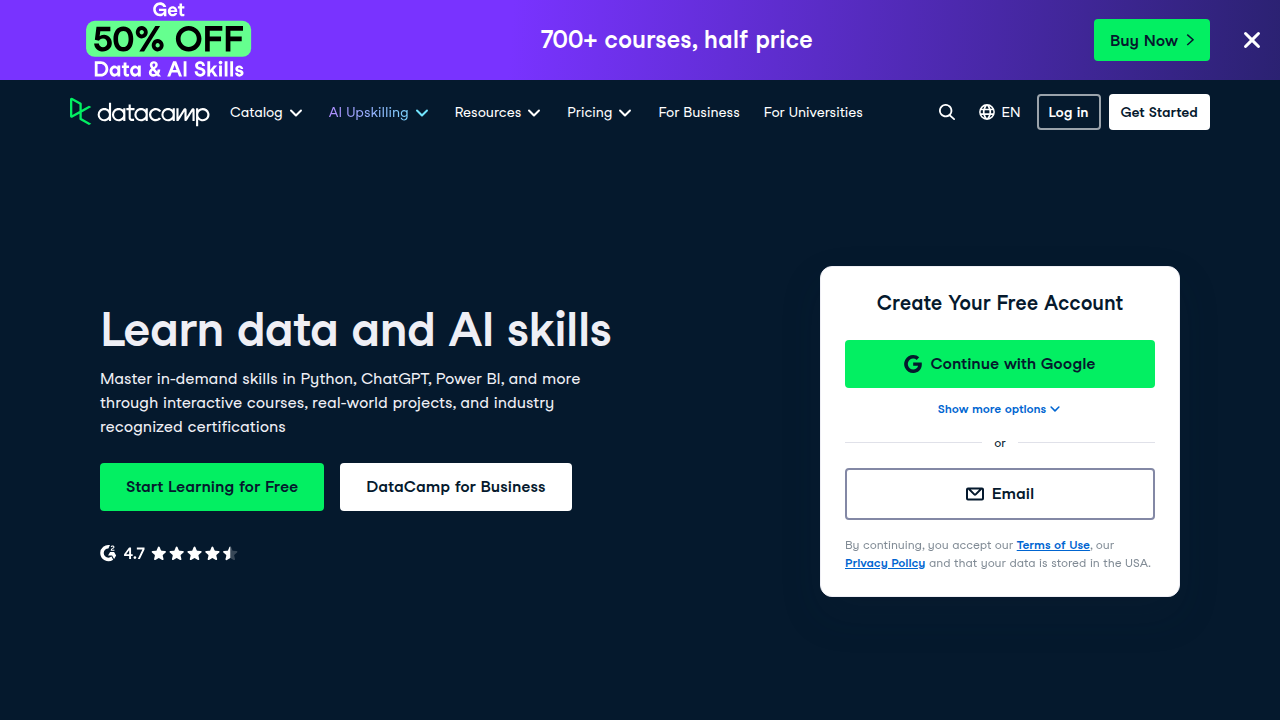
It scores high on hands-on coding, curriculum recency, and student outcomes. The program takes about 4 to 5 months at 10 hours per week. At $49 per month with a free first month, it is one of the most affordable structured paths available.
Here is a quick comparison of popular certification options based on cost, time, and level:
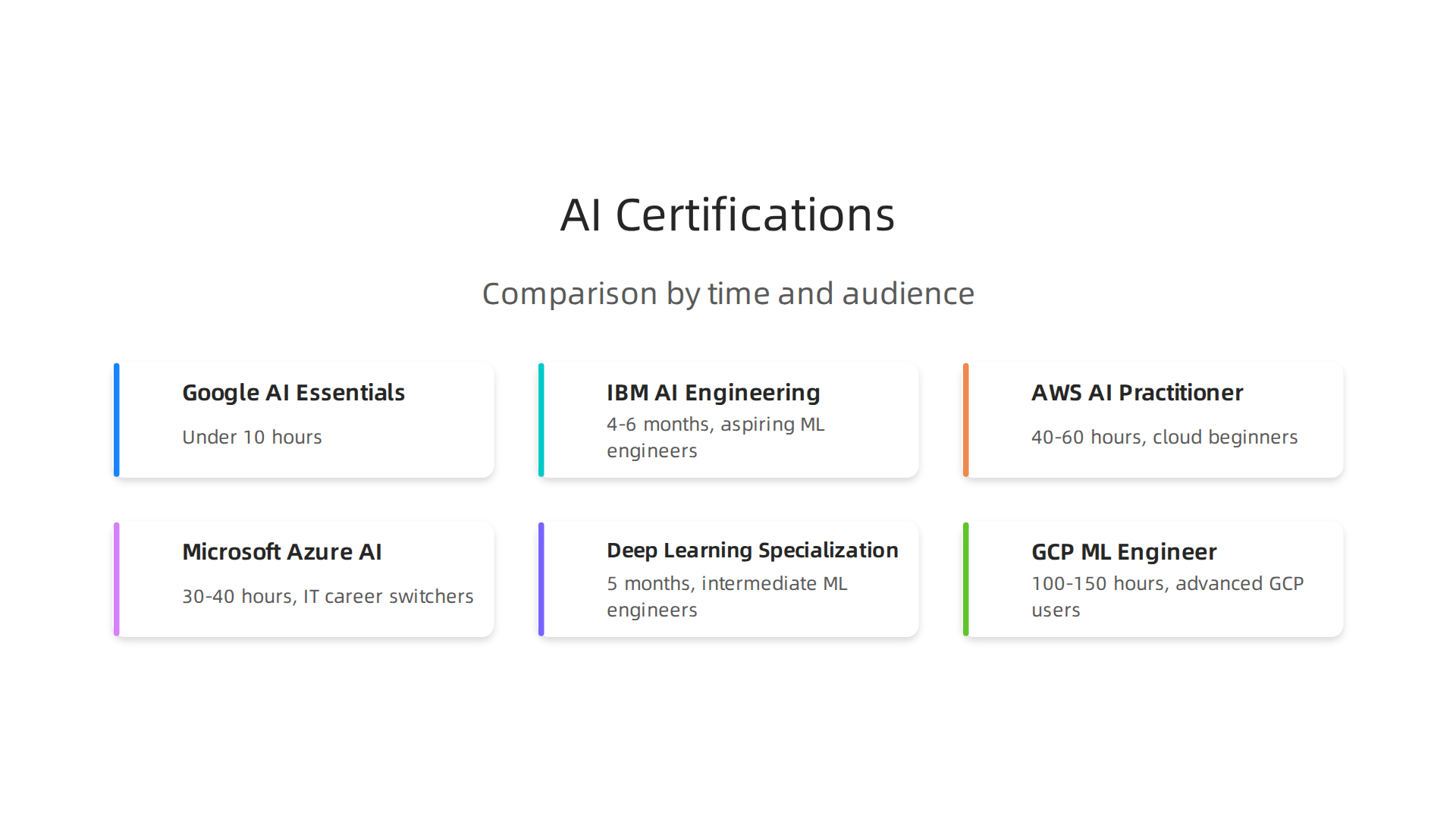
| Certification | Cost | Time Needed | Best For |
|---|---|---|---|
| Google AI Essentials | $49/month | Under 10 hours | Quick overview, all roles |
| IBM AI Engineering Professional Certificate | $196 to $294 | 4 to 6 months | Aspiring ML engineers |
| AWS AI Practitioner (AIF-C01) | $100 exam fee | 40 to 60 hours | Cloud-focused beginners |
| Microsoft Azure AI Fundamentals (AI-900) | $99 exam fee | 30 to 40 hours | IT professionals career switchers |
| Deep Learning Specialization (Andrew Ng) | $245 | 5 months | Intermediate ML engineers |
| Google Cloud Professional ML Engineer | $200 exam fee | 100 to 150 hours | Advanced GCP users |
Certifications that boost your resume
Cloud platform certifications carry real weight. The top AI certifications for 2026 include credentials from AWS, Google, and Microsoft. These are not just nice to have. Employers specifically look for cloud AI skills because most production systems run on cloud infrastructure.
If you work with Google Cloud, the Professional Machine Learning Engineer certification is widely respected. For Microsoft shops, the AI-102 Azure AI Engineering Associate is the most commonly requested credential. And for AWS users, the AI Practitioner (AIF-C01) covers AI fundamentals while the ML Specialty (MLS-C01) is for experienced pros.
A comprehensive AI certification guide reviews these programs in depth and confirms that practical project evidence matters as much as the certificate itself. Employers want to see deployed models, reproducible notebooks, and production pipelines.
Free resources that complement paid programs
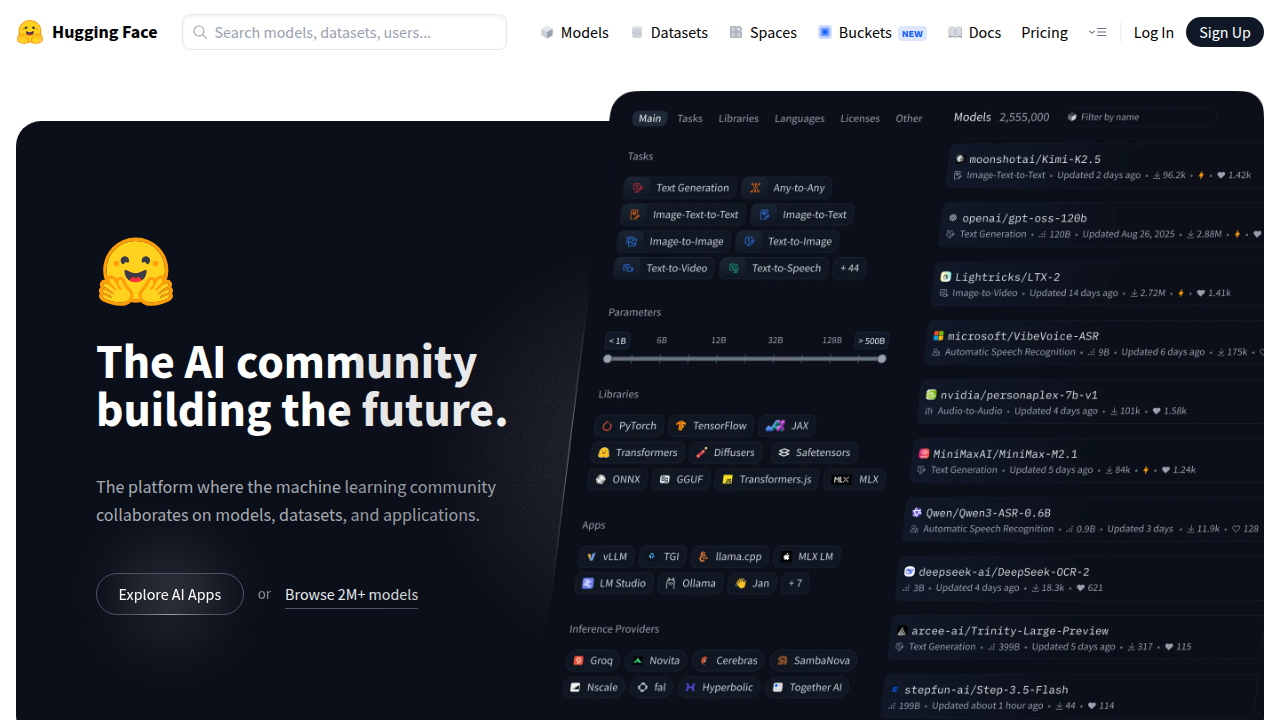
You do not have to spend a lot to get good training. Free resources like MIT OpenCourseWare, Hugging Face courses, and YouTube channels from Andrew Ng offer excellent content.
The key is to use them the right way.
Research shows free course completion rates are very low, often in the single digits. Structured paid tracks see much higher completion. So use free resources as supplements, not your main plan. Watch a lecture to understand a concept. Then use a paid platform where you code, get assessed, and build projects you can show to employers.
If you are starting from zero with no technical background, try the Microsoft Career Essentials in Generative AI first. It is completely free, takes about 4 hours, and you can finish it in a weekend. Then move to IBM SkillsBuild AI Fundamentals. Both require no credit card and no subscription.
This article is part of a series on building a career in AI. You might also find our guide on how image artificial intelligence works helpful if you are interested in computer vision roles.
The certification market is crowded, but the right choices can give you a clear edge. Focus on hands-on programs from recognized platforms. Pair them with cloud vendor certifications that match your target role. And never stop building real projects that prove what you can do.
Staying current with AI once you start your career is just as important as the initial training. One easy way to keep learning is to get clear daily updates from The AI Newsletter Worth Reading. It covers the latest AI breakthroughs so you can keep your knowledge fresh.
Building a Portfolio: Projects That Impress Employers
Certifications prove you have studied the theory. But hiring managers for AI jobs want proof that you can actually build things.

A strong portfolio of real-world projects is the single best way to show you have the skills.
Think of your portfolio as your resume in code. When a recruiter opens your GitHub, they should see projects that solve real problems, not toy demos. The best projects go beyond a simple notebook. They show an end-to-end workflow: data collection, model building, evaluation, and deployment.
What makes a project portfolio worthy
Hiring managers are looking for three things in your projects. First, does it solve a real need? A chatbot for customer support or a resume screening tool shows you understand business value. Second, does it include documentation? A clear README file that explains the problem, your approach, and how to run the code is essential. Third, does it show production thinking? Adding things like error handling, monitoring, or a CI pipeline proves you are ready for a team environment.
A helpful list of AI portfolio projects that actually get you hired in 2026 recommends building five specific types: a production RAG pipeline, a local small language model app, a monitoring and observability system, a fine-tuning project with LoRA, and a real-time multimodal application. Each teaches skills that employers actively look for.
How to structure your projects on GitHub
Do not just dump a Jupyter notebook into a repo. Structure your project like a real software product. Include a README.md with an overview, setup instructions, and a usage example. Add a requirements.txt or environment.yml file. Write clean, modular code with comments. If you can, add a link to a live demo or a blog post explaining your methodology.
One thing that separates senior candidates from beginners is a Technical Decisions section in the README. Explain why you chose a particular model, framework, or evaluation metric. Show tradeoffs you considered. This tells recruiters you can think critically, not just follow tutorials.
A great internal resource for leveling up your skills is mastering practical machine learning for data science in 2026. It covers the hands-on techniques that directly translate into portfolio projects.
Where to find project ideas
If you are stuck on what to build, look at open competition datasets on Kaggle. Pick a domain that interests you like healthcare, finance, or e-commerce. You can also contribute to open-source AI libraries. Even fixing a bug or adding a small feature shows you can work with existing codebases.
The goal is not to build 20 small projects. It is to build 3 to 5 solid ones that show depth. When you study AI courses, always look for ones that include a capstone project. That project can become the centerpiece of your portfolio.
Document your journey. Write a short blog post for each project explaining what you learned and what challenges you faced. This builds credibility and helps you stand out. Your portfolio tells the story of what you can do. Make sure it is a good one.
Networking and Community: Staying Ahead in AI
A strong portfolio gets your foot in the door. But the people you know and the communities you join can open that door even wider.

In 2026, the best AI jobs often go to candidates who are already plugged into the right networks. Hiring managers and founders talk to each other. If you are active in the same spaces, your name comes up long before you apply.
Start by joining online AI communities. Reddit groups like r/MachineLearning and r/LocalLLaMA are full of practitioners sharing real-world problems and solutions. Discord servers for open-source AI projects let you ask questions in real time. LinkedIn groups focused on AI engineering are great for following thought leaders and seeing what skills companies actually need. One resource specifically designed for turning community connections into career breakthroughs is the networking playbook from AI Nexus World. It gives practical steps for building a network that leads to real opportunities.
Do not just lurk. Ask questions, share what you are building, and help others when you can. The more value you give, the more you will receive. When you study AI through a structured program or a self-paced course AI, look for ones that include access to a private community. Many top programs have alumni networks or Slack groups where you can find mentors and collaborators.
Attending conferences like NeurIPS, ICML, or the AI Summit is another powerful move. These events put you in the same room as researchers, hiring managers, and other job seekers. If travel is not possible, many conferences now offer virtual tickets. Local meetups are just as valuable. Search for AI meetups in your city on sites like Meetup.com or Eventbrite. A monthly meetup where you can demo a project or ask for feedback builds connections that last.
Mentorship is one of the fastest ways to level up. A mentor who works in the field can help you avoid common mistakes, recommend tools, and even refer you for roles. You can find mentors through LinkedIn, alumni networks, or by reaching out to people whose work you admire. Most people are happy to help if you ask respectfully.
Staying ahead also means keeping your finger on the pulse of the industry. Subscribing to a daily AI newsletter is an easy way to catch important updates without hours of scrolling. The AI Newsletter Worth Reading delivers clear daily updates straight to your inbox, so you never miss a breakthrough or a new tool.
Finally, remember that networking is not just about getting a job. It is about learning faster. The people you meet in communities will challenge you, introduce you to new ideas, and help you grow as an AI builder. Start small. Join one community this week. Introduce yourself. Share something you built. That one action can lead to your next opportunity.
Summary
This article is a practical guide to building a career in AI in 2026, cutting through the noise to show which skills, courses, and strategies actually lead to jobs and higher pay. It explains market trends—like faster growth and higher wages for AI-touched roles—and identifies the most in-demand positions and geographies. You’ll learn the foundational technical skills (Python, SQL, statistics, linear algebra), the specializations that stand out (NLP, computer vision, MLOps, deep learning), and the soft skills recruiters value. The piece lays out a three-stage learning path from basics to specialization to mastery, compares reputable certifications and courses, and shows how to build a portfolio of 3–5 production-minded projects that prove you can deliver. It also covers where to find project ideas, how to structure GitHub repos, and practical networking tactics—including communities, conferences, and mentorship—to turn skills into opportunities. Finally, the guide emphasizes continuous learning and daily updates as key to staying competitive as AI tools evolve.