
Every day, you face a flood of emails, reports, meeting notes, and research papers. There is simply too much information and too little time.

What if you could process it all at superhuman speed?
In 2026, AI productivity tools have moved from being a nice experiment to a daily necessity. The numbers prove it. The global market for AI productivity tools is expected to reach over $36 billion by 2033, growing at a rapid pace. Professionals everywhere are using these tools to cut through the noise and focus on what matters most. But with so many options out there, it is hard to tell which tools are real breakthroughs and which are just hype.
That is where this guide comes in. We have put together a clear framework to help you understand, evaluate, and adopt the AI tools that actually boost your work. Whether you are curious about platforms like Mindgrasp AI or Brainly AI, or you just want to find the top AI tools for your daily tasks, this article will show you the way.

To start, check out our roundup of the best AI tools for businesses that deliver a real productivity advantage. And if you want to stay ahead of every new development, subscribe to The Deep View Newsletter for clear, daily AI updates straight to your inbox.
What Are Superhuman AI Productivity Tools?
Think of the last time you finished a task and thought, "I wish I could do that twice as fast." That is the core idea behind superhuman AI. These are not just faster versions of old software. They are AI tools that lift your natural abilities to a level that feels almost impossible on your own.
The term "superhuman AI" in productivity means tools that combine speed, accuracy, contextual understanding, and seamless integration into one experience. Instead of you chasing information, the tool brings the right information to you. Instead of you drafting every email from scratch, the AI writes a version that sounds like you. Instead of you digging through meeting notes, the tool gives you a one-line summary.
Let’s break down the key criteria that make a tool truly superhuman.
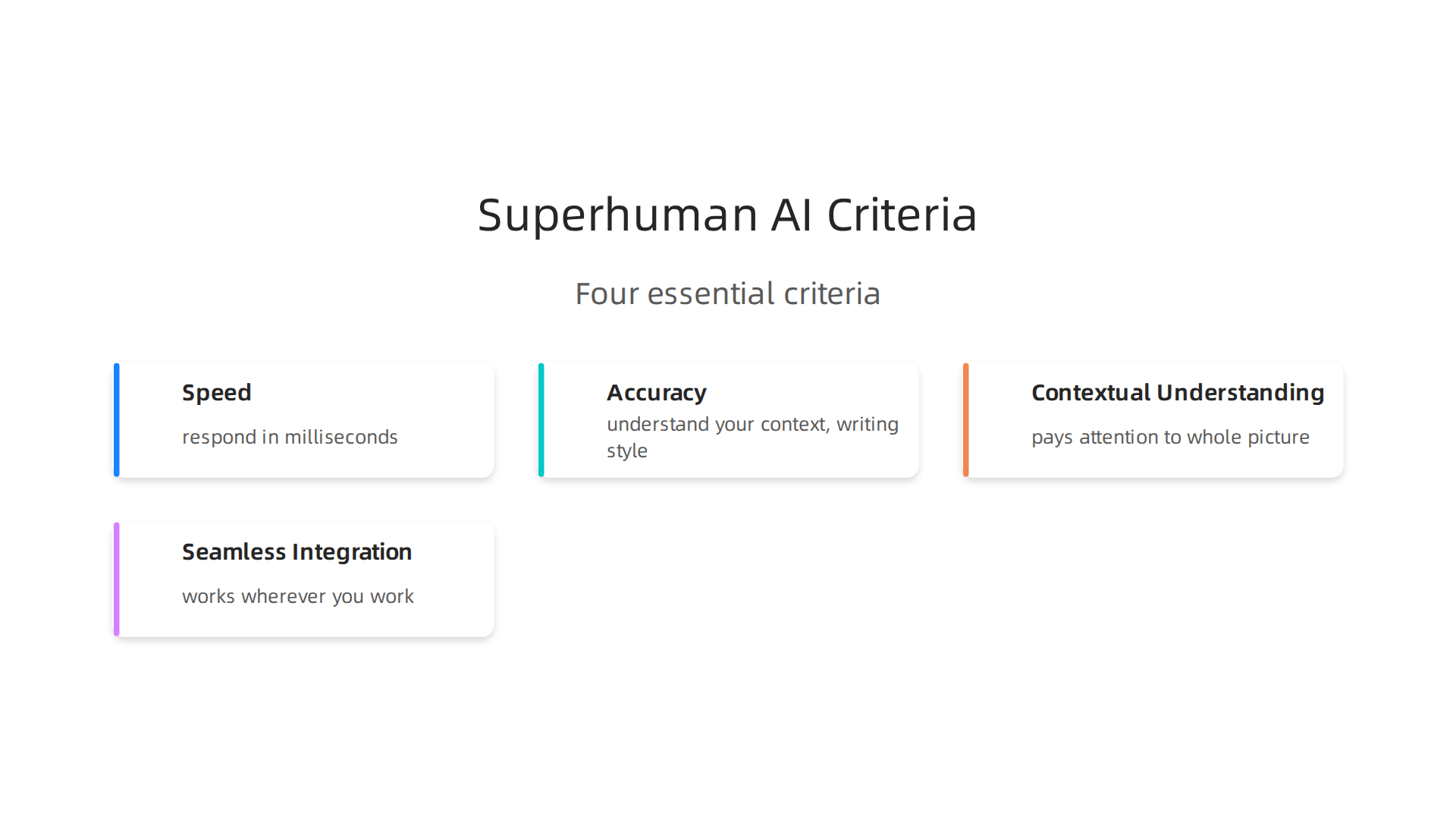
Speed is the first and most obvious trait. These tools respond in milliseconds. Every action feels instant. You do not wait for loading screens or slow searches. The main example is the Superhuman AI productivity suite — a system built so every action happens in under 100 milliseconds. That speed frees your focus.
Accuracy matters just as much. A fast wrong answer is worse than a slow right one. Superhuman tools understand your context, your writing style, and your priorities. They learn from you. The more you use them, the better they get at delivering what you actually need.
Contextual understanding sets these tools apart from older automation. Old tools followed fixed rules: "if this happens, do that." Superhuman AI pays attention to the whole picture. When you ask it to summarize a long email thread, it knows which parts are important to you. It recognizes whether you are in a hurry or have time for details.
Seamless integration means the AI works wherever you work. It is not a separate app you have to open. It lives inside your email, your documents, your spreadsheets, your messaging apps. That is what makes it feel like an extension of you, not another thing to manage.
Contrast this with the automation tools of five or ten years ago. Those tools could send automatic replies or sort emails into folders. But they could not understand the meaning of a message. They could not draft a thoughtful reply in your voice. They could not adapt when your priorities shifted. Superhuman AI does all of that. It turns email from a drain into an advantage.
Other AI platforms like Mindgrasp AI and Brainly AI take a similar approach for learning and research. They do not just show you search results. They summarize articles, answer questions in natural language, and help you understand complex topics faster. These are all examples of the shift toward tools that amplify your thinking rather than just speed up your typing.
To see which AI breakthroughs are actually worth your attention in 2026, check out our guide on the AI breakthroughs in 2026 that actually matter. Understanding the landscape helps you pick the right tools for your daily work.
Key Categories of AI Productivity Tools in 2026
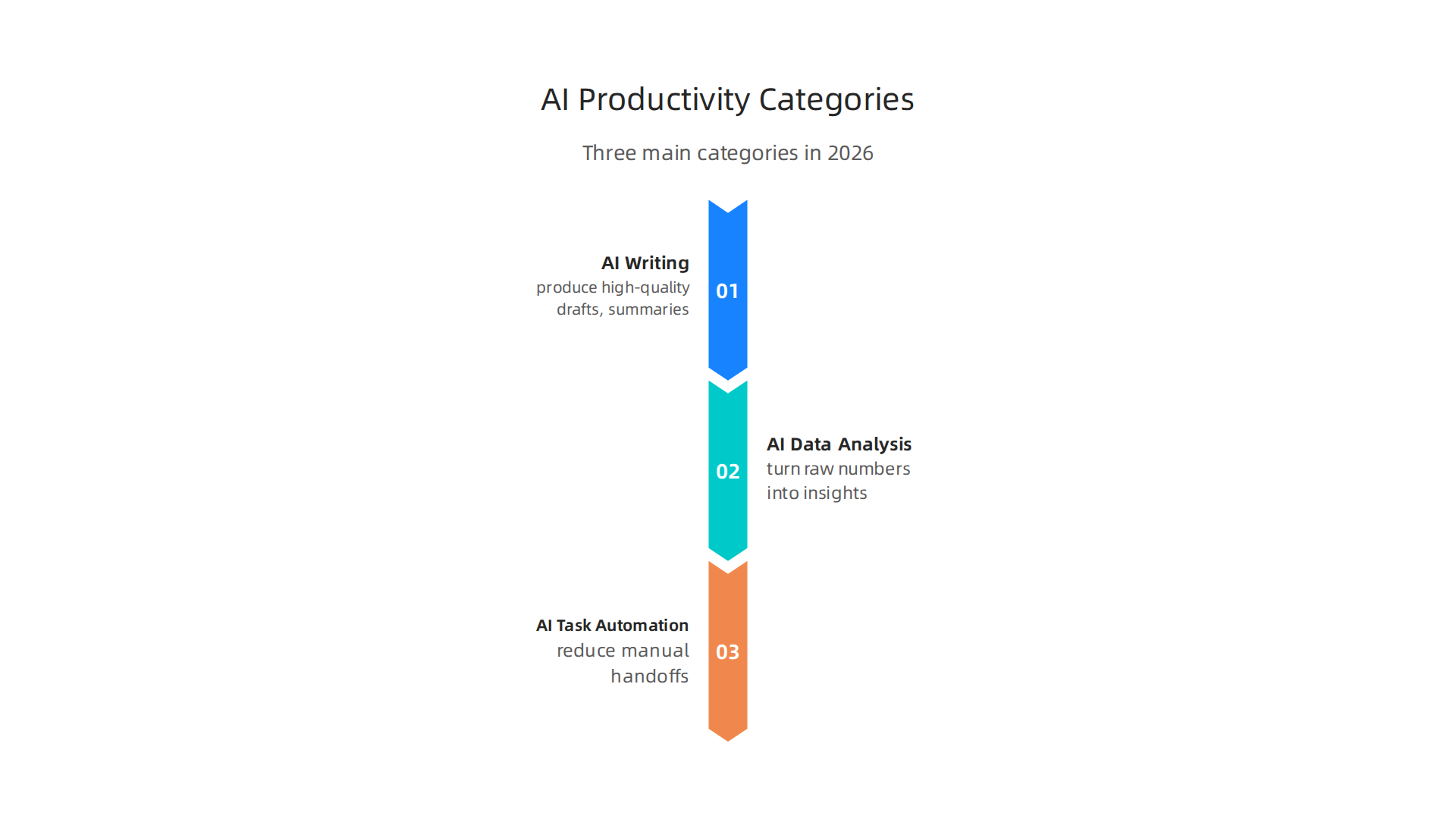
Now that you know what makes a tool truly superhuman, let’s look at the three main categories where these tools are making the biggest difference in 2026.
Each category solves a different kind of problem, but together they cover almost every part of your daily work.
AI Writing and Content Generation tools are probably the most popular category right now. These tools do not just spit out generic paragraphs. They produce high-quality drafts, summaries, and reports that sound like you wrote them. The best models in this space, like Claude Opus 4.6 and GPT-5.2, lead the 2026 writing benchmarks by delivering clean prose and consistent voice control. If you need to turn a messy set of ideas into a polished email, a blog post, or a research summary, these tools save you hours every week.
Some platforms like Mindgrasp AI and Brainly AI fall into this category too, but they focus more on learning and research. They help you understand complex topics by summarizing articles and answering your questions in plain language. That is a different angle on content generation: it is not about writing for an audience but about building your own understanding faster.
AI Data Analysis and Visualization tools are the second major category. These tools turn raw numbers into actionable insights instantly. Instead of spending half your day wrestling with spreadsheets, you ask a question in natural language and the tool shows you a chart, a summary, or a trend line. This is huge for anyone who needs to make decisions based on data but does not have a data science degree. In 2026, the top AI platforms in this space connect directly to your business tools and update reports in real time. You stop digging for answers and start acting on them.
AI Task Automation and Workflow orchestration is the third category, and it might be the most practical. These platforms reduce the manual handoffs that slow you down. Think about all the times you copy information from one app to another, or wait for someone to approve a step before you can move forward. AI workflow tools automate those bridges. They draft the follow-up email, update the project tracker, and send the next task to the right person without you touching anything. The best tools in 2026 combine everything from brief creation to article drafting to content repurposing in a single system, so you never have to stitch five different apps together.
These three categories are not separate worlds. They work together. You use AI writing to draft a report, data tools to pull the numbers, and workflow automation to send it all to the right people. That is what turns good tools into a truly superhuman AI productivity system.
If you want to stay up to date on which new tools and models are actually worth your time, subscribe to the newsletter that delivers clear daily AI updates straight to your inbox.
AI Writing and Content Generation
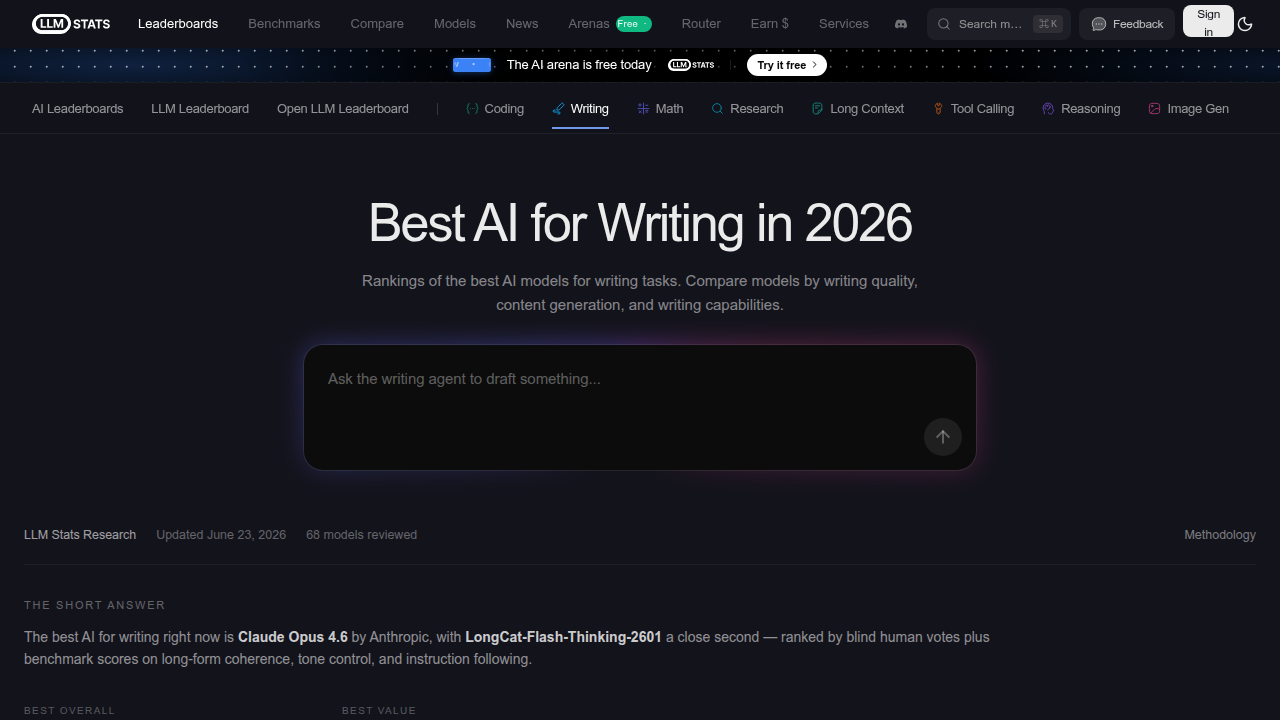
Let us zoom in on the first category, because this is where many people start their journey with superhuman AI. These tools have moved well beyond writing generic fluff. In 2026, the best models produce long-form content that reads like a human wrote it. According to the latest best AI for writing leaderboard, Claude Opus 4.6 from Anthropic leads with a score of 44.9, beating other top models on long-form coherence, tone control, and instruction following.
What does that mean for you? You can draft a polished email, a full blog post, or even code documentation in minutes instead of hours. The key metrics that define a powerful writing tool are output speed, grammatical accuracy, and tone consistency. The best platforms nail all three. They match your voice and keep it steady across an entire document.
Use cases are everywhere. Marketing teams write social media posts and ad copy. Engineers generate clear API documentation. Executives draft reports and internal memos. The tools handle short bursts and long form equally well.
If you want to get the most out of these tools, you need to learn how to work with them. A good next step is reading about human AI collaboration to understand how to partner with AI instead of just letting it write for you. That is where real productivity gains happen.
AI Data Analysis and Visualization
Now let us talk about another area where superhuman AI is making a huge difference: data analysis and visualization. You no longer need to be a data scientist to work with spreadsheets and dashboards. In 2026, the top AI platforms let you ask questions in plain English and get instant, visual answers.
For example, tools like Microsoft Power BI Copilot and Tableau AI let you type "Show me last quarter’s sales by region" and the system builds the chart for you. Some platforms even detect anomalies automatically and send real-time alerts before a small problem becomes a big one. According to a recent comparison of the top AI data analysis tools in 2026, Power BI leads for enterprise use, while options like Polymer and Zerve offer fast dashboards for smaller teams.

These tools integrate directly with popular BI platforms. That means you can keep using Tableau or Power BI but add a smart layer that does the heavy lifting. If you are curious about building practical data skills this year, check out this guide on how to succeed as a data analyst in 2026. It covers exactly what you need to stay ahead.
The bottom line: superhuman AI turns raw numbers into clear stories. You get faster decisions and fewer headaches.
Want to keep up with the latest AI tools that actually deliver value? Subscribe to The AI Newsletter Worth Reading for clear daily updates.
AI Task Automation and Workflow
Beyond data, superhuman AI is also reshaping how you handle daily tasks. Think of robotic process automation (RPA) supercharged with AI. Instead of following rigid rules, these smart agents can make decisions. A common example: an AI tool reads an email, checks your calendar, and automatically schedules a meeting without you lifting a finger.

It can also fill in forms, update your CRM records, and trigger follow-up actions based on what happens next.
In 2026, many of these tools are no-code. You do not need to be a programmer. You simply describe the workflow you want, and the AI builds it for you. This kind of automation saves hours every week. For a deeper look at platforms that make this possible, check out this roundup of the best AI tools that boost productivity. And if you are comparing options, take a closer look at some of the leading platforms. According to a review of the best AI automation testing tools in 2026, these systems are getting more reliable every quarter.
The shift is simple: less busywork, more time for the work that matters.
So how much faster and better can you actually work? The numbers are starting to pile up. Across studies from 2025 and 2026, one pattern keeps showing up: people who use AI tools get more done in less time. The gains are not tiny. They are real and often big.
Real-world quantified results.
A detailed analysis of hard data on AI productivity gains from Forbes reports that task-level improvements range from 14% to 55%.
That is huge. Customer service agents close 14% more tickets per hour. Coders using GitHub Copilot finish tasks 55% faster. Consultants at top firms complete their work 25% quicker with 40% higher quality. These are not guesses. These are from controlled studies with real workers.
The data keeps getting stronger. In 2025, the Federal Reserve Bank of St. Louis found that employees using generative AI saved about 2.2 hours per week. That is a 5% productivity boost just from routine use. And according to the self-reported impact of AI on work value from a 2026 METR survey, the median respondent says their work value has already doubled. They expect it to hit 2.5 times by 2027. The trend is clear: superhuman AI is not a distant dream. It is happening now.
The multiplier effect is the real secret.
Here is the thing. Using one AI tool helps. But combining tools for writing, analysis, and automation creates exponential gains. You write a draft with a language model. Then you paste it into an analysis tool that checks your logic. Finally, an automation agent sends the finished document to your team. Each step saves a few minutes. Together, they save hours. The whole workflow runs faster than any human could manage alone. For a deeper look at the platforms driving this multiplier, check out our guide to the best AI tools for businesses that deliver a real productivity advantage.
The psychological payoff is just as important.
Superhuman efficiency is not only about speed. It is about how you feel at the end of the day. When AI handles the boring repetitive stuff, your brain has room to breathe. You experience less cognitive load.

You make fewer decisions about small tasks, which means you suffer less decision fatigue. That clarity lets you focus on the work that actually needs your full attention. A BCG report on AI reshaping jobs warns that leaders must actively manage workloads to prevent burnout. So the tools do not just save time. They protect your mental energy.
This is the part many people miss. Superhuman AI does not make you a machine. It makes you a more effective human. You get the hours back. You keep your head clear. And you produce better work than ever before.
Staying on top of these rapid shifts is hard. That is why the top performers never stop learning. Get clear daily AI updates from The Deep View Newsletter to keep your edge in 2026.
Overcoming Challenges: Information Overload and Hype
With all this progress, it is easy to feel buried under headlines and hype. Every week a new AI model drops. Every month a different company claims its tool is the best. The noise makes it hard to know what actually matters.
Here is the truth. A Forbes analysis found that 95% of enterprise AI pilots fail to deliver on their promises. That number is not meant to scare you. It is a reminder that most of what you read is marketing spin. The real task is learning to separate signal from noise.
How to spot genuine breakthroughs
Start with the evidence. Real breakthroughs come with controlled studies, peer reviews, or open benchmarks. If a company says its tool boosts productivity by 50%, ask to see the study. Look for third party validation. A review of the empirical literature on AI and productivity explains that the strongest results come from randomized experiments and field trials. If the claim sounds too good to be true, it probably is.
Next, watch for vague language. Words like "revolutionary" and "game changing" without hard data are red flags. Genuine superhuman AI advancements are usually described with specific numbers: 14% faster, 40% better quality, 2 hours saved per week. Hold every tool and platform to that standard.
Strategies for curating reliable sources
You do not need to read everything. Pick a handful of trusted sources and stick with them. Industry analysts, academic roundups, and independent media like this one do the filtering for you. If you struggle with overload, try a tool that summarizes and organizes AI news so you can zero in on what matters. For a practical solution to this problem, check out our guide on how to pick the best AI-powered research assistant to conquer information overload. It walks you through choosing a platform that cuts the noise and delivers only relevant updates.
Also, set a weekly review rhythm. Spend 30 minutes every Friday scanning key headlines and bookmarking the articles worth reading. Do not chase every update. Let the important ones come to you through curated digests.
Common pitfalls to avoid
Even informed users fall into traps. The biggest one is over reliance on a single tool.
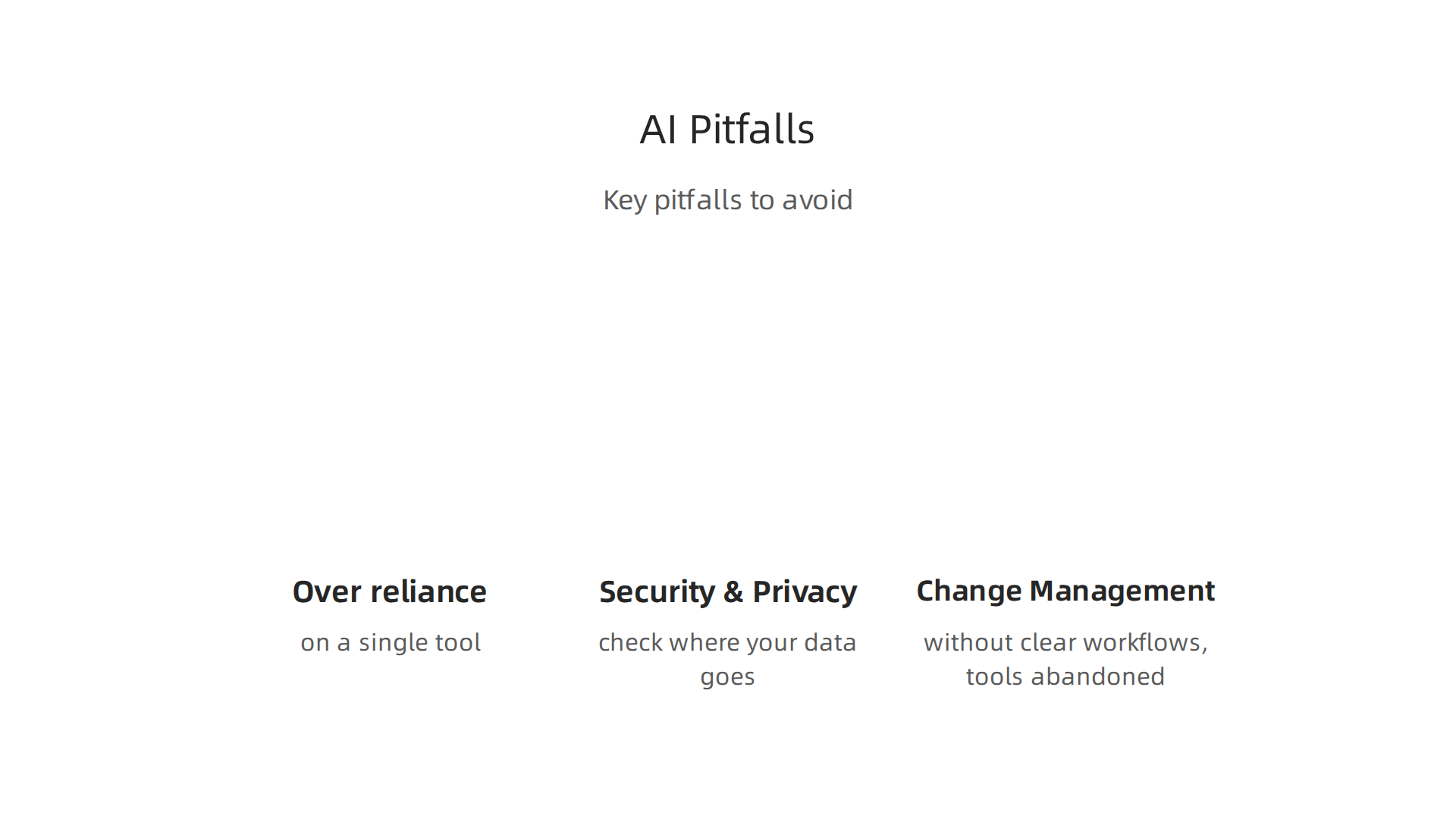
Using only one AI platform means you miss out on strengths that other tools offer. Diversify your stack. Use a writer, an analyst, and an automation agent. Each serves a different purpose.
Security and privacy are another blind spot. Before adopting any new AI tool, check where your data goes. Some platforms train on your inputs. Others offer enterprise grade protections. Ignoring this can lead to leaks or compliance issues.
Finally, do not skip change management. Superhuman AI changes how teams collaborate. Without clear workflows and training, tools get abandoned. Take time to onboard your team properly. A BCG report on AI reshaping jobs warns that leaders must actively manage workloads and adoption to prevent burnout and failure. Plan the rollout as carefully as you plan the tool selection itself.
The hype is loud. But with the right filters and habits, you can focus on the breakthroughs that actually move the needle.
How to Choose the Right AI Productivity Stack for Your Needs
Now that you know how to filter the noise, the next question is: which tools should you actually put into your daily workflow? The answer depends on the work you do most. A writer needs different AI than a data analyst. A team manager needs something else again.
Match tools to your specific workflows
Start by listing the three to five tasks you repeat every day. If you write emails, reports, or content constantly, look for AI that helps with drafting and editing. If you analyze spreadsheets or databases, find tools that can crunch numbers and spot patterns. If you manage projects and automate repetitive tasks, search for AI that connects your apps together.
For example, a common high performance stack includes an AI email client like Superhuman Mail, a writing assistant like Grammarly, and a flexible workspace platform like Coda. The approach described in our Top 5 AI Tools guide shows how to mix tools that handle different jobs without overlapping. The key is that each piece serves one clear purpose and integrates with the others.
Check integration, security, and cost
Before you commit, ask three questions. First, does this tool connect with the apps you already use? A tool that works alone creates more work, not less. Second, where does your data go? Some AI platforms train on your inputs, which can be a privacy risk. Look for tools that offer enterprise grade data protection. Third, what is the real cost? Free tiers are great for testing, but watch for hidden limits on usage or features. Superhuman AI, for instance, starts at $30 per user per month for its Starter plan, which includes email AI, team collaboration, and scheduling. That pricing makes sense only if the tool saves you several hours each week.
Pilot before you scale
Here is a practical framework. Pick one tool for one workflow. Start with a free trial. Use it for two weeks. Track how much time it saves you. Measure the quality difference in your output. If the ROI is clear, then expand to a paid plan and add the next tool. Do not try to adopt three tools at once. That leads to tool fatigue and low adoption.
For a deeper look at which platforms deliver real business results, check out our guide on the best AI tools for businesses that deliver a real productivity advantage in 2026. It breaks down what works and what does not based on real team feedback.
Stay informed without the noise
Even the best stack needs regular updates. AI tools change fast. New features drop, pricing shifts, and better alternatives appear. The smartest way to stay ahead is to get curated daily updates from people who filter the hype for you. That is why we recommend subscribing to The Deep View Newsletter. It delivers clear, daily AI updates straight to your inbox so you always know what matters without drowning in headlines.
Take the time to build your stack intentionally. One well chosen tool that fits your workflow beats five expensive ones that collect dust.
Summary
This article explains how "superhuman" AI productivity tools—those that combine speed, accuracy, contextual understanding, and seamless integration—are transforming daily work in 2026. It defines what makes a tool superhuman, breaks the market into three practical categories (AI writing, data analysis/visualization, and task automation), and shows real-world use cases and quantified productivity gains. The guide also warns about hype and failed pilots, offers a simple framework for choosing and piloting tools, and highlights security and change-management risks to watch. Readers will learn how to match tools to their workflows, run short trials to measure ROI, and build a complementary AI stack that saves time while protecting data and team wellbeing.