

Introduction
Data analytics has changed a lot in recent years. In 2026, it is no longer just about looking at old reports. It is about using artificial intelligence to predict what will happen next. This shift from reactive reporting to proactive insight generation is huge. But with so much new technology, it is easy to feel overwhelmed.
How do you know what actually works? Every day brings new tools, new terms, and new claims. You hear about visualizing data using t-SNE, AI data annotation, and complex machine learning models. Sorting the real breakthroughs from the noise takes time.
That is where this guide comes in. We have put together a clear, evidence-based overview of the most important AI advancements in data analytics and data visualization for 2026. Whether you are a professional looking to improve your skills or a business leader trying to make smarter decisions, this article will help you cut through the hype.
The data analytics market is growing fast. According to the latest data analytics statistics for 2026, over 65% of organizations are already using AI for data and analytics. But only a small number of companies feel they are truly AI-mature. That gap is exactly why you need a structured approach.
In the sections ahead, we will look at practical tools, real-world use cases, and expert insights. We will also cover the biggest AI breakthroughs in 2026 that actually matter and show you how to keep learning without getting lost. If you want to stay ahead of the curve, consider subscribing to The AI Newsletter Worth Reading for clear daily AI updates straight to your inbox.

Now let’s dive into the key trends shaping data analytics in 2026.
The Evolution of Data Analytics: From Descriptive to AI-Powered
Remember when data analytics meant looking at a spreadsheet from last quarter and nodding? That world is gone. Data analytics has grown through four clear stages, and AI is now pushing it into a fifth one.
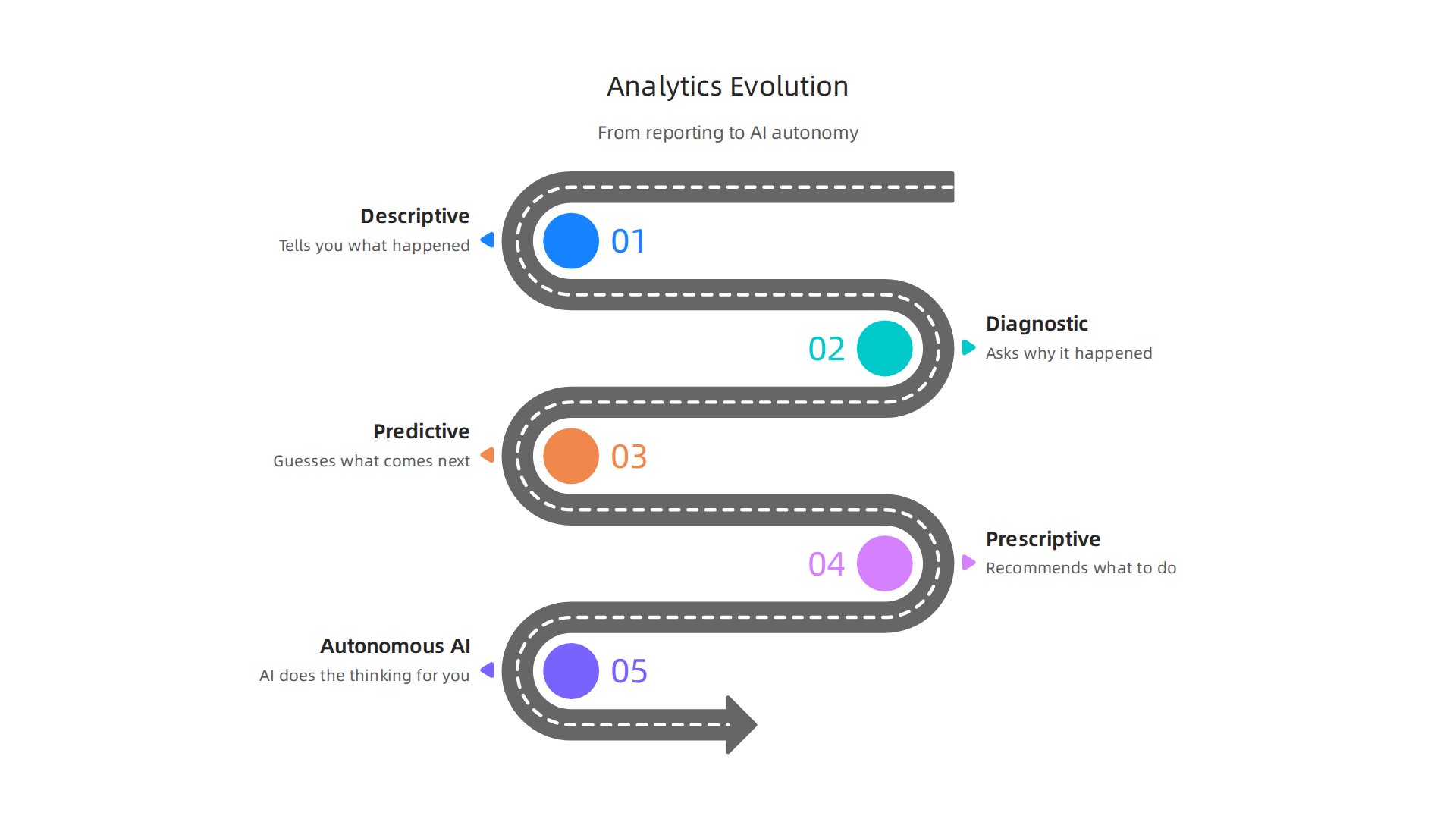
Stage one: Descriptive analytics. This tells you what happened. Your sales were up 10% last month. Your website had 50,000 visitors. It is like looking in the rearview mirror.
Stage two: Diagnostic analytics. This asks why it happened. Why did sales jump? Because a marketing campaign went viral. Why did traffic drop? Because a server went down.
Stage three: Predictive analytics. This uses past data to guess what comes next. Your sales will likely rise again next quarter. Your churn rate might increase in winter. Predictive models make these calls possible.
Stage four: Prescriptive analytics. This recommends what to do. If churn is coming, send a discount offer. If demand is rising, increase inventory.
Each stage added more value. But each one still needed a human to ask the right question, run the query, and decide what to do with the answer.
Stage five: AI-powered autonomous analytics. This is the big shift in 2026. AI agents can now query databases, interpret the results, spot patterns, and recommend actions without a human in the loop. You do not need to know SQL or even what question to ask. The AI does the thinking for you.
This change is huge. According to a recent data analytics market size and share analysis for 2026, agentic AI is converting static dashboards into decision engines that act on their own. The global data analytics market is worth over $108 billion in 2026 and keeps growing fast.
Why does this matter to you? Because the old way of working hit a wall. You cannot spend hours cleaning data, building charts, and guessing what to do next. AI lets you skip straight to answers. It automates the tedious parts. It finds patterns you would miss. It helps you make decisions in minutes instead of weeks.
Understanding this evolution explains why AI-powered analytics is not just another upgrade. It is a complete change in how we work with information.

If you want to build the skills to thrive in this new world, check out this guide on how to succeed as a data analyst in 2026. It will show you exactly what to learn next.
In the next section, we will look at the specific AI tools and techniques that make all of this possible.
Key AI Breakthroughs Revolutionizing Data Analytics in 2026
So what exactly is making AI-powered analytics possible right now? Three big breakthroughs stand out.
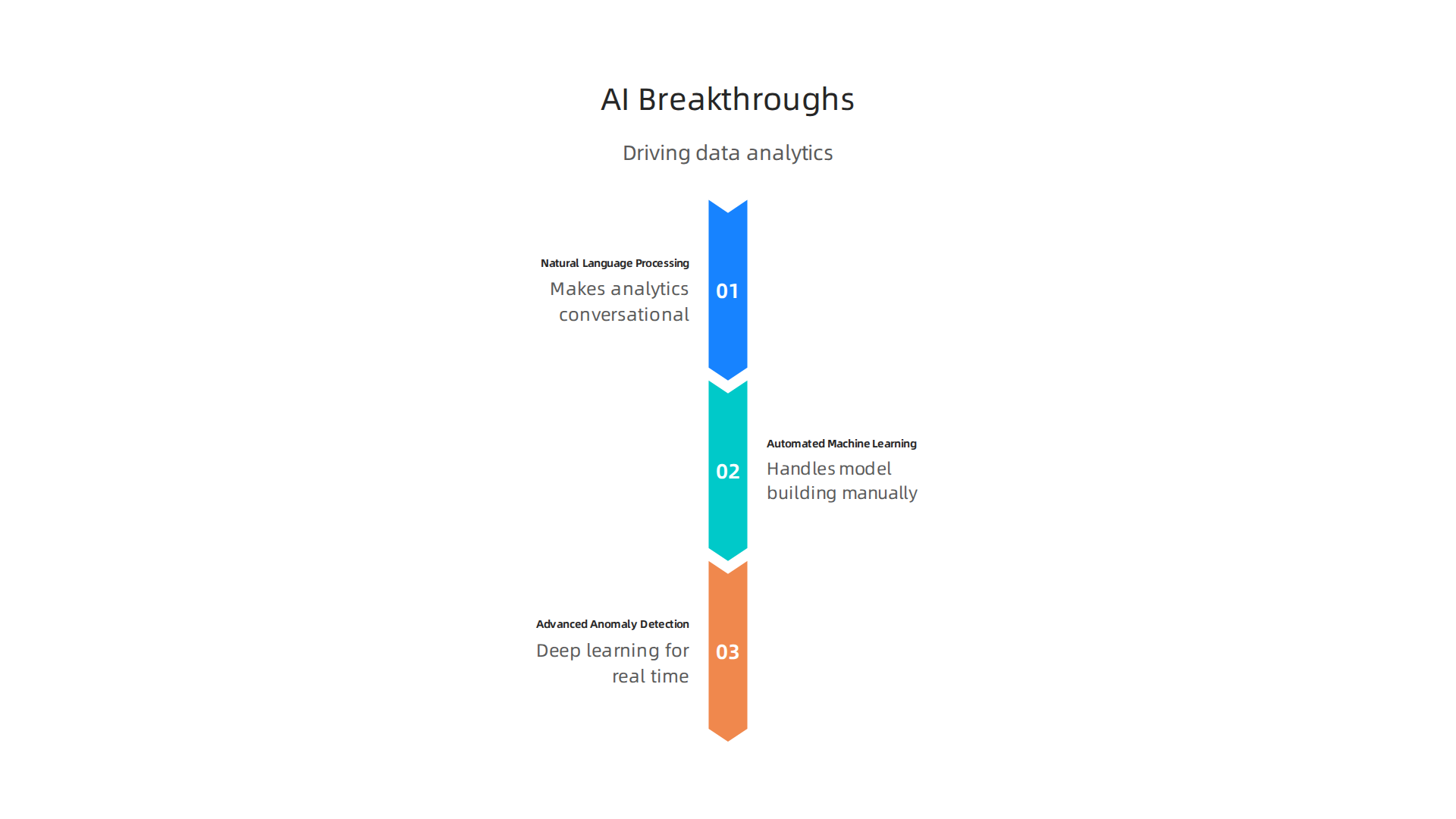
They are the engines behind the shift from manual dashboards to autonomous insight.
Natural Language Processing (NLP) makes analytics conversational. Instead of writing complex SQL queries or clicking through menus, you can just ask a question in plain English. "Show me sales trends for the last six months" and the system builds the chart instantly. This is huge for people who are not data experts. According to the 2026 guide on NLP-powered analytics platforms, NLP removes technical barriers so anyone can get answers. You do not need a data science degree. You just need to know what you want to know. This alone democratizes data analytics across entire organizations.
Automated machine learning (AutoML) handles the heavy lifting of model building manually. In the past, selecting the right algorithm, tuning parameters, and validating results took days or weeks. AutoML automates that entire pipeline. It tests dozens of models, picks the best one, and surfaces the insights without you having to touch a single line of code. In 2026, AutoML tools are becoming standard in BI platforms. As covered in the AI trends report for 2026, AutoML makes training guided and fast, so teams can assemble and ship models instead of building from scratch.
Advanced anomaly detection and predictive modeling now use deep learning for real time. Traditional rule based systems miss subtle patterns. Deep learning models can scan millions of data points in seconds and flag unusual behavior that would slip past a human analyst. This is a game changer for fraud detection, predictive maintenance, and demand forecasting. For example, a bank can spot a suspicious transaction in real time and freeze it before any damage is done. A factory can predict when a machine will fail and schedule repair before it breaks. These deep learning models learn and improve continuously.
All three breakthroughs reinforce each other. NLP lets you ask the question. AutoML builds the model. Deep learning spots the pattern. Together they turn raw data into decisions faster than ever before.
If you want to stay on top of these rapid changes, getting daily updates from a trusted source helps. Consider subscribing to the AI newsletter worth reading for clear, concise daily briefings on what actually matters in AI.
How AI-Powered Visualization Transforms Decision-Making
The breakthroughs we just covered are the engine. But the dashboard is where you feel the difference. In 2026, AI-powered visualization is not just about prettier charts. It changes how you see your data and how fast you act on it.
Real-time, adaptive dashboards that read your intent. In the past, building a dashboard meant configuring filters, choosing chart types, and setting up refresh schedules. Now, AI does that work for you. A dashboard adjusts on the fly based on what you are looking for. If you ask about customer churn, the system automatically surfaces retention trends, at-risk segments, and the most relevant time windows. No manual tweaking. This works because the AI understands your question and the data context at the same time. According to a 2026 guide on how AI data visualization is transforming analytics, adaptive dashboards guide users toward what matters most without requiring a technical background.
Interactive data storytelling with natural language narratives. Charts alone can be hard to read. AI now writes short, plain-English summaries alongside the visuals. You see a spike in sales, and the tool tells you: "Revenue jumped 23% this month, driven by the launch of Product X in the Midwest region." It connects the dots for you. This is a big step forward in data annotation, because the AI labels key events and trends automatically, saving you hours of manual analysis. The same technology works for spreadsheets and BI reports, turning numbers into stories anyone can follow.
Augmented analytics that highlight what you might miss. The best human analysts still miss patterns. AI does not. It scans every row and flags anomalies, hidden correlations, and unusual trends. You get alerts like "Average order size dropped 15% in the last week, mostly from returning customers in the 25 to 34 age group." No one had to search for that insight. The AI found it and surfaced it. This reduces your reliance on dedicated data experts and lets the whole team make faster, smarter calls.
All of this puts the power of data analytics directly into the hands of people making decisions.

If you want to build the skills to work with these tools, check out this practical guide on how to succeed as a data analyst in 2026. It covers exactly what you need to know to stay relevant.
Overcoming Implementation Challenges: Data Quality, Privacy, and Scalability
Even the most intelligent AI tools stumble if the data feeding them is a mess.
In 2026, poor data quality remains the top barrier. The old saying still holds true: garbage in, garbage out. When your datasets have missing values, inconsistent formats, or sit in separate silos, your AI models learn the wrong lessons. Fixing this requires standardizing how you collect and label data. It also means investing in cleaning and validation before training begins. As noted in a breakdown of top AI implementation challenges, improving data quality and governance is the first step toward turning experimentation into real business results.
Compliance adds another layer. Regulations like GDPR and CCPA demand that you handle personal data carefully. You cannot just feed customer information into an analytics model without thinking about privacy. Ethical AI use means encrypting sensitive data, masking personal details, and running regular privacy audits. According to a guide on AI challenges for businesses, following these rules protects your company from fines and builds trust with your users. It also forces you to think about bias. If your training data has hidden biases, your predictions will too. Testing for fairness must be part of your regular workflow.
Then there is scalability. As your data grows in volume, speed, and variety, your infrastructure needs to keep up. Moving storage and processing to the cloud helps. Using middleware or APIs to connect new AI tools with your old systems also works. A practical guide on overcoming AI implementation challenges recommends starting with small pilot projects, defining clear KPIs, and scaling only after you see measurable results.
The right approach balances data quality with strong governance and smart infrastructure. If you want to stay ahead of these challenges, you need reliable daily updates on how AI is evolving. Subscribe to The Deep View Newsletter for clear, practical insights that help you make smarter data analytics decisions every day.
Practical Framework for Adopting AI-Data Analytics in Your Organization
You already know the obstacles. Now you need a clear path forward. Adopting AI-driven data analytics does not have to be overwhelming if you break it into steps. Here is a practical framework that works in 2026.
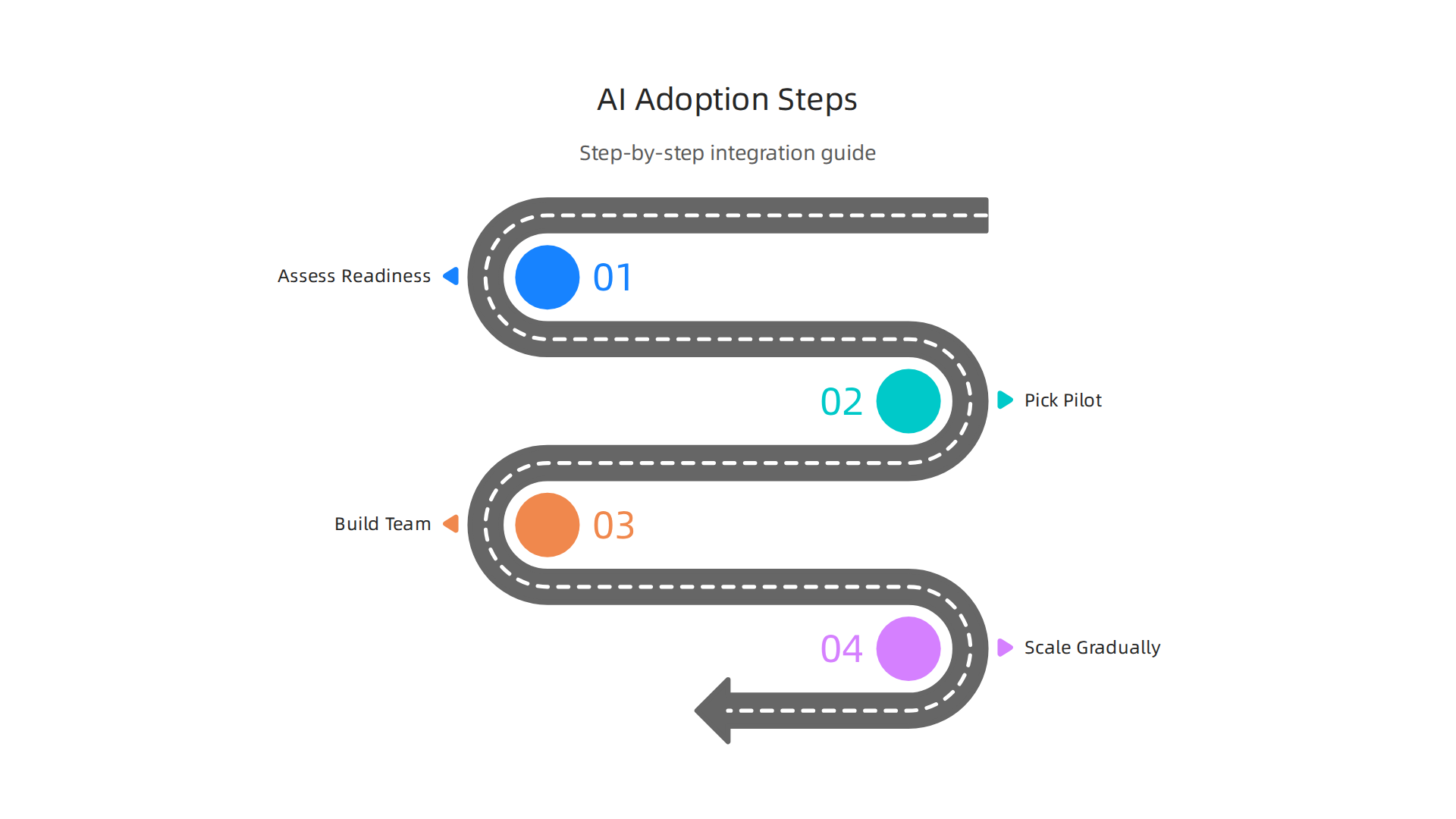
Step 1: Assess Your Readiness
Before you buy any tools, take a hard look at where you stand. Ask three questions:
- Do you have clean, organized data that your team can actually use?
- Is your current tech stack ready to handle new AI tools?
- Does your team have the right mix of skills?
This readiness check saves you from wasting money on fancy software you cannot use. The global data analytics market is expected to grow fast, but only companies with solid foundations see real returns. According to the latest research on data analytics market trends, over 65% of organizations are already exploring AI for data and analytics. Do not rush in without preparation.
As part of this step, look at how you handle data preparation. Many teams struggle with labeling and cleaning data. That is where ai data annotation becomes critical. If your training data is messy, your predictions will be unreliable. You can also learn a lot by browsing communities like data annotation reddit to see what tools and methods real teams use.
Step 2: Pick One High-Impact Pilot
Do not try to transform everything at once. Choose a single business problem where better data analytics can make a clear difference. For example:
- Reduce customer churn by identifying at-risk accounts early.
- Improve inventory forecasting to cut waste.
- Speed up fraud detection for transactions.
Start small. Define specific success metrics before you launch. Good options include time to insight, accuracy improvement, cost savings, and user adoption. Run the pilot for a set period. Measure results honestly. Only then decide whether to scale.
Step 3: Build the Right Team
Technology alone does not drive success. You need people who can work together. Blend these roles:
- Data engineers to build pipelines and keep data flowing.
- Data scientists to build and tune models. When working with complex data, techniques like visualizing data using t-sne can help you see patterns that algorithms might miss.
- Domain experts who understand the business context and can ask the right questions.
- Change management leads who help your teams adopt new tools and workflows.
Without domain experts, your models might solve the wrong problem. Without change management, your teams might resist using the new system. Investing in the right people is just as important as investing in technology.
For more on building analytics skills, check out this guide on how to succeed as a data analyst in 2026.
Step 4: Scale Gradually and Optimize Continuously
Once your pilot shows positive results, expand step by step. Add more data sources. Roll the model into more departments. Keep tracking your key metrics. Look for ways to improve accuracy and reduce costs over time.
Automate where you can. Use dashboards that update in real time. Create feedback loops so your models learn from new data and from mistakes.
Following this framework helps you move from experimenting to getting real value from AI-powered data analytics.

Stay patient. Focus on measurable wins. That is how you build momentum and create a culture that relies on data every day.
The Future of AI in Data Analytics and Visualization
You have a practical framework to start using AI data analytics today. But the field is moving fast. The tools and methods that work now will look very different a year from now. Here is what is coming next and how it will change the way you work with data in 2026.
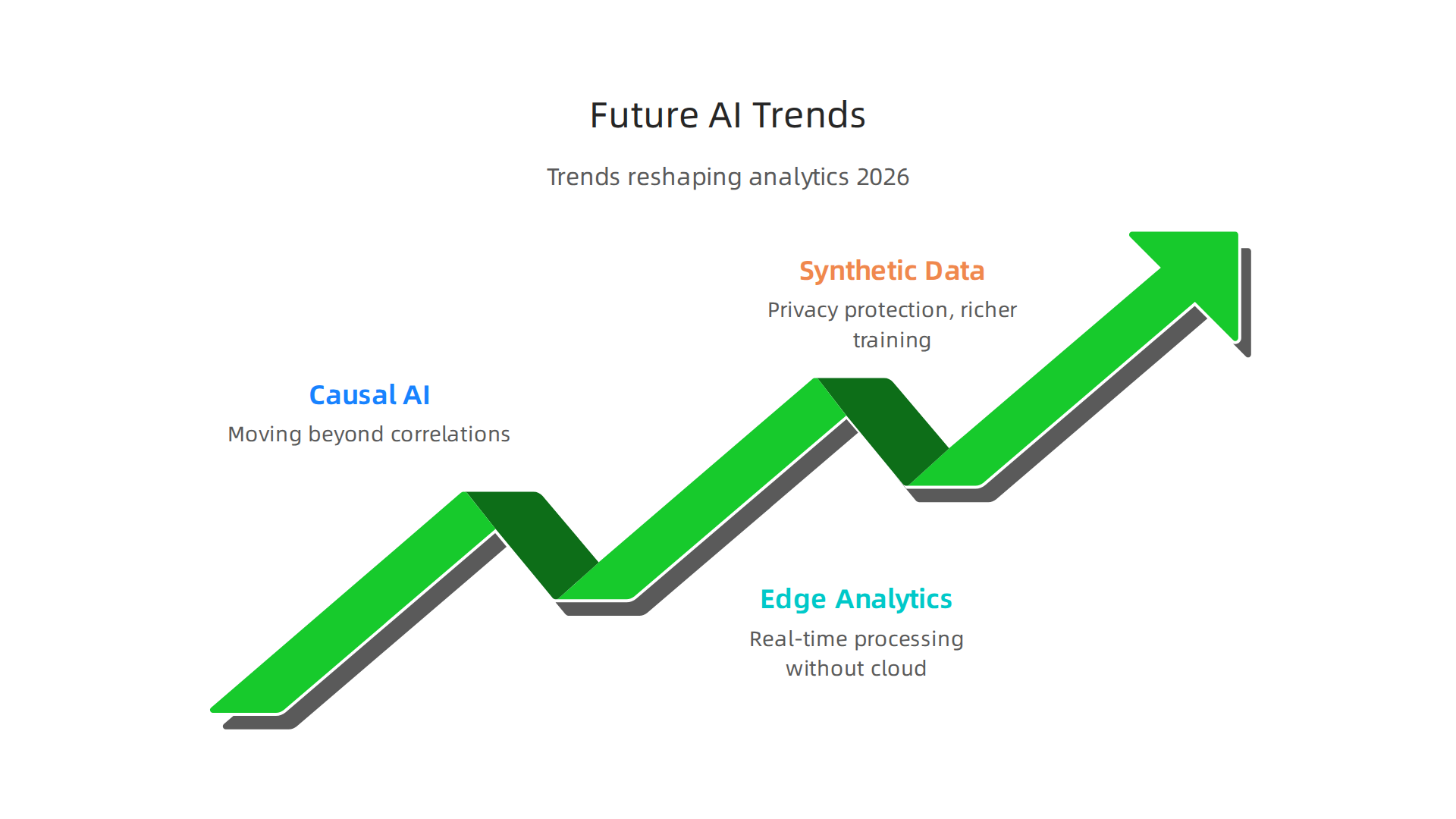
Causal AI: Moving Beyond Correlations
Most analytics today tells you what happened and what might happen next. But those predictions are based on correlations. Two things go up together, so the model assumes they are connected. That leads to wrong conclusions more often than you think.
Causal AI changes this. It asks "why" not just "what." Instead of spotting patterns, it tries to find root causes. For example, a normal model might see that sales go up when emails go out and assume emails cause sales. Causal AI digs deeper and checks if something else is driving both.
This shift matters because it lets you recommend real interventions. If you know the root cause, you can fix the actual problem. According to the future trends in predictive analytics guide, prescriptive analytics is the next step beyond prediction. Causal AI makes that possible.
Edge Analytics: Real-Time Processing Without the Cloud
Cloud computing has been great for analytics. But it has limits. Sending data to the cloud, waiting for processing, and getting results back takes time. That delay kills use cases like self-driving cars, factory robots, and medical monitors.
Edge analytics solves this by running AI models right on the device. Sensors, cameras, and IoT gadgets process data locally. They make decisions in milliseconds. No cloud needed. No latency.
In 2026, more industries will adopt edge analytics for real-time decisions. Manufacturing lines will spot defects instantly. Retail stores will track inventory without sending data to a server. This changes how you think about infrastructure. You no longer need massive data centers for every use case. The processing happens where the data lives.
Synthetic Data: Privacy Protection and Richer Training Sets
One of the biggest blockers for data analytics is privacy. You cannot share customer data freely. You cannot train models on sensitive information without risk.
Synthetic data solves that. It creates artificial data that looks and behaves like real data but contains no actual person information. You can use it to train models, test systems, and run analytics without privacy violations.
This is huge for industries like healthcare and finance where regulations are strict. It also helps when you simply do not have enough real data to train a good model. Tools that generate synthetic data are becoming more accessible and affordable in 2026.
These three trends are reshaping what is possible with data analytics. The companies that pay attention now will have a big advantage tomorrow.
If you want to stay ahead of these changes and get clear daily updates on AI and analytics, check out The AI Newsletter Worth Reading.
For a broader look at what is coming, read more about the AI breakthroughs in 2026 that actually matter.
Summary
This article explains how data analytics transformed in 2026 from manual reporting into AI-powered, autonomous decision systems and why that shift matters for businesses and analysts. It walks through the five-stage evolution of analytics, highlights three practical AI breakthroughs—NLP for conversational queries, AutoML for model automation, and deep learning for real-time anomaly detection—and shows how those capabilities change visualization and dashboards. The guide also tackles the real-world obstacles you will face, including data quality, privacy, and scalability, and lays out a four-step adoption framework: assess readiness, run a focused pilot, build the right team, and scale gradually. Readers will find actionable advice on choosing pilots, assembling roles, and measuring success, plus a look at near-term trends like causal AI, edge analytics, and synthetic data. After reading, you will understand what technologies matter, how to avoid common mistakes, and how to start delivering measurable value from AI-driven analytics today.