Introduction: The AI Imagery Revolution and What You Need to Know
You have probably seen a picture of artificial intelligence lately and not even realized it. Maybe it was a photo of a person who never existed, a product image that never required a camera, or a piece of art generated in seconds. In 2026, image artificial intelligence has moved from a cool experiment to a core business tool. But here is the problem: information overload is real. Every day brings new models, fresh claims, and confusing hype. How do you separate what matters from what does not?
Simply put, image artificial intelligence refers to technology that lets computers create, edit, and understand visual content in ways that mimic human perception. As IBM explains, AI enables machines to simulate learning, comprehension, and creativity.
When you apply that to images, you get tools that can generate realistic scenes, enhance old photos, or even produce medical scans.
For professionals like you, staying ahead means cutting through the noise.
That is exactly what this guide provides. We offer a clear, evidence-based overview of how image AI works, where it applies today, how to evaluate the tools, and what comes next. This is not a list of random tips. It is a foundation for your strategy and R&D decisions.
Want to go deeper into the latest breakthroughs? Check out our article on AI imaging trends and market shifts in 2026 for real-world applications.
If you want to stay informed without the noise, subscribe free to The Deep View Newsletter. We deliver clear daily AI updates straight to your inbox.
What Is Image Artificial Intelligence? Defining the Core Concepts
Let us make this simple. When someone mentions image artificial intelligence, they are talking about computer programs that can create, change, or understand visual content. Think of it like teaching a machine to see and draw at the same time.
At its heart, this technology uses special models called machine learning algorithms. These models learn from millions of examples. Over time, they start to recognize patterns, colors, shapes, and even objects in a picture of artificial intelligence. As Google Cloud explains, AI is about teaching computers to do the amazing things our own brains can do, like understanding the world around them.
Now, here is the important part. Not all image AI works the same way. There are three main types you hear about in 2026.
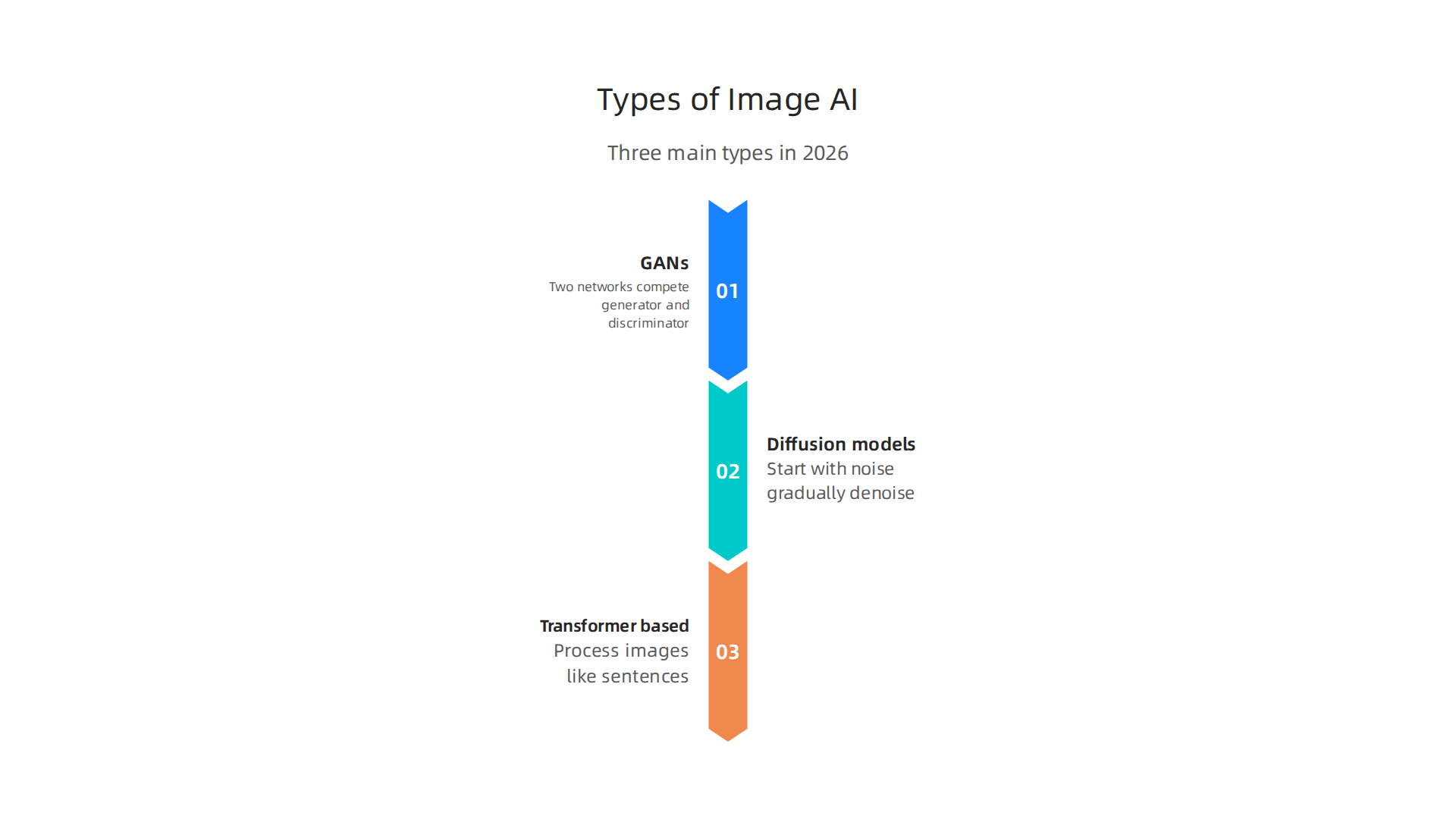
- Generative Adversarial Networks (GANs). Two networks compete. One creates images. The other judges them. They get better together.
- Diffusion models. These start with random noise and slowly remove it to reveal a clear image. They power many popular tools today.
- Transformer based architectures. These models process images like a sentence, looking at relationships between every part of the picture.
The Big Difference: Creating vs. Understanding
There is a key split you need to know. Some models are discriminative. They look at a picture of artificial intelligence and tell you what is in it. Is it a cat? A car? A cancer cell? These models are great for classification and detection.
Other models are generative. They create new content from scratch. You give them a text prompt, and they generate a brand new picture of artificial intelligence that never existed before. Right now, generative models dominate the conversation because they are so visible and exciting. But discriminative models are just as important in fields like medical imaging and security.
Clearing Up the Terms
You will see a few different phrases thrown around. Let us make them clear.
- AI imagery. Any visual created or modified by artificial intelligence.
- Synthetic images. Artificially produced images that mimic real ones. Often used for training other AI models.
- Computer generated imagery (CGI). Older term from computer graphics. Usually refers to 3D rendering or animation made with traditional software.
As Coursera notes, artificial intelligence simulates human intelligence processes by machines. That includes creativity. So AI imagery and synthetic images overlap a lot. CGI is a bit different because it usually does not involve machine learning.
If you want to see how these models are being applied in real businesses today, check out our guide on AI imaging trends and market shifts in 2026.
Understanding these core concepts helps you cut through the noise. You can spot real advancements from marketing fluff. And that saves you time and money.
Want to stay updated on the latest AI breakthroughs without the hype? Subscribe Free to The Deep View Newsletter for clear daily insights.
How AI Creates Images: Generative Models and Their Mechanics
Now you know the difference between models that understand images and models that create them. Let us zoom in on the creation side. How exactly does a machine turn a few words into a stunning picture of artificial intelligence?
Two main approaches have dominated the scene: Generative Adversarial Networks (GANs) and diffusion models. But as of 2026, diffusion models have clearly pulled ahead. They deliver better quality, more control, and more reliable results for text-to-image tasks.
Here is how diffusion models work. Imagine starting with a canvas full of random noise, like TV static. The model slowly removes that noise step by step. Each step brings it closer to a clear, recognizable image. This process is called denoising. The model uses a special structure called a U-Net to predict and remove noise at each step. And it does all of this in something called latent space, a compressed version of the image that makes processing faster.
The model does not just guess. It follows a carefully planned path called noise scheduling. A scheduler decides how much noise to remove at each step. This is why results can look so polished.
Conditioning: Giving the Model Directions
How does the model know what to draw? You give it a condition. The most common condition is a text prompt. But in 2026, conditioning has expanded way beyond text. Models now accept:
- Segmentation maps (telling the model where objects go)
- Pose skeletons (giving a human figure the right stance)
- Reference images (copying a style or subject)
- Depth maps (controlling 3D layout)
This multi-modal conditioning lets you create complex scenes with far fewer guesswork. Tools like SDXL use two CLIP networks to better capture what you want, as MLCommons explains.
What Has Changed in 2026
The field keeps moving fast. Here are the biggest advances this year:
- Real-time generation. Some models now create images in under a second, opening doors for live video editing and interactive design.
- Improved coherence. Hands, faces, and complex backgrounds look much more realistic. Models understand relationships between objects better.
- Better evaluation metrics. Researchers now rely on tools like FID (Fréchet inception distance) and CLIP score to measure quality. Hugging Face provides a thorough guide on how these metrics work for diffusion pipelines.
These improvements mean that an image artificial intelligence generated today is harder to tell apart from a real photo. For professionals, that is both exciting and a reason to stay sharp.
If you want to keep up with how these models are changing industries, check out our full report on AI imaging trends and market shifts in 2026.
Want to stay ahead of these rapid changes? Get Free Updates from The Deep View Newsletter. We break down the most important AI breakthroughs every day in plain English.
Key Applications of AI Imagery Across Industries
Now you know how AI creates images from scratch. But how does this actually help businesses? In 2026, image artificial intelligence is not just a cool toy. It is a practical tool that saves time, cuts costs, and opens new possibilities across many fields.
Here are the biggest areas where it is making a real difference.
Marketing and Advertising
Marketers have to create lots of visuals fast. Social media, email campaigns, and online ads all need fresh images. Generative AI lets you generate hundreds of ad variations in minutes. This makes A/B testing faster and cheaper. You can also personalize ads for different audiences without hiring extra designers. According to a guide on AI business use cases, generative AI is widely used for content creation and personalized marketing (Product School). For example, tools like AdCreative AI can design professional ad graphics and copy in seconds, as noted in a roundup of top AI tools for business (TTMS).
Product Design and Prototyping
Designers no longer need physical prototypes to test an idea. They can create synthetic images of products from any angle using a text prompt. This speeds up concept validation and reduces material waste. E-commerce companies also use AI to generate entire product catalogs from a single photo. And virtual try on is becoming standard. Customers can see how a piece of furniture looks in their room or how clothes fit before buying. These applications fall under broader generative AI use cases that boost enterprise growth (Systango).
Healthcare and Research
In medicine, picture of artificial intelligence helps doctors and researchers in surprising ways. Scientists use synthetic medical images to train diagnostic models. This avoids privacy issues with real patient data. It also lets them create rare disease examples that are hard to find. Augmented microscopy uses AI to highlight cells or structures in real time. This speeds up research and diagnosis. As a result, healthcare is one of the fields seeing strong ROI from AI adoption, as highlighted in NVIDIA’s 2026 state of AI report (NVIDIA Blog).
These examples show that pictures on artificial intelligence are more than art. They are practical tools that improve how we market, design, and heal. If you want to stay ahead of these changes and get clear daily updates, subscribe to The Deep View Newsletter. It breaks down the most important AI breakthroughs in plain English. Get Free Updates today.
Evaluating AI Imagery Quality: Metrics, Benchmarks, and Trust
So you know how AI images are being used across industries. But how do you know if a picture generated by an AI is actually good? In 2026, that question matters more than ever. Businesses need reliable ways to measure quality, and regular people need to know what is real.
Common Automated Metrics
Researchers use several numbers to judge a picture of artificial intelligence. Here are the biggest ones:
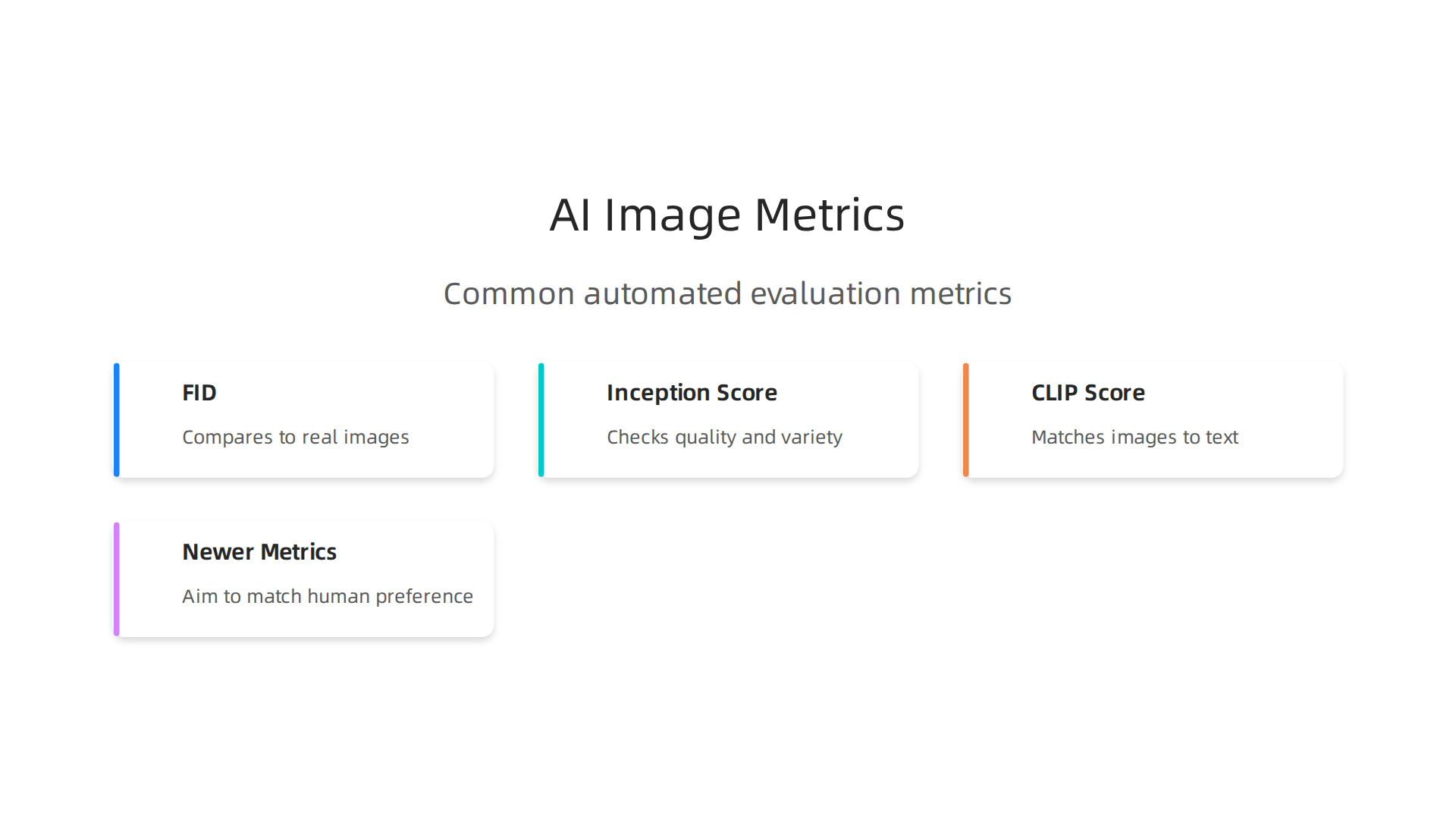
- FID (Fréchet Inception Distance): This compares the set of generated images to real images. A lower score means the AI images look more realistic. The SoftwareMill guide explains that FID and Inception Score are the two main metrics for generative image models (SoftwareMill).
- Inception Score (IS): This checks both quality and variety. It sees if the AI creates images that are clearly one object (like a dog) and not just a blurry mess.
- CLIP Score: This is about following instructions. It measures how well the image matches your text prompt (Hugging Face). For example, if you ask for a cat on a bike, the CLIP score tells you if the image actually shows that.
- Newer Human Aligned Metrics: FID and IS have been around for a while. But newer metrics like HYPE and DreamSim try to match what a person actually likes. They are better at capturing human preference.
The Limits of Numbers
Here is the thing about metrics. They can be tricked. A model could learn to produce images with a great FID score but still look weird to you. The numbers do not always capture domain specific fidelity. For instance, an AI might make a medical image that passes automated checks but looks wrong to a doctor. This is why human evaluation is still a key part of benchmarking. According to the Milvus guide, CLIP Score is often used to measure alignment between images and text, but it is not perfect (Milvus). You always need a person to double check.
Trust and Detection
Now for the trickiest part. How do you tell if an image is AI generated? As tech gets better, so does the need for trust. There are several tools at work in 2026:
- Watermarks: Many models now add invisible watermarks to every image they create.
- Deepfake Detectors: Special software can scan a picture of artificial intelligence and spot patterns that human eyes miss.
- Provenance Standards (C2PA): This is like a digital pedigree. It tracks where an image came from and if it was changed. It is becoming a standard way to verify content.
A true picture of artificial intelligence quality needs both automated metrics and human judgment. But it also needs transparency. For a deeper look at how these technologies are evolving, read our full guide on artificial intelligence imaging in 2026. If you want to stay ahead of changes like these and get clear daily updates, join The Deep View Newsletter. It breaks down the most important AI breakthroughs in plain English. Get Free Updates today.
Commercial AI Imagery Tools and Platforms in 2026
Now that you know how to evaluate quality, it is time to choose the right tool. The market for image artificial intelligence tools in 2026 is bigger than ever. Whether you need a single picture of artificial intelligence for a blog post or thousands of images for a marketing campaign, there is a platform built for you.
Leading Platforms
The big names still dominate, but they keep getting better.
- OpenAI DALL-E: Great for creative concepts and following complex prompts. It is a top choice for marketers and designers who need quick, high quality visuals.
- Stability AI DreamStudio: This gives you more control over details like style and composition. It runs on Stable Diffusion, the same engine behind many open source projects.
- Midjourney: Known for beautiful, artistic results. It lives inside Discord, which makes it popular with creative teams and indie creators.
- Google Imagen: Integrated with Google Cloud, so it works well for businesses already using that ecosystem.
- Open Source Alternatives: Variants of Stable Diffusion let you run everything on your own hardware. That means total control and no per image fees.
Enterprise Considerations
Picking a platform for your business takes more thought. You need to balance cost, privacy, and flexibility.

- API Pricing: Some platforms charge per image. Others offer monthly subscriptions. Check how much volume you need before you commit.
- Data Privacy: Can the model train on your images? Enterprise plans often let you opt out of training. For sensitive work in healthcare or finance, running a model on premises is safer. The NVIDIA State of AI Report 2026 shows that enterprise AI adoption continues to accelerate, with cost cutting and productivity as top drivers (NVIDIA Blog).
- Model Customization: Fine tuning or LoRA adapters let you teach an AI your brand style. This is huge for companies that need consistent visuals across campaigns. The Helium42 guide to best AI tools for business in 2026 recommends evaluating each tool by ROI for your specific function (Helium42).
- Integration: Does the tool connect to your existing design software, content management system, or workflow? API access matters if you plan to generate images at scale.
Emerging Tools
The next wave of innovation goes beyond still images. You can now generate video clips, 3D models, and industry specific visuals.
- Video Generation: New tools extend image AI into short video clips. Great for social media content and product demos.
- 3D Asset Generators: Turn a text prompt or a single picture of artificial intelligence into a full 3D model. Architects and game designers love this.
- Vertical Solutions: Specialized platforms now serve architecture, fashion, and medical imaging. These tools understand industry terms and compliance needs. The Product School guide on AI business use cases shows how personalized generation is reshaping entire sectors (Product School).
The commercial AI imagery space moves fast. To see how all these trends fit together, read our comprehensive guide on artificial intelligence imaging in 2026. And if you want to stay ahead of the next big tool or platform, subscribe to The Deep View Newsletter. It delivers the most important AI news in plain English, every day. Subscribe Free and never miss a breakthrough.
Ethical Considerations and Trust in AI-Generated Images
With great power comes great responsibility. The same image artificial intelligence tools that help you create stunning visuals can also be used to spread misinformation, create deepfakes, and reinforce harmful biases. That is why understanding the ethics of AI imagery matters for everyone, not just regulators.

The Real Risks
Here are the biggest concerns you need to know about.
- Deepfakes and Misinformation: A single picture of artificial intelligence can look completely real. Bad actors use this to create fake news or impersonate people. That erodes public trust.
- Copyright and Ownership: Who owns an AI-generated image? The user? The platform? The model’s training data often includes copyrighted work, which raises legal questions. Many lawsuits are still being decided.
- Bias in Generated Content: If the training data is not diverse, the outputs will not be either. You might see racial, gender, or cultural stereotypes in your images. This can harm your brand and alienate audiences.
What the Law Says in 2026
Governments are catching up fast. The most important regulation right now is the European Union’s AI Act. It is the first comprehensive AI law from a major regulator (Artificial Intelligence Act).
The transparency rules of the EU AI Act will fully take effect in August 2026 (European Commission). This means any AI-generated content you distribute in the EU must be clearly labeled as synthetic. The law also bans certain high-risk uses of AI, like social scoring and real-time biometric surveillance in public spaces (Harvard Information). In the United States, the Executive Order on AI pushes for similar transparency measures, though a federal law is still pending.
Best Practices for Responsible Use
You do not have to wait for new laws to do the right thing. Here are simple practices you can start today.
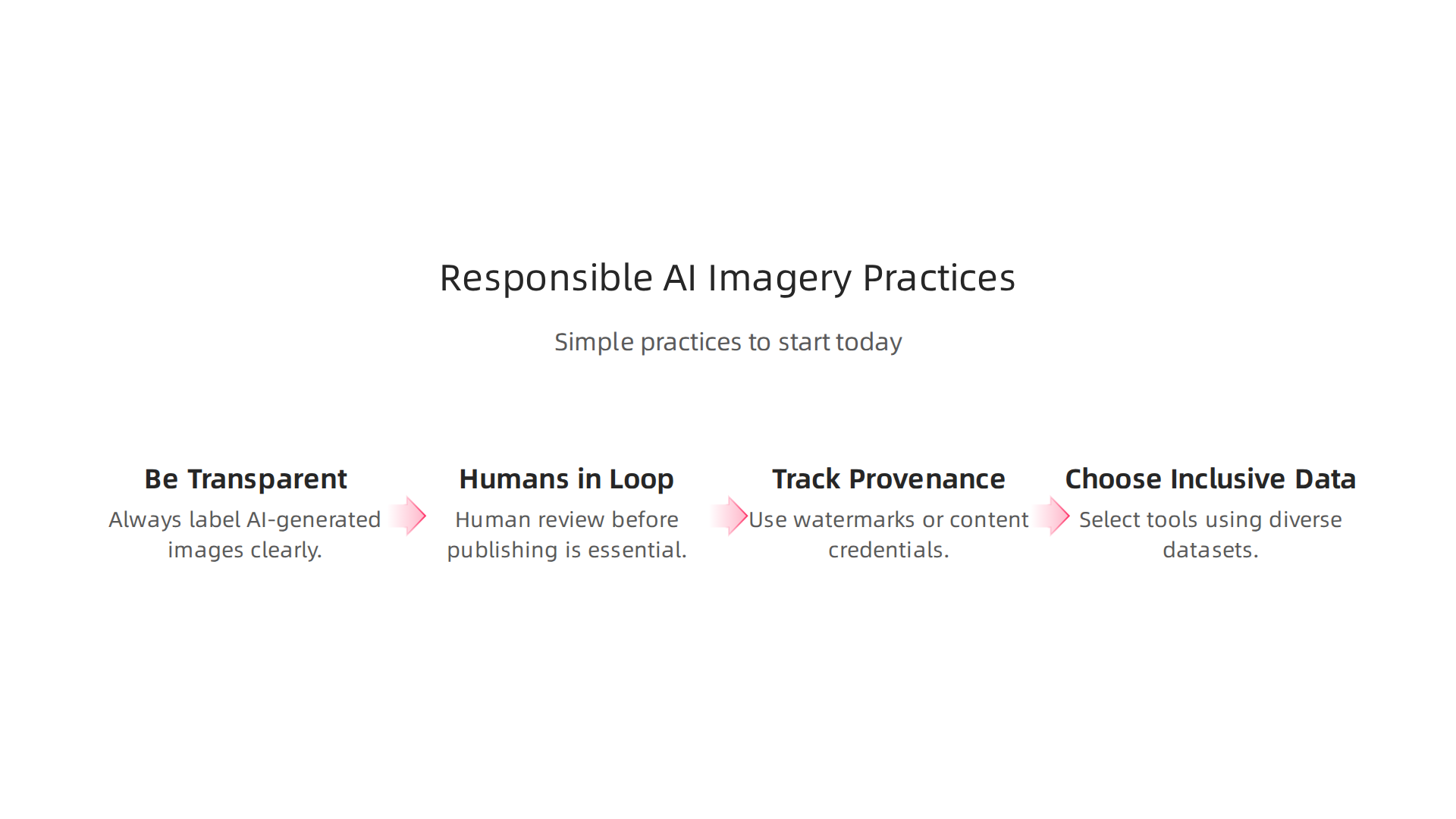
- Be Transparent: Always label AI-generated images. Tell your audience when a pic of artificial intelligence is not a real photo. Honesty builds trust.
- Keep Humans in the Loop: Use AI as a starting point, not a final answer. A human should always review and approve images before publishing, especially for sensitive topics.
- Track the Provenance: Use digital watermarks or content credentials to show where an image came from. This helps people verify authenticity.
- Choose Inclusive Training Data: When you can, select tools that use diverse datasets. This reduces bias and produces fairer results.
The future of image artificial intelligence depends on trust. If you want to stay informed about the latest regulations, tools, and ethical guidelines, you need a reliable source. That is why I recommend The Deep View Newsletter. It delivers clear daily updates on AI breakthroughs, including ethics and policy changes, straight to your inbox. Subscribe Free and stay ahead of the curve. For a broader look at how these tools are evolving, check out our main article on artificial intelligence imaging in 2026.
Implementation Best Practices for Adopting AI Imagery
So you are ready to bring image artificial intelligence into your workflows. That is exciting. But jumping in without a plan can cause big problems. You need to start with a clear use case and measurable success metrics. Do not just take an old process and slap AI on top. Redesign the workflow from scratch to get the real benefits. When teams try to force AI imagery into legacy systems, they often end up with more confusion than value. To avoid this, treat your AI rollout like any serious software project. As the experts at Galileo AI explain, operationalizing machine learning requires clear goals and a structured approach.
Next, build the right team. You cannot do this alone. You need a cross-functional group that includes AI engineers, domain experts who understand your industry, legal and compliance people to manage risk, and creative leads who know how visuals work. Each person brings a different piece of the puzzle. Domain experts make sure the output is accurate. Legal helps you avoid copyright or bias issues. Creatives ensure the images look good and fit your brand. According to the MLOps best practices guide from Kanerika, high performing teams break down silos and collaborate closely. This blend of skills helps you produce better and safer AI imagery.
Quality control is another must have. Automated tools can catch obvious errors, but they are not enough for customer facing content. You need a human in the loop to review the final output. A picture of artificial intelligence might look fine to a machine, but a human can spot subtle problems like weird hands or wrong cultural symbols. Set up a pipeline that runs each image through automatic checks first, then sends it to a person for final approval. The lakeFS guide to MLOps tools in 2026 highlights how monitoring and governance keep models reliable over time. This two step system saves time while keeping quality high.
If you want to keep learning about how AI imagery is changing the world, check out our article on the latest breakthroughs, applications, and market trends. And for even more daily insights, get free updates from The Deep View Newsletter straight to your inbox. It is the easiest way to stay ahead of the fast moving AI landscape.
Summary
This article explains how image artificial intelligence has evolved from an experiment into a business-critical technology and provides a clear, practical guide for professionals. It defines core concepts—generative and discriminative models—and breaks down the leading generation methods like diffusion models and GANs, including how conditioning and noise scheduling shape outputs. The piece surveys major industry applications in marketing, design, healthcare and more, then shows how to measure quality with metrics such as FID and CLIP while noting their limits and the continuing need for human review. It also compares commercial tools and enterprise considerations, outlines ethical and legal risks (including the EU AI Act), and gives step-by-step best practices for adopting AI imagery safely and effectively. After reading, you’ll understand how to choose tools, evaluate image quality, mitigate risks, and integrate AI imagery into real workflows.