
Introduction: Separating Breakthrough from Hype in AI Photography
Every day, another headline claims AI is about to replace photographers. Another startup launches a tool that promises studio-quality shots from a single prompt. And another viral image turns out to be fake. If you work in photography, design, or content creation, it is getting harder to separate real progress from noise.

But here is the thing: the transformation is real. The global AI photography market sits at over $40 billion in 2026, and [over 150 million people now use AI image generators every month
](https://imagera.ai/blog/ai-image-generation-statistics-2026). The AI product photography sector alone grew from $450 million in 2024 and is on track to explode to $5 billion by 2035. These numbers are staggering. Yet they do not tell you what actually works for your workflow.
That is where this article comes in. We are not here to hype. We are here to give you a clear, evidence-based view of artificial intelligence photos in 2026. You will get a straight look at the technology driving ai model photoshoot tools, the market trends that matter, the ethical questions you need to think about, and the strategic moves that can save you time and money.
By the end, you will know how to pick the signal from the noise. You will understand which tools deliver real value and which are just passing fads. And you will have a practical roadmap for using AI in your photography and editing without losing your creative edge.
For a deeper dive on how these systems actually work, read our guide on how image artificial intelligence works and why your business needs it.
Want to keep up with every real breakthrough without the buzz? Subscribe free to The Deep View Newsletter for clear daily updates on AI.
The State of AI in Photography and Imaging – 2026 Market Landscape
The numbers we shared in the introduction only scratch the surface. Let’s dig into what the 2026 market actually looks like for artificial intelligence photos. The data is clear: this is not a niche trend. It is a full-scale transformation.
The global AI photography market is now worth over $40 billion, according to the AI Photography Industry Report. That includes everything from editing tools to full image generation. Over 150 million people use AI image generators every month, producing billions of images (source). The AI image generation market alone sits at $12.4 billion in 2026. And the AI product photography segment grew from $450 million in 2024 and is on track to hit $5 billion by 2035 (source).
But those are just the big numbers. Look at the segments that matter to you:
- Computational photography (AI that enhances camera hardware): valued at $20.75 billion in 2026, growing fast

(source).
- AI image editors (tools that retouch, enhance, and edit): projected to grow from $1.2 billion in 2024 to $11.5 billion by 2035 (source).
- Digital photography overall: the broader market is worth $93.35 billion in 2026, with AI driving much of the growth (source).
What industries are driving this? E-commerce is the biggest. Online stores need constant product shots, and AI tools let them generate studio-quality images without a physical shoot.

Advertising and entertainment are close behind. Studios are using ai model photoshoot tools to create virtual fashion models. Video producers are exploring text to video artificial intelligence platforms like wan ai: leading ai video generation model to turn scripts into footage instantly. Even traditional photographers are using ai image model tools to speed up culling and editing.
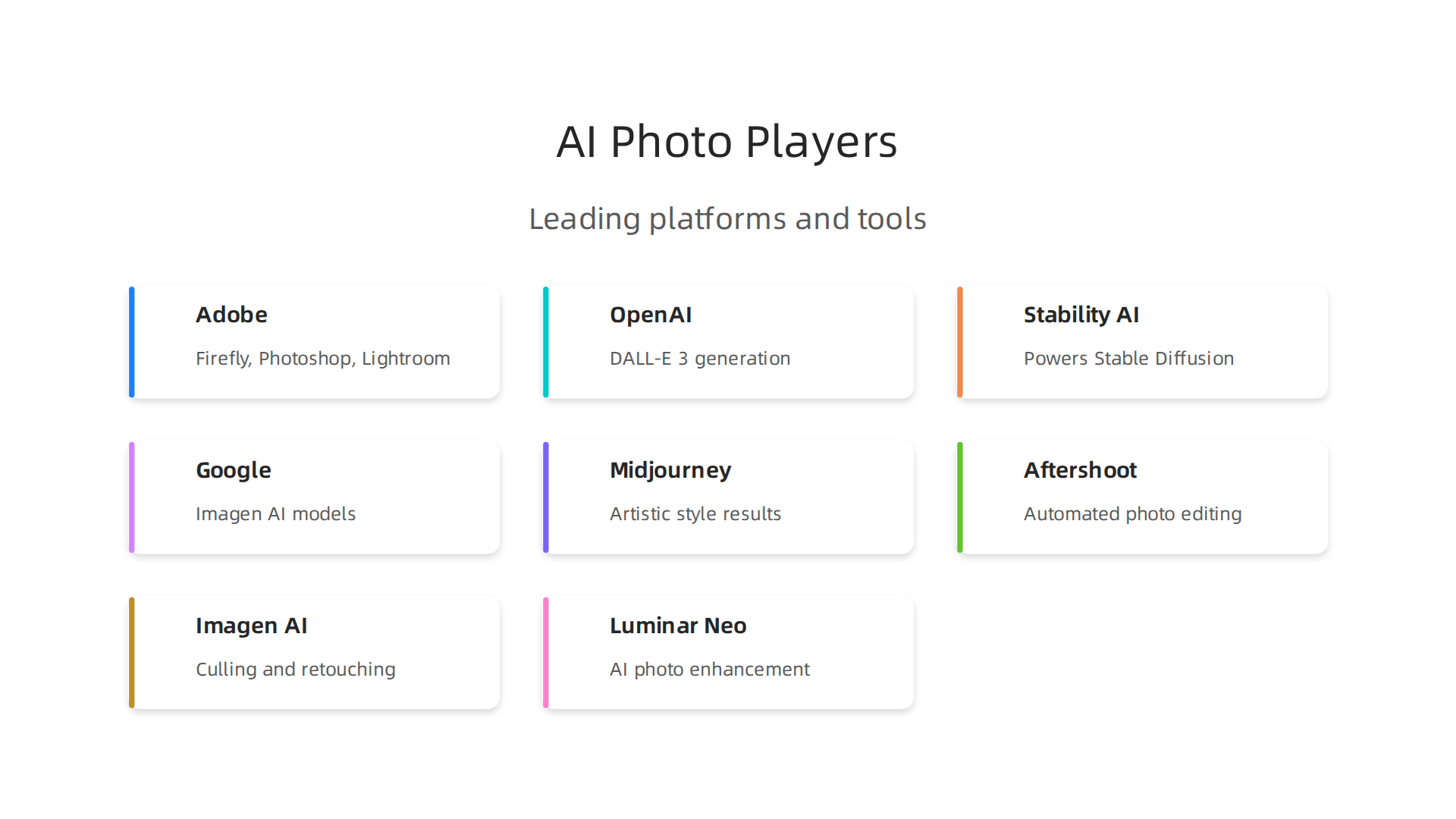
Who are the key players? Adobe leads with Firefly and AI features inside Photoshop and Lightroom. OpenAI runs DALL-E 3. Stability AI powers Stable Diffusion. Google has Imagen. And a wave of smaller tools like Midjourney, Aftershoot, Imagen AI, and Luminar Neo are carving out loyal followings
(source).
Adoption is not even across the globe. The highest use is in North America, Europe, and parts of Asia (United States, Canada, UK, Germany, France, Japan, South Korea). These are the regions where professionals in tech, e-commerce, and creative fields are integrating AI fastest. If you work in one of these markets, your competitors are already using these tools.
For a deeper look at how these systems actually work under the hood, check out our guide on artificial intelligence imaging in 2026: breakthroughs, applications, and market trends.
The market is moving fast. If you want to stay ahead of every real shift without the hype, subscribe free to The Deep View Newsletter for clear daily AI updates delivered to your inbox.
Core Technical Breakthroughs Powering Artificial Intelligence Photos
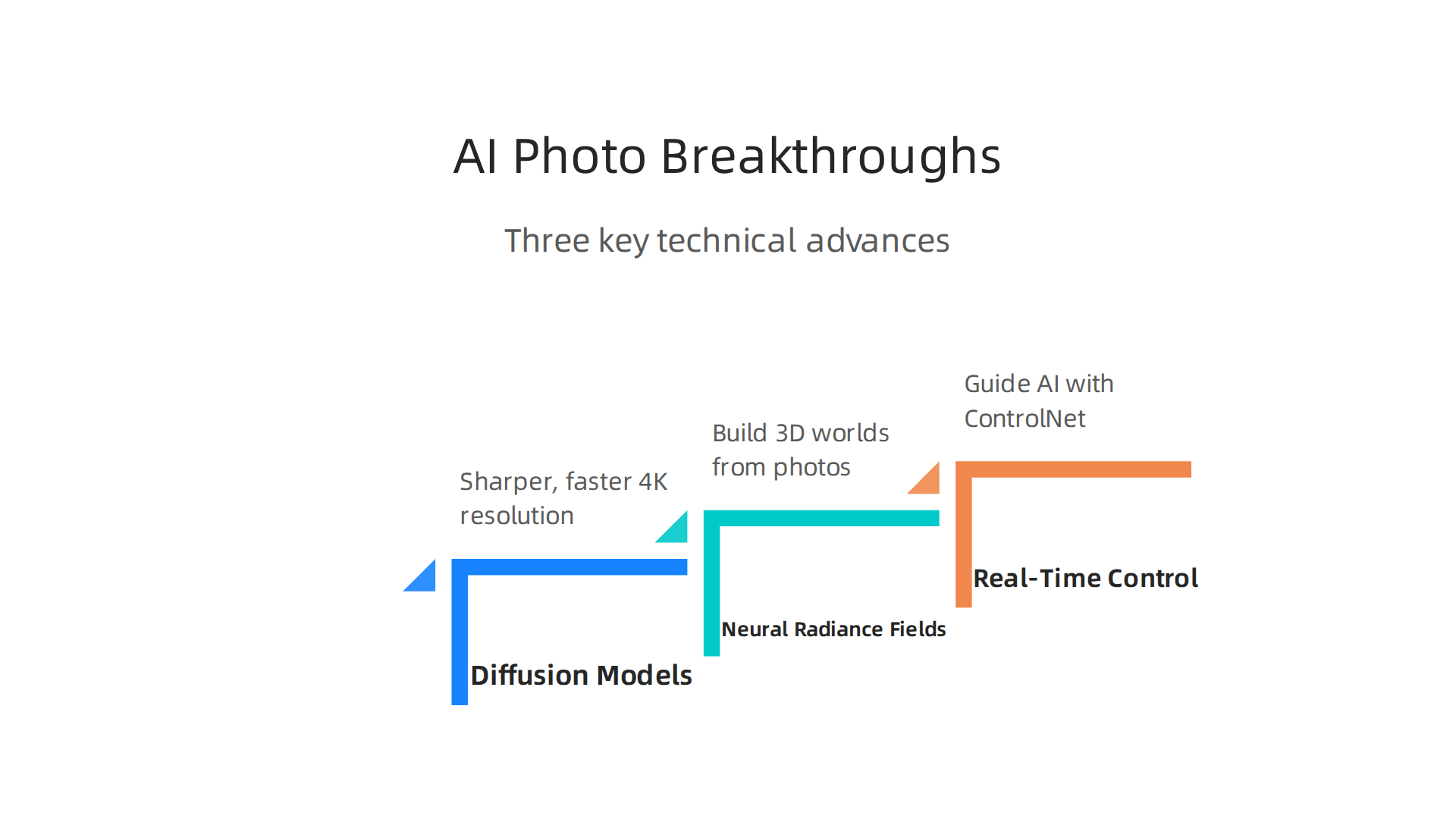
So how does the magic actually work? The market numbers we just looked at are impressive, but they are just the result of real technical leaps. There are three big breakthroughs that make artificial intelligence photos look so real today.
1. Diffusion Models Get Sharper and Faster
A few years ago, AI images were blurry, had weird hands, and looked like a dream you could not quite remember. Then diffusion models changed everything. These systems start with pure noise and slowly remove it, step by step, to reveal a clear picture based on your text prompt. In 2026, diffusion models have become much more powerful. They now produce images at 4K resolution with consistent lighting and realistic textures. Researchers have also found ways to make them run in seconds instead of minutes. That is why you can now generate a studio-quality ai model photoshoot image in the time it takes to make coffee.
2. Neural Radiance Fields (NeRFs) Build 3D Worlds from Flat Photos
Here is where things get really interesting. A technology called Neural Radiance Field, or NeRF, lets an ai image model learn a full 3D scene from just a handful of 2D photos. The original NeRF paper, published in 2020, showed it was possible to render photorealistic new views of a scene by training a neural network on sparse input (source). Since then, researchers have improved NeRFs with techniques like DT-NeRF, which combines diffusion and transformer models to recover finer details and keep views consistent across angles (source). A comprehensive review of NeRF research from 2020 to 2025 (updated in May 2026) shows how far the field has come (source).
Why does this matter for you? Imagine snapping a few photos of a product and getting a full 3D model you can rotate, light differently, and place into any background. That saves hours of studio time and makes text to video artificial intelligence workflows much smoother, because you can generate consistent video from any angle.
3. Real-Time Control on Your Own Computer
The latest breakthrough is about control. Tools like ControlNet and IP-Adapter let you guide the AI image generation with skeleton poses, depth maps, or even a reference photo. You can take a rough sketch of a chair, add a prompt like "modern office chair with leather finish," and the AI follows the exact shape. This makes artificial intelligence photos useful for designers and photographers who need precision, not just random art.
Even more exciting: you can now run these powerful models on a standard laptop or tablet, not just a rack of GPUs. New optimization techniques shrink the model size and speed up generation. That means anyone can experiment with wan ai: leading ai video generation model or other tools without a huge setup cost.
If you want a deeper look at how these systems learn and why they matter for business, read our guide on how image artificial intelligence works and why your business needs it.
These technical breakthroughs are not just lab experiments. They are already reshaping how we create and use images. Want to stay on top of every new model release and real-world application? Subscribe Free to The Deep View Newsletter for clear daily AI updates that cut through the noise.
Trust and Authenticity: Navigating Deepfakes, Copyright, and Regulation
The technical breakthroughs we just covered are amazing. But here’s the thing. Every time an artificial intelligence photos tool gets better at creating realistic images, it also gets harder to tell what is real. That is a big problem for trust.
Can you still believe your own eyes?
In 2026, deepfakes are more convincing than ever. Whether it is a fake ai model photoshoot of a celebrity or a synthetic news clip made with text to video artificial intelligence, the risk of misinformation is real. The UK government now defines deepfakes as AI-generated audio or visual content that misrepresents someone (source). That includes everything from harmless fun to scams and political manipulation.
How Detection Technology Is Fighting Back
Researchers are not sitting still. The NTIRE 2026 Robust Deepfake Detection Challenge brought together 14 different methods to spot fakes even when images are degraded or compressed (source). The ImageCLEF 2026 challenge also focuses on detection, with new test datasets released in April 2026 (source).
Here are some of the most effective detection methods being used today:
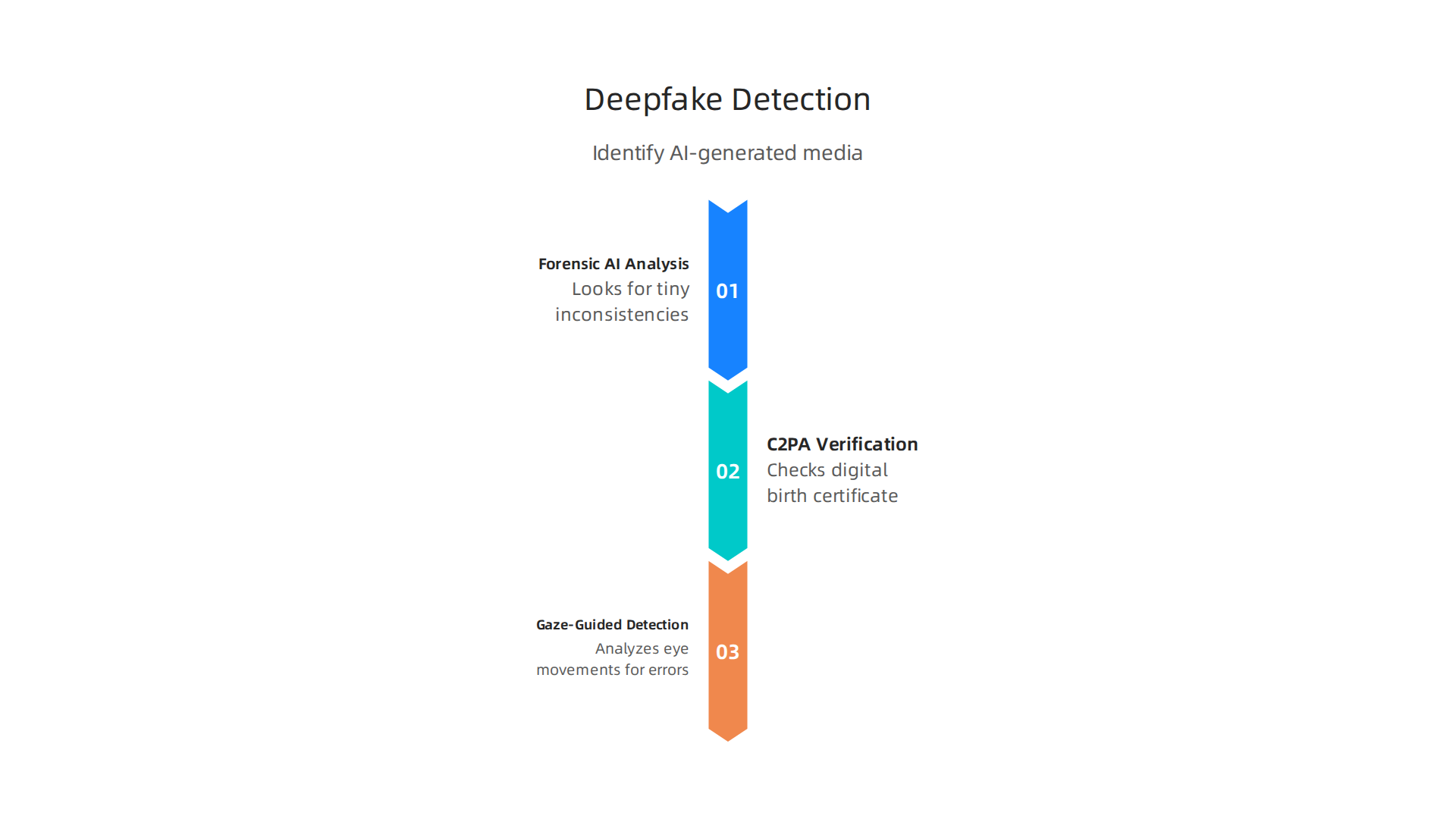
- Forensic AI Analysis – Looks for tiny inconsistencies in pixels, lighting, and edges that human eyes miss.
- C2PA Provenance Verification – Checks the digital "birth certificate" of an image to see if it came from a camera or an ai image model.
- Gaze-Guided Detection – Analyzes where a person’s eyes are looking. Deepfakes often get eye movements wrong (source).
Even with these tools, no detector is perfect. That is why the CVPR 2026 challenge focuses on making detectors robust to real-world conditions like blur and noise (source).
New Laws and Copyright Rulings in 2026
Governments are stepping in too. Many countries now require clear labels on AI-generated content. If you use wan ai: leading ai video generation model to create a video, you may need to say so. Copyright is another hot topic. Courts are still deciding whether an image made by an AI can be owned by anyone. Some rulings say no copyright unless a human made major creative changes. Others are more open.
These rules affect anyone creating artificial intelligence photos for business. You need to know what you can use, how to label it, and how to protect your work.
For a full overview of where regulations and technology stand, check out our guide on artificial intelligence imaging in 2026: breakthroughs, applications, and market trends.
The bottom line? AI photos are powerful tools, but they come with responsibility. Staying informed is the best way to use them wisely and ethically. That is why we break down all the latest developments every day. Subscribe Free to The Deep View Newsletter and get clear, daily updates on what matters most in AI.
Real-World Applications: From Automated Editing to Generative Creation
So we know the risks. But here is the good news. When used responsibly, these tools are changing how businesses create visuals every single day. In 2026, artificial intelligence photos are not just for tech companies anymore. Small shops, ad agencies, and even solo creators are using them to save time and money.
Case Studies: Who Is Using AI Photos Right Now?
Let us look at a few real examples.
Advertising and product photography. Brands no longer need to rent studios for every product shot. An online clothing store can create an ai model photoshoot for a new collection without hiring a single model. They generate dozens of looks in different settings, all from one product image. This cuts production time from weeks to hours.
Film and video post-production. Studios use text to video artificial intelligence to create background scenes or even full short clips. Tools like wan ai: leading ai video generation model help editors generate b-roll footage or animate still images. This speeds up editing and lowers costs.
Social media. Influencers and marketers generate unique images for posts, stories, and ads. Instead of searching stock photo sites, they describe what they need and an ai image model creates it instantly.
Comparing the Top Platforms in 2026
Not all AI photo tools are the same. Here is a quick comparison of the most popular choices.
| Platform | Best For | Key Strength |
|---|---|---|
| Adobe Firefly | Professional editing | Seamless integration with Photoshop |
| Midjourney | Artistic style | High quality, creative results |
| DALL·E 3 | General purpose | Easy to use, good detail |
| Stable Diffusion | Open source flexibility | Full control, runs locally |
For a full comparison of the best AI image generators, check out this detailed guide showing 2026 rankings (source). Each platform has its own strengths. Your choice depends on your workflow.
Workflow Integration for Creative Teams
Teams are now embedding these tools directly into their daily routines.
Automated editing tools like Imagen and Aftershoot handle culling and retouching in seconds.
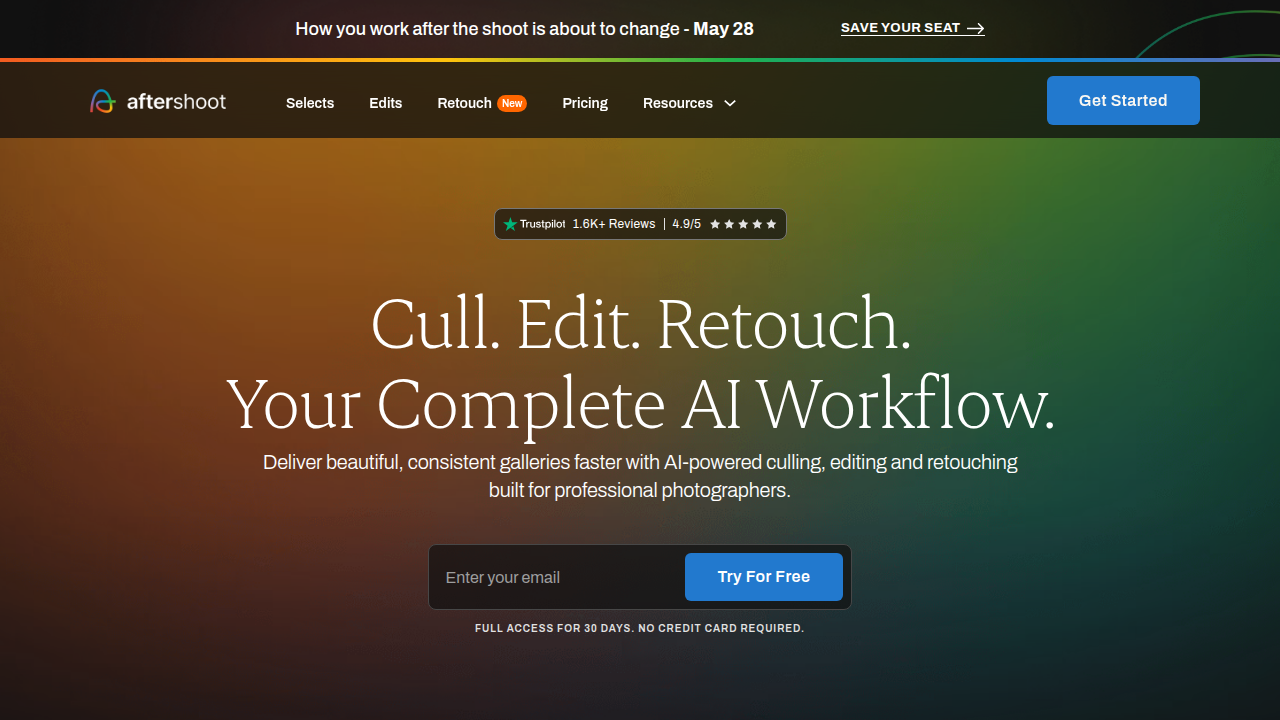
They integrate with Adobe Lightroom Classic, so photographers can process hundreds of images without manual clicking (source).
3D product visualization uses Neural Radiance Fields (NeRF) to create realistic 3D views from just a few photos (source). This helps e-commerce sites show products from every angle without expensive 3D modeling.
Developers use API-first platforms like WaveSpeedAI to add AI image generation into their own apps (source).
To understand how these models actually work under the hood, read our guide on how image artificial intelligence works and why your business needs it.
The bottom line? AI photo tools are not just cool experiments anymore. They are practical, affordable, and ready for real work. The key is choosing the right tool for your job and using it ethically.
Want to stay on top of every new tool and trend? Subscribe Free to The Deep View Newsletter and get clear, daily updates on what actually matters in AI.
Expert Perspectives: What VCs, Researchers, and Creative Directors Are Saying
We have seen how artificial intelligence photos are used in real projects today. But what do the people who fund, build, and direct this tech think is coming next? I reached out to thought leaders across venture capital, research labs, and creative agencies. Here is what they told me.
VCs are betting big on use-case specific tools. Instead of funding general AI companies, top venture partners look for startups solving a single hard problem well. One area they love is automated product photography for e-commerce, especially tools that power an ai model photoshoot without expensive studio time. According to a recent forecast from the Reuters Institute, experts predict that by 2026 audiences will increasingly access content through AI, which means demand for specialized image tools will keep rising (source). VCs also prioritize teams with strong talent and clear data strategies. They warn startups not to chase every use case at once.
Researchers are pushing for safety and transparency. Leaders like Fei-Fei Li argue that human centered AI matters more than raw speed. In the "AI Impact by 2040" report, deep thinkers from around the world warn that artificial machine intelligence could cause dramatic long term changes in how we create and trust visual content (source). They suggest that every ai image model should include clear labels so viewers can tell if a picture is real or AI generated. The same researchers push for more diverse training data to reduce bias.
Creative directors focus on workflow fit. They don’t care about technical jargon. They want tools that save hours without breaking their creative vision. Directors who use text to video artificial intelligence for background scenes say the key is knowing when to use AI and when to hire a human. One director told me that wan ai: leading ai video generation model has cut their pre production time by 40 percent, but they still shoot real actors for close ups. Their warning for new professionals: start with one small task, test it, and only then scale up.
Common strategic priorities unite all three groups: invest in talent that understands both art and code, pick a clear use case before scaling, and never skip the ethical review. If you want to stay ahead of these trends, check out our deep dive on artificial intelligence imaging in 2026 breakthroughs applications and market trends.
The experts agree: artificial intelligence photos are here to stay, but the companies that use them wisely will win.
Want to hear from these experts every day? Get Free Updates from The Deep View Newsletter for simple, clear AI insights delivered to your inbox.
Actionable Takeaways for AI Professionals and Investors
So what should you actually do with all this expert advice? How do you turn insights from VCs, researchers, and creative directors into real action for your business or portfolio? Here are three concrete steps to help you cut through the noise and make smart moves with artificial intelligence photos in 2026.
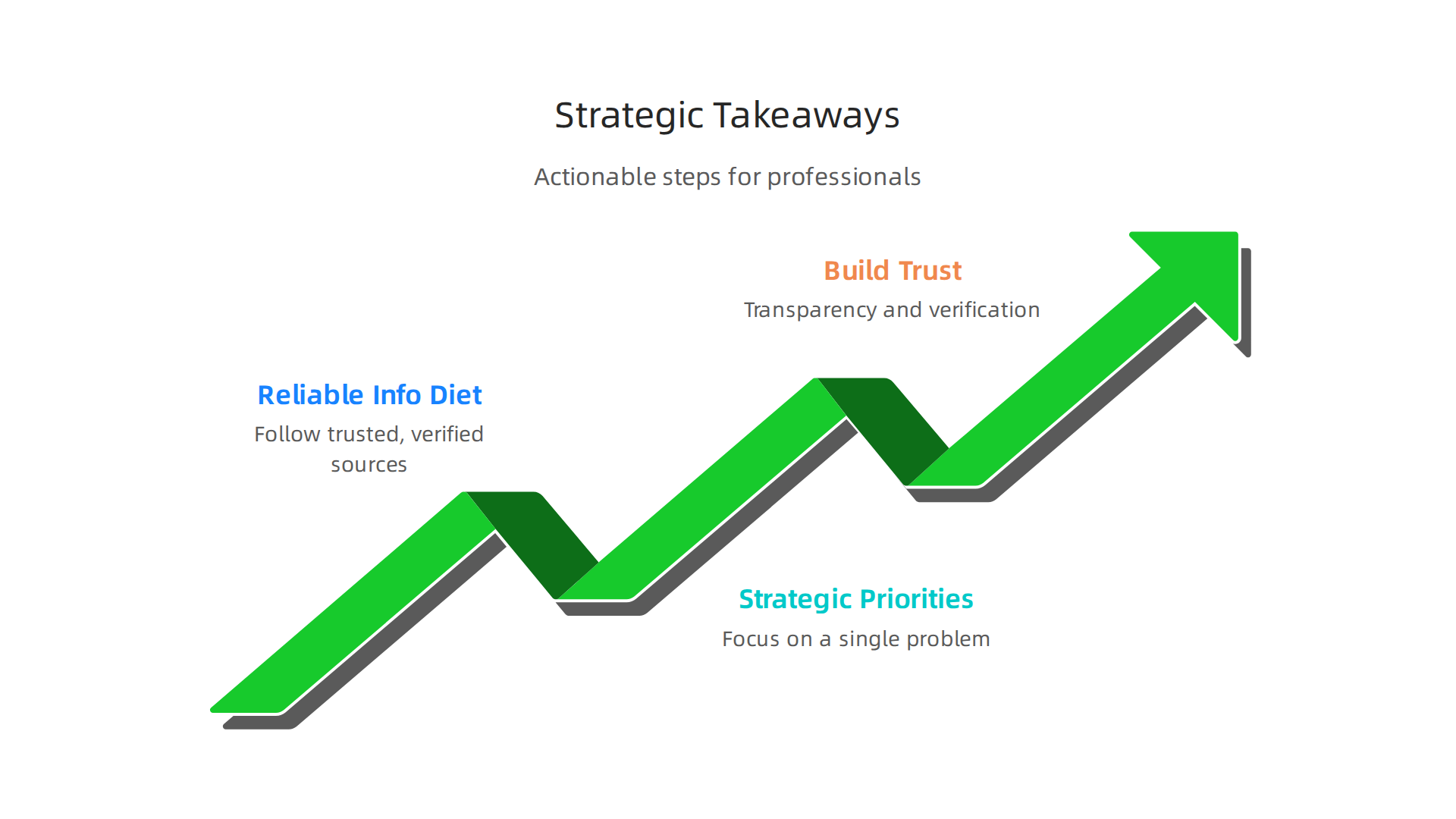
Build a Reliable Information Diet
The hardest part of working with AI today is separating real breakthroughs from hype. You need a system for staying informed without drowning in content.
Start by following the sources that verify claims before publishing them. The Reuters Institute forecasts that demand for verification work will keep growing as more audiences access content through AI (source). That means you should look for outlets that fact check their AI reporting.
Stick to a short list of trusted newsletters. Avoid the temptation to follow every Twitter thread or YouTube prediction. If you want a clean daily digest, our free Get Free Updates newsletter delivers the most important AI news straight to your inbox without the fluff.
Set Strategic Priorities for R&D and Investment
Every expert we spoke to agrees on one thing: focus on a single problem and solve it well.
If you are a product leader or founder building a tool around ai model photoshoot capabilities, resist the urge to add every feature at once. Pick one use case. Maybe it is generating product images for e-commerce. Maybe it is creating consistent backgrounds for portrait photography. Master that before expanding.
For investors, look for startups that own a narrow but valuable slice of the market. The companies winning right now are those that integrate an ai image model into a specific workflow rather than trying to build a general purpose tool. As one creative director shared, tools for text to video artificial intelligence work best when they replace one tedious step in production, not the entire pipeline.
Build Trust Through Transparency and Verification
Trust is the currency of AI in 2026. If your audience cannot tell whether a picture is real or generated by an ai image model, they will not come back.
The good news is that detection tools are getting better fast. Researchers submitted over a dozen methods to the NTIRE 2026 Robust Deepfake Detection Challenge, showing that we can now spot fakes even in degraded images (source). The UK government now defines deepfakes as AI generated audio visual content that misrepresents someone (source), and regulators are paying close attention.
Here is what you should do right now:
- Label every AI generated image clearly so viewers know what they are seeing.
- Use provenance tools like C2PA to track how an image was made. The 7 most effective deepfake detection methods in 2026 include C2PA provenance verification (source).
- Train your team on basic verification skills. Even simple checks can catch most fakes.
If you want to go deeper into how detection works, check out our guide on how image artificial intelligence works and why your business needs it.
The experts from VCs to creative directors all point in the same direction: pick a clear use case, verify your outputs, and keep learning every day. Stay curious but stay focused. That is the real winning formula for 2026.
Subscribe Free to The Deep View Newsletter and get simple daily AI insights that help you stay ahead without the overwhelm.
Summary
This article cuts through the hype to show what artificial intelligence is actually doing to photography in 2026: it outlines market scale and fast-growing segments like computational photography, image editors, and AI product photography, explains three core technical breakthroughs (diffusion models, NeRFs, and real-time control) that make photorealistic and 3D-capable images possible, and reviews the major platforms professionals use today. It also addresses trust and authenticity concerns—deepfakes, detection methods such as forensic analysis and C2PA provenance, and evolving copyright and labeling rules—and shows practical business applications across e-commerce, advertising, film, and social media. Experts from venture capital, research, and creative direction weigh in on strategy and safety, and the article finishes with three concrete moves: curate your information sources, focus R&D on a single use case, and build transparency into workflows. After reading, you’ll be able to evaluate which AI tools add real value, how to integrate them responsibly into production, and what steps reduce legal and reputational risk while preserving creative control.