
Introduction: The State of Entry-Level Data Science in 2026
So you want to break into data science. Good news and bad news. The good news is the field is still growing fast. According to recent data from the Bureau of Labor Statistics, employment for data scientists is expected to grow 34 percent through 2034. That is much faster than most other jobs. About 23,400 new openings pop up each year.
The bad news? Landing one of those entry level data science jobs looks very different than it did a few years ago.

Here is the thing. AI has changed everything. Routine data work that used to occupy junior team members is now handled by automated tools. Companies do not need someone to clean spreadsheets all day anymore. They need people who can ask the right questions, spot patterns, and turn messy data into smart decisions.
This shift means the old playbook does not work. Sending out hundreds of resumes with a basic certification will not get you far in 2026. Employers want candidates who understand both the technical side and the business side of data.
So what actually matters now? You need a mix of hands-on skills like working with real datasets, knowing your way around AI tools, and being able to explain your findings to people who are not data experts. You also need to understand the latest hiring trends and salary benchmarks.
For example, remote data analyst jobs are still out there, but they are more competitive than ever. That is why a structured learning path can make a real difference. If you want to build skills that actually get you hired, checking out the best online AI courses 2026 that actually prepare you for real jobs is a smart place to start.
The bottom line is this. Entry level data science jobs still exist. But you need to be strategic about how you pursue them. The rest of this guide will walk you through what has changed, what skills matter most, and how to stand out in a crowded market.
And if you want to stay ahead of the curve on AI trends that affect your career, the AI Newsletter Worth Reading delivers clear daily updates straight to your inbox.

The State of Entry-Level Data Science Jobs in 2026
So what does the job market actually look like right now? Let us break down the numbers.
The demand for data scientists is still climbing. According to the Occupational Outlook Handbook for data scientists, employment in this field is expected to grow 34 percent through 2034. That translates to roughly 23,400 new openings every year. On paper, those are great numbers for anyone hunting for entry level data science jobs.
But here is the reality check. The number of qualified applicants has grown even faster. Bootcamps, degree programs, and online courses have produced a wave of new graduates. At the same time, AI tools are handling the basic data work that junior employees used to do. So companies can afford to be much more selective about who they bring on board. A recent analysis of how to land a data job in 2026 confirms that employers now want candidates who can think strategically, not just crunch numbers.
Which industries are hiring the most? Healthcare, finance, and e-commerce are the big three.
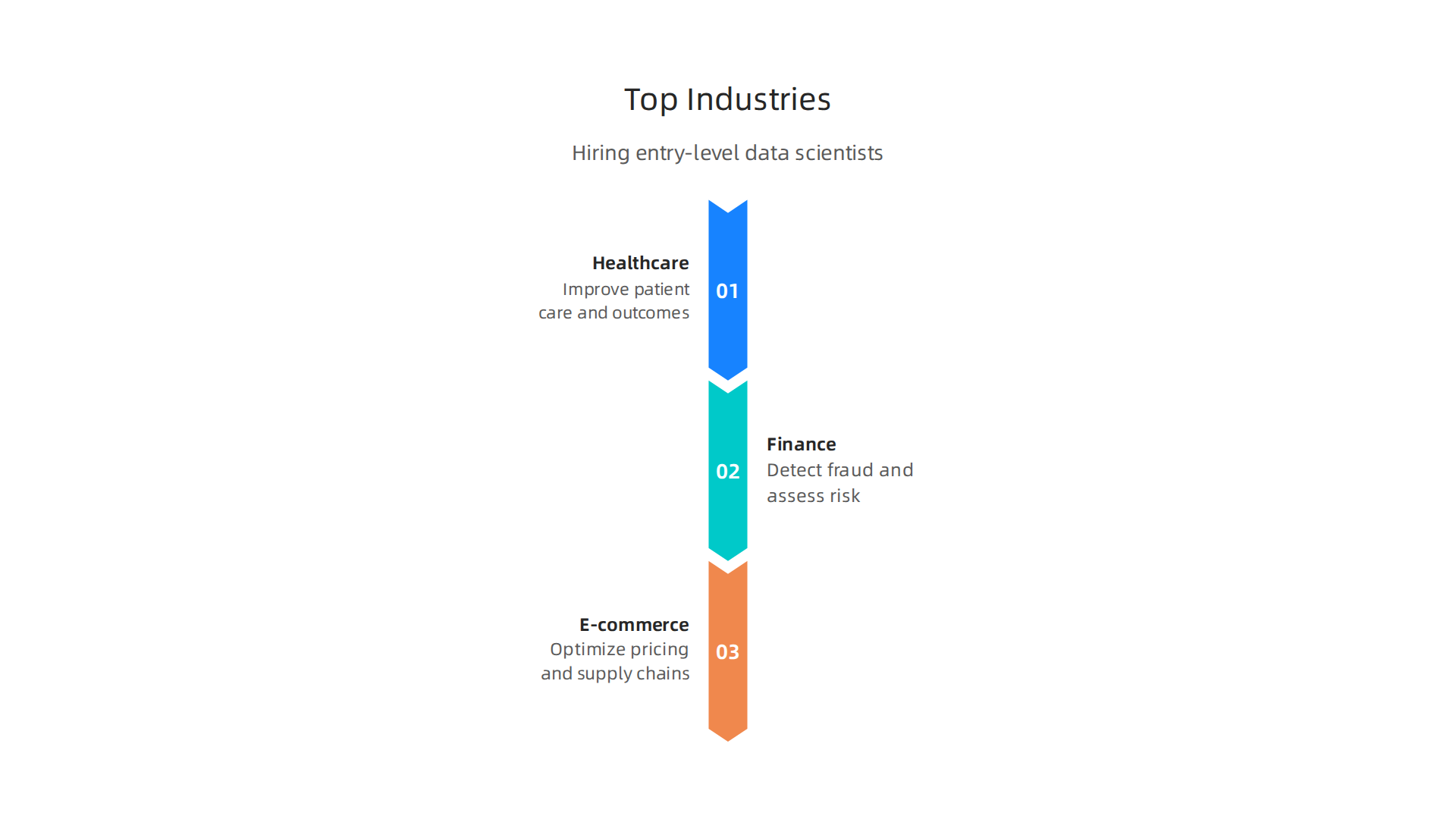
Hospitals and clinics need data scientists to improve patient care, predict health trends, and manage costs. Banks and investment firms use data to catch fraud, assess risk, and personalize services. Online retailers rely on data to set prices, manage supply chains, and predict what customers will buy next. If you are looking for entry level data science jobs, these three sectors should be at the top of your list.
Location is another factor that has shifted. Remote and hybrid work have opened doors that did not exist before. You no longer need to live in a tech hub to land a good role. Cities like Pittsburgh, St. Louis, and Hartford are seeing a rise in junior data science openings. The list of entry level data science job openings from ZipRecruiter shows that these cities are worth watching.
That said, remote roles come with their own challenge. When anyone in the country can apply, the applicant pool becomes much larger. Standing out requires more than just a basic certification. You need practical experience, strong communication skills, and the ability to work with AI tools confidently.
So where does that leave you? The market for entry level data science jobs in 2026 is full of opportunity, but only for people who are strategic about it. Target the right industries. Look beyond traditional tech cities. Build skills that actually match what employers need.
One way to get ahead is to understand where the field is heading. Checking out the latest AI data analytics 2026 trends can give you a clearer picture of what skills will matter most. And if you are still building your foundation, learning what is data analytics and how it applies to real business problems will set you on the right path.
Must-Have Skills for Entry-Level Data Scientists in 2026
So you know the job market is hot. But do you know exactly what skills you need to land one of those entry level data science jobs in 2026? Let us break it down.
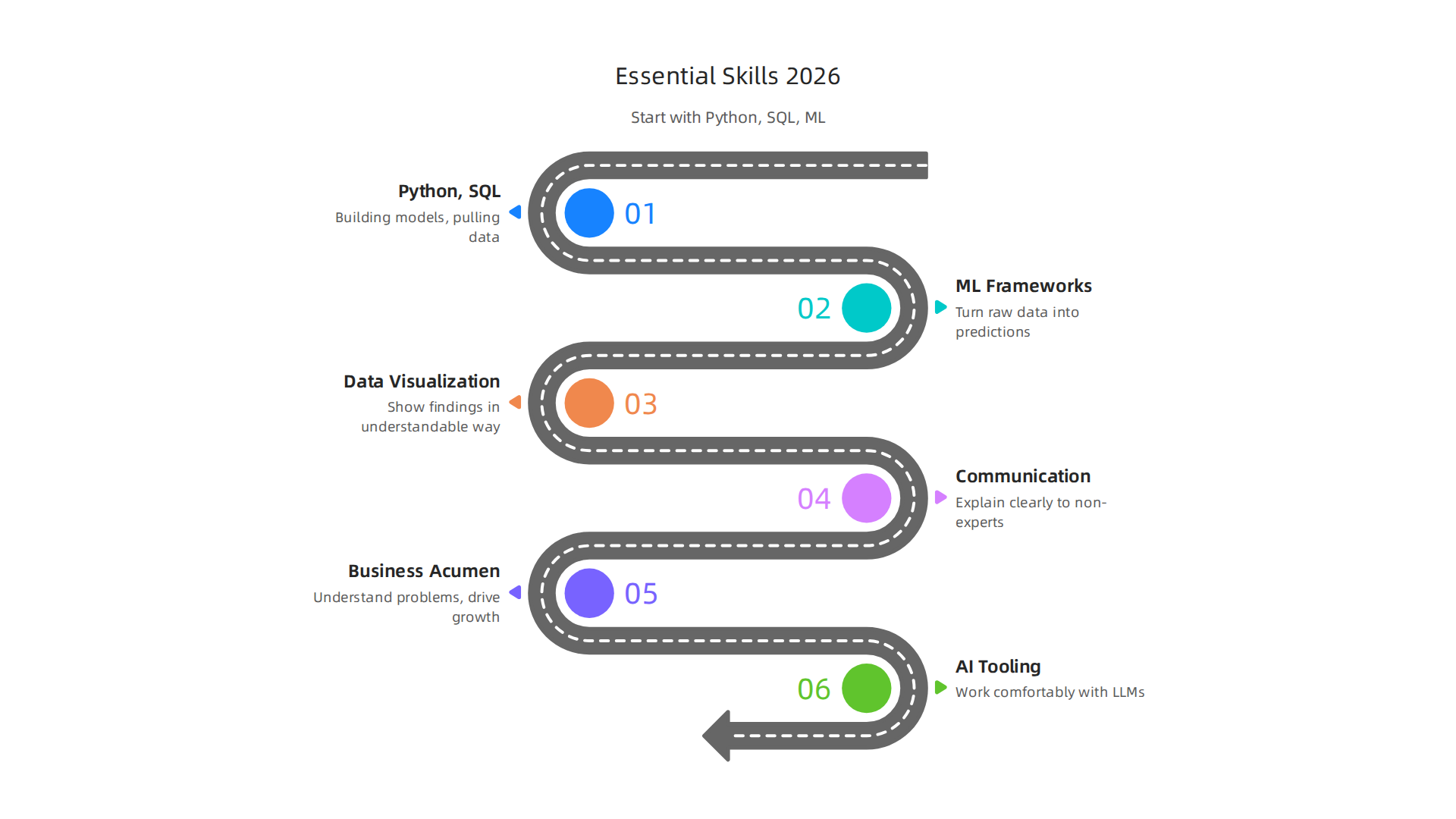
Every hiring manager expects the same core toolkit. You need Python for building models and automating tasks. SQL is non-negotiable for pulling and cleaning data from databases. Machine learning frameworks like scikit-learn or TensorFlow help you turn raw data into predictions. And data visualization tools like Tableau or Matplotlib let you show your findings in a way anyone can understand. Following the 2026 Data Skills Roadmap from Dataquest is a smart way to make sure you have these basics covered.
But here is the thing. Technical chops alone will not cut it anymore. Soft skills are becoming just as important. You need to communicate clearly with people who do not speak data. You need domain knowledge so you understand the business problem behind every analysis. And you need business acumen to explain how your work actually saves money or drives growth. Companies want data scientists who can think strategically, not just run code. If you want to build these skills the right way, learning practical machine learning for data science in 2026 is a great next step.
Now for the skill that separates the good candidates from the great ones. AI tooling proficiency. In 2026, employers expect you to work comfortably with large language models and other AI tools for data analysis. That means using tools like ChatGPT or Claude to write code faster, explore datasets, and generate insights. It is not about replacing your own thinking. It is about being more efficient and tying your work to real business impact. Programs like the Harvard Data Science Initiative have started emphasizing this blend of traditional skills and modern AI fluency.
The bottom line is simple. Focus on Python, SQL, ML, and visualization first. Add strong communication and business thinking on top. Then prove you can use AI tools to get results faster.
That combination is what landed the best entry level data science jobs this year.
And if you want to stay ahead of these changes, consider subscribing to The AI Newsletter Worth Reading. It delivers clear daily updates so you never fall behind on the tools that matter.
Education Pathways: Degrees, Bootcamps, and Self-Learning
So you have the skills mapped out. But how do you actually build them in the first place? And more importantly, which learning path gives you the best shot at landing a real job?
The old rule of "you need a master’s degree to work in data science" is fading fast in 2026.
A traditional master’s degree in data science still opens doors. Many companies recruit directly from well known graduate programs. Having that credential on your resume can help you get past early HR filters. Schools connected to top research initiatives carry real weight with hiring managers.
But here is what has changed. Employers today care way more about what you can do than where you studied. Look at actual job listings for data science entry level roles on Indeed and you will see a clear pattern. Most postings list specific skills and practical experience first. Education is listed as a nice to have rather than a must have.
That shift is huge for people who want to break in without a six figure degree.
Bootcamps and structured online programs have stepped up to fill the gap. A good bootcamp teaches Python, SQL, machine learning, and portfolio building in three to six months. The cost is usually a few thousand dollars rather than tens of thousands. And graduates who build strong project portfolios often land the same entry level data science jobs as master’s degree holders.
Self learning is also a real path in 2026. Free and low cost resources like YouTube, Coursera, and DataCamp let you learn at your own pace. The complete guide to becoming a data scientist from Zero To Mastery walks through exactly which skills to learn and in what order if you are going the self taught route. If you want a structured curriculum that connects directly to what hiring teams expect, exploring the best AI courses for 2026 that prepare you for real jobs is a smart next step.
So which path actually gives you the best return on investment? Let us break it down simply.
A master’s degree costs around 20,000 to 60,000 dollars and takes one to two years. Bootcamps cost 5,000 to 15,000 dollars and take three to six months. Self learning costs next to nothing but requires strong discipline and can take six months to a year.
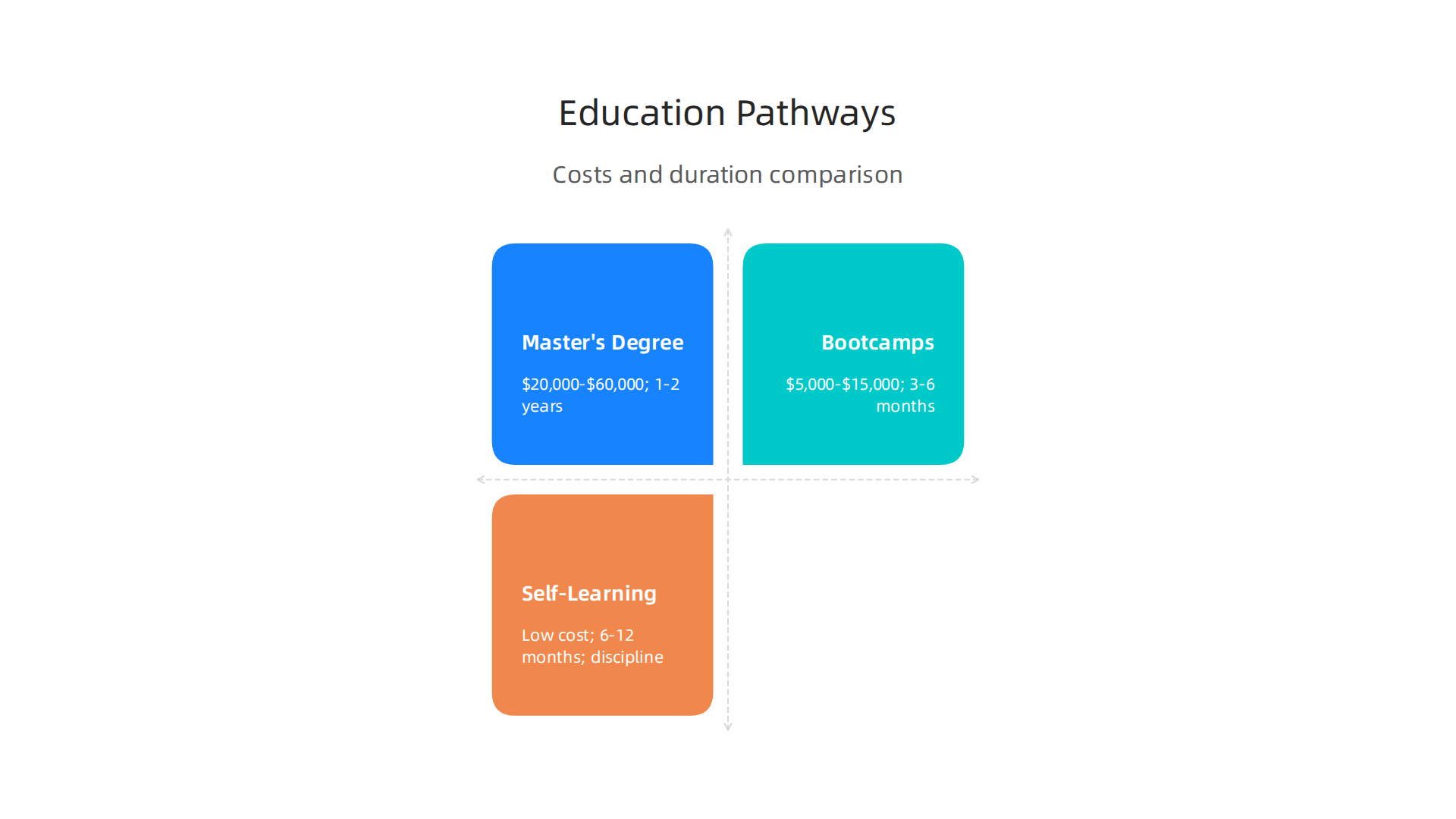
All three paths can work. The deciding factor every single time is your portfolio. Employers want to see real projects that prove you can clean messy data, build predictive models, and explain your findings. If you have a strong portfolio, the degree on your resume matters much less.
Think of it this way. A degree might open the door. But your projects are what walk you through it.
If you are still deciding which route to take, the latest data scientist job outlook for 2026 from 365 Data Science gives you a clear picture of what employers actually pay for each education level. That real world data can help you make a smarter choice about where to invest your time and money.
How AI and Automation Are Reshaping Data Science Hiring
Here is the honest truth about landing entry level data science jobs in 2026. The ground has shifted under your feet. And if you do not adjust your approach, you will struggle.
AI and automation tools are now handling the routine data tasks that junior data scientists used to do. Things like data cleaning, basic feature engineering, and simple model building. Companies like IBM and Accenture have already paused junior hiring in some areas. They let AI do what entry level staff used to do. The World Economic Forum reports that entry level work being reshaped by AI has caused a 35% drop in entry level jobs over the last 18 months.
That sounds scary. But here is what it really means.
The entry level work that remains has moved upward. Employers no longer want someone who can only clean spreadsheets. They want someone who can ask smart business questions, interpret results, and make strategic recommendations. Automation handles the boring stuff. Human judgment handles the important stuff.

This is backed up by research on the AI impact on data scientist roles from CareerSignal. It found that AI augmented specialists now earn 15 to 30 percent more than generalists. Companies are looking for fewer people who just run models and more people who can connect data to business outcomes.
At the same time, generative AI has created entirely new roles. The data on fastest growing AI roles in 2026 from HeroHunt shows positions like AI prompt engineer, model evaluator, and forward deployed engineer appearing on job boards in record numbers. These roles did not exist five years ago. Now they are some of the hottest tickets in the job market.
So what does this mean for you as someone chasing entry level data science jobs?
It means you cannot rely on technical skills alone. You need to develop the human side of data science. Critical thinking. Domain knowledge. Communication. The ability to frame problems and explain what the data actually means. The BCG report on AI reshaping more jobs than it replaces makes this clear. AI substitutes for some tasks but demand for human insight remains strong where judgment matters.
Focus your learning on areas where AI cannot replace you. Build projects that show you can take messy real world data, ask the right questions, and deliver actionable insights. That is the kind of portfolio that will stand out in 2026.
If you want to stay ahead of these shifts and understand which new roles are worth targeting, the generative AI jobs in 2026 guide breaks down the skills and hiring trends for this exact moment.
And if you want clear daily updates on how AI is reshaping the job market, The AI Newsletter Worth Reading delivers the signal without the noise.
Salary Benchmarks and What to Expect
So what can you actually earn in entry level data science jobs in 2026? The numbers might surprise you.
Entry level data scientist salaries in the US now range from about $95,000 to $152,000 per year.

That is a wide spread. And it depends heavily on where you live and which industry you target.
The higher end of that range comes from companies in tech hubs like New York and San Francisco. According to the Data Scientist Job Outlook 2026: Trends, Salaries, and Skills report, entry level positions now average $152,000 in those markets. That is up by $40,000 from just a year earlier.
On the lower end, smaller cities and non tech industries still offer solid starting pay. The Entry-Level Data Scientist Salaries: Industry Insights guide shows base salaries starting around $79,000 in some regions. But most new hires land somewhere in the middle.
Here is another factor worth knowing. Equity compensation is becoming more common for junior roles. Startups in particular are offering stock options or restricted stock units to entry level hires. This is a way for them to compete with bigger companies that can pay higher base salaries. Those equity grants can be worth an extra 10 to 30 percent of your salary if the company grows.
And here is the good news about growth. In your first few years, you can expect a salary increase of roughly 10 to 20 percent each year. That means someone starting at $100,000 could be earning $120,000 within twelve months. And after three years, that number can jump to $145,000 or more.
The key is getting that first role. Once you have real world experience on your resume, companies will compete for your skills. The Data Scientist Salary in 2026: Real Data from 1.9 Million Job Postings analysis confirms that median pay for all data scientists sits at $185,000 right now. That is the number you are working toward.
If you want to build a career path that leads to these salaries, understanding the fundamentals is essential. Take a look at this practical guide on mastering practical machine learning for data science to strengthen the technical side employers actually pay for.
Your future salary depends on the choices you make today. And the market is clearly rewarding those who invest in the right skills.
Top Locations and Remote Opportunities for Junior Data Scientists
Location matters a lot when you start your search for entry level data science jobs. Where you live can change your salary by tens of thousands of dollars. And in 2026, you have more options than ever thanks to remote work.
The classic tech hubs still lead the pack. San Francisco and New York are home to the highest paying roles. According to the Best Cities for Tech Jobs: Data Science Career Guide 2026, average data scientist salaries in San Francisco hit around $180,000. In New York, that number sits near $160,000. If you can live there or commute, those are the top markets.
But here is the thing. Only about 5 percent of data science jobs are fully remote, according to the same report. That number surprises a lot of people. You might think remote is everywhere, but many companies still want you in the office a few days a week.
That does not mean you are stuck with the big cities. Secondary markets are rising fast. Cities like Pittsburgh, Saint Louis, and Hartford now have growing data science scenes. They offer lower costs of living, which means your paycheck goes further. A salary of $100,000 in Pittsburgh feels like $150,000 in San Francisco when you factor in rent and groceries.
Remote data analyst jobs and junior data scientist roles are still out there. You just need to know where to look. Some companies hire remote workers from anywhere in the US. And a few even hire internationally for the right talent. That opens up opportunities for US based candidates who want to work for global teams without relocating.
If you are willing to move, check out cities like Raleigh-Durham, Seattle, and Washington D.C. Those places have strong job markets and reasonable costs. Austin and Denver are also growing fast.
The best strategy is to apply broadly. Do not limit yourself to one city. And consider a hybrid setup where you live in a lower cost area but work for a company based in a high paying hub.
Building the right skills helps you stand out no matter where you apply. For a deeper look at what it takes, read this guide on how to succeed as a data analyst in 2026. The principles apply to data science roles too.
The data science AI field changes fast, so staying informed is key. The AI Newsletter Worth Reading delivers daily updates on AI breakthroughs, job trends, and market shifts straight to your inbox. It is a simple way to keep your finger on the pulse while you build your career.
Pick a location that matches your lifestyle and your goals. The right place can make all the difference in your first data science role.
Mapping Your Career Path: From Entry-Level to Senior Leadership
Getting your first entry level data science jobs is a huge milestone. But it is really just the starting line. The field offers a clear ladder you can climb over time. Knowing what comes next helps you make smart choices from day one.
Most data scientists follow a path that looks like this. You start as a junior data scientist. After a year or two, you move into a data scientist role. From there, you can become a senior data scientist. The next steps are lead or manager roles. And eventually, you might reach director or chief data officer.
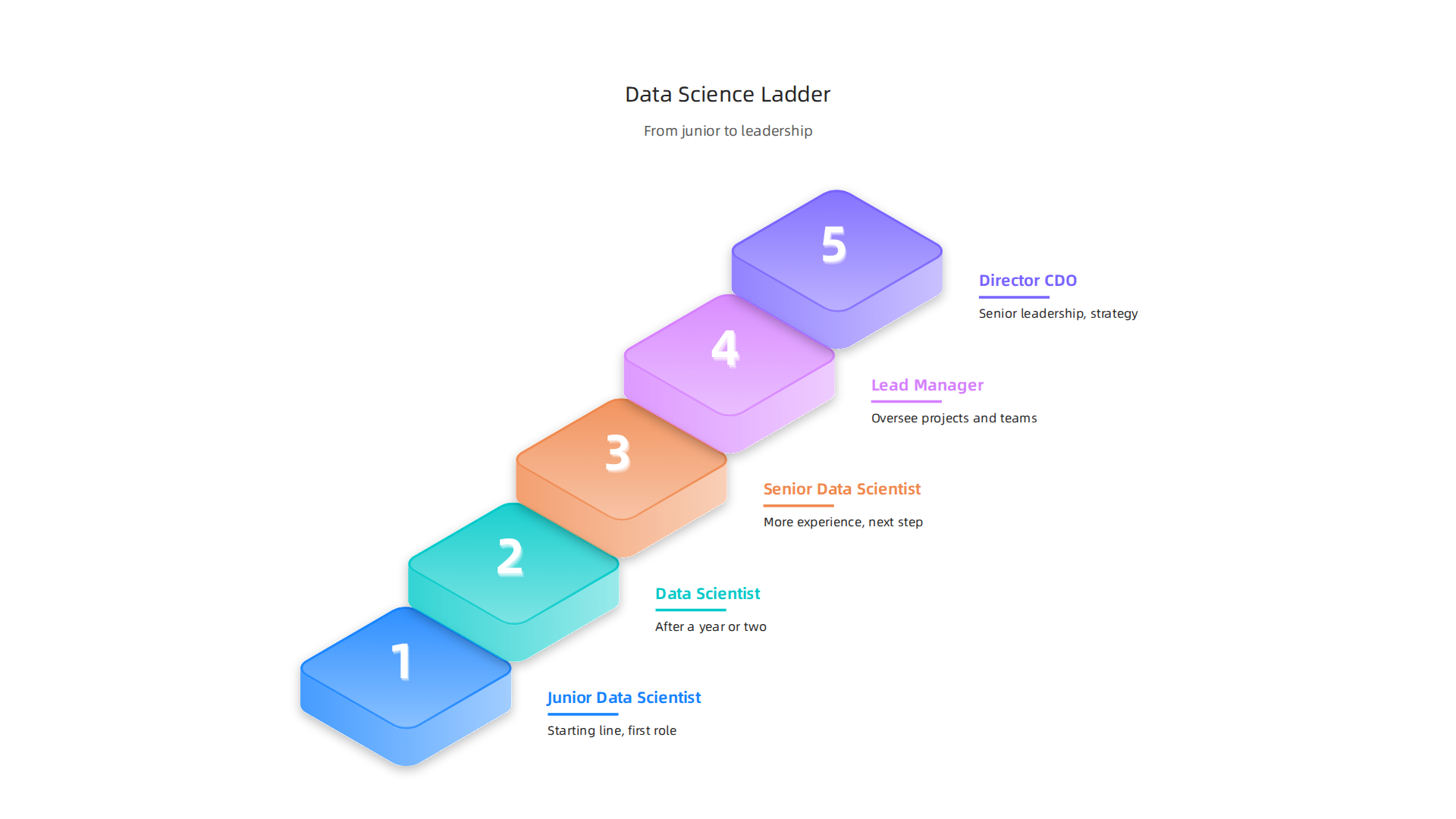
According to the data science career factsheet for 2026, the number of open roles keeps growing across all levels. That means opportunities exist at every stage of your career.
Here is the good news. You do not have to stay on one straight path. Many professionals pivot into specialized roles along the way. Moving into machine learning engineering or data engineering is very common. These roles often pay more and focus on different kinds of problems. The most in-demand data science career paths in 2026 include AI engineering and data architecture. Both offer strong salaries and high demand.
So how do you speed up your growth? Three things matter most.
First, build your network. Talk to people in roles you want next. Attend meetups. Join online communities. Knowing the right people opens doors that applications alone cannot.
Second, earn certifications that prove your skills. A structured course can fill gaps in your knowledge. Check out this guide on the best AI course in 2026 to find a program that fits your schedule and budget.
Third, share what you learn. Write blog posts. Give a talk at a local event. Post about projects on LinkedIn. When you put your ideas out there, people notice. That kind of thought leadership gets you noticed by hiring managers and recruiters.
The timeline varies for everyone. Some people hit senior level in three years. Others take five or six. The key is to keep learning and stay curious. The data science AI field changes fast. What worked last year might not work next year.
Your first job is just the beginning. Plan your next move now and you will build a career that grows with you.
Summary
This guide explains how the entry-level data science job market has changed in 2026 and what you must do to win an interview and land a role. It shows that while demand remains strong, AI and automation have removed routine junior tasks, shifting employer focus to candidates who combine Python, SQL, ML, visualization, AI-tool fluency, and business communication. The article compares education options—master’s degrees, bootcamps, and self-learning—so you can choose the fastest, most cost-effective route and emphasizes that a strong project portfolio beats credentials alone. You’ll learn which industries and cities hire most, realistic salary ranges and growth expectations, and how to position yourself for remote or hybrid roles. Practical advice covers which skills to prioritize, how to use generative AI productively, and how to accelerate promotion into senior and specialized roles. Read this to build a targeted plan for learning, portfolio projects, and job search tactics that match what employers actually pay for in 2026.