
Why specialized AI agent and ML courses matter now
The world of artificial intelligence is moving very, very fast. It seems like every day there are new breakthroughs, especially with things called AI agents. These smart computer programs can do tasks on their own, making them super useful for businesses. But this rapid change also means that people who work with technology need to constantly update their skills. It’s a big challenge to keep up, and many professionals feel like they are falling behind.

That’s why specialized courses, like a Google AI Agents Intensive Course, are so important in 2026.
They offer a way for people to learn new skills quickly. We want to help you understand if these types of training are the right fit for you. This guide will give you a clear way to look at courses such as the Google AI agent intensive course and other similar offerings. It’s for people who make big choices about technology and business. You want to make smart moves, and choosing the best AI course in 2026 can make a huge difference.
In this article, you will learn about what these courses teach. We will look at how they deliver lessons, like if they are online or in person. We’ll also talk about if they are worth the time and money you put into them, which is called ROI. You’ll find out how these courses can help you get a job or move up in your career. Finally, we’ll give you a simple list to help you pick the right AI and ML course for your needs.
Keeping up with AI news can be tough. For clear, daily updates, consider subscribing:
The AI Newsletter Worth Reading
What a Google AI Agents Intensive Course typically includes
So, you’re thinking about taking a specialized AI course, maybe even a Google AI Agents Intensive Course. It’s smart to know what you’ll learn and what you’ll need to know beforehand. These kinds of training programs are designed to give you strong skills in a fast-changing area. They often cover key parts of how AI agents work, how they use large language models (LLMs), and how they learn.
Core topics and what you’ll learn
A good AI and ML course focused on AI agents will usually break down into a few main parts.
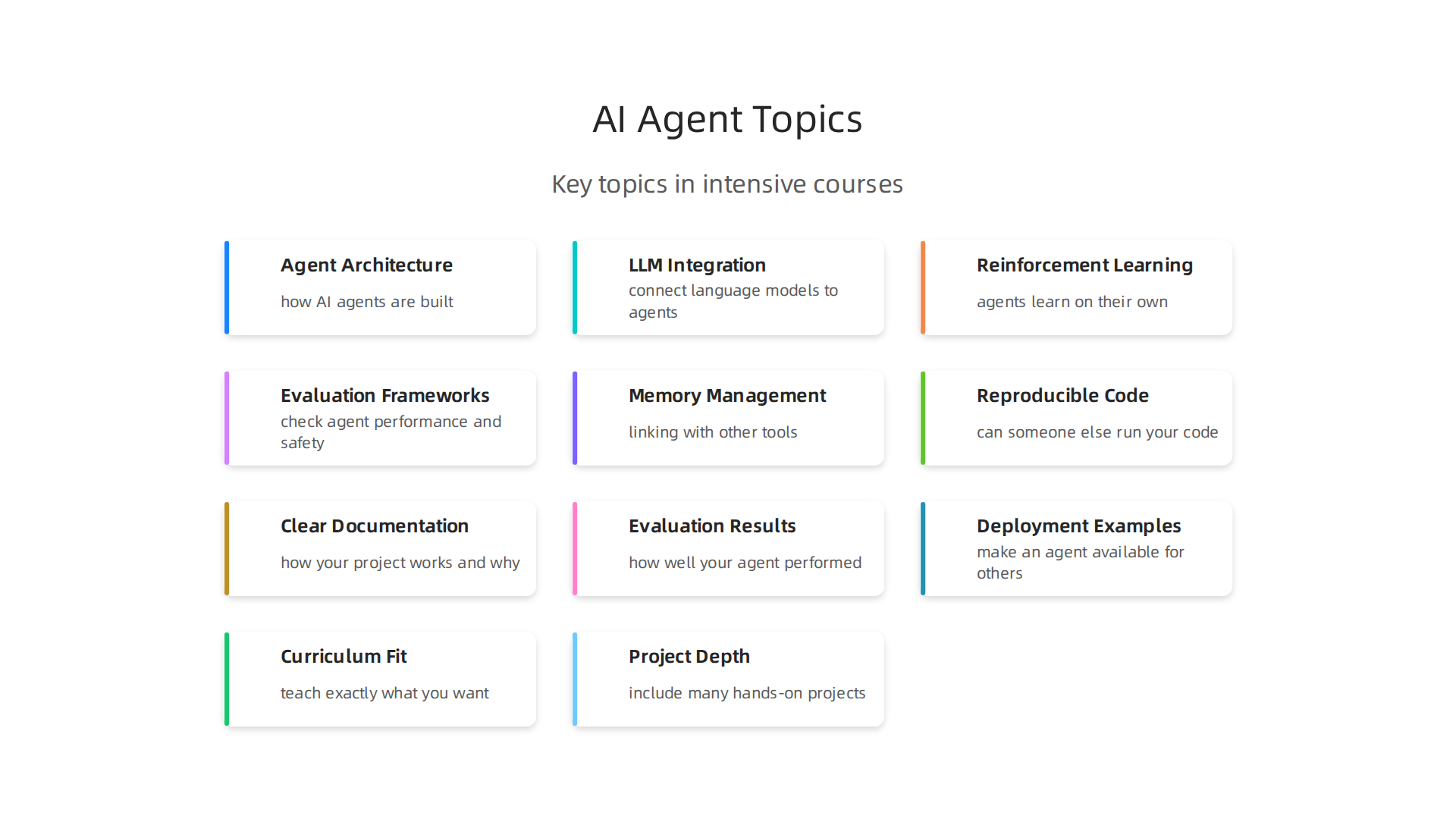
You’ll likely start by learning about agent architecture. This means understanding how AI agents are built and how their different parts talk to each other to get things done. Many courses in 2026 teach about how agents use LLMs, which are like the agent’s brain for understanding and making language. You’ll learn how to connect these powerful language models to agents so they can perform tasks.
Courses also often cover how agents learn and get better at their jobs. This might include ideas like reinforcement learning, where agents learn by trying things and getting rewards or corrections. You’ll also learn how to check if an agent is working well, using special methods called evaluation frameworks. For example, some courses teach how to use advanced reasoning patterns like Chain-of-Thought to build better agents, as seen in many 2026 course syllabuses Agentic AI in Engineering: NIAT 2026 Course Syllabus and Stream …. A broad overview of what AI agent courses cover also includes things like memory management and linking with other tools The 5 Best AI Agents Courses & Bootcamps to Learn ….
Who can take these courses and how they work
These intensive courses aren’t usually for total beginners. You’ll often need to know some basics about coding, especially Python, and have a good grasp of how computers work. Some courses might ask that you understand simple machine learning ideas already. An Agentic AI Roadmap: Complete Learning Path for 2026 shows that a good learning path often starts with AI fundamentals before diving into agents. The main goal is for you to be able to design, build, and test your own AI agents. This can really help you unlock your AI potential choosing the right learning AI course.
The way these courses are taught also matters. Look for ones that offer:
- Live labs: This means you get to practice coding and building agents in real time.
- Capstone projects: These are bigger projects where you use everything you’ve learned to build something complex.
- Code reviews: Experts look at your code and give you tips to make it better.
- Different tests: These help show that you really understand the material.
For instance, an applied agentic AI course might be eight weeks long and include live webinars with instructors Applied Agentic AI for Organizational Transformation.
These hands-on parts are really important for becoming good at working with AI agents.
Picking the right AI and ML course means looking closely at the specific technical parts it teaches. A strong ai course will break down the complex world of AI agents into understandable modules.
These parts are important because they give you the skills needed to build AI agents that actually work in the real world in 2026.
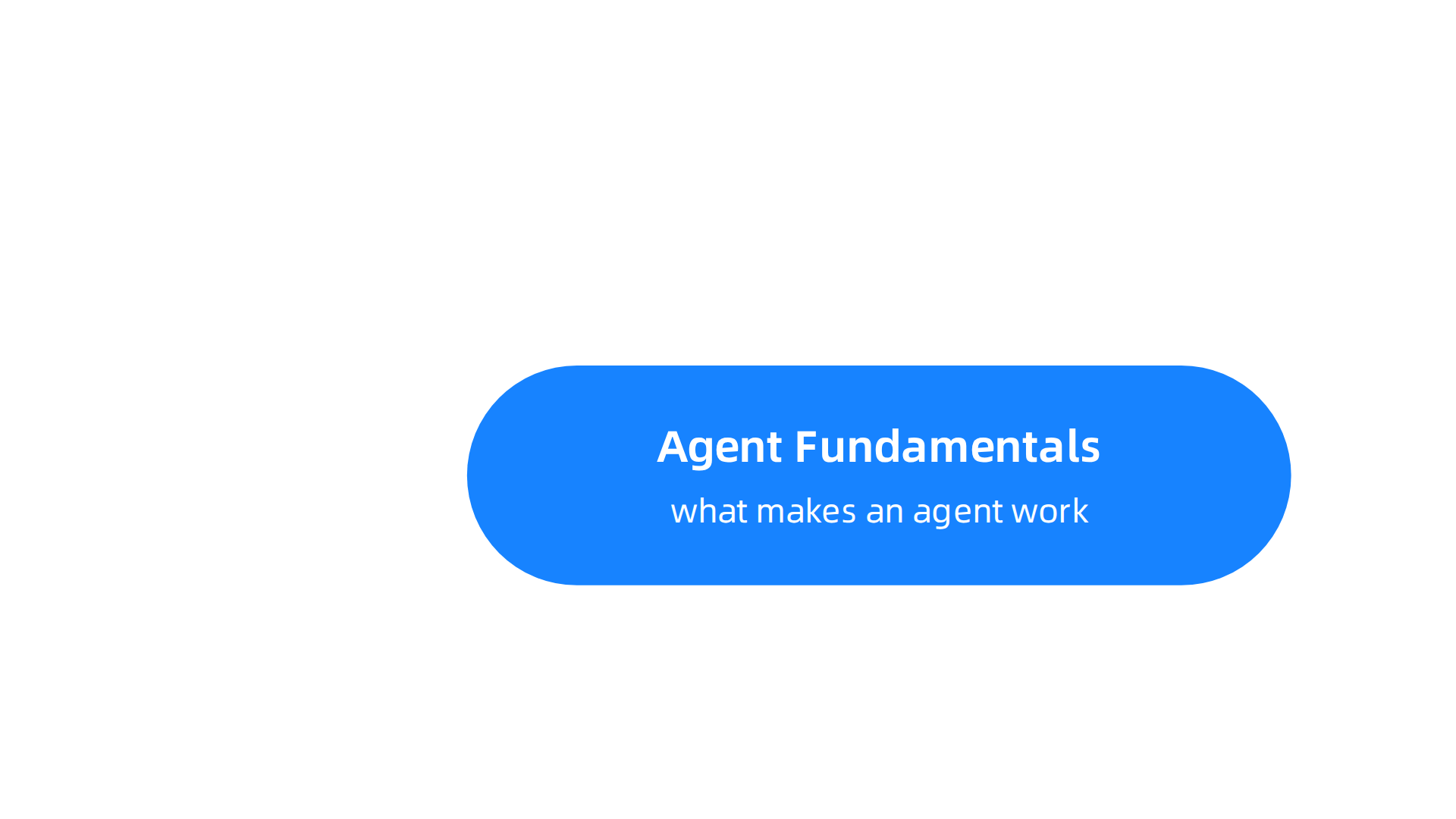
Deep Dive into Agent Fundamentals
First, a good google ai agents intensive course or any top ai course will cover the basics of agent systems. You’ll learn what makes an AI agent an agent, like how it senses things, thinks, and acts. This foundational knowledge is key. You’ll often practice by designing simple agents that can complete tasks. The goal is to understand the building blocks so you can create more complex systems later.
LLM Integration and Advanced Reasoning
Next up is learning how to connect AI agents with large language models, or LLMs. These are the powerful brains that help agents understand and create language. In a quality ai and ml course, you’ll learn important techniques like Retrieval-Augmented Generation (RAG). RAG helps agents look up information from a big knowledge base to give smarter answers, which is a big part of many AI certifications today, like the IBM RAG and Agentic AI Professional Certificate.
You will also learn how agents can use different tools to do more than just talk, like scheduling meetings or writing reports. Your projects might include building an agent that uses an LLM to chat with users and then completes a task based on that conversation.
Learning Through Experience: Reinforcement Learning
Many top ai course programs will also teach about reinforcement learning (RL). This is how AI agents learn on their own by trying different actions and getting feedback. Think of it like teaching a dog tricks with rewards. For AI agents, good actions get positive feedback, helping them learn the best ways to solve problems over time. Understanding RL is crucial for making agents that can adapt and improve without constant human input. Practical labs in an intensive course might involve setting up a small environment and training an agent to navigate it successfully.
Ensuring Quality: Evaluation and Safety
A vital part of any google ai agent intensive course is learning how to check if your agents are working well and safely. This module focuses on "evaluation frameworks." You’ll learn how to measure an agent’s performance, find its mistakes, and make sure it doesn’t do anything harmful or biased. In 2026, AI safety and ethics are more important than ever. Programs often include modules on AI safety education to ensure agents interact responsibly and securely, as highlighted in curriculums like the TAISE Compass: AI Safety Education Curriculum for Secondary Students. You might work on projects where you have to test an agent thoroughly and report on its safety measures.
Mastery in these areas is often shown through hands-on coding projects, where you build, test, and improve your own AI agents. Code reviews and presentations of your work also help show that you truly understand the material and can apply it. If you’re looking for the best AI course to help you stay ahead, understanding these core modules is key. To keep up with all the fast changes in AI, it helps to have daily updates.
Get clear daily AI updates from The AI Newsletter Worth Reading.
Mastery in these areas is often shown through hands-on coding projects, where you build, test, and improve your own AI agents. Code reviews and presentations of your work also help show that you truly understand the material and can apply it. If you’re looking for the best AI course to help you stay ahead, understanding these core modules is key. To keep up with all the fast changes in AI, it helps to have daily updates.
Hands-on labs, projects, and portfolios: what demonstrates real skill
Beyond just learning the ideas, showing what you can do with AI agents is what truly matters. A great google ai agents intensive course will push you to create real projects. These projects are your chance to prove you have real skills.
What kind of projects show real skill?
The best ai and ml course programs help you build projects that are ready for the real world. Think about making:
- Multi-agent systems: These are like a team of AI agents working together to solve a bigger problem. For example, one agent could gather information, another could analyze it, and a third could write a report. This shows you can manage complex AI setups.
- Evaluation pipelines: This means you set up a way to automatically check if your AI agent is doing a good job. It’s about being sure your agent works well every time.
- Deployment demos: This is when you show how your AI agent can be used by others, perhaps through a simple website or app. This proves you can make an agent that people can actually use.
These types of projects show that you’re not just playing with AI, but you can build something useful. In 2026, employers want to see projects that solve real problems and can be put into action. Many companies even track their students’ success on LinkedIn to show how these skills lead to new jobs and better pay, as noted by some of the top AI courses for job opportunities in 2026.
How to make your projects shine
When you work on projects in an ai course, think about how to make them stand out.
- Mentorship quality: Did your teachers or mentors give you good feedback that helped you make your project better? Good guidance is a sign of a strong program.
- Reusability: Can parts of your project be used again in other projects? This shows smart planning.
- Complexity: Does your project tackle a challenging problem? This helps prove your skills.
- Showcase your work: Keep a good record of your projects. A public online space like GitHub is very important in 2026 for showing your AI agent abilities. It’s often called an AI agents portfolio.
What employers look for in your portfolio
Your portfolio is your main way to show off your skills for AI jobs in 2026.
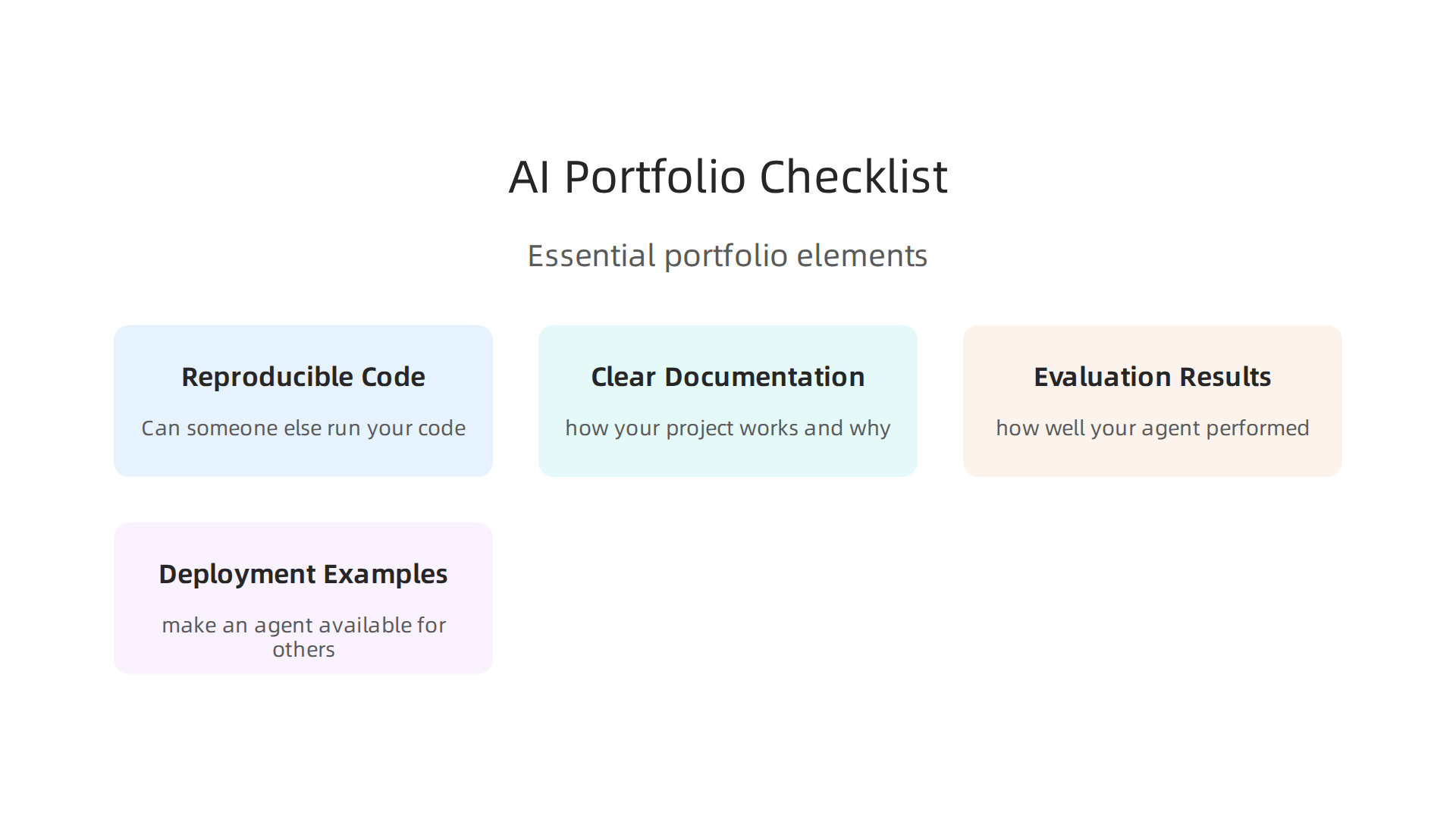
Employers want to see certain things:
- Reproducible code: Can someone else run your code and get the same results? This means your code is clean and works well.
- Clear documentation: Did you write down how your project works and why you made certain choices? This shows you can explain complex ideas simply.
- Evaluation results: Can you show how well your agent performed, perhaps with numbers or charts? This proves your agent is effective.
- Deployment examples: Proof that you can make an agent available for others to use.
Actually, having a solid portfolio can make a big difference in landing a job. It’s how you prove you can work with AI agents in a valuable way, as discussed in guides on AI Workflow Portfolio: How to Prove You Can Work With AI Agents. Many experts suggest building at least three strong projects that cover things like large language models and autonomous agents to show you can build production-ready projects. If you’re looking for the best course for ai, make sure it helps you build these kinds of projects and guides you in creating a strong portfolio. It’s key for careers in this fast-growing field. To learn more about the specific skills and portfolios employers seek, you can check out resources on AI jobs in 2026 and how to get hired.
Beyond building an impressive portfolio, many people wonder about official papers like certificates. These papers, or credentials, show that you’ve learned certain things. But it’s good to know the different kinds and what they really mean for your career in AI.
Different types of AI certificates
In 2026, you’ll see a few main types of AI certificates:
- Vendor-issued certificates: These come from big tech companies like Google. For example, the Google AI Professional Certificate is made to help people get AI skills. The Google and Kaggle 5-Day AI Agents Intensive Course also offers a certificate of completion and a badge, as noted in the Google AI Agents Capstone 2026 overview. These show you’ve learned specific tools or methods from that company.
- University credits: These are part of bigger degree programs from colleges. They often cost more and take longer.
- Informal certificates: These come from private schools or online platforms. They can be good, but their value really depends on the school’s reputation and how well they teach.
What employers actually look for
Here’s the thing: while certificates can be helpful, employers in 2026 care most about what you can do. They want to see:
- Real skills: Can you actually build and run AI agents?
- Demonstrable project work: Your portfolio, full of hands-on projects, is super important.
- Signals of success: This means showing how you think and solve problems.
A certificate from a strong program, like a google ai agents intensive course or a good ai and ml course, can get your foot in the door. It shows you’re serious and have a basic level of understanding. For example, many companies in the Google Career Certificates Employer Consortium are ready to look at graduates for jobs. However, a certificate alone won’t get you hired if you can’t show practical skills. The top AI certifications worth getting in 2026 often correlate with higher pay because they are backed by real skill development.
Many experts agree that a strong ai course should prepare you for what employers truly value. This means focusing on hands-on work and building a portfolio, not just collecting certificates. If you are trying to find the best course for ai, remember that what you learn and how you apply it matters most. For more tips on choosing a program that aligns with what employers want, explore resources on how to identify the best course on AI in 2026.
How to check claims about job outcomes
Some courses might promise high job placement rates or big salary jumps. If you see these claims, it’s smart to ask for proof. Good programs should be able to show real data, like where past students work or how much their salaries increased. For example, Google states that over 70% of their career certificate graduates see positive career changes, which can include a new job, promotion, or salary increase, according to a Google AI Professional Certificate guide.
Look for clear facts, not just big words. A good way to check is to see if they track their former students or have stories with actual names and roles. This helps you know if an ai course is truly worth your time and money. Staying updated with the latest trends can also help you judge a program’s relevance.
To ensure you’re always informed about the fast-moving world of AI, there’s a valuable resource available. The AI Newsletter Worth Reading offers daily updates, helping you separate the hype from real breakthroughs.
When you’re a busy professional, time is super important. Picking an ai course means thinking about how much time you have and what kind of learning works best for you. It’s about finding the right fit, not just the fanciest program.
Different Learning Formats and Their Time Needs
In 2026, you’ll find a few main ways to learn AI, each with its own time commitment:
- Immersive Bootcamps: These are like a quick, deep dive into AI. They usually run full-time, often for 8 to 16 weeks. Programs like a
google ai agents intensive coursecan be very fast-paced. They are good if you can take time off work or are between jobs. But they demand a lot of your time every day, like a full-time job. - Modular Part-Time Tracks: These programs let you learn while you keep working. They stretch out over a longer time, often 6 to 12 months. You might have classes a few evenings a week or on weekends. This format is great for senior engineers or executives who need to balance their jobs with learning new skills. Many part-time AI bootcamps ask for about 15-20 hours of study each week to keep up with the work.
- Self-Paced Micro-Credentials: These are the most flexible. You learn at your own speed through online lessons and projects. They can be shorter, taking 4 weeks to a few months, depending on how much you study each day. This option is good if your schedule changes a lot, but it needs a lot of self-discipline to stay on track.

According to experts, a complete AI training program can take anywhere from 4 weeks to 12 months. It really depends on how deep the course goes and if you’re studying part-time or full-time. For instance, full-time programs can be 12 to 24 weeks long, while part-time ones might go up to 9 months, as shared in a guide about how long it takes to complete an AI training program.
Scheduling for Busy Professionals
For working professionals, especially those in leadership roles, picking an ai and ml course needs careful planning. Here are some things to think about:
- Cohort Timing: Some programs have set start dates and group classes (cohorts). This can be good for staying motivated with others, but it means you must be free at specific times.
- Asynchronous Work: Many courses offer lessons you can do any time. This asynchronous style is much easier to fit around a busy work schedule. You can learn when it suits you best.
- Mentorship Hours: Look for programs that offer flexible one-on-one time with teachers or mentors. This personalized help can be very important for deeper learning and getting answers to your specific questions.
Actually, one of the biggest challenges is simply protecting your study time. Some studies show that only a small number of people finish online courses because life gets in the way. You have to treat your learning time like any other important meeting on your calendar.
How to Estimate Your True Time-to-Skill
When choosing the best course for ai, it’s not just about how long the course lasts. It’s about how long it takes for you to truly gain the skills you need. This is called "time-to-skill."
- Be Realistic: Think about your current work and family duties. Can you really set aside 15-20 hours a week for a part-time
ai course? - Practice, Practice, Practice: Remember, the actual learning happens when you practice. So, you need to budget time not just for lessons, but for hands-on projects and problem-solving.
- Integrate Learning: Try to find ways to use what you’re learning right away in your job. This makes the learning stick better and helps you see its value.
Choosing the right ai course or bootcamp means looking at the format and how it fits into your busy life. It’s a trade-off between speed, flexibility, and the amount of work you can realistically put in. To make sure you’re always picking the right learning path and staying informed about the latest developments, it’s helpful to have up-to-date information.
Get clear daily AI updates that fit into your busy schedule with The AI Newsletter Worth Reading.
After thinking about how much time you need for an ai course, the next big thing to consider is money. It’s not just about the sticker price of a program, but also other costs and what you get back from your investment.
Costs, ROI, scholarships, and employer sponsorship
When you pick an ai course, especially a full-on ai and ml course, you need to look at all the costs. This means more than just the tuition fee.
- Direct Costs: This is the money you pay for the course itself. It can be a few hundred dollars for a small online certificate or many thousands for a long bootcamp. For example, some specialized Google AI certifications can cost around $99 for an exam, but many learning paths are free to start. Knowing the actual fees helps you plan your budget.
- Opportunity Costs: This is the money you might lose by taking time off work or reducing your work hours to study. If you join a
google ai agents intensive course, you might need to use vacation days or work less. This "lost income" is a real cost. - Study Materials: Sometimes, you need to buy books, software, or special tools. These extra items add to your total cost.
The good news is that there are often free options available. For instance, the Google & Kaggle’s Free AI Agents Course: June 2026 Guide explains how to access free intensive training from big names. You can also explore options to find the best free AI courses to master your skills in 2026.
Getting Your Money’s Worth: Return on Investment (ROI)
ROI, or Return on Investment, means what you get back for the money and time you put in. For an ai course, this can look like a better job, higher pay, or being able to do more at your current company.
- Speed to Impact: How quickly can you use your new AI skills at work? If you learn fast and apply it right away, your company sees value sooner. This can lead to promotions or new projects.
- Career Growth: Getting an AI certification can show employers you’re serious. Programs like the Google AI Professional Certificate: Complete 2026 Guide can lead to positive career changes for many graduates.
- Direct Value: Can your new skills help your company make more money or save money? Maybe you develop a new AI tool or improve an existing process. Getting a badge or certificate for a project, like from the Google AI Agents Capstone 2026, helps showcase your practical skills.
Funding Your AI Learning
There are several ways to pay for your best course for ai without breaking the bank.
- Scholarships: Many schools and tech companies offer money to help people pay for AI courses. These scholarships can cover part or all of the costs.
- Employer Sponsorship: A lot of companies, especially those that want their staff to learn new tech skills, will pay for their employees’ training. This is often part of their Learning & Development (L&D) budget. If your job can benefit from AI skills, ask your boss if they can cover the cost.
- Cohort-Based Sponsorship: Some programs work with companies to offer special deals for groups of employees. This means your company might get a discount if several people from your team join an
ai coursetogether.
After thinking about how much time you need for an AI course, and then how much money it will cost, the next important step is to carefully look at all the different course providers. You want to make sure you pick the best course for ai that truly fits your goals.
Comparing Providers: Evaluation Checklist and Decision Framework
Choosing an ai course or an ai and ml course can feel like a big task. There are so many options out there in 2026. To help you, here’s a simple checklist to compare different programs, including a google ai agents intensive course, and decide which one is right for you.
A Step-by-Step Checklist for Choosing an AI Course
When you look at different AI programs, think about these points:
- Curriculum Fit: Does the course teach exactly what you want to learn? For instance, if you aim to work with AI agents, does the program focus on building, using, and managing these agents? Make sure the topics match your needs.
- Instructor Experience: Who will be teaching you? Look for instructors who have real-world experience working with AI. They should know how to apply AI in actual jobs, not just teach from books.
- Project Depth: The best way to learn AI is by doing. Does the course include many hands-on projects? For a
google ai agents intensive course, this means building real AI agents. A strong portfolio of projects is key to showing what you can do. In fact, in 2026, showcasing your work through projects on platforms like GitHub is a very important way to prove your skills in agent engineering, according to some experts AI Agents Portfolio: 5 Projects That Get You Hired. - Assessment Rigor: How will your learning be checked? Are there tough assignments or capstone projects that really test your understanding? This helps ensure you truly learn the skills.
- Post-Course Support: What kind of help does the course offer after you finish? Do they help with job searches, provide career advice, or connect you with a community of past students? This support can be very helpful for your career.
To learn more about finding the right fit, check out our guide on how to identify the best course on AI in 2026.
How to Weigh Factors for Your Role and Needs
The importance of each checklist item can change based on who you are and what you need.
- For Founders, Product Leaders, and Investors: You might care most about how AI can help your business grow or save money. You’ll want to see courses that focus on strategy, business applications, and the overall value of AI, rather than just deep coding. Understanding AI strategy for executives is key.
- For Engineers and Developers: You’ll focus more on technical skills, hands-on coding, and building practical projects. You need a course that goes deep into the tools and methods used to create AI solutions.
- For Organizational Needs: If a company is training a team, they might look for custom programs, group discounts, or courses that tackle specific problems their business faces.
Red Flags and Claims to Verify
Be careful of courses that make promises that sound too good to be true. Here are some red flags:
- Over-the-top Job Guarantees: While a good
ai coursecan boost your career, no course can truly guarantee you a job. Always check what past students actually achieved. You can look up alumni on sites like LinkedIn to see their career paths after the course. Some companies even suggest checking LinkedIn to confirm student outcomes Top 10 Best AI Courses for Job Opportunities in 2026. - Vague Course Content: If a course doesn’t clearly list what it will teach or what projects you will work on, it might not be well-planned.
- Lack of Practical Work: For any
ai course, especially anai and ml courseor agoogle ai agents intensive course, hands-on practice is vital. If a program is mostly lectures with no real projects, it might not prepare you for real jobs.
Staying informed helps you make the best choices.
Get clear daily AI updates from The AI Newsletter Worth Reading.
Summary
Specialized AI agent and ML courses are critical in 2026 because agents and LLM-driven systems are reshaping how businesses automate work and deliver value. This article explains what top intensive programs teach—from agent architecture, LLM integration, RAG and reinforcement learning to evaluation, safety, and deployment—and who they’re for (usually people with basic Python and ML knowledge). It covers learning formats (full-time bootcamps, part-time tracks, self-paced micro-credentials), realistic time-to-skill estimates, and the hands-on projects that employers want to see. The guide also breaks down costs, opportunity costs, scholarships and employer sponsorships, and explains how to judge ROI and job-outcome claims. Finally, you get a practical checklist for comparing providers, spotting red flags, and choosing the course that fits your role and schedule so you can build a job-ready portfolio and apply agent skills in production.