

Introduction
Artificial intelligence is moving faster than most of us can keep up with. Every week there is a new model, a new funding round, or a new claim about what AI can do. For anyone trying to make sense of this space, it can feel overwhelming.

Here is the thing: understanding the landscape matters. Whether you are building a product, investing capital, or just trying to stay informed, knowing who the key players are and how they stack up helps you make smarter decisions.
The numbers are huge. In 2026 the global AI market reached $514.5 billion, up 19% from the year before. North America holds the largest regional share at about 35.5%. And generative AI alone hit $91.57 billion, growing 45% in a single year. Those are not just stats. They tell you where the money is flowing and which companies are winning.
Some names you already know. Tech companies like Google, Microsoft, and Amazon are spending hundreds of billions on AI infrastructure. Sundar Pichai has made artificial intelligence technology the centerpiece of Google’s strategy. But the field is also full of specialized players. You have Canary Technologies working on AI for hospitality, Voyager Technologies pushing into defense and space, and TTM Technologies providing hardware components that power AI systems.
Then there are the disruptors. OpenAI closed a record $122 billion funding round at an $852 billion valuation in early 2026. Anthropic raised $30 billion. xAI secured $20 billion. Together, AI startups captured 80% of global venture funding in the first quarter of 2026. That is an incredible concentration of capital and attention.
This article gives you a clear, data-driven look at the top companies driving AI in 2026. We cover the giants, the challengers, and the emerging trends that will shape the next few years. If you want to go deeper on which platforms are best for business needs, check out our guide to the top AI platforms for business growth.
Staying informed in this space is a full-time job. That is why we recommend a resource that does the heavy lifting for you. The AI Newsletter Worth Reading delivers clear daily updates straight to your inbox. Subscribe to The Deep View Newsletter and never miss a breakthrough that matters.

The AI Landscape in 2026: Key Players and Trends
So who is actually making this AI revolution happen? If you zoom out, the picture splits into two groups. On one side you have the mega-cap technology companies. Think Google, Microsoft, Amazon, and Meta. On the other side you have a fast-growing crowd of specialized startups that focus on one industry at a time.
The big guys are spending like never before. In 2026, the four largest tech firms plan to invest around $725 billion combined on AI infrastructure. That number comes from a Statista chart tracking capital expenditure. Most of that money goes to data centers, custom chips, and networking gear. It is a bet that AI will reshape every part of how we work and live.
At the same time, the cloud wars are entering a new phase. Amazon Web Services, Google Cloud, and Microsoft Azure are no longer just renting out computing power. They are building vertically integrated stacks that include their own chips, models, and developer tools. If you want to pick the right cloud for your business, you are really choosing which "nervous system" your company will run on. You can see how this plays out in our detailed article on Palantir’s AI impact on government and business.
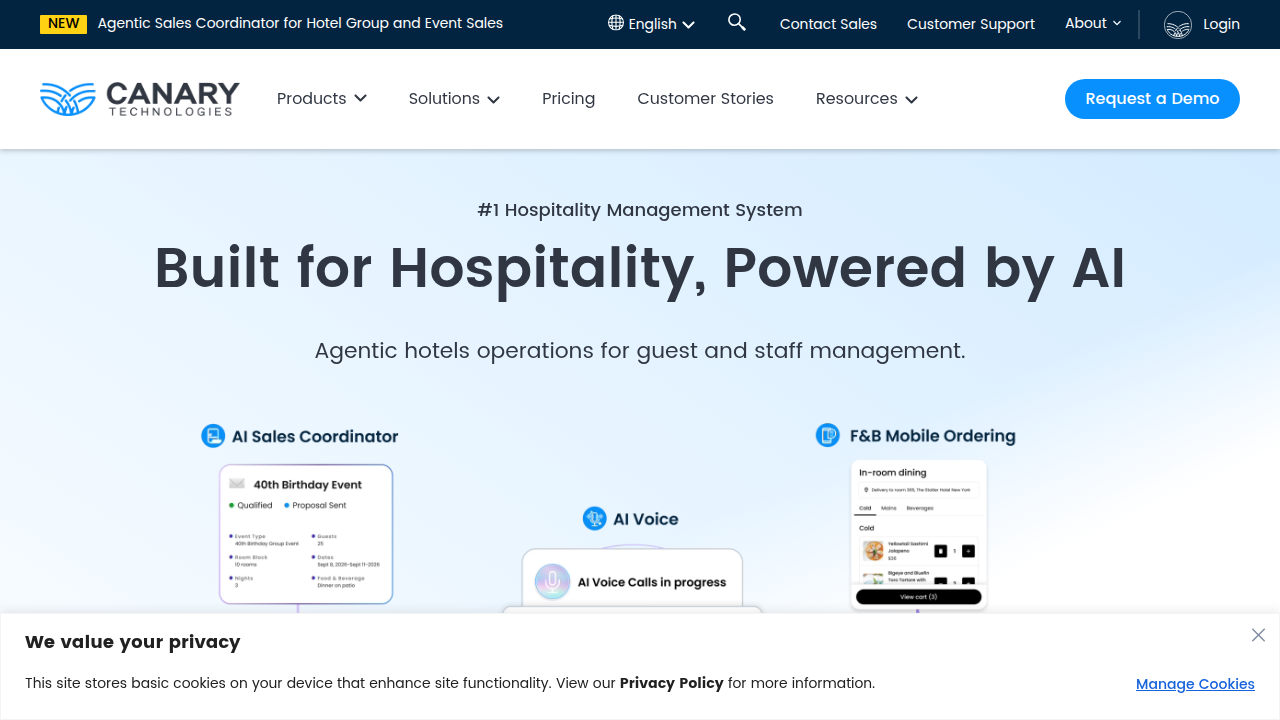
Then there are the specialized players that fly under the radar. Canary Technologies builds AI tools specifically for the hospitality industry, helping hotels automate guest communication and operations.
Voyager Technologies focuses on defense and space, using AI for satellite imaging and autonomous systems. TTM Technologies is a hardware company that manufactures circuit boards and components that power AI systems behind the scenes. These companies may not grab headlines, but they are essential pieces of the ecosystem.
Key trends driving 2026 include generative AI moving from novelty to real business tool, on-device AI that runs locally on phones and laptops, and AI-powered software-as-a-service that makes everyday tools smarter.

The generative AI market alone grew 45% last year, hitting $91.57 billion. And the U.S. AI market is expected to grow from $201 billion in 2026 to nearly $976 billion by 2035, according to Precedence Research.
Sundar Pajal (typo? Should be Sundar Pichai) has made artificial intelligence technology the core of Google’s strategy. He is betting that AI will redefine search, cloud, and advertising. Meanwhile, startups like Anthropic and xAI are pulling in billions in funding to compete with the giants.
The bottom line is simple. The AI landscape in 2026 is not just about a few winners. It is a mix of massive infrastructure plays and sharp, focused niche builders. Understanding both sides helps you make better decisions, whether you are investing, building products, or just trying to keep up.
How Tech Giants Are Embedding AI into Products
All that spending on infrastructure and models is only half the story. The real question is: How are these big tech companies actually putting AI into the things you use every day? The answer in 2026 is everywhere.
Take Google first. Sundar Pichai made artificial intelligence technology the core of Google’s strategy, and you see it in search, Gmail, Docs, and Maps. Gemini now lives inside Workspace, helping you draft emails, summarize documents, and generate slides.
Google Cloud is embedding Gemini into BigQuery and its data tools so businesses can analyze data with natural language instead of SQL queries. The company is also using generative AI to automate ad creation and targeting, as explained in a detailed look at AI in advertising for Meta, Google, Amazon, and Microsoft. That integration is already driving revenue. Google Cloud’s GenAI products grew nearly 800% year over year in Q1 2026.
Microsoft is taking a similar but distinct approach. Copilot is the face of AI across Microsoft 365, appearing inside Word, Excel, Teams, and Outlook.
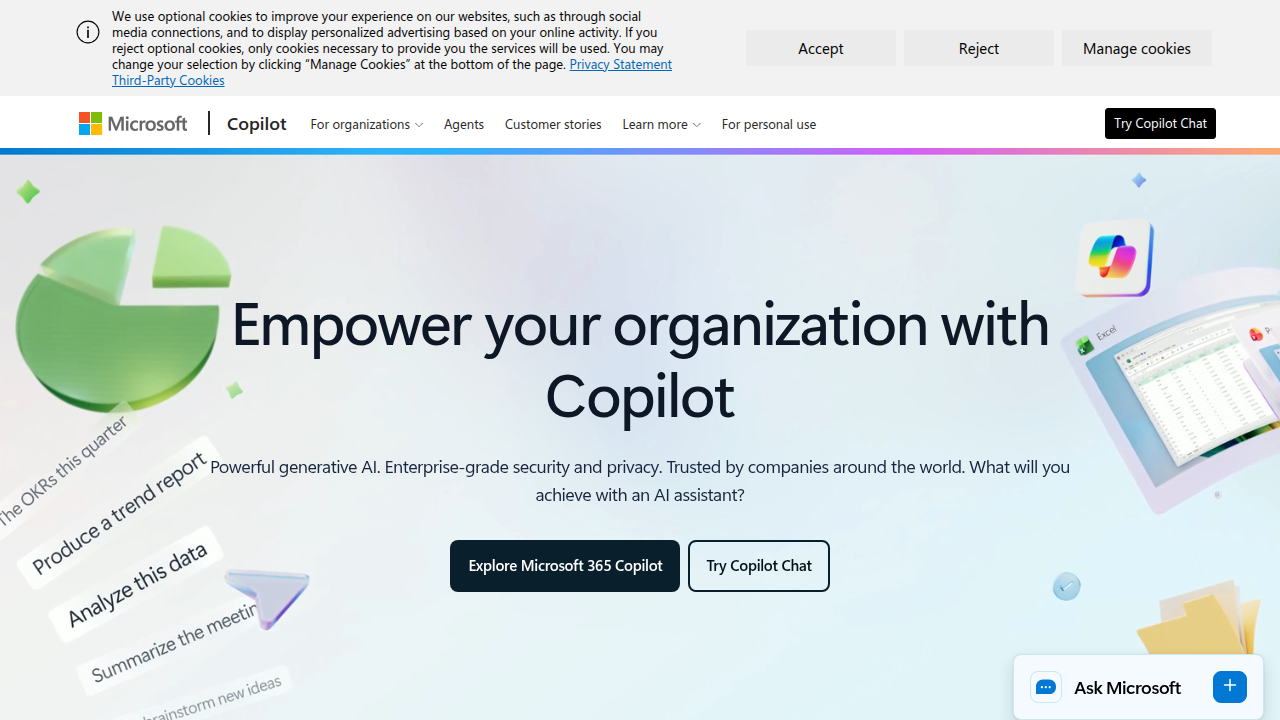
It summarizes meetings, drafts code in GitHub, and generates reports from your data. The bigger play is Azure’s Copilot architecture, which connects AI to the work surface where millions of employees already live. As one analysis of the AWS vs Google vs Microsoft enterprise nervous system notes, Microsoft wants AI to enrich the context of your daily tools. Bing also got a major AI overhaul, with an AI chatbot that answers questions and even inserts ads into responses, a new monetization model that could reshape search advertising.
Meta is embedding AI into its social platforms and advertising engine. The company built LLaMA, its own large language model, but unlike OpenAI or Anthropic, Meta is using it vertically. LLaMA powers content recommendation on Facebook and Instagram, helps creators edit videos, and drives ad targeting. Meta’s huge investment in custom silicon (ASICs co-designed with Broadcom) lets it run a trillion-parameter model with sub-second latency. According to the Q1 2026 earnings breakdown for Amazon, Google, Microsoft, and Meta, Meta’s AI is deliberately focused on shopping, social, and content discovery rather than being a general-purpose AI. This vertical integration is paying off in margins and engagement.
The shift from experimental AI to production-grade systems is clearly accelerating. These companies are no longer showing off demos. They are shipping AI features that millions of people rely on every day. For business leaders trying to keep up, the challenge is choosing which ecosystem to bet on. If you want to explore which tools actually deliver a productivity boost, check out our guide on best AI tools for businesses that deliver a real productivity advantage in 2026.
The pace of change is only going to speed up. To stay ahead of the latest product launches and strategic moves from these giants, you need a steady stream of clear, daily updates. That is why we recommend The AI Newsletter Worth Reading. It cuts through the noise and gives you actionable insights on how AI is reshaping products across every industry.
Comparing AI Strategies: The Big Five
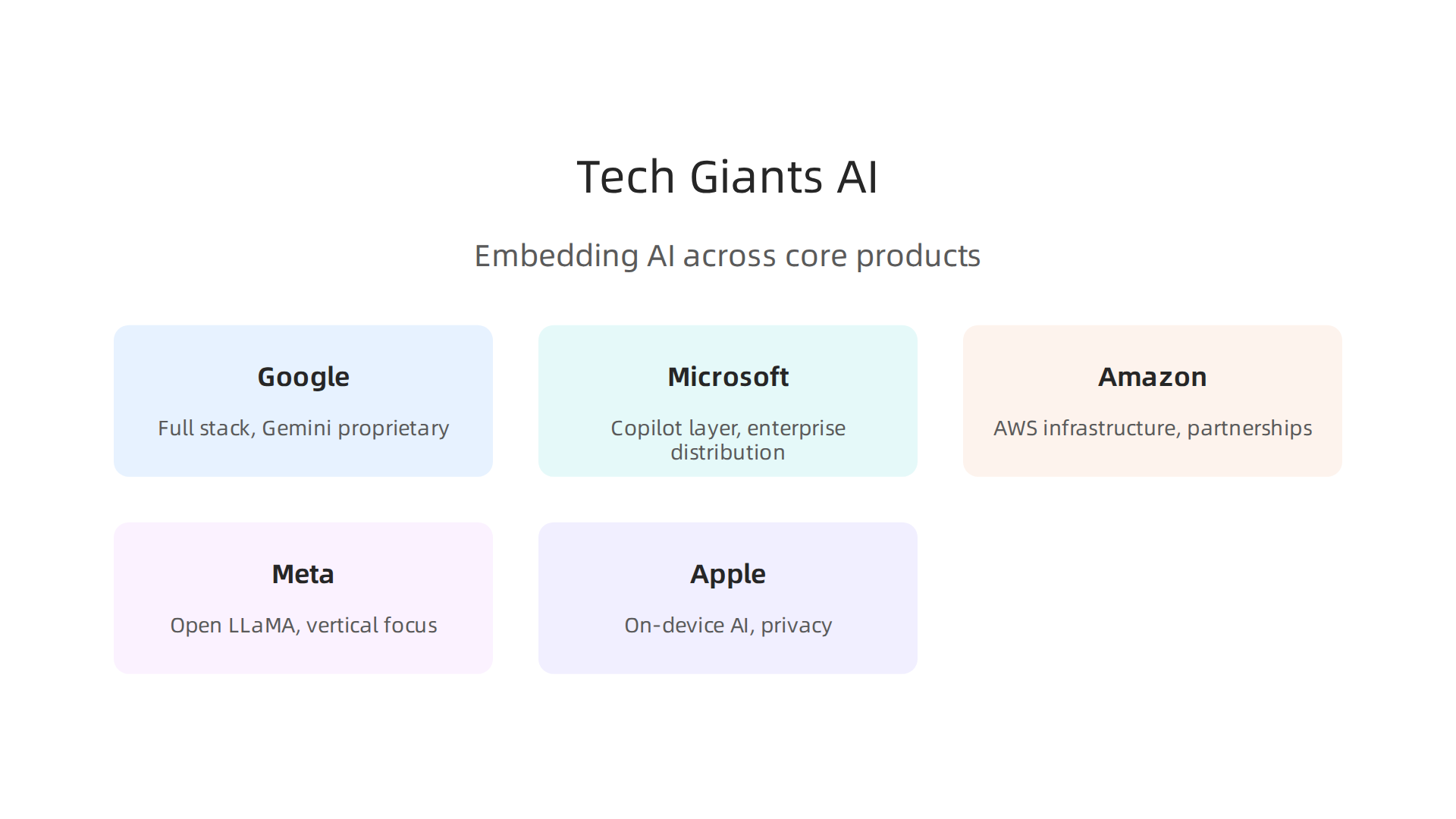
The previous section showed how each giant embeds AI into specific products. But the real differences run deeper. Google, Microsoft, Amazon, Meta, and Apple each follow a distinct playbook shaped by their core business, culture, and bets on openness versus control.
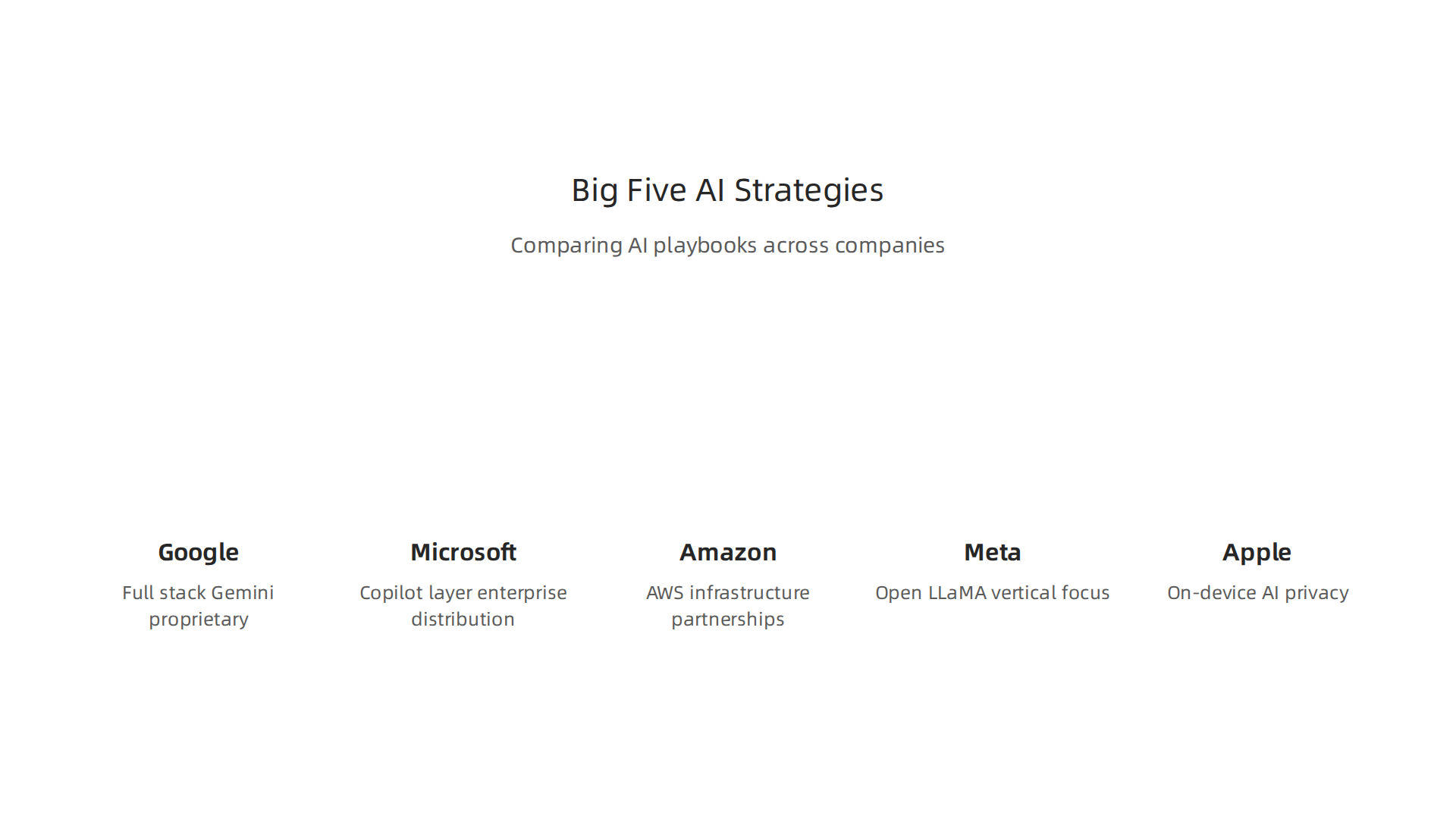
Google leans on an open foundation (TensorFlow, TPUs as a service) but keeps its crown jewel, Gemini, proprietary. Its strength is owning the full stack: silicon, model, cloud, and consumer surface. Google Cloud gives businesses access to Gemini and Vertex AI, and the company now treats AI as the primary growth engine for cloud revenue. The bet is that developers choose Google because its tools are both powerful and deeply integrated with BigQuery and Workspace.
Microsoft takes a different route. It partners heavily with OpenAI but builds its own Copilot layer on top. Rather than selling models directly, Microsoft embeds AI into the software people already use, like Office 365 and Teams. Its cloud strategy centers on Azure AI Foundry and the Copilot architecture, turning enterprise data into the context for agentic work. This makes switching away from Microsoft more expensive over time, a deliberate lock-in by design.
Amazon competes mostly through AWS. Its strategy is less about consumer AI (Alexa is still evolving) and more about infrastructure. AWS offers access to models from Anthropic, Meta, and others, plus its own custom Trainium chips for cost-efficient inference. Amazon is also building vertical AI for advertising, automating video and image creation for sellers. And it has invested billions in Anthropic to secure frontier model access without building its own from scratch.
Meta is the most open in the group. It open-sources its LLaMA models, which has created a huge ecosystem of developers and startups. But Meta’s real focus is vertical: making AI better at shopping, content discovery, and ad targeting on Facebook and Instagram. It also co-designed custom ASICs with Broadcom to run a trillion-parameter model at sub-second latency, giving it a cost advantage at scale.
Apple is the quietest player. It prioritizes on-device AI for privacy and low latency, using its own chips (Neural Engine) for features like photo editing, Siri improvements, and health monitoring. Apple does not compete in cloud AI directly, but it is reportedly building its own large language model and exploring partnerships. Its strategy is to make AI invisible, secure, and deeply integrated into the user experience.
A surprising pattern across all five is how they invest. Instead of buying AI startups, they pour money into infrastructure and back established frontier labs. Google, Microsoft, Amazon, and Meta are on track to invest nearly $600 billion in AI in 2026, much of it into model labs like OpenAI, Anthropic, and Scale AI, as highlighted in a recent industry analysis of how Google, Meta, Microsoft, and Amazon are investing in AI. This preference for compute-linked partnerships over acquisitions is reshaping the AI talent and M&A landscape.
Each strategy comes with tradeoffs. Google offers the most coherent full-stack narrative. Microsoft wins on enterprise distribution. Amazon dominates infrastructure choice. Meta leads in openness and vertical social AI. Apple focuses on privacy and user experience. Choosing which ecosystem to bet on depends on your business needs.

If you want a practical framework for evaluating these platforms, read our guide on picking the right AI platforms for business growth. It breaks down what each provider actually delivers.
The Rise of AI-First Startups vs. Established Companies
Just a few years ago, most people assumed big tech companies would own artificial intelligence. Google, Microsoft, Amazon, Meta, and Apple had all the advantages. Deep pockets. Massive data sets. The best talent. What chance did a startup really have?
But something shifted. AI-first startups began competing head on with these giants. And today, some of them are worth more than many established tech companies.
Take OpenAI and Anthropic. These two startups have reached valuations that rival Fortune 500 companies. OpenAI recently raised $110 billion at an $840 billion valuation. Amazon alone put in $50 billion. Anthropic raised $30 billion at $380 billion. Together, these two companies have accumulated over $242 billion in venture funding. A detailed ranking of the most valuable generative AI startups shows that the top players now compete directly with the largest tech companies in the world.
The funding numbers are staggering. In the first quarter of 2026, AI startups captured $242 billion in global venture funding. That is 80% of all venture money invested worldwide in that quarter.
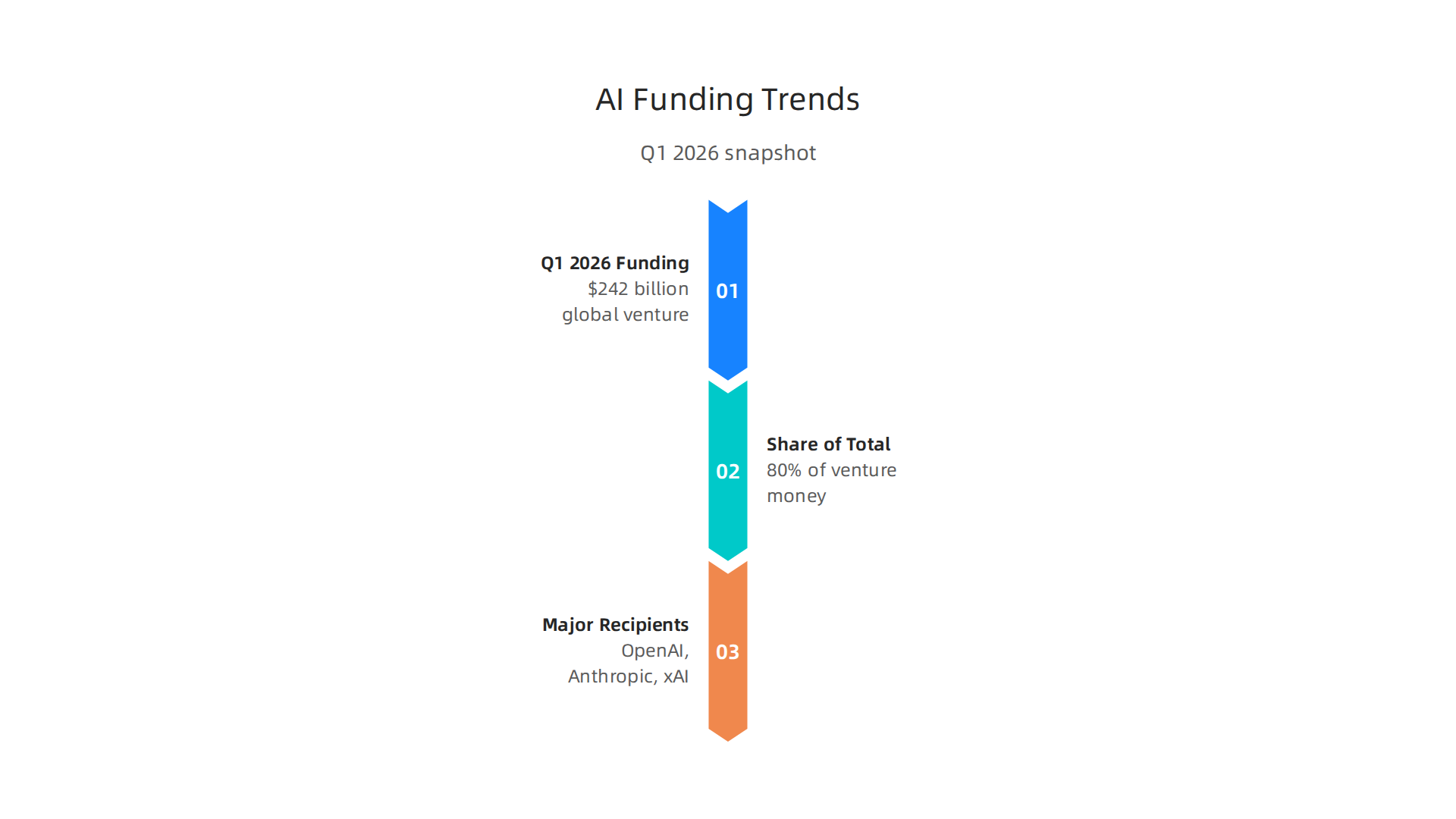
Four of the five largest venture rounds ever recorded closed in Q1 2026. Three of those went to frontier AI labs. According to Crunchbase, the previous record was set in Q1 2025 when AI accounted for 55% of global venture funding. Now it dominates completely.
This creates a fascinating tension. Big tech companies have resources, existing customer bases, and deep product integration. But startups move faster. They have a single focus.

They do not carry legacy systems or the weight of quarterly earnings pressure in the same way. A startup like Cursor from Anysphere reached an estimated $500 million to $1 billion in annual recurring revenue in roughly two and a half years. That kind of growth is almost unheard of in traditional software.
The competitive landscape is now dynamic rather than settled. Startups push innovation forward with speed and specialization. Big tech companies absorb and integrate those advances at scale. Both roles matter. If you are interested in how this plays out in a specific case, our deep dive on how Anthropic approaches safety and constitutional AI shows how a startup can differentiate itself through values as much as raw capability.
The pace of change is relentless. Reliable signals are hard to find. That is why we recommend The Deep View Newsletter. It delivers clear daily updates on the biggest developments in AI, helping you cut through the noise and stay informed.
Investment and Valuation Trends in AI
The numbers coming out of the AI investment world in 2026 are huge. Venture funding for AI has reached record levels, and private company valuations are climbing higher than anyone expected just a few years ago.
According to the 2026 AI Index Report from Stanford HAI, private AI investment in the United States hit $285.9 billion in 2025. That is more than 23 times the amount invested in China during the same period. But those numbers only tell part of the story. When you add in government funding and state-backed initiatives, China’s total AI spending is much larger.
Globally, the AI market was valued at $601.93 billion in 2026, according to the AI market report from MarketsandMarkets. The generative AI segment alone reached $91.57 billion, growing 45% year over year. These figures show how fast the industry is moving.
Big tech companies continue to dominate the spending side. NVIDIA, Amazon, Google, Microsoft, and Meta are pouring hundreds of billions into AI infrastructure. Sundar Pichai has positioned Google’s artificial intelligence technology as a core driver of the company’s future. But new entrants are also making waves. Companies like Canary Technologies, Voyager Technologies, and TTM Technologies are attracting significant venture capital for their specialized AI applications.
The distribution of investment is not evenly spread. North America held the largest regional share of the AI market at 35.5% in 2026, according to an ABI Research report on the AI software market. Asia-Pacific followed with 33%, driven largely by China. By 2030, analysts expect Asia-Pacific to account for 47% of AI software revenue, with China alone making up two-thirds of that total. Europe, the Middle East, and Africa together represented about 21% of respondents in a recent NVIDIA survey, which also found that 86% of organizations plan to increase their AI budgets in 2026.
Public market sentiment is also strong. NVIDIA’s market cap surpassed $5 trillion in May 2026, and its annual revenue projection sits at $130 billion or higher. The tech indices are heavily influenced by AI stocks, and investors are closely watching which companies will lead the next wave.
If you want to build the skills to succeed in this fast-moving space, mastering practical machine learning for data science can give you a strong foundation.
The pace of investment shows no signs of slowing down. The competition between the US and China, the rise of new players, and the massive spending from established tech companies all point to one thing: AI is reshaping the global economy in real time.
Ethical, Regulatory, and Trust Challenges
The rapid growth of AI has brought a big question to the front: Can we trust these systems? Leading tech companies now face more scrutiny than ever over bias, safety, and transparency. When a hiring tool favors one group over another, or a chatbot gives dangerous medical advice, people notice. And they expect those companies to fix it fast.
The pressure is coming from all sides. Governments are writing new rules. Customers are demanding honesty. And investors are starting to reward companies that take ethics seriously.
In Europe, the EU AI Act is the most complete set of AI rules in the world. It bans things like social scoring and harmful manipulation. It also requires companies to label AI-generated content clearly. Full enforcement for high-risk systems starts in August 2026. Companies that break the rules could face fines of up to 7% of their global annual revenue.
The United States is taking a different path. Instead of one national law, states are creating their own. For example, Utah passed a law that forces companies to tell you when you are talking to an AI instead of a human. Colorado and California are building their own frameworks too. This patchwork of 2026 AI laws means tech companies have to follow many different rules at once. It is not easy, but it is necessary.
Beyond the law, trust is becoming a real business advantage. Companies that openly share how their AI works, test for bias, and let users understand decisions are winning customers. A report from the AI ethics community highlights that responsible AI principles like fairness, transparency, and accountability are now essential for any serious AI company. If you cannot explain your model, people will not use it.
The same is true for AI safety. Companies like Anthropic build their products around safety from day one. Our article on Anthropic’s safety-focused approach shows how putting trust first can be a competitive edge.
The message is clear: In 2026, the tech companies that thrive will be the ones that treat ethics and regulation not as roadblocks, but as guides. They will be open about their data, careful about bias, and ready to follow the rules wherever they operate. And they will earn your trust one honest decision at a time.
Staying on top of these fast-moving changes is tough. That is why thousands of professionals rely on The AI Newsletter Worth Reading to get clear daily updates on AI ethics, regulation, and breakthroughs. It is a simple way to keep your knowledge sharp and your decisions informed.
Summary
This article maps the AI landscape in 2026, combining market data, company strategy, funding trends, and regulatory pressures to help readers make smarter decisions. It explains how mega-cap firms (Google, Microsoft, Amazon, Meta, Apple) are investing in infrastructure and embedding AI across products, while specialized startups and frontier labs capture massive venture funding and push rapid innovation. You’ll learn the strategic differences between full-stack players and niche builders, see why generative and on-device AI are becoming business-grade, and get a clear picture of where investment dollars and talent are flowing. The piece also covers valuation trends, example companies powering AI ecosystems, and the growing importance of ethics and compliance across regions. After reading, you should be able to compare vendor strategies, spot key investment signals, and prioritize next steps for adopting AI in your product, team, or portfolio.