
Introduction
Artificial intelligence moves fast. In 2026, new models, tools, and breakthroughs hit the news almost daily. It can feel impossible to keep up. You might wonder: where do I even start?
Here’s the truth: no matter how fast AI changes, the core ideas stay the same. Understanding how intelligent agents work, how machines learn from data, and how to build systems that reason under uncertainty will always matter. That’s why one textbook has remained the gold standard for decades. It is Artificial Intelligence: A Modern Approach, 4th US ed. , written by Stuart Russell and Peter Norvig.
This book is not just another AI resource. It is the most authoritative and comprehensive AI textbook available. According to the official book site, it has been adopted by over 1500 schools worldwide. Universities, bootcamps, and self-taught engineers all turn to it. The 4th edition, published in 2021, added fresh chapters on deep learning, probabilistic programming, and multiagent systems. It also expanded coverage of ethics and safety. In short, it brings together everything you need to build a strong foundation.
But here’s the catch: a book this dense can be intimidating. You might buy it, read a few pages, and feel lost. Or you might skip the fundamentals and jump straight to the flashy new tools. That would be a mistake.
This article is your review and learning roadmap. We will walk through what makes the 4th edition special, who should use it, and how to actually get value from it. Whether you are a student, a professional making a career switch, or a leader who wants to understand AI at a deeper level, this guide will help you maximize the book’s power.

Before we dive in, staying current with AI news is just as important as learning the foundations. The AI Newsletter Worth Reading delivers clear daily updates so you never miss a breakthrough.
Ready to master AI from the ground up? Let’s start with what the 4th edition actually covers.
Why ‘AIMA’ Remains the Gold Standard for AI Education
Maybe you have asked yourself: what makes one textbook stand out while others gather dust? For AI, the answer is clear. Since 1995, Artificial Intelligence: A Modern Approach has shaped how the world learns about intelligent machines. The fourth US edition, released in 2020, keeps that legacy alive and strong.
According to the AI textbook Wikipedia entry, the book is used at over 1,500 universities worldwide.
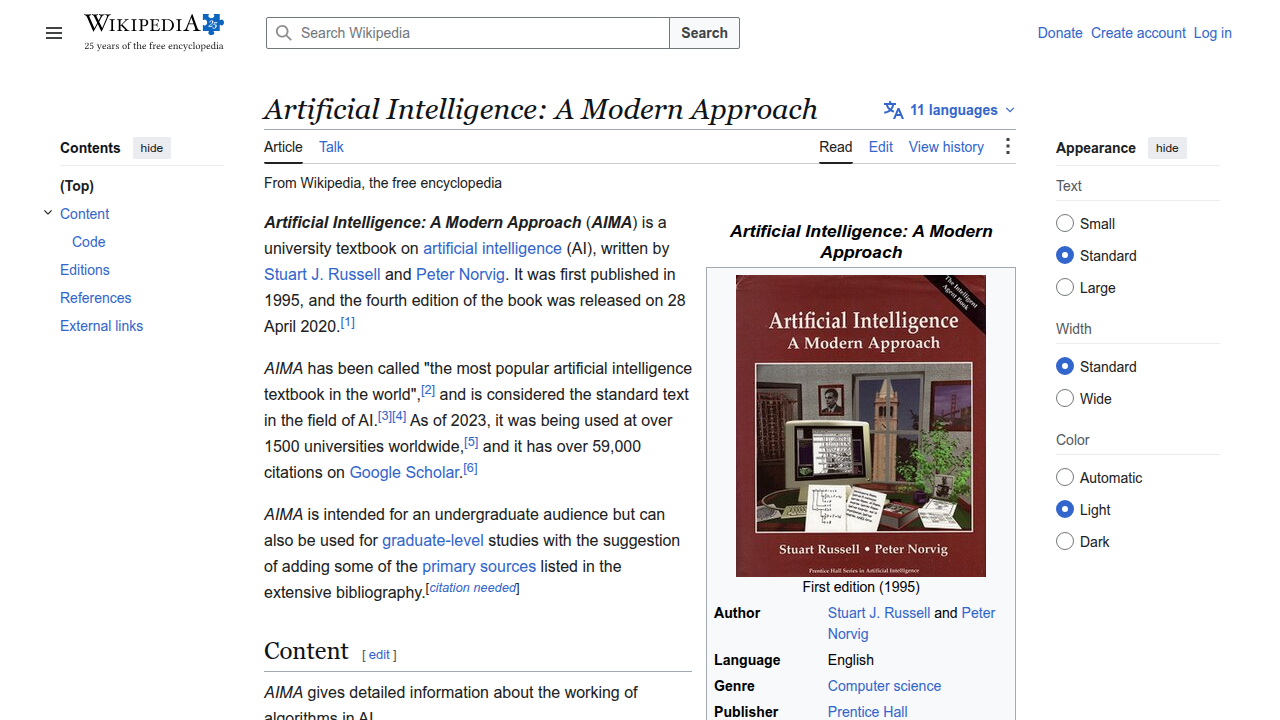
That is not just a big number. It means professors in Tokyo, São Paulo, Berlin, and Mumbai all trust the same source to teach their students. No other AI textbook comes close.
So why does artificial intelligence a modern approach 4th us ed earn that trust? Three big reasons.
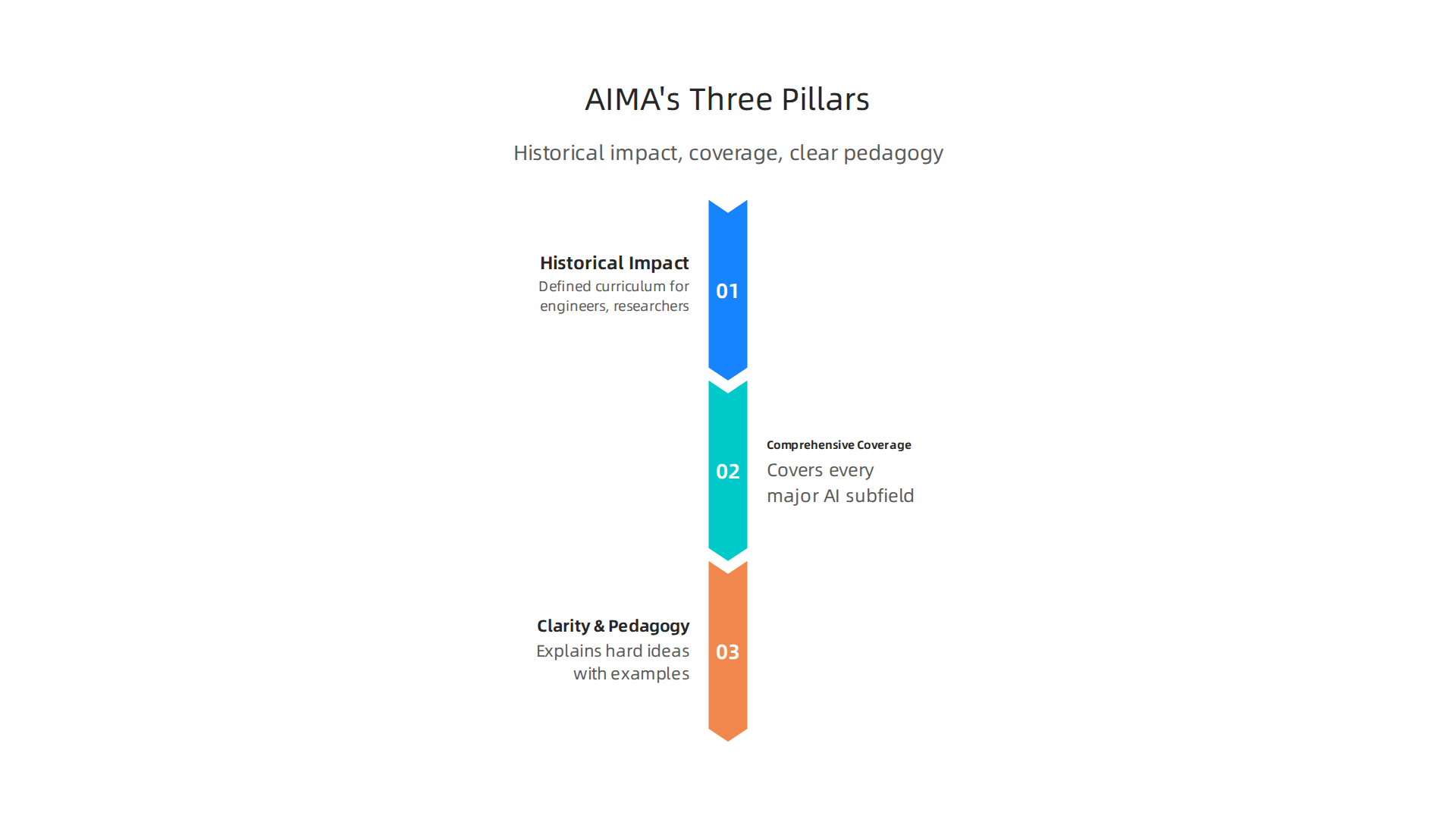
First, historical impact. Russell and Norvig wrote the first edition when AI was still a niche field. Over three decades, the book grew alongside the technology. Each new edition added what mattered most, from machine learning to deep learning to ethics. It did not just report the changes. It helped define the curriculum for an entire generation of engineers and researchers.
Second, comprehensive coverage. The 4th edition covers every major subfield of artificial intelligence. You get chapters on search algorithms, logic, probability, natural language, computer vision, robotics, and modern deep learning. It connects the dots between old-school symbolic AI and today’s neural networks. You understand not just how a tool works, but why it was built that way in the first place.
Third, clarity and pedagogy. The authors know how to explain hard ideas without dumbing them down. They use real examples, clear diagrams, and practical exercises. A beginner can follow along, while a seasoned professional still finds depth. That balance is rare.
If you want to see how this textbook connects to the newest version, check out our guide on the 5th edition of Artificial Intelligence: A Modern Approach. It shows how the series continues to evolve for learners in 2026.
The bottom line: if you want a strong foundation, artificial intelligence: a modern approach 4th us ed is the book that universities, companies, and self-learners keep coming back to. It earned its gold standard title through decades of quality, not hype.
What’s New in the 4th US Edition?
So what exactly changed between the 2010 third edition and the 2020 fourth edition? A lot. The field of artificial intelligence moved fast, and the book had to keep up.
About 25 percent of the material in the fourth edition is completely new. The remaining 75 percent was rewritten to make everything fit together better. According to the official AIMA 4th edition page, the authors added dedicated chapters on deep learning, probabilistic programming, and multiagent decision making.
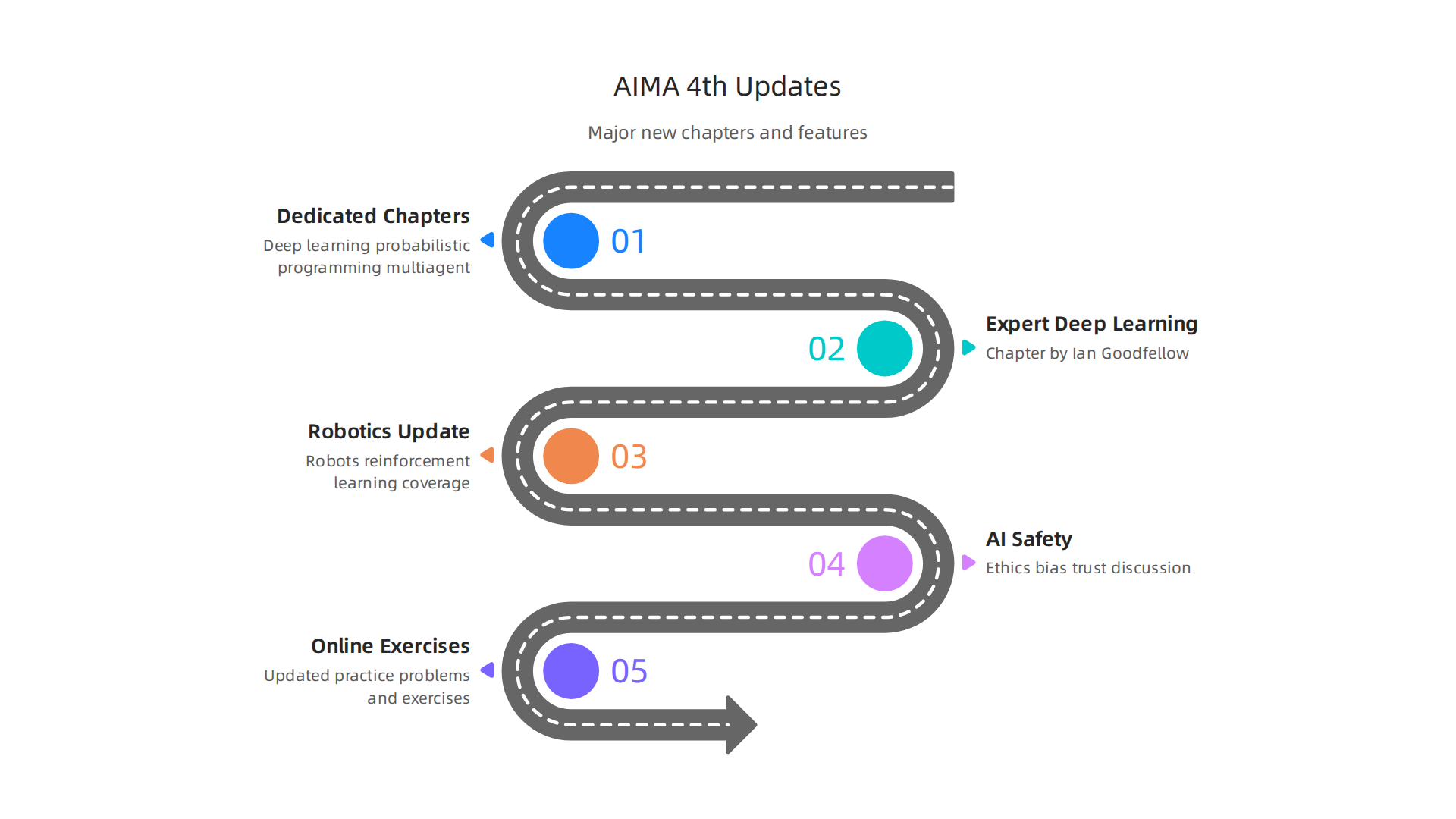
Each of these got its own full treatment instead of being squeezed into a few pages.
Ian Goodfellow, a well known researcher in generative AI, guest wrote the new deep learning chapter. That means you get expert level insight on how neural networks really work, from someone who helped invent key techniques like GANs.
The robotics chapter also got a big update. It now covers robots that work alongside humans and how reinforcement learning helps robots learn new tasks. Computer vision and natural language processing chapters were revised to reflect the impact of deep learning methods.
There is also a brand new focus on AI safety and ethics. The book now includes a full chapter on philosophy, ethics, and safety of AI. This covers bias, fairness, trust, and the societal impact of intelligent systems. That is important for anyone who wants to build AI responsibly.
Another practical change: the exercises moved online. Instead of having static questions at the end of each chapter, instructors and learners can access updated exercises that stay current with new tools and research. That keeps the learning experience fresh.
If you want to see how these topics connect to today’s most impactful developments, check out our guide on the AI breakthroughs in 2026 that actually matter. It covers exactly the kinds of advances the 4th edition prepared you to understand.
The bottom line: the 4th US edition is not a minor refresh. It is a major overhaul that brings the classic textbook into the modern era of deep learning, multiagent systems, and responsible AI. And if you want to stay on top of how AI keeps evolving after you finish the book, consider subscribing to The AI Newsletter Worth Reading for clear daily updates.
Chapter-by-Chapter Deep Dive: Core Topics
The artificial intelligence: a modern approach 4th us ed organizes its 28 chapters into seven clear parts. These guide you from foundations to future. The Goodreads overview of the book’s structure shows how each part builds on the last.
Part I covers AI basics and intelligent agents. Parts II and III dive into search, logic, and planning. Part IV tackles reasoning under uncertainty. Part V is the machine learning core with chapters on deep learning and reinforcement learning. Part VI covers NLP, computer vision, and robotics. Part VII concludes with AI ethics and the future.
For professionals, the most impactful chapters are deep learning, reinforcement learning, and multiagent decision making. These subfields of artificial intelligence drive today’s biggest advances in autonomous systems and large language models. Spend extra time on Part V if you work in the industry.
To see these concepts applied in real environments, check out our guide on enterprise AI tooling in 2026.
Intelligent Agents and Problem Solving (Parts I–III)
Parts I through III of artificial intelligence: a modern approach 4th us ed lay the foundation for everything that follows. You start with the concept of an intelligent agent: a system that perceives its environment and takes actions to achieve goals. This is the core idea behind all modern AI, from a chatbot to a self-driving car.
From there, you move into problem solving. The book teaches you how to use search algorithms to find solutions. You learn about breadth-first search, A*, and how to handle complex environments. The section on constraint satisfaction problems shows you how to solve puzzles and scheduling tasks by setting rules and finding valid answers.
Why does this matter? Because these methods are the building blocks of planning and decision-making in real systems. Whether you are building a robot that navigates a warehouse or a scheduling tool for a hospital, you are using ideas from these early chapters.
For a practical look at how these concepts apply in business, read our guide on understanding realistic AI for business leaders. It connects the theoretical foundation to real-world decisions.
As you work through these chapters, you will see how the authors build a unified framework. The Pearson listing for the 4th edition shows the full chapter breakdown, confirming the depth of coverage on search, logic, and planning.
If you want to keep up with how these AI fundamentals are evolving in 2026, consider subscribing to The AI Newsletter Worth Reading for daily updates that cut through the noise.
Knowledge Representation and Reasoning (Part IV)
After learning how intelligent agents search and solve problems in Parts I through III, you are ready for the next step. Part IV of artificial intelligence: a modern approach 4th us ed moves into knowledge representation and reasoning. This part covers three big areas: logical reasoning, classical planning, and probabilistic reasoning.
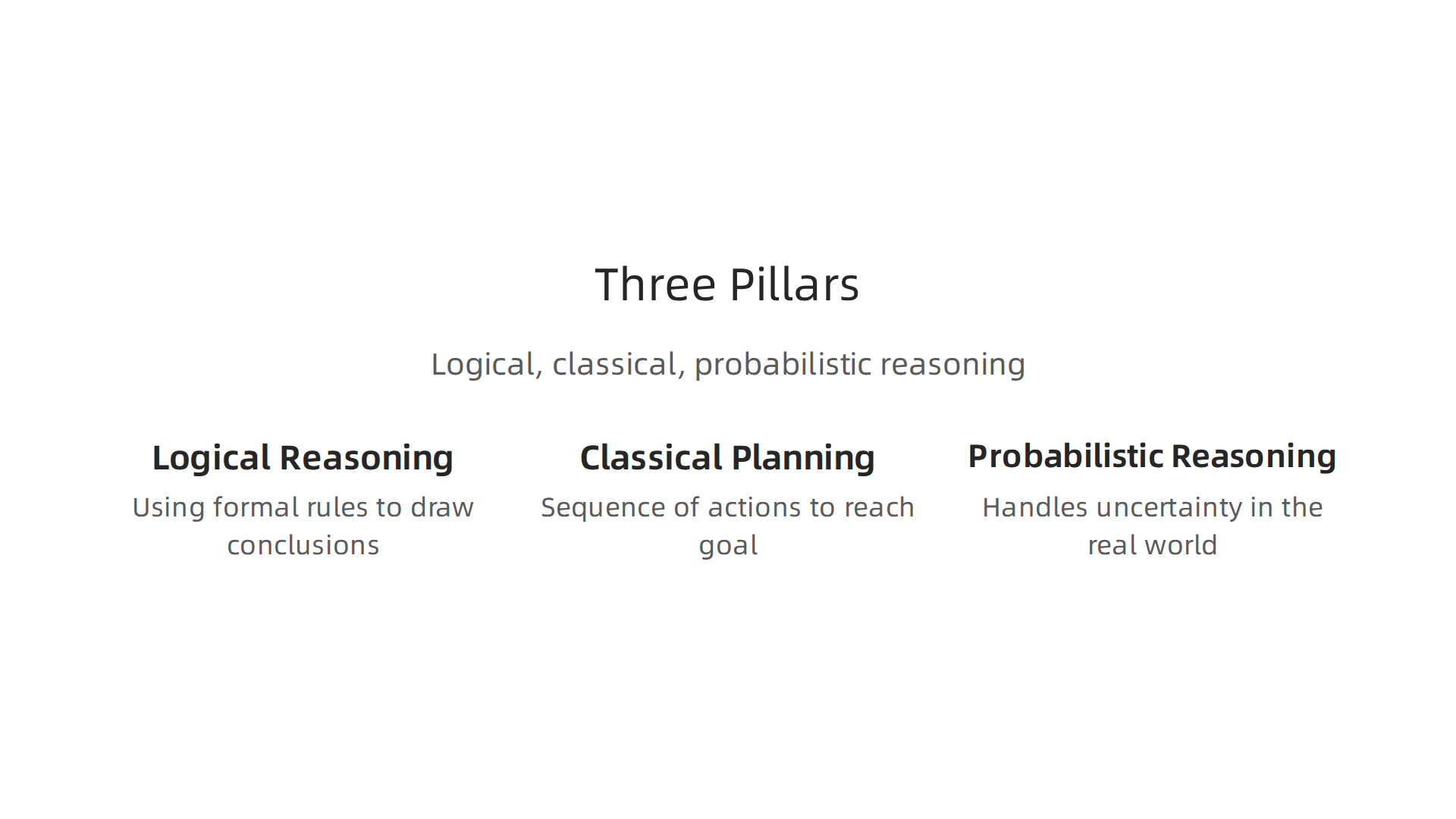
Logical reasoning means using formal rules to draw conclusions from facts. Classical planning is about figuring out a sequence of actions to reach a goal. Probabilistic reasoning handles uncertainty, which is everywhere in the real world. Together, these methods are what let an AI system explain its decisions and handle messy, incomplete information.
That makes this part critical for building explainable and robust AI systems. If you want a system you can trust, it needs to be able to tell you why it did something. That starts with how it represents what it knows.
The official table of contents for the 4th US edition shows that Part IV includes chapters on logical agents, first-order logic, knowledge representation, automated planning, and probabilistic reasoning. Each chapter builds on the last, giving you a complete toolkit for handling knowledge.
If you are already thinking about what comes next, read our overview of why the 5th edition is the go to AI textbook in 2026 to see how this material continues to evolve.
Machine Learning and Neural Networks (Part V)
Part V of artificial intelligence: a modern approach 4th us ed is all about machine learning and neural networks. This is where the book really shines in its 4th edition. The coverage has been completely updated to match what is happening in the field in 2026.
You get a thorough walkthrough of the three main types of learning. Supervised learning teaches models from labeled data. Unsupervised learning finds patterns without labels. Reinforcement learning trains agents through trial and error. Each method gets its own dedicated chapter.
The big news in this edition is the expanded focus on deep learning. There is now a full chapter on deep learning, written by Ian Goodfellow, one of the pioneers in the area. You will learn about transformers and generative models, which power tools like ChatGPT and image generators. According to the 4th edition description on Pearson, the book now includes new chapters on deep learning for natural language processing and probabilistic programming.
If you want to go deeper into hands-on skills, check out our guide on mastering practical machine learning for data science. It will help you apply what you learn from the textbook to real projects.
The field moves fast. To stay on top of the latest AI research and tools, consider The AI Newsletter Worth Reading for daily updates that cut through the noise.
Robotics and Perception (Parts VI–VII)
Once you have a handle on machine learning, the next big step in artificial intelligence: a modern approach 4th us ed is understanding how AI actually sees, hears, and acts in the real world. Parts VI and VII cover exactly that. They group together natural language processing, computer vision, and robotics. These are the subfields of artificial intelligence that turn raw data into smart action.
The 4th edition completely rewrote these chapters to reflect the impact of deep learning. The computer vision chapter now relies on neural networks instead of hand-crafted rules. The robotics chapter, written by Anca Dragan, includes robots that work alongside people and use reinforcement learning to improve their movements. You can see the full list of updated chapters on the AIMA 4th edition official site.
This part of the book is where theory meets practice. You learn how self-driving cars process camera feeds to avoid obstacles. You see how voice assistants turn your words into commands. These examples show AI doing real work.
If you want to go beyond the textbook and explore how humans and machines work together today, check out our guide on human AI collaboration in 2026. It covers the practical side of building systems that cooperate with people, just like the robots in the book.
How to Effectively Study AIMA: A Practical Roadmap
So you know what artificial intelligence: a modern approach 4th us ed covers. Now the real question: how do you actually get through it without getting stuck? The book is big, and it can feel like a lot. But with the right plan, you can work through it in a way that sticks.
The first rule is to be honest about what you want from AI. If you dream of building machine learning models, focus hard on the probability and learning chapters.

If you care more about agents that act in the real world, lean into the search, planning, and robotics parts. Interested in safety and fairness? Spend extra time on Part V: AI Ethics and Society. AIMA is used at over 1500 universities worldwide, and that is because it works as a reference too. You do not have to read every chapter in order. The AIMA Wikipedia entry says the book is intended for both undergraduate and graduate audiences, so matching chapters to your goals is completely okay.
Second, do not just read. Code. AIMA is famous for its pseudocode, which is great for understanding ideas, but you need to turn those ideas into real projects. Pick one chapter, say the one on search algorithms, and implement a simple pathfinder in Python. Then apply it to a small robot simulation. This combination of reading and building is what turns the theory into a skill you can actually use. If you want extra structure, check out our guide on the best online AI courses 2026 that pair well with the textbook.
Third, use the study resources that already exist. There are official solution sets for some exercises, lecture videos from top universities that follow the same chapters, and active forums where learners share code and answer each other’s questions. You do not have to figure it out alone. The community around this book is huge, and people are happy to help. One simple habit: after finishing a chapter, search for a short lecture video on the same topic. Seeing the material from another angle makes it click faster.
And beyond the textbook, staying up to date with AI news helps you see how the concepts connect to what is happening right now. For that, consider subscribing to The AI Newsletter Worth Reading from The Deep View. It gives you clear daily updates on research, models, and trends, so your studying always has a real-world context.
Complementary Resources Every AI Learner Needs
AIMA gives you the theory, but no single book can teach you everything. To truly master AI, you need hands-on practice and a few extra resources.
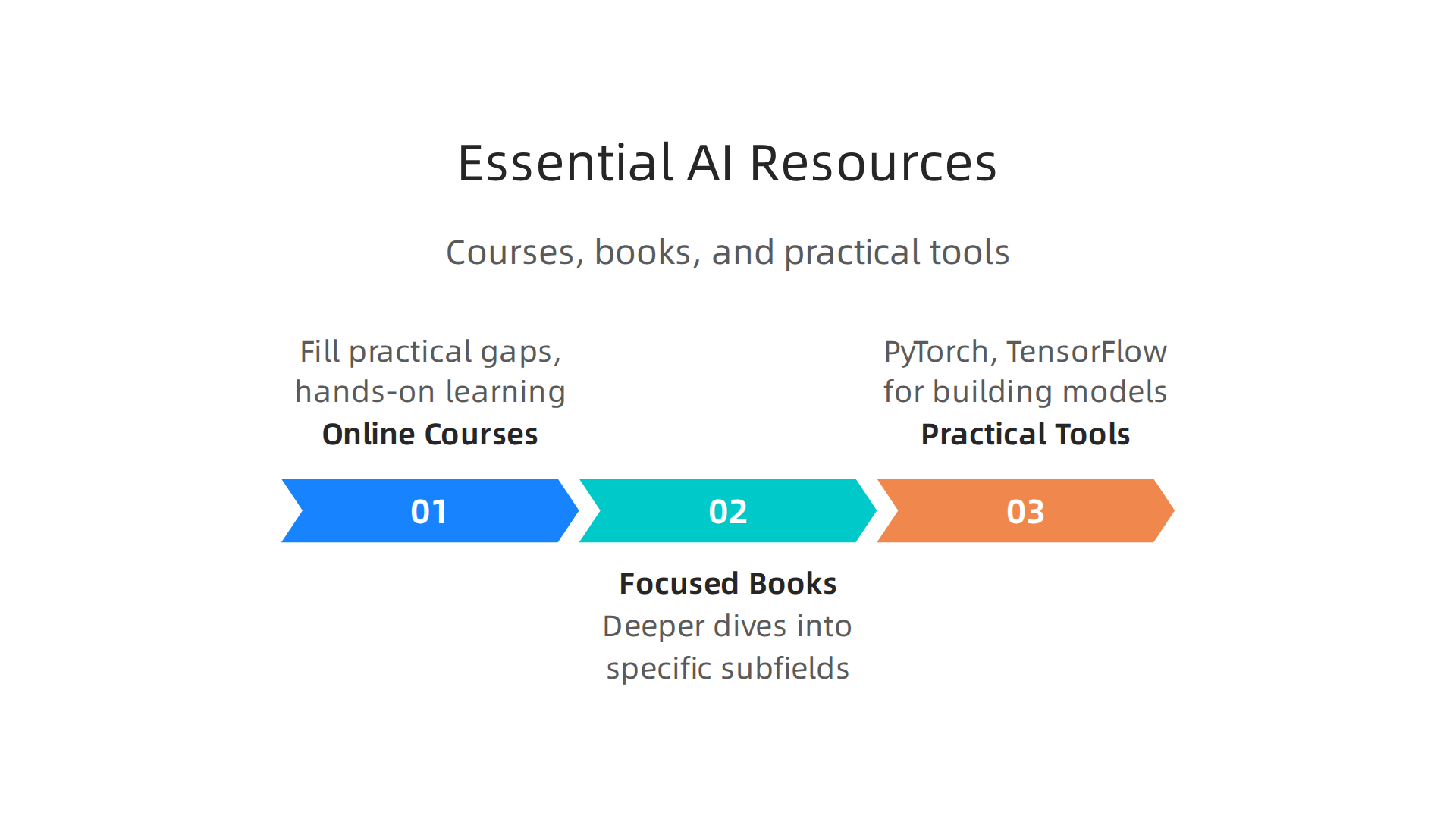
Think of the textbook as your map. The courses, books, and tools below are the vehicle that gets you moving.
Online courses fill the practical gaps. Deeplearning.ai has a top-rated Deep Learning Specialization that walks you through neural networks, computer vision, and natural language processing step by step.
That course pairs perfectly with AIMA’s chapters on machine learning and perception. MIT OpenCourseWare also offers a free version of its famous AI class, which follows a similar structure to the textbook. If you want a broader overview for beginners, the University of Helsinki’s Elements of AI course is free and takes only six to eight hours. These courses turn abstract pseudocode into working models you can actually test.
Supplement with focused books. AIMA covers the whole field, but you might want deeper dives. For deep learning, Ian Goodfellow’s book is the standard. For NLP, Jurafsky and Martin’s “Speech and Language Processing” is excellent. And for AI ethics, check out recent titles from Oxford or MIT Press. Reading one extra book per subfield rounds out your understanding of the subfields of artificial intelligence and shows you how they connect back to the core ideas in AIMA.
Get your hands dirty with tools. PyTorch and TensorFlow are the two big frameworks for building models. Start with PyTorch for research-style work and TensorFlow for production systems. Both have free tutorials that walk you through building a simple image classifier or language model. Practicing with these tools is the fastest way to turn “artificial intelligence a modern approach 4th us ed” knowledge into real skills employers want.

For a deeper look at using AI in business, check out our guide on best AI tools for businesses that deliver a real productivity advantage.
Pick one course, one extra book, and one framework. Start small. Run the code. Change the parameters. Break it and fix it. That is how you go from reading AI to actually doing AI.
AIMA’s Influence on AI Research and Industry
But the influence of artificial intelligence: a modern approach 4th us ed goes far beyond personal learning. This textbook has shaped how the entire field of AI talks, thinks, and works.
Since its first release, AIMA has become the standard reference in artificial intelligence. It is the most popular artificial intelligence textbook in the world, used at over 1,500 universities and cited more than 59,000 times in research papers.

When academics study the subfields of artificial intelligence, they often turn to AIMA for definitions and frameworks. The book helped create a shared language for everything from search algorithms to machine learning.
That influence extends into industry. Top technology companies like Google, Microsoft, and Amazon have used AIMA for internal training programs. Engineers and product leaders rely on its structure to understand core concepts. The book’s clear explanations make it a trusted resource for teams building real world AI systems. For a look at how the field is evolving, check out our guide on why the 5th edition of AIMA is the go-to textbook in 2026.
AIMA also shaped who invented ai and how the history of the field is taught. Its early chapters on AI history are widely praised for providing context and clarity. By organizing the entire field around rational decision making, AIMA gave researchers and practitioners a unified way to think about intelligence.
If you want to stay ahead of AI developments, you need reliable daily insights. Subscribe to The AI Newsletter Worth Reading for clear updates on research, tools, and industry trends.
Expert Perspectives on the 4th Edition
What do the people who actually teach and study AI think about artificial intelligence: a modern approach 4th us ed? The answer is overwhelmingly positive, though not without some honest critique.
Leading researchers have called this book a landmark. Professor Shlomo Zilberstein from the University of Massachusetts reported that his students loved using it in their intro AI course, calling it one of the best textbooks they had ever used. Curry Guinn from Duke University described it simply as the best and most comprehensive introduction to artificial intelligence available. Pat Hayes from the University of West Florida put it even more plainly: "It’s simply the best." You can read more of these detailed reviews and comments on AIMA on the official site maintained by the authors.
What makes the 4th edition stand out from earlier versions? According to the official preface, about 25 percent of the material in this edition is brand new, while the remaining 75 percent was largely rewritten to present a more unified picture of the field. The book now focuses much more on machine learning rather than hand coded knowledge engineering, reflecting how the field has changed since 2010. Deep learning, probabilistic programming, and multiagent systems each get their own chapter.
Not every review is glowing, and that is fair. Some readers on Reddit have noted that the book can be hard to read as a complete beginner. The depth that experts love can feel overwhelming if you are just starting out. For that reason, many educators pair the textbook with practical exercises and online courses to bridge the gap between theory and hands-on work.
If you want to learn AI step by step, check out our guide to the best online AI courses in 2026 that actually prepare you for real jobs.
Summary
Artificial Intelligence: A Modern Approach (4th US ed.) remains the definitive textbook for learning core AI concepts, and this article is a practical review plus a study roadmap for getting value from it. It explains why the book is trusted worldwide, what changed in the fourth edition (deep learning, probabilistic programming, multiagent systems, and ethics), and how the 28 chapters are organized from agents and search to perception and safety. The guide shows which parts matter most for students, engineers, and leaders, and gives concrete advice on study plans: focus by goal, code the pseudocode, and use online exercises and community resources. It points to complementary materials—courses, focused books, and frameworks like PyTorch—and recommends hands-on projects that turn reading into usable skills. The article also covers how AIMA influences research and industry training, offers perspectives from instructors, and warns about common pitfalls for beginners. Readers will finish knowing what to read first, how to practice effectively, and which resources to pair with the book to build real AI competence.