
Why the Right AI Tools Are the Decisive Productivity Advantage in 2026
Are you drowning in AI tool announcements? In 2026, it feels like a new AI platform launches every week. Every vendor promises to save you time, cut costs, and boost revenue. But here’s the problem: 88% of companies now use AI in at least one business function, according to Zapier’s 2026 AI statistics. That sounds great, but many businesses still struggle to pick the right solutions. They either get paralyzed by too many choices or jump into hype that doesn’t deliver real results.
The stakes are high. Companies that invest wisely see a massive return.

McKinsey’s latest data shows an average ROI of 5.8x within just 14 months of deploying AI (as reported by Medhacloud). That’s the difference between wasting money and scaling productivity. But to get there, you need more than a list of trendy tools. You need a clear framework to evaluate, choose, and integrate the best AI tools for businesses into your daily workflow.
This article is your shortcut. We’ve reviewed expert analysis, adoption data from sources like the Stanford HAI 2026 AI Index, and hands-on testing. Our goal is to give you a practical buying guide that cuts through the noise. No fluff, just what works.
As you explore these tools, remember that success also depends on how well your team works alongside AI. That’s why we’ve put together a guide on human AI collaboration and how to partner with artificial intelligence in 2026. It’s a natural next step after you find the right tools.
Want to stay ahead of every new AI tool and trend without the overwhelm? Get clear, daily updates straight to your inbox. Subscribe to The Deep View Newsletter for insights that help you make smarter business technology decisions.
1. AI-Powered Writing Assistants for Content Creation
Let’s talk about writing. If you run a business, you already know that content never stops. Blog posts, emails, social updates, product descriptions. It adds up fast. That’s why AI writing assistants have become one of the best AI tools for businesses in 2026.
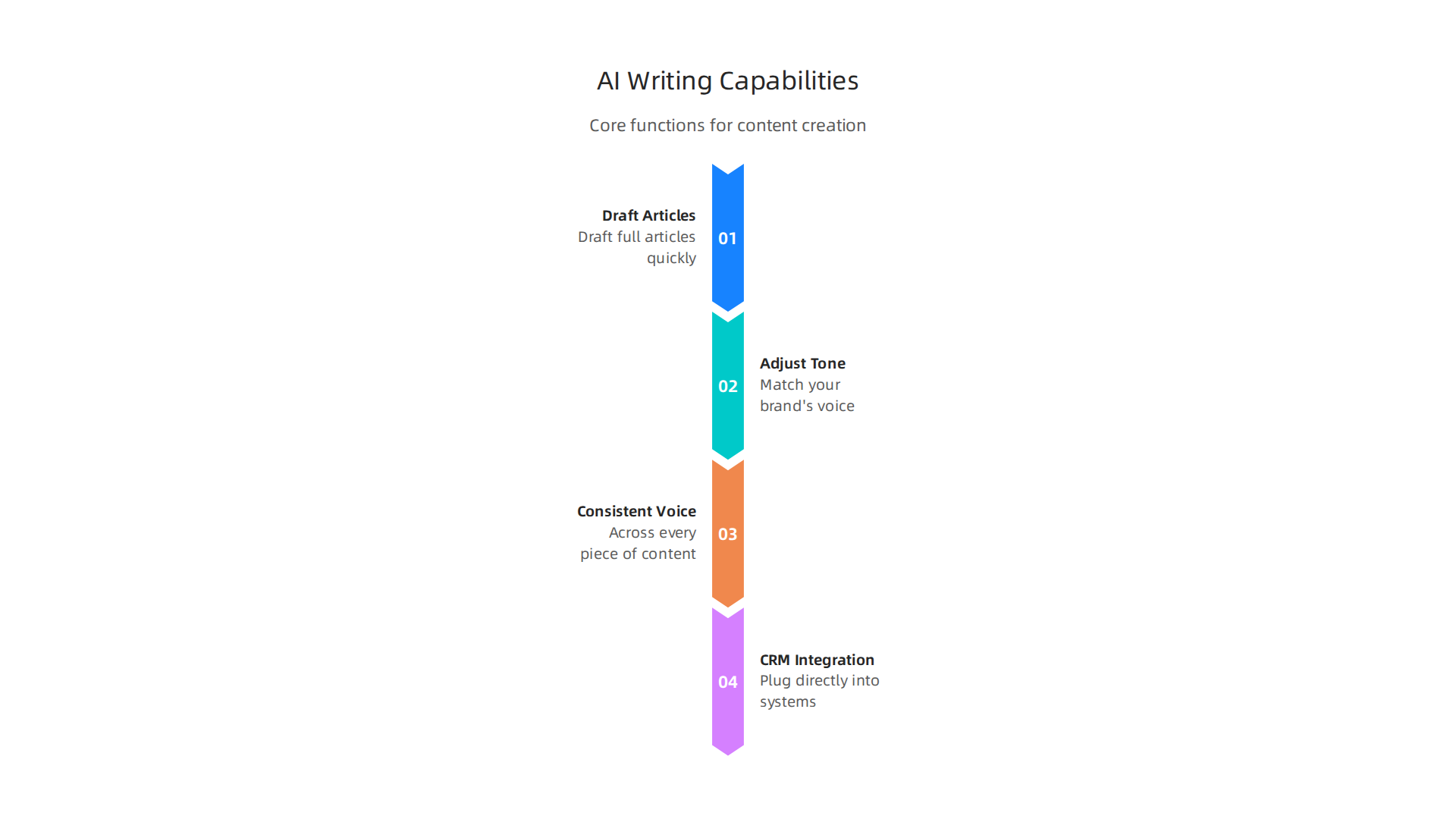
These tools have come a long way. They don’t just fix your grammar anymore. Today’s top platforms can draft full articles, adjust tone to match your brand, and keep your voice consistent across every piece of content.
A detailed comparison of Jasper and Copy.ai for 2026 shows that tools like Jasper now deliver depth and brand consistency, while Copy.ai shines when you need quick, creative bursts.
Here’s what makes these tools truly powerful for business. The best ones now plug directly into your CRM, your CMS, and your project management system. That means you can write a blog post, schedule it in your content calendar, and track performance without ever switching tabs. It’s a complete end-to-end workflow. And when you need to scale artificial intelligence across your marketing team, that kind of integration is a game changer.
If you’re worried about AI content detection, we have a helpful breakdown of how an artificial intelligence detector analyzes text and spot machine writing. It explains how to keep your content authentic while still using these tools.
The key is picking the right assistant for your specific needs. Test a few. See which one matches how your team actually works.
Want to stay ahead of every new AI tool and trend without the overwhelm? Get clear, daily updates straight to your inbox. Subscribe to The Deep View Newsletter for insights that help you make smarter business technology decisions.
2. Intelligent Project Management with AI
Now, let’s talk about project management. If your team still relies on spreadsheets and manual check-ins, you know the pain. Deadlines slip, resources get wasted, and status meetings eat up hours. That is where business technology finally catches up.
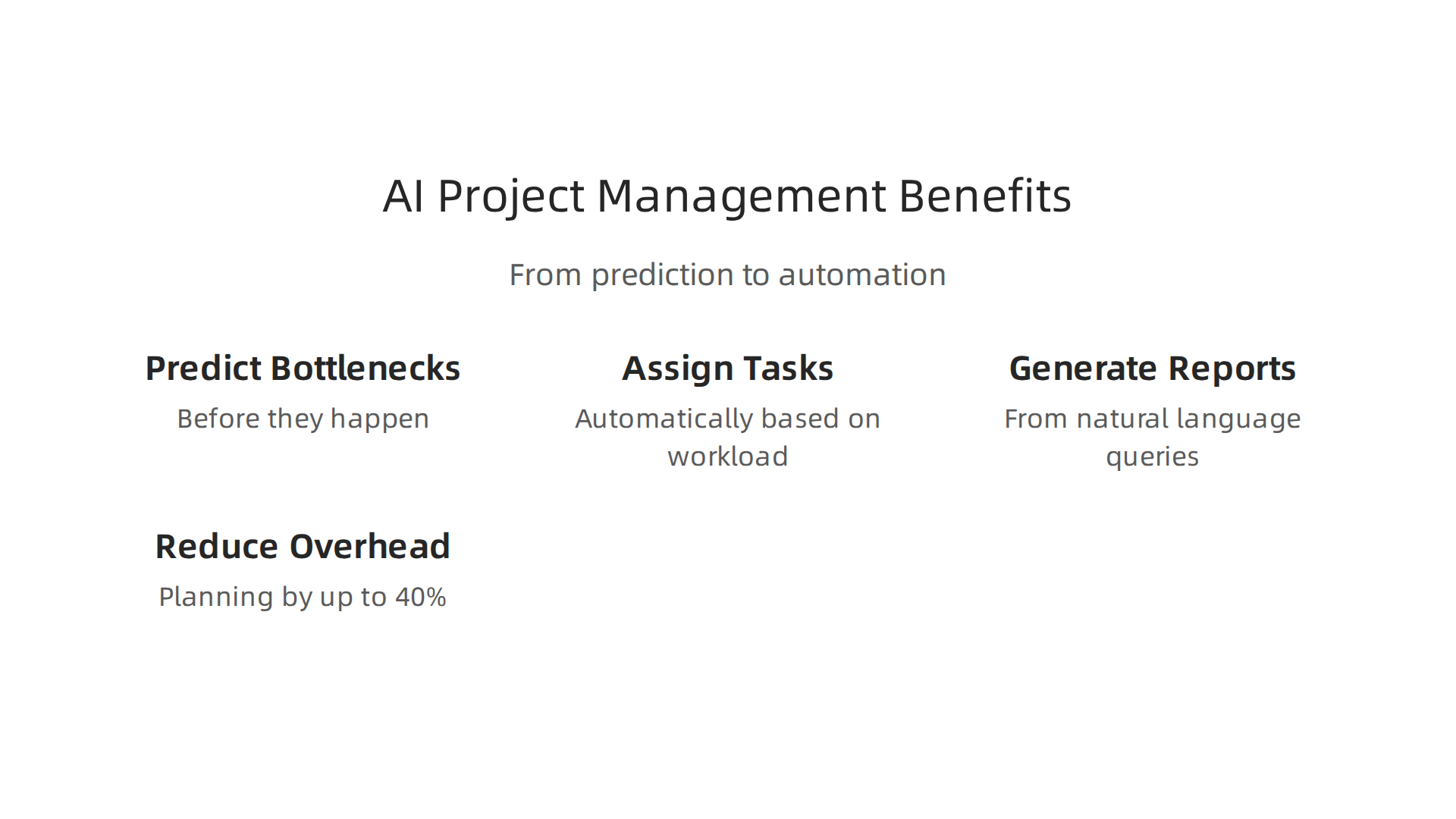
The best AI tools for businesses in 2026 have turned project management on its head. Tools like ClickUp, Asana, and monday.com now use AI to predict bottlenecks before they happen, automatically assign tasks based on workload, and generate status reports from simple natural language queries.
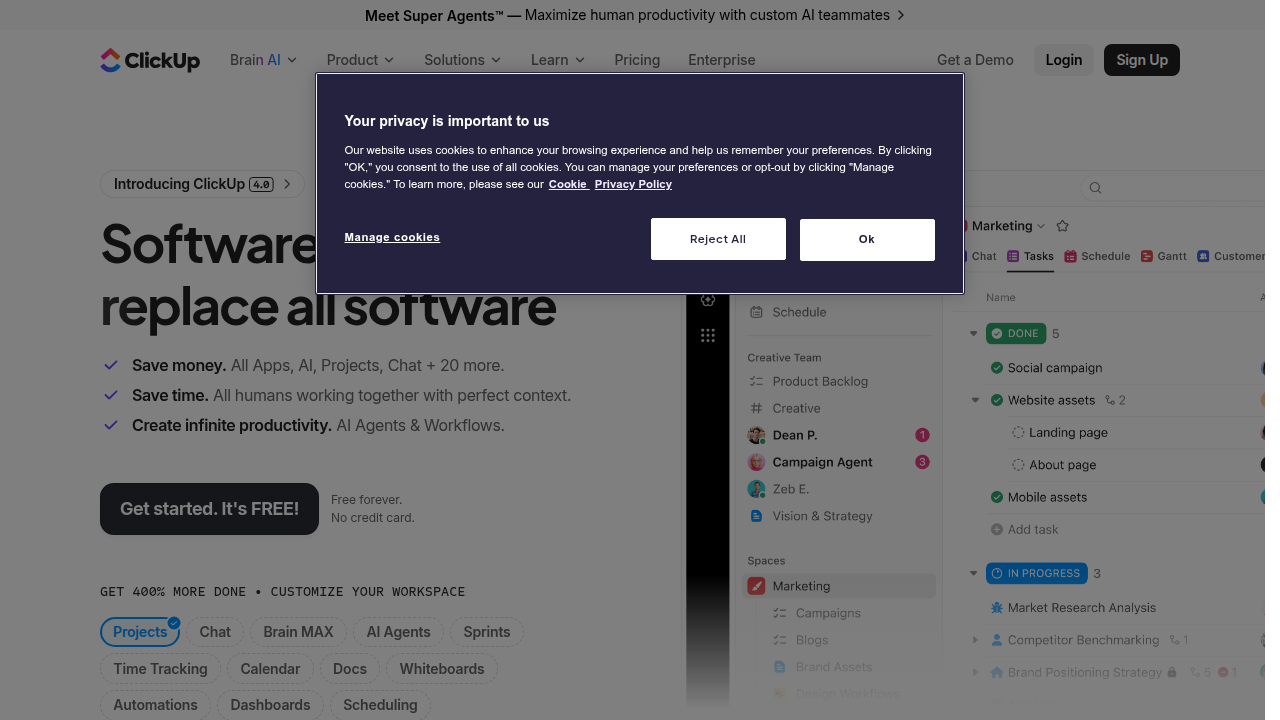
A detailed comparison of ClickUp, Asana, and monday.com AI features shows how each platform takes a different approach. monday.com, for example, has built a full AI platform with seven distinct features, while ClickUp offers an AI Project Manager that handles scheduling and resource allocation.
Here is the real win. When you combine predictive analytics with seamless integrations, these platforms can reduce planning overhead by up to 40%. That means less time micromanaging and more time moving your business forward. You can ask your project manager tool "What tasks are at risk this week?" and get an instant answer. No more digging through dashboards.
If you want to understand how humans and AI can work together effectively in 2026, our guide on human AI collaboration explains how to set up workflows that actually scale.
Want to stay on top of every AI tool that could transform your business? Get daily updates that cut through the noise. Subscribe to The Deep View Newsletter and never miss a breakthrough.
3. AI-Driven Data Analytics and Business Intelligence
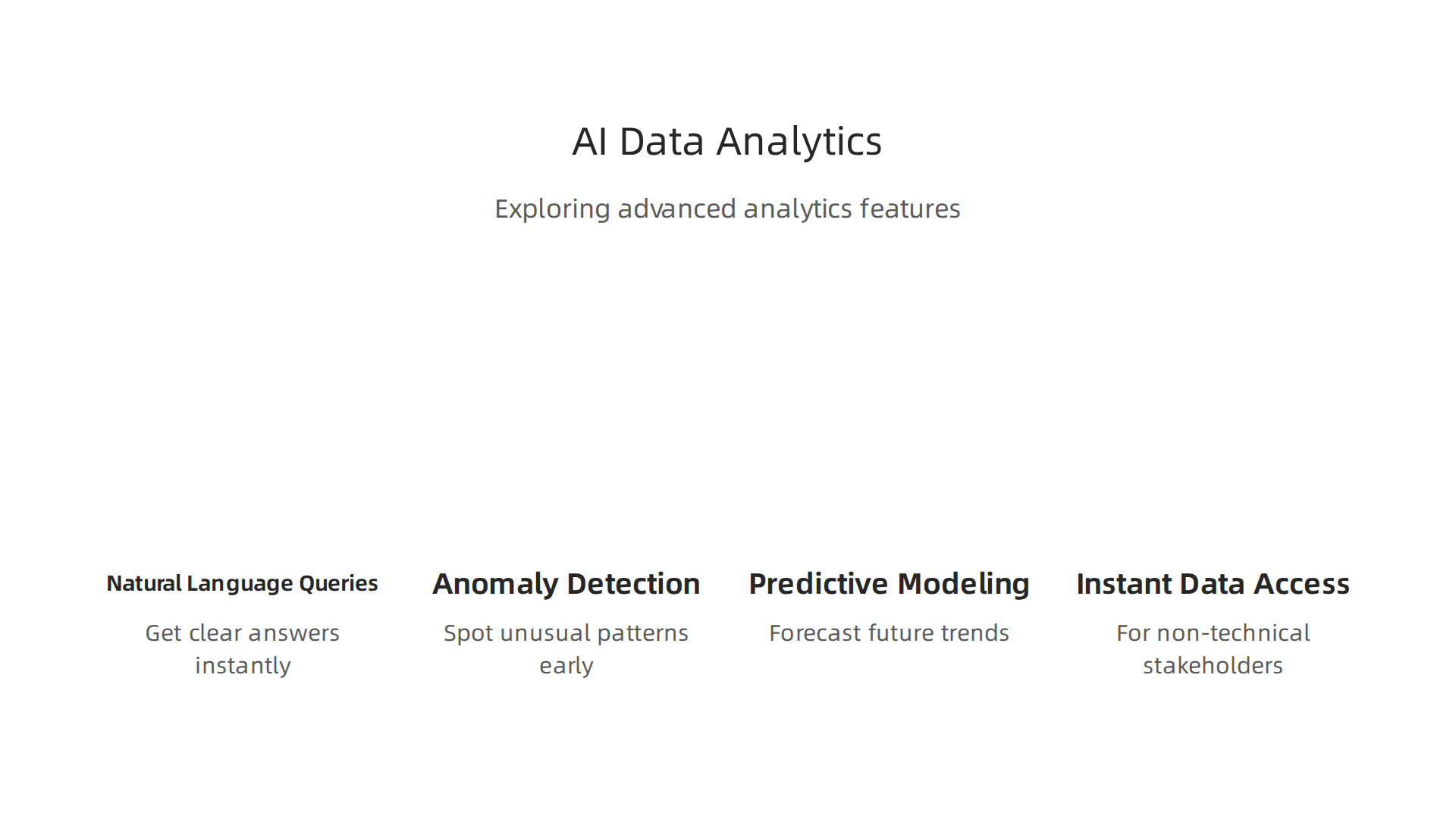
Now that your projects run smoother, it is time to shine a light on your data. In 2026, the best ai tools for businesses are making analytics accessible to everyone. You do not need a data science degree to ask your data questions and get clear answers. Natural language query interfaces now let you type things like "Show me last quarter’s sales by region" and instantly see a chart or table.
This shift is huge. Tools like Microsoft Power BI Copilot and Tableau Pulse are leading the way.

A detailed comparison of Tableau Pulse vs Power BI Copilot shows that Power BI focuses on being an end to end AI analytics platform, while Tableau excels at guided analysis and storytelling. Another platform, Querio, turns plain English into insights without any technical setup (Querio overview).
Beyond simple queries, automated anomaly detection and predictive modeling are the most wanted BI capabilities right now. These features spot unusual patterns before they become problems and forecast trends so you can plan ahead. Whether you use Domo, ThoughtSpot, or a data visualization tool like Sisense, the goal is the same: move from hindsight to foresight.
For non-technical stakeholders, this means instant access to a living data dashboard that updates itself. No more waiting for the analytics team to run a report.
If you want to build your own skills in this area, check out our guide on how to thrive as a data analyst in 2026. It covers the tools and mindsets you need to scale artificial intelligence in your daily work.
Want to stay ahead of every AI analytics breakthrough? Get a daily dose of clarity. Subscribe to The Deep View Newsletter and never miss a key update.
4. Automated Customer Support with AI Chatbots
Your data dashboard tells you what customers need. But what if an AI could take the next step and solve those needs in real time?
In 2026, automated customer support has changed completely. The best ai tools for businesses now use conversational AI that handles complex, multi-step issues with near-human accuracy. These new AI agents understand context, ask smart follow-up questions, and fix problems without passing you around.
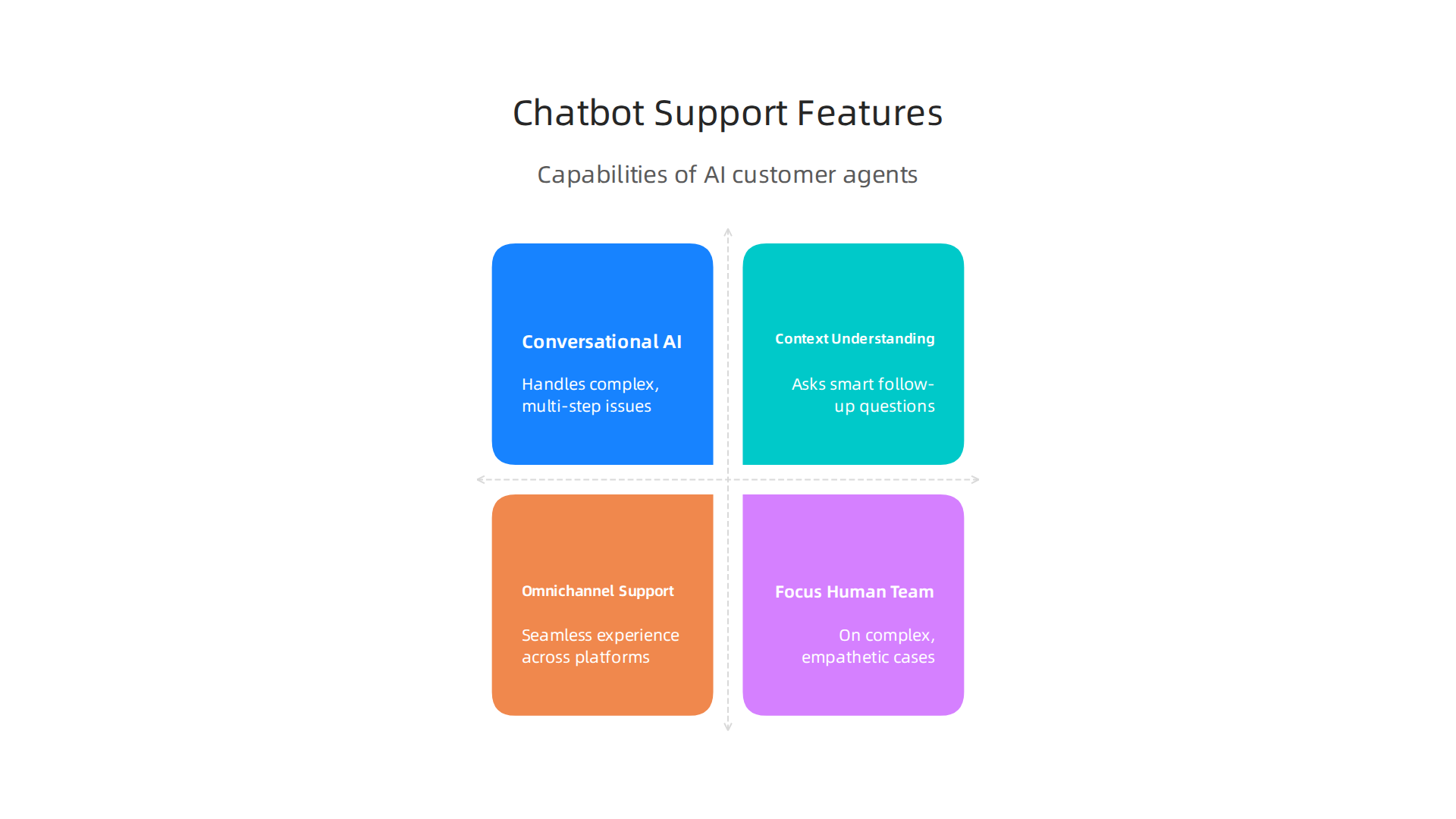
This shift saves companies a lot of money. Instead of hiring huge teams to answer the same questions all day, AI handles the routine work. Your human team can then focus on the complex cases that need real empathy.
Context is everything here. These bots are omnichannel by default. A customer can start on email, continue on live chat, and finish over voice. The AI remembers every detail. This kind of seamless experience is now standard for modern business technology stacks.
Platforms like Intercom Fin and Zendesk AI are leading the way in 2026.
If you are comparing options, a detailed breakdown of the best AI chatbots for customer service in 2026 shows how different tools work for B2B teams. Another top pick this year is Twig, which scores high for ease of use and deep automation, as seen in this honest ranking of AI chatbot platforms.
Building a system where humans and AI work together smoothly is the real trick. Our guide on human AI collaboration offers practical tips for making that partnership work well.
The world of AI support tools is moving incredibly fast. New features drop every week. Want to stay ahead of every update? Get a daily dose of clarity. Subscribe to The Deep View Newsletter and never miss a key update.
5. AI for Sales and CRM Optimization
Your sales team probably spends too much time on data entry and guessing which leads to chase. The best ai tools for businesses in 2026 solve that problem directly inside your CRM.
Here is how it works. AI now looks at your past sales data and scores every lead instantly. It tells you who is ready to buy right now.

No more cold calls to people who are not interested. The same AI can then write personalized email drafts for each lead. It uses their past behavior and industry to make the message feel human.
Some advanced tools do even more. They can create a full custom proposal or presentation in just a few seconds. You just pick a template, and the AI fills in the numbers, the case studies, and the next steps. This kind of generative AI saves hours of busy work every week.
These systems also recommend next actions inside your CRM. For example, if a customer opens a proposal twice, the AI might suggest you send a short video follow-up. It takes the guesswork out of timing.
The trick is pairing this technology with your team’s own judgment. That is where smart scale artificial intelligence plays a role. The best results come when humans and AI work as partners. Our guide on human AI collaboration offers practical tips for making that partnership work well.
Sales and CRM tools are evolving fast. New features drop every week. Want to stay on top of every update and find the right tool for your team? Get a daily dose of clarity. Subscribe to The Deep View Newsletter and never miss a key insight.
6. AI-Powered Design and Creative Tools
You do not need to be a designer to create great visuals anymore. In 2026, the best ai tools for businesses let anyone turn a simple text prompt into brand-ready graphics, short videos, or even UI prototypes.
Here is the thing. These tools work inside the platforms you already use. Think Figma, Adobe, or Canva. You just type what you want, and the AI builds it. It keeps your brand colors, fonts, and style consistent every time. That saves your team hours of manual tweaking.
Many of these tools also let you use the output for commercial projects. That matters if you are creating ads, product mockups, or client presentations. No legal headaches later.
Need to create a landing page design? The AI can generate a few options in seconds. Want to test different ad visuals? Same thing. You get variety without starting from scratch. This kind of scale artificial intelligence helps small teams act like big agencies.
If you want to understand how this technology sees and creates images, read our guide on how image artificial intelligence works.
New creative tools launch all the time. To know which ones are worth your time and your budget, get a daily dose of clarity. Subscribe to The Deep View Newsletter and never miss a key insight.
7. AI in Finance and Accounting Automation
You know the feeling. You spend hours sorting receipts, matching invoices, and staring at spreadsheets. It is tedious work. And it eats up time you could spend on growing your business. In 2026, the best ai tools for businesses handle all that heavy lifting in the background.
Here is the thing. AI now automates the boring parts of finance. Tools pull data from invoices and receipts automatically. They match bank transactions to your records. They even flag odd charges that might be fraud. This kind of scale artificial intelligence works with high accuracy, so you make fewer mistakes.
For example, platforms like Xero use machine learning to speed up bank reconciliation and catch anomalies source: Learnsignal Blog. Other tools like Dext and Hubdoc handle document extraction and data entry for you source: AI Smart Ventures. The result? Your team spends less time on data entry and more time on strategy.
But the real game changer is generative AI. These systems can now draft financial reports and even do a first pass at audit analysis. Imagine typing a prompt and getting a summary of your quarterly performance. That saves hours for accountants and business owners alike.
If you want to explore how this technology fits into your operations without running into problems, read our guide on AI without restrictions to understand the risks and rewards.
New tools launch all the time, and the landscape shifts fast. To know which ones actually save you time and money, get clear daily updates. Subscribe to The Deep View Newsletter and stay ahead of the curve.
8. AI for Recruiting and Human Resources
Hiring is one of the most time-consuming parts of running a business. You post a job, and suddenly hundreds of resumes show up. Reading every one takes forever. The best ai tools for businesses in 2026 solve this problem by handling the early stages of recruiting for you.
AI talent acquisition tools now filter resumes automatically. They look for skills, experience, and keywords that match your job description.

Some tools even schedule interviews based on your calendar. Others conduct initial screening conversations using natural language processing. This kind of scale artificial intelligence can process thousands of applications in minutes, not weeks.
The result is faster hires and less bias. An AI tool does not get tired or distracted. It reviews every candidate against the same criteria.
But the power of AI in HR does not stop at hiring. Once people join your team, HR analytics platforms use AI to predict who might leave. They look at patterns like engagement scores, attendance, and feedback. Then they recommend retention interventions, like a conversation or a role change. This helps you keep your best people.
A good data dashboard shows all this information clearly. You can see turnover risks, hiring pipeline status, and team performance in one place. It turns HR into a data-driven function.
For a deeper look at how humans and AI can work together in the workplace, check out our guide on human AI collaboration.
The world of business technology changes fast. Keeping up with the latest AI tools for HR and other departments can feel overwhelming. Get clear daily updates on what matters. Subscribe to The Deep View Newsletter and stay ahead of the curve.
9. AI-Enhanced Communication and Collaboration
Meetings can eat up your day. But the best ai tools for businesses in 2026 now handle the parts nobody likes. They summarize meetings automatically, translate conversations in real time, and suggest action items across platforms like Slack, Microsoft Teams, and Zoom.
These tools use scale artificial intelligence to listen in on a call and then create a written recap. No more scrolling through a recording. The AI pulls out decisions, deadlines, and owner names. It even posts them to your project management tool.
And that is where the real power shows up. The tightest integrations with Slack, Teams, and Zoom are a key competitive factor right now. When your meeting notes appear in your task list without anyone copying and pasting, the whole team saves time.

Platforms like Asana, ClickUp, and monday.com all ship AI features in 2026 that connect directly to these communication tools. For a deep comparison of what each one offers, check out this detailed ClickUp vs Asana vs monday.com AI features analysis. Some of them let you create workflows in plain English or assign tasks inside a chat thread. That changes how teams collaborate.
This kind of business technology makes sure nothing falls through the cracks. The AI does the busy work. Your team focuses on the actual thinking and creating.
Want to learn how people and AI can work as true partners? Read our guide on human AI collaboration.
New tools appear every week. Staying on top of the best ones for your team can feel like a full-time job. Subscribe to The Deep View Newsletter and get daily updates on the AI tools that actually move the needle.
10. Custom AI Agents and Workflow Automation
Communication tools save time on meetings. But what about the repetitive tasks that happen every day after the call? That is where custom AI agents come in.
The best ai tools for businesses in 2026 let you build your own AI agents without writing a single line of code. These agents handle complex, multi-step workflows. Think of them as digital team members that never sleep.
Say your sales team gets a new lead. An AI agent can check the lead’s company size, pull past interactions from your CRM, send a personalized email, and log everything into your data dashboard. All of that happens automatically.
No-code AI agent builders are a game changer for non-technical teams. You do not need a developer to set up automation anymore. Platforms like Tableau and Power BI now include AI features that turn plain English questions into insights. In fact, the comparison between Tableau Pulse and Power BI Copilot shows how far business technology has come. These tools let you ask questions in normal language and get instant answers from your data.
This is scale artificial intelligence at work. Small teams can act like big ones because the AI handles the heavy lifting. The key is knowing how to design the workflow so the agent does exactly what you need.
For a deeper look at how people and AI agents can work together effectively, read our guide on human AI collaboration.
The landscape shifts fast. New no-code agent builders appear every month. Subscribe to The Deep View Newsletter to stay ahead of the best ai tools for businesses as they launch.
Summary
This article explains why choosing the right AI tools is the decisive productivity advantage for businesses in 2026 and gives a practical buying guide to cut through the noise. It reviews the leading categories—writing assistants, project management, analytics, chatbots, CRM/sales, creative tools, finance, HR, collaboration, and custom agents—and highlights real benefits like saved time, better forecasting, and higher ROI. The piece shows how modern tools integrate with CRMs, CMSs and project platforms to create end-to-end workflows, and it points to concrete gains (for example, reduced planning overhead and measurable ROI) when selection and integration are done well. Readers will learn a clear framework for evaluating tools, run pilots, measure results, and scale AI responsibly while preserving human judgment. The article also emphasizes the importance of human–AI collaboration, compliance, and ongoing testing to avoid hype-driven mistakes. By the end, you’ll know which tool categories to test first, how to validate vendor claims, and how to build workflows that let AI handle routine work so your team focuses on higher-value tasks.