
Introduction
Are you trying to break into data analytics in 2026 but feeling overwhelmed by the options? You are not alone. The field is growing fast, and companies need skilled professionals who can turn raw numbers into real business decisions. But with so many programs, bootcamps, and degrees out there, how do you know which path actually works?
That is where a data analytics certification comes in. Certifications offer a structured way to prove your skills without spending years in school. They show employers you know the tools and techniques that matter right now. According to reliable data on the 7 popular data analytics certifications, professionals with a certification earn higher wages and face lower unemployment than those without one. A data analytics certification can open doors to better roles, bigger paychecks, and even data science internships that build real-world experience.

But here is the challenge. The AI industry moves fast. New tools, platforms, and methods appear every month. Choosing the right certification feels like chasing a moving target. Do you go for a general credential or something specialized? Should you take a course in AI or pursue an online master’s in data science? This guide cuts through the noise. We walk you through the top data analytics certification options for 2026. You will learn what each one covers, who it is best for, and how to pick the one that fits your goals. Whether you are just starting out or looking to move up, we help you make a smart choice.
The key is to choose strategically. A certification only helps if it matches what employers actually need. Pair it with practical experience, and you set yourself up for real career growth. For more on building a complete career strategy, check out how to succeed as a data analyst in 2026. Keep reading to find the right certification for your future. And if you want to stay ahead of the fast-changing AI landscape while you build your skills, The AI Newsletter Worth Reading can help you spot trends early and make smarter career moves.

Why Data Analytics Certifications Matter for AI Careers
You might wonder if a certification really makes a difference when you are trying to break into AI. The answer is yes. In 2026, the AI industry is growing at a breathtaking speed. Companies need people who can work with data to train models, interpret results, and build smart products. But they do not just want someone with a degree. They want proof that you can actually do the work.
That is where a data analytics certification shines. It shows employers you have hands-on skills with tools like SQL, Python, and Tableau. According to the list of roles that benefit from data analytics certification from Indeed, even experienced data scientists use certifications to refine their career path and prove specialized knowledge in areas like machine learning. For AI careers, this is huge. An AI professional who holds a certification signals that they understand not just theory but real-world application.
Certifications also fill the gap between what you learn in school and what the job actually requires.
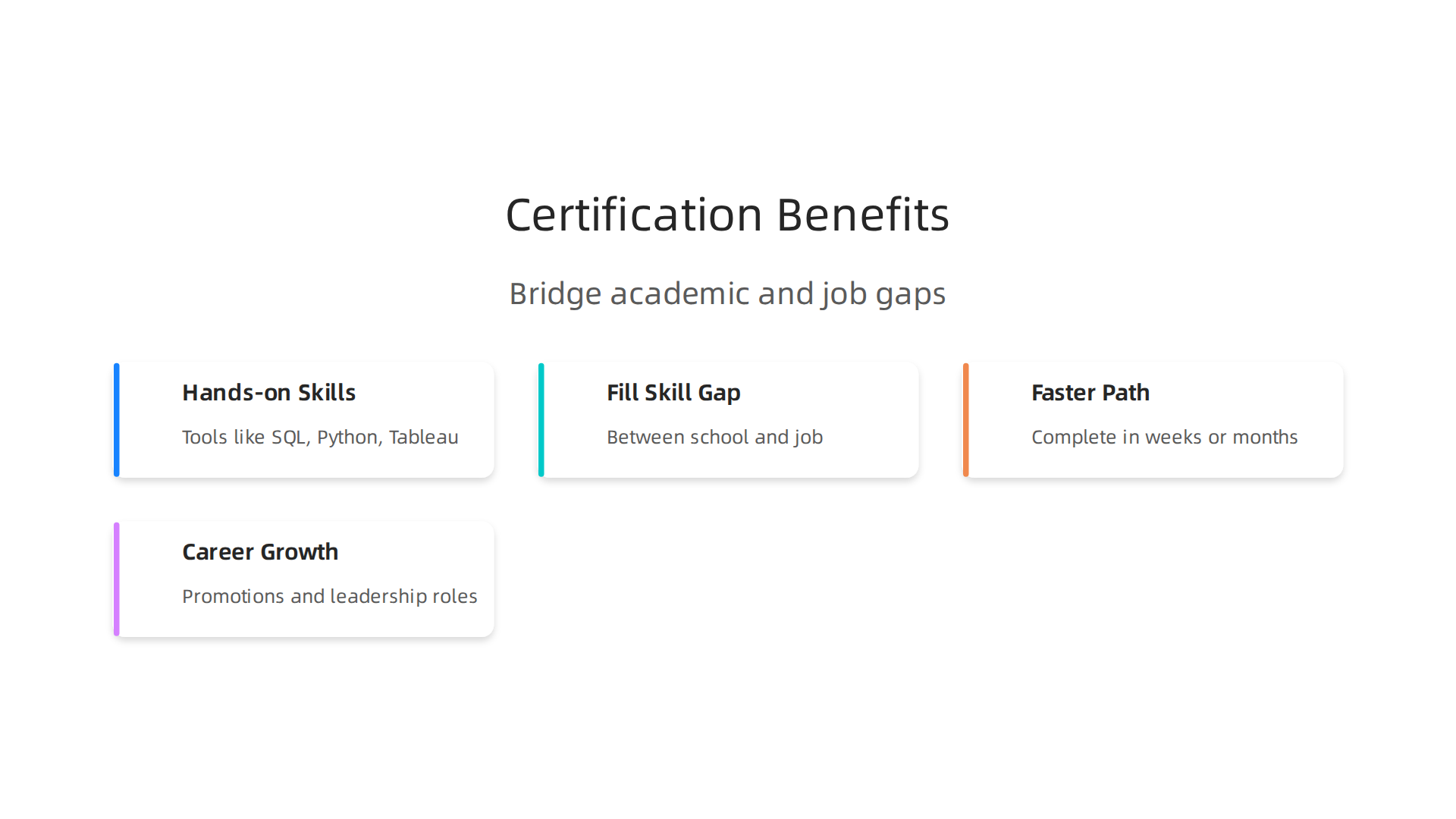
Many people enter AI through an online master’s in data science or a course in AI, but those programs can take years. A certification is faster. It focuses on the exact skills employers need right now. You can complete a respected program in weeks or months, and your salary can jump thousands of dollars as a result.
Another reason certifications matter is career growth. AI professionals with certifications often move up faster. They land promotions and leadership roles sooner. Why? Because the certification shows they are serious about their development. It proves they have taken the extra step to master their craft.
If you are aiming for AI roles, a data analytics certification can even help you land data science internships that build the experience employers value. Pairing a certification with real projects makes you a strong candidate.
For more on how certifications fit into the broader AI job landscape, check out the skills and certifications that get you hired in AI jobs in 2026. It breaks down exactly what top companies look for.
The bottom line is simple. In AI, what you can do matters more than where you went to school. A data analytics certification is one of the fastest ways to prove your abilities and accelerate your career.
Top Data Analytics Certifications in 2026: Overview and Comparison
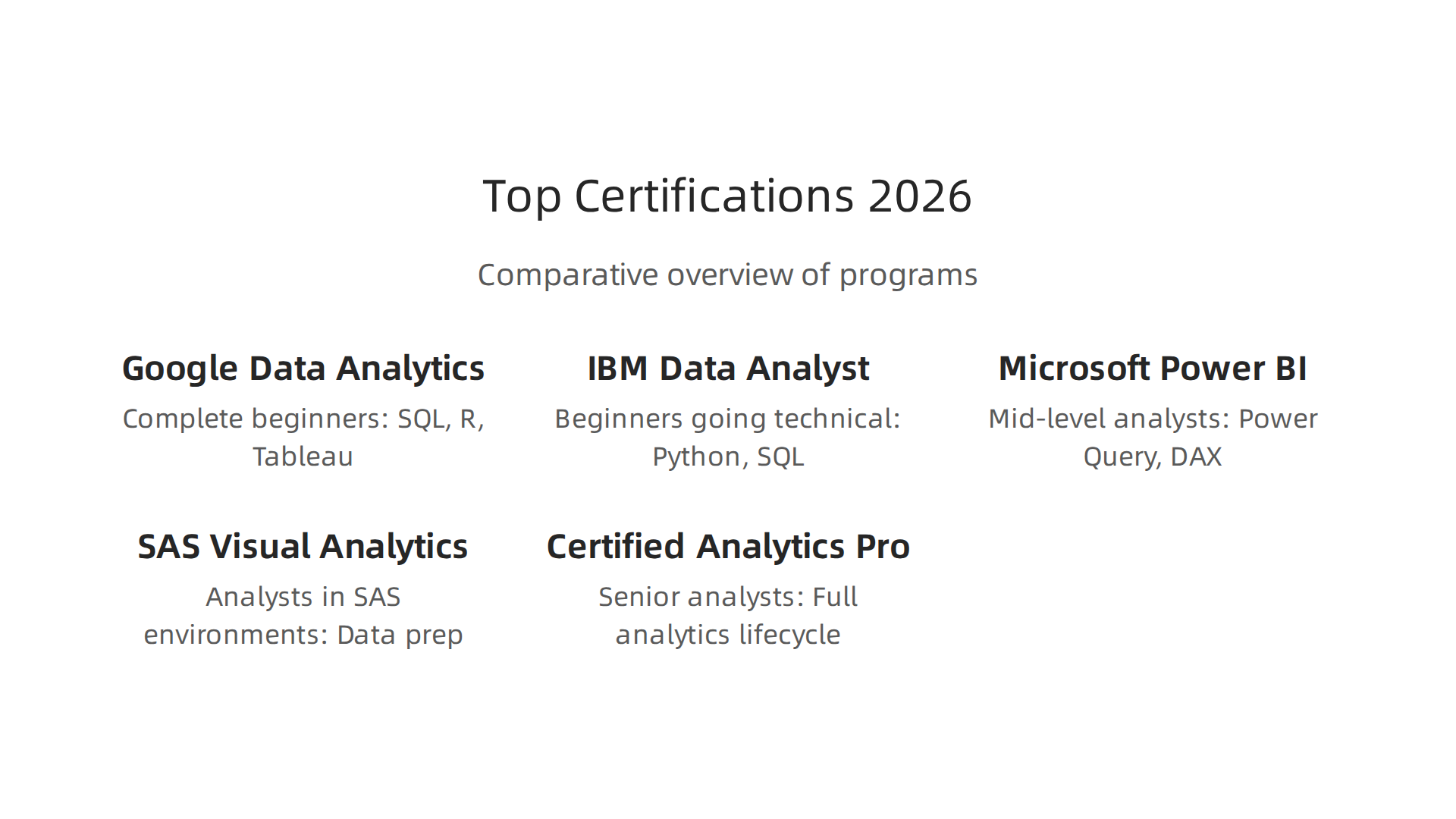
Now that you understand why certifications matter, let’s look at the best options available in 2026. The right data analytics certification can open doors to AI roles, but choosing the wrong one wastes time and money. Here is a clear breakdown of the top programs, what they cover, and who they are for.
Quick Look at the Leading Certifications
| Certification | Best For | Key Skills | Cost | Duration |
|---|---|---|---|---|
| Google Data Analytics Professional Certificate | Complete beginners | SQL, R, Tableau, data cleaning, AI tools | ~$35/month | 3 to 6 months |
| IBM Data Analyst Professional Certificate | Beginners going technical | Python, SQL, Excel, Tableau, Cognos | ~$35/month | 3 to 4 months |
| Microsoft Power BI Data Analyst Associate | Mid-level analysts | Power Query, DAX, data modeling, dashboards | ~$165 | Flexible; about 21 hours of study |
| SAS Visual Business Analytics | Analysts in SAS environments | Data prep, interactive reporting, forecasting | $180 exam | 2 hour exam; 30 hour prep course |
| Certified Analytics Professional (CAP) | Senior analysts and managers | Full analytics lifecycle: framing, modeling, deployment | $495 to $695 | 3 hour exam; 4 week prep course |
For a deeper look at all the options, check out the 6 best data analytics certifications for 2026 from Skyvia. It contains full details on each program.
Google Data Analytics Professional Certificate
This is the most popular choice for people starting from zero. You do not need a degree or prior experience. The program teaches data cleaning, analysis with SQL and R, and visualization in Tableau. It also covers how to use AI tools like Gemini. You can finish it in three to six months at 10 hours per week. Many graduates use this certification to land entry-level roles or data science internships.
IBM Data Analyst Professional Certificate
If you prefer Python over R, this is a strong pick. The IBM program covers the whole data analysis process. You learn Python with Pandas and NumPy, SQL, Excel, Tableau, and even some predictive modeling. It also includes AI automation. This certification is great if you plan to move into machine learning or data engineering later on.
Microsoft Power BI Data Analyst Associate
For professionals who already have some analytics experience, this certification proves you can use Power BI to build dashboards and reports. It focuses on data modeling, DAX formulas, and business intelligence. Companies around the world recognize this credential. It is a solid choice if you work in a Microsoft environment or want to specialize in BI.
SAS and CAP Certifications
If your company uses SAS, the SAS Visual Business Analytics credential shows you can handle data prep, reporting, and forecasting. It costs $180 for the exam. For senior roles, the Certified Analytics Professional (CAP) certification is the gold standard. It requires three to five years of experience and tests your ability to manage the entire analytics lifecycle. It is more expensive but carries serious weight.
How to Choose the Right One
Think about your current skill level and where you want to go. Beginners should start with Google or IBM. If you already know the basics and want a tool-specific credential, go with Microsoft, SAS, or Tableau. For senior positions aiming for leadership, CAP is the best bet.
Next Steps
Once you decide on a certification, pair it with real projects. You can also read how to succeed as a data analyst in 2026 for more tips on building your career.
The world of AI moves fast. A data analytics certification gives you the proof employers need. And to stay ahead, you need to keep learning every day. The AI Newsletter Worth Reading delivers clear daily updates on AI breakthroughs, tools, and career advice. Subscribe to get the insights that matter straight to your inbox.
How to Choose the Best Data Analytics Certification for Your Role
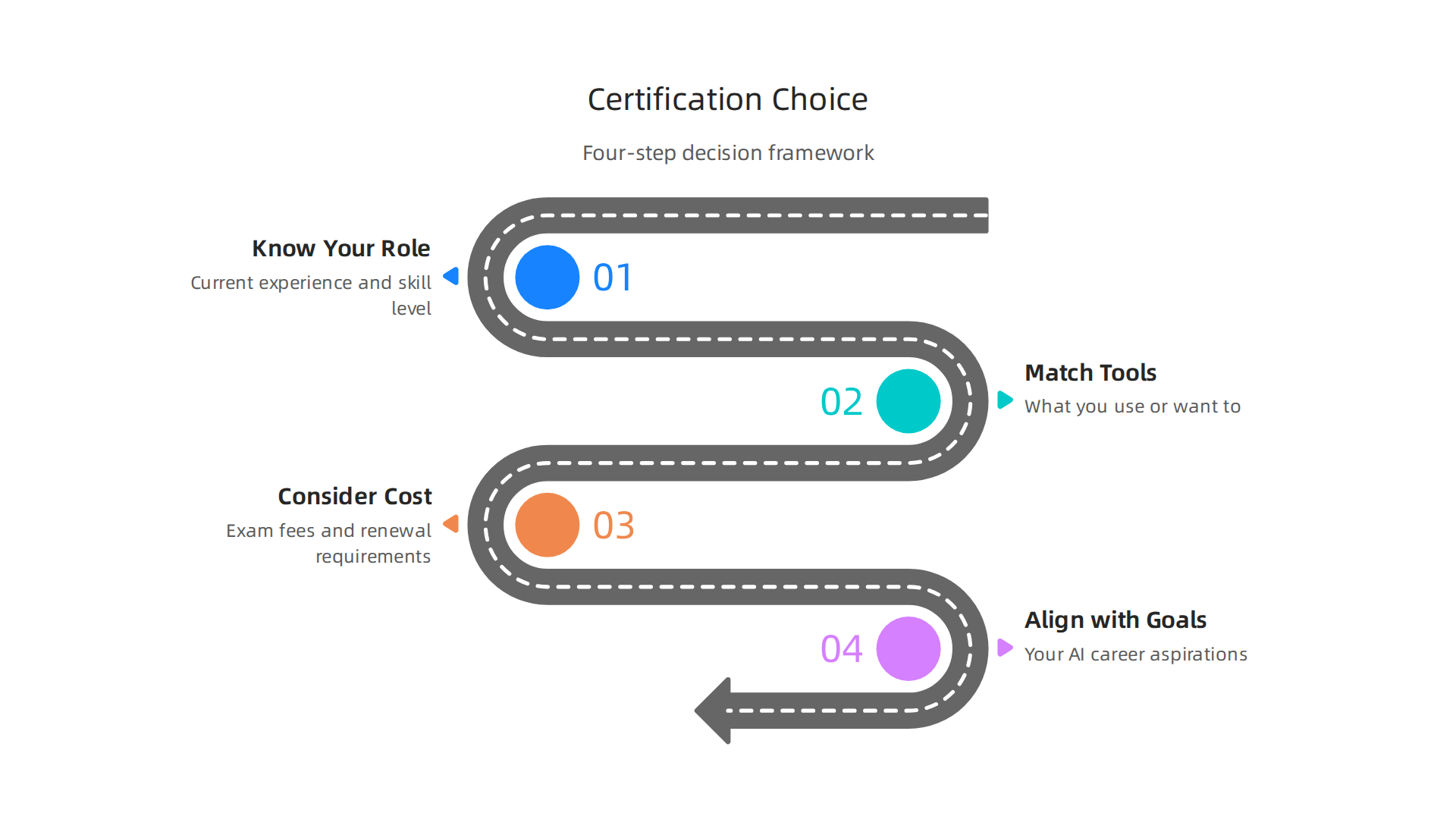
With all those options on the table, the real question is: which one fits you best? Your choice depends on a few personal factors. Let’s walk through a simple decision framework so you don’t get stuck.
Step 1: Know Your Current Role and Experience
If you are brand new to data, start with a beginner-friendly certification like the Google or IBM program. They require no prior experience. If you already work as an analyst, tools like Power BI or SAS are better bets. Senior professionals managing teams should look at the CAP certification. It tests your ability to lead the whole analytics lifecycle.
Step 2: Match the Tools You Use or Want to Learn
Your preferred tools matter a lot. If you love Python, the IBM Data Analyst path is a strong fit. If your company runs on Microsoft, the Power BI Data Analyst certification proves you can handle dashboards and business intelligence. If you work in a cloud environment, consider cloud vendor certifications. The 12 Best Data Analytics Certifications in 2026 from Dataquest shows detailed comparisons on which tools each program covers.
Step 3: Think About Cost and Renewal
Exam costs range from around $165 to almost $700. Budget for that upfront. Some certifications never expire, while others require renewal every three years. For example, the CAP certification costs $150 to $200 to renew. If you want a one-time investment, look for credentials with no renewal fees.
Step 4: Align with Your AI Career Goals
Data analytics certification is often a stepping stone to more advanced roles. If you are aiming for data science internships or an online master’s in data science, pick a certification that includes machine learning or AI fundamentals. The Google Advanced Data Analytics Certificate teaches regression models and machine learning in under six months. That’s a solid foundation if you want to move deeper into AI.
After you earn your certification, the next step is to keep learning. A practical course in AI, like the best online AI courses of 2026 that prepare you for real jobs, can help you specialize further. And if you are curious about which AI roles are growing fastest, check out the guide on generative AI jobs in 2026 to see where your new skills could take you.
Quick Decision Checklist
- Are you a beginner? Go with Google or IBM.
- Do you already use Python or SQL? IBM or Dataquest are strong.
- Do you work in a Microsoft environment? Pick the Power BI certification.
- Do you want a management-level credential? Choose CAP.
- Is your company cloud-first? Look into AWS or Azure certifications.
Take a few minutes to match your situation with the checklist above. The best data analytics certification is the one that fits your role, your tools, and your budget today while also opening doors for tomorrow.
Exam Preparation Strategies for Data Analytics Certifications
You have picked your certification. Now comes the real work: studying for the exam. It can feel overwhelming at first. But the right approach makes all the difference. Here are four strategies that actually work.
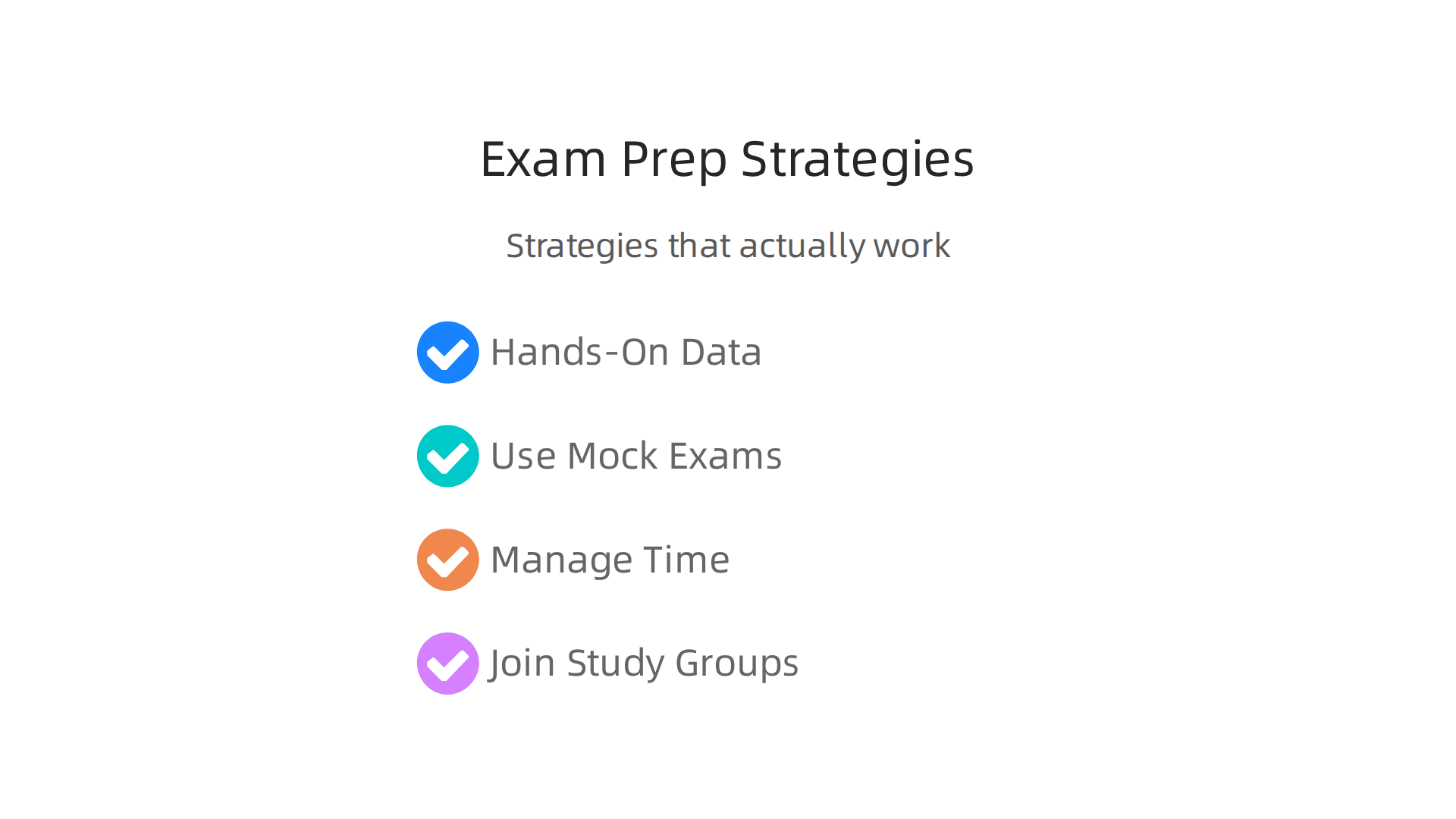
1. Get Hands-On with Real Data
Reading theory alone will not prepare you for a data analytics certification exam. You need to work with actual datasets. This builds confidence and shows you how concepts apply in real situations. According to the GSDC’s exam preparation tips, hands-on practice with real datasets is one of the most effective ways to reinforce your learning. Use free datasets from sources like Kaggle or government open data portals. Write code in Python or SQL. Build dashboards. The more you practice, the easier the exam questions will feel.
2. Use Mock Exams and Case Studies
Most certification exams include scenario-based questions. You will need to apply your knowledge to solve a business problem. Mock tests help you get used to this format. They also show you where you are weak. The Dataquest guide on the best data analytics certifications recommends taking full practice tests before your actual exam. Many official providers offer sample exams. Use them. Treat each mock test like the real thing: time yourself, avoid distractions, and review every wrong answer afterward.
3. Manage Your Time and Study Schedule
Certification exams often have strict time limits. You need to move quickly without making careless mistakes. Break your study plan into weekly goals. For example, spend week one on SQL basics, week two on statistics, and week three on visualization tools. Use a calendar or a simple checklist.

Some people find mobile apps helpful for on-the-go review. The Data Analytics Exam Prep 2026 app offers topic-based quizzes and full practice tests so you can study during your commute.
4. Join Study Groups and Forums
You do not have to study alone. Online communities on Reddit, LinkedIn, and certification-specific forums are full of people preparing for the same exams. Sharing tips and asking questions keeps you motivated. One Reddit discussion on learning data analytics highlights how connecting with others can help you discover the most important skills and avoid common mistakes. You might even find study partners who keep you accountable.
After you pass your exam, keep building. A strong certification is just the start. To truly stand out as a data analyst, you also need to stay current with AI trends that are reshaping the field. Reading a daily newsletter like the The Deep View Newsletter gives you quick, clear updates on new tools and techniques. Subscribe once and you get a short briefing every day that helps you stay ahead.
If you want a full roadmap for your analytics career, check out this guide on how to succeed as a data analyst in 2026. It covers the skills, certifications, and portfolio projects that employers are looking for right now.
Real-World Career Outcomes from Data Analytics Certifications
You might wonder if spending time and money on a data analytics certification really pays off. The short answer is yes. Many professionals see real changes in their careers after earning a credential.
Higher Job Satisfaction and Career Mobility
Certified analysts report feeling more confident in their roles. They also move between jobs more freely. When you have a recognized certification, employers see you as someone who knows the latest tools and techniques. This makes it easier to switch industries or take on new challenges. The 2026 guide from GoLogica explains that getting certified helps you stand out in a crowded job market and opens doors to better opportunities.
Salary Increases and Role Transitions
One of the biggest reasons people pursue a data analytics certification is the pay bump. Many analysts see salary jumps of 15 to 25 percent after passing their exam. Some even move into senior roles like data scientist or analytics manager.
Concrete examples show that certification can be the push you need to land a promotion. And in 2026, as companies rely more on data, those with certified skills are in higher demand than ever.
Real Case Studies: From Beginner to Analyst
Consider Marta, a retail worker who completed the Google Data Analytics Certificate. Within six months, she landed a junior analyst role at a tech startup. Or take James, a marketing coordinator who earned a Power BI certification. He moved into a business intelligence position with a 30 percent raise. Stories like these are common. Certification gives you both the knowledge and the proof to make career changes happen.
What This Means for You
If you are on the fence, look at the people who took the step before you. Many of them now earn more, enjoy their work more, and have more options. To keep that momentum going after you certify, staying current with AI trends is key. You can get clear daily AI updates from The Deep View Newsletter to stay ahead of new tools that affect your field.
For a full roadmap on turning your credential into a long-term career, check out this guide on how to succeed as a data analyst in 2026.
The Role of Data Analytics Certifications in AI Skill Development
AI tools now touch almost every part of data work. You might wonder if a data analytics certification still helps with building AI skills. The truth is, it matters more than ever.
A Built-In Learning Path
A good certification gives you a clear, step-by-step way to learn. Instead of hopping between random YouTube videos, you follow a structured route. You begin with data cleaning and basic stats. Then you move into SQL, Python, and visualization. This solid base is exactly what you need before diving into machine learning or natural language processing. The guide on data science and AI trends for 2026 from Refonte Learning explains that embracing generative AI is now essential.
Certifications help you get there in a logical order.
Strengthening the Fundamentals
AI models only work well with clean, reliable data. If you cannot clean, transform, or explore raw data properly, your AI projects will struggle. Data analytics certifications drill these core skills. Programs like the Google Data Analytics Certificate and the IBM Data Analyst Certificate teach you how to handle messy datasets and pull out accurate insights. Those same skills carry directly into AI work, where data quality makes or breaks your results.
Keeping Up with Evolving Tools
AI tools change fast. A method that worked last year might already be outdated. A data analytics certification forces you to learn current tools and practices. Many programs now include modules on AI automation, cloud platforms, and real-time analytics. For example, Microsoft certifications cover building AI-powered solutions using Azure. Continuous upskilling through certifications helps you stay relevant without scrambling to catch up.
If you want to see how these credentials fit into the bigger picture of landing an AI role, check out this guide on AI jobs in 2026 that covers skills, certifications, and portfolio building.
Future Trends in Data Analytics Certifications for AI Professionals
Certifications are changing fast. If you want to earn a data analytics certification today, you need to know what’s coming next. Here are the biggest trends shaping these programs in 2026.
Certifications Are Adding AI-Specific Modules
Old certification programs taught only spreadsheets and SQL. Now top providers build AI modules right into the curriculum. For example, the Google Data Analytics Certificate now includes tools like Gemini AI. The IBM Data Analyst Certificate covers AI automation. Many programs also offer micro-credentials. These short, focused badges let you prove you can use AI tools without taking a full course. You can stack them as you go.
Cloud-Native and Real-Time Skills Matter More
Companies want data that updates instantly. That means you need skills in real-time analytics and cloud platforms. Microsoft has stepped up with applied skills like "Implement a Real-Time Intelligence solution with Microsoft Fabric." Certifications that focus on cloud-native tools (Azure, AWS, Google Cloud) are gaining popularity because they match what employers actually use in 2026.
Generative AI Is Reshaping Exam Content
Generative AI is not just a tool. It is changing what certification exams test. Instead of memorizing steps, you now get questions about using AI to clean data faster, automate reports, or build basic models. According to Refonte Learning’s guide on data science and AI trends for 2026, embracing generative AI is crucial. Certification bodies are rewriting their exams to reflect this shift. Expect more scenario-based questions that test how you apply AI in real work.
Staying ahead means picking a data analytics certification that matches these trends. To go deeper into building the right skills, check out this overview of the best online AI courses for 2026.
And if you want clear daily updates on all things AI, subscribe to the Deep View Newsletter. It helps you stay informed without the noise.
Staying Updated: How to Leverage Certifications for Continuous Learning
Earning a data analytics certification is a big step. But the real growth starts after you get that credential. Think of your certification as a launchpad, not a finish line. The best data professionals treat learning as an ongoing habit.
Use Your Certification as a Foundation
Once you pass the exam, keep going. Many certification providers offer renewal paths or advanced credentials. You can stack micro-credentials to specialize in areas like generative AI or real-time analytics. This approach helps you bridge skill gaps and move into more senior roles. According to the womenintech article about continuous learning and certifications, ongoing education accelerates the jump from data analyst to machine learning engineer.
Pair Certifications with Real Projects
Book knowledge only takes you so far. To truly master the material, apply it. Take on projects at work, join hackathons, or explore data science internships. These hands-on experiences turn theory into results. They also build a portfolio that employers love. A strong complement to your certification is an online master’s in data science or a focused course in AI. These programs go deeper into the concepts your certification introduced.
Network with Other Certified Professionals
Learning doesn’t happen in a bubble. Join online communities, attend industry meetups, and connect with people who hold the same data analytics certification you earned. Share what you’re learning. Ask questions. The pushmetrics.io guide on continuous learning emphasizes that networking and community involvement are critical for staying current and discovering new opportunities.
For a full roadmap on building your career after certification, check out our guide on how to succeed as a data analyst in 2026. It covers the skills, habits, and connections that turn a credential into a long-term career.
Summary
This guide explains why data analytics certifications matter for AI careers in 2026 and walks you through the leading options, from beginner programs to senior credentials. It compares top choices — Google, IBM, Microsoft Power BI, SAS, and CAP — by skills taught, cost, and who should take them, and shows how to match a certification to your current role, tools, and career goals. You’ll learn practical exam preparation strategies (real datasets, mock tests, study schedules, and study groups) and how to turn a certificate into real career outcomes like higher pay, promotions, and internship opportunities. The article also covers how certifications now include AI and cloud-native modules, why fundamentals still matter for machine learning, and how to keep learning after you certify. By the end, you’ll have a clear decision framework, a checklist to pick the right credential, and next steps to prepare and apply your new skills on the job.