
Why ‘Tech Exchange’ is the Next Strategic Layer for AI Adoption
In 2026, many big companies feel lost trying to keep up with all the new Artificial Intelligence (AI) tools and ideas.

It feels like a never-ending flood of information. Businesses need better ways to share and use all this new technology, data, and smart computer models. It’s like having too many toys but no good way to store or play with them together.
Actually, many companies struggle with making AI work for them. Reports show that half of companies face problems with how their teams work and how to actually use AI, more than just technical issues. This is why the idea of a "tech exchange" is so important.
Think of a tech exchange as a special, organized marketplace inside your company. It’s a place where different teams can easily find, share, and use AI tools, data, and models. This helps everyone in a big company, especially with complex enterprise AI projects. It makes it easier to figure out the best AI to use for different tasks.
Without a good system, companies might waste money and time, or even build the same thing twice. A study from 2026 shows that challenges in setting up and running AI are major roadblocks for many businesses trying to use these new smart tools effectively Deloitte-HKU AI Adoption Index 2026 The Paradox of Promise and ….
This guide will give you a clear plan. We will talk about what a tech exchange really is, why it matters so much for using AI well, and how to put one into action. We will also cover how to set rules for it (governance), how to see if it’s actually making money for your company (ROI), and how to make it grow bigger.
To keep up with all the latest changes and breakthroughs in AI, consider subscribing to The AI Newsletter Worth Reading for clear daily updates.
What Exactly is a Tech Exchange? A Practical Framework
Let’s dive deeper into what a tech exchange actually means. Imagine it as a special place where all the smart tools, information, and ideas about Artificial Intelligence within your company can live. It’s not just a folder on a computer. It’s a living system that helps different parts of your business share and use AI better. This kind of setup is key for getting the most out of enterprise AI.
A good tech exchange has a few main parts, like different layers working together:
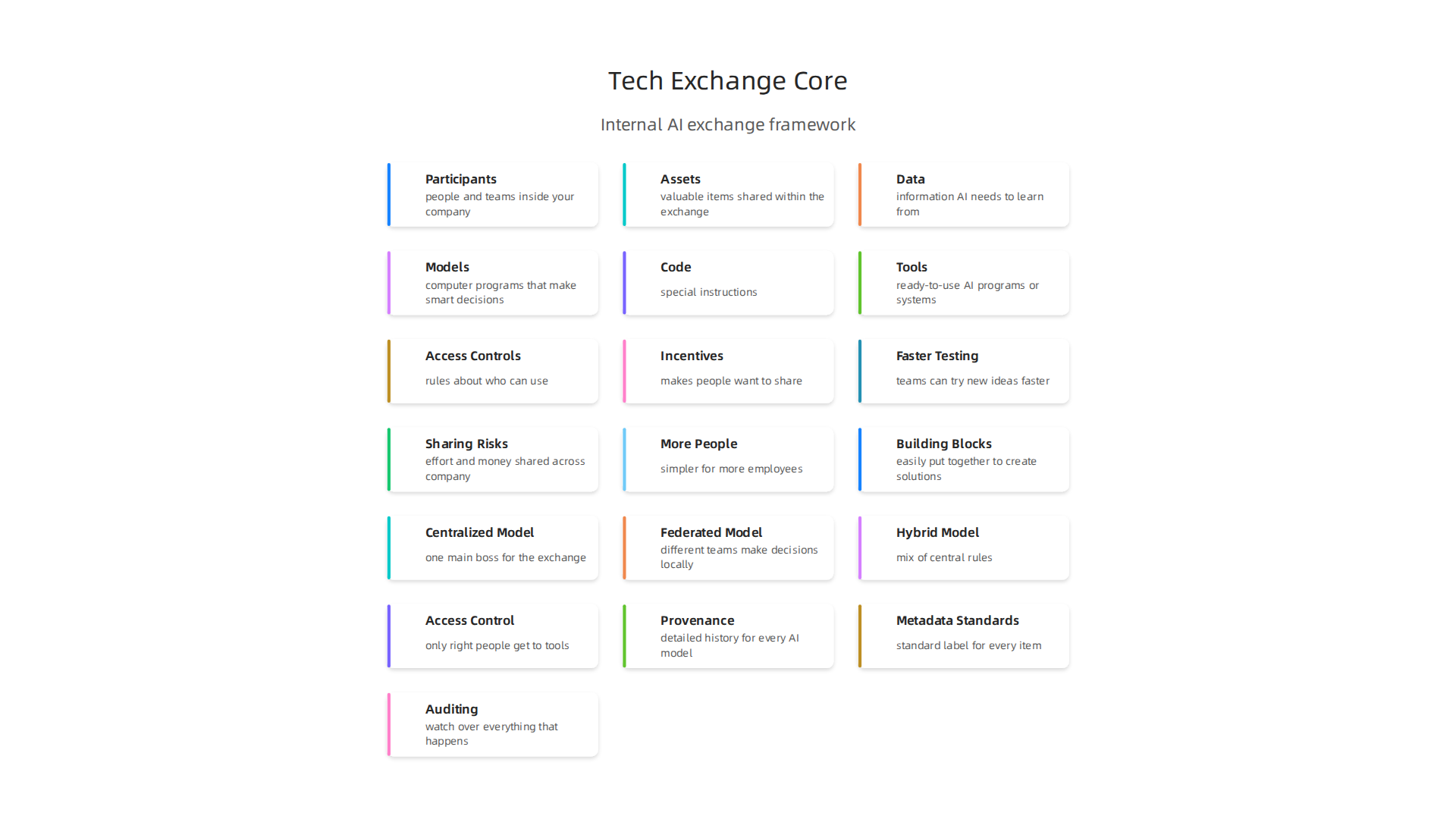
- Participants: These are the people and teams inside your company. They are the ones who put things into the exchange, like new AI models they’ve built. They are also the ones who search for and use what others have shared. Think of them as both sellers and buyers in a special internal store.
- Assets: These are the valuable items shared within the exchange. They can be different kinds of things:
- Data: Information that AI needs to learn from. Good data is like good food for AI.
- Models: These are the "brains" of AI. They are computer programs that can make smart guesses or decisions.
- Code: Special instructions that make AI tools work.
- Tools: Ready-to-use AI programs or systems that help with specific tasks.
- Access Controls: Not everyone should have access to everything. A tech exchange has rules about who can see, use, or change each asset. This keeps sensitive data safe and makes sure people use the right tools for the right jobs.
- Incentives and Transaction Models: This part makes sure people want to share and use the tech exchange. It could be about rewarding teams for sharing useful tools, or making it super easy to find the best AI to use for a project. It helps show the value of sharing.
Some people might confuse a tech exchange with other ideas. For example, a "data marketplace" usually focuses only on sharing data. An "internal model hub" might only store AI models. A tech exchange is bigger. It brings together all these different parts in an organized way, making it easier for your company to adopt AI broadly. In fact, many European companies that use AI mostly buy ready-to-use systems, which shows a strong need for better internal sharing systems to manage these assets once acquired, according to a survey on AI adoption European enterprise survey on the use of technologies based ….
Think of it as the complete ecosystem where your company’s AI efforts can really grow. It helps your teams build and use smart technologies faster and more efficiently. To truly succeed, businesses need clear rules for managing these AI systems. Learn more about how to set up and run these systems with the Leaders’ Guide to Building and Operating Enterprise AI Systems.
Why Tech Exchanges Matter for AI-Driven Businesses
For any business in 2026 looking to truly make the most of Artificial Intelligence, having a well-run tech exchange isn’t just a nice-to-have, it’s a must. It brings many good things that help a company grow and work smarter.
Think about these main benefits a tech exchange offers:
- Faster Testing of New Ideas: When all your AI tools and data are in one easy-to-reach place, teams can try new ideas much faster. They don’t have to start from scratch every time. This speed means your company can learn and improve its AI projects more quickly.
- Sharing Risks and Work: If one team builds a useful AI model, other teams can use it right away. This means the effort and money spent are shared across the company. It makes everyone’s job easier and reduces big risks for any single project.
- More People Can Use AI: A tech exchange makes it simpler for more employees to access and use powerful AI tools, even if they aren’t AI experts. This builds a bigger network of people who can benefit from and contribute to your enterprise AI efforts. It’s like giving everyone the right tools for the job.
- Building Blocks for New AI: Imagine AI tools as LEGO bricks. A tech exchange allows different AI parts to be easily put together to create new, more complex solutions. This "composability" helps your company build unique capabilities that fit its exact needs.
Making AI Adoption Easier
Many companies face challenges when trying to use AI more widely. These can include not having enough skilled people, the high cost of new tools, or simply finding it too complicated. For instance, reports show that many businesses struggle with cultural hurdles and challenges in putting AI plans into action, even more than just technical problems Deloitte-HKU AI Adoption Index 2026 The Paradox of Promise and ….
A strong tech exchange helps overcome these problems:
- Less Need for New Hires: By making existing AI tools and knowledge available to everyone, a tech exchange can lower the need to constantly hire new, expensive AI specialists for every project.
- Saving Money: Sharing valuable AI assets means different teams don’t have to buy or build the same things multiple times. This saves money and makes AI adoption more affordable.
- Simplifying Things: With clear rules and an organized system, a tech exchange makes using AI less confusing. It guides people to the best AI to use for their tasks.
- Breaking Down Walls: When sharing is easy and encouraged, people are more likely to work together. This helps break down any resistance to new technology within the company.
By smoothing out these bumps, a tech exchange lets businesses move faster and smarter in their AI journey.

It’s truly a game-changer for becoming an AI-driven company in 2026.
Staying informed about the fast-changing world of AI is crucial for leaders and professionals. Get clear, daily AI updates right to your inbox.
The AI Newsletter Worth Reading
Designing an effective tech exchange: governance, access, and incentives
To really make the benefits of a tech exchange happen for your business, you need a smart plan for how it will work. This includes deciding who makes the rules, who can use what, and how to get people excited about sharing and using AI tools.
Who Makes the Rules? Choosing a Governance Model
A good "governance model" means having clear rules for how your tech exchange runs. It’s about who gets to decide what AI tools are added, how they are kept safe, and who can use them. There are a few ways to set this up:
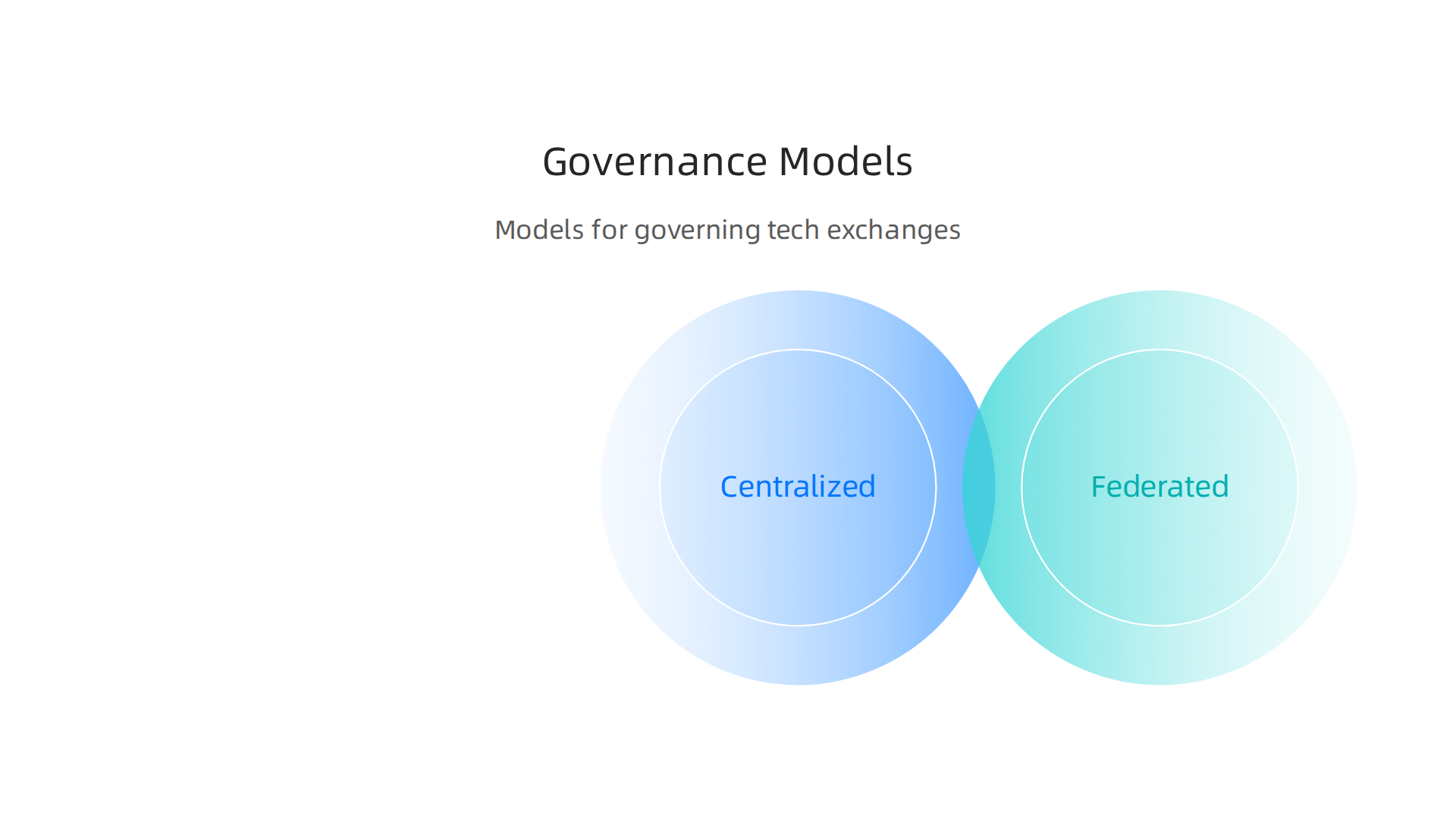
- Centralized Model: This is like having one main boss for the whole tech exchange. A single team or group makes all the big decisions. This can be great for smaller companies or when you’re just starting, as it keeps things simple and consistent. It makes sure everyone follows the same steps, which is important for things like AI risk & governance.
- Federated Model: In a bigger company with many different departments, a federated model might work better. Here, different teams or parts of the company get to make decisions for their own area, but they still follow some main rules from the top. Think of it as local leaders having power, but with a national guideline. This lets teams move faster while still being organized. The idea is that architecture activities are spread out to match local business needs, as seen in some EA Operating Models.
- Hybrid Model: Most large businesses using enterprise AI will find a hybrid model to be the most helpful. This is a mix of both. Some important rules, like safety and data protection, come from a central group. But individual teams still have the freedom to manage their own AI tools and data within those main rules. This balance helps companies be agile while keeping everything secure and in order. Many setups use a central authority for shared items, while business units decide on their own specific applications Service-Oriented Architecture Governance for the Services Driven Enterprise.
Choosing the right model is a big step for your enterprise AI success. It helps make sure everyone knows their part.
Access and Incentives: Getting Everyone Involved
Once you have your rules, you need to think about access and incentives. How do you make sure people can easily find and use the best AI to use, and how do you encourage them to share their own useful AI tools?
Managing Access: A good tech exchange makes it easy for the right people to get to the right tools. This means setting up permissions so that employees can only access what they need for their work. It’s about keeping data safe while also making tools widely available.
Creating Incentives: People are more likely to share their good work if there’s something in it for them.
- Credits or Points: You could give teams "credits" for adding valuable AI models or datasets. These credits could then be used to access other premium tools or resources.
- Revenue Share: If an AI tool created by one team helps the company earn more money, that team could get a share of the extra profit.
- Reciprocity: This is about building a culture where teams help each other. If one team shares a great tool, other teams are more likely to share back, creating a helpful community.
- Reputation Systems: Teams or individuals who share high-quality, useful AI tools could gain a good reputation or be recognized within the company. This kind of recognition can be a strong motivator, much like how some platforms give rewards or rebates for those who provide liquidity or volume Fee Calculation and Tier Systems: Maker/Taker Models and …. Governments also see the value in this, with plans to encourage researchers to share high-quality data publicly America’s AI Action Plan.
By carefully thinking about governance, access, and incentives, your company can build a powerful tech exchange that truly supports its AI goals in 2026. For more in-depth guidance on steering your organization’s AI journey, consider exploring The Leaders Playbook for AI Governance in 2026.
Building a successful tech exchange for your company’s AI tools is not just about rules and rewards. You also need to pay close attention to the technical details and legal stuff. This helps make sure everything runs smoothly and safely.
Technical Safeguards: Keeping Your Tech Exchange Secure
To make your tech exchange trustworthy, you need to put some important technical controls in place.
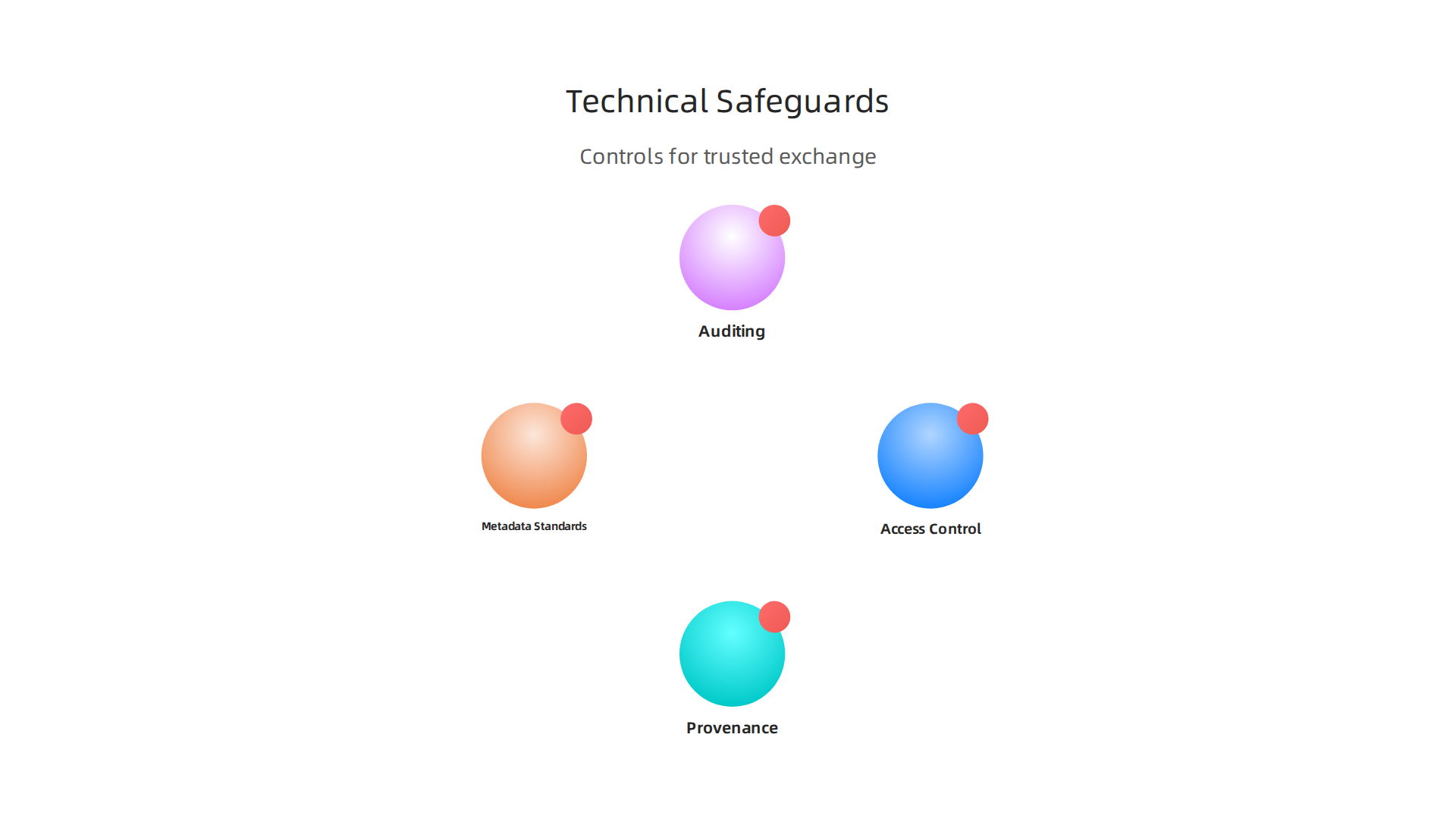
These controls protect your data and AI tools, much like a good lock protects your house.
- Access Control: This means making sure only the right people can get to certain AI tools and data. It’s like having different keys for different rooms. This helps keep sensitive information safe, which is a big part of dealing with AI tools and data privacy.
- Provenance: Think of this as keeping a detailed history book for every AI model and dataset. It shows where the data came from, who worked on the AI tool, and any changes made. This helps ensure quality and trust. Understanding core data fundamentals for AI professionals is key here.
- Metadata Standards: This is like having a standard label for every item in your tech exchange. Metadata gives important details about each AI tool or dataset, like what it does or what kind of data it uses. Good standards make it easier to find and use the best AI to use, helping with smart data solutions and improving quality, accuracy, and completeness, as highlighted in guides for KPMG AI Risk & Controls.
- Auditing and Secure Compute: You need systems that watch over everything that happens in the exchange to make sure rules are followed. Also, the computer systems where the AI tools run must be very secure to prevent problems. This is important for risk management of Artificial Intelligence systems. The government of Bangladesh is also working on a data-sharing framework for 2026-2030 to define standards and processes for managing data assets securely National AI Policy Bangladesh 2026-2030 (DRAFT V1.1).
Legal Matters: Important Rules to Follow
Setting up a tech exchange also means thinking about some tricky legal points. These guardrails protect both your company and the people who share and use the AI tools.

- Licensing Models: If teams are sharing AI tools, how will they be used by others? You need clear rules for who can use what and under what conditions. This is often done through licensing, which defines usage rights.
- IP Ownership: Who owns the clever ideas or "intellectual property" (IP) behind an AI tool shared on the exchange? This needs to be clear from the start to avoid arguments later.
- Privacy and Compliance Boundaries: When you share data and AI tools, you must follow strict privacy rules, like the upcoming AI Act in Europe, which will be enforced starting August 2, 2026 AI Act | Shaping Europe’s digital future – European Union. This means knowing what data can be shared, how it’s protected, and making sure everything meets legal standards. This also covers AI and data protection.
- Contractual Guardrails: You’ll need agreements or contracts that clearly state everyone’s responsibilities and rights within the tech exchange. These contracts help protect everyone involved and set clear expectations.
By carefully handling these technical and legal details, your enterprise AI tech exchange can be a safe and powerful place for innovation. It can help your company grow by making it easier to find and use the best AI tools, whether it’s ninjatech AI or other groundbreaking solutions.
Staying on top of these fast-changing rules and new AI developments is crucial.
The AI Newsletter Worth Reading
To make your enterprise AI tech exchange truly work, you need to set up the right platforms and smart ways of doing things. This means choosing the best AI to use, from the tools themselves to how everyone works together with them.
Operationalizing a tech exchange: platform choices, workflows and tooling
Building a tech exchange is a bit like setting up a special library for all your company’s AI tools. You need to decide what kind of library it will be and how people will find, use, and share the tools. This is key for any successful leaders guide to building and operating enterprise AI systems.
Platform Choices: Different Kinds of Exchanges
Just like libraries, tech exchanges can come in different forms:
- Internal Hub: This is like a private library just for your company. Teams share their AI tools and data only within the company. It’s great for keeping things secure and easy to manage inside, especially for specific enterprise AI needs.
- Partner Marketplace: Think of this as a special market where your company and trusted partners can share AI tools. It lets you work closely with others, but still keeps things somewhat private.
- Federated Ledger: This is a more spread-out system. Instead of one central place, different parts of your company or partners keep their own AI tools but follow common rules for sharing. This helps with bigger organizations and ensures "data platforms for multi-organizational settings" work well, as explained in research for 2025.
- API-First Exchanges: These exchanges focus on making AI tools available through special connections called APIs. It’s like giving others a special code that lets their software talk directly to your AI tools. This is very good for quick and automatic sharing.
Each type has its own pros and cons. When picking the right one, you need to think about what your company needs most. You can learn more about picking the right top AI platforms for business growth in 2026.
Operational Workflows: Making Things Run Smoothly
No matter which platform you choose, you need clear steps for how things will work every day. These steps are called operational workflows:
- Onboarding: This is about how new AI tools or data get added to the tech exchange. It includes checking them, making sure they meet quality rules, and adding important details like "provenance," which is like a history record. Provenance helps everyone trust the AI, detailing where information comes from and how it’s used. This kind of systematic metadata capture is important for "provenance-based computing" and for checking the quality of data.
- Curation: Once tools are in, they need to be kept tidy and up-to-date. This means making sure descriptions are clear, removing old or broken tools, and helping users find the best AI to use for their projects.
- Access Provisioning: This is about making sure only the right people can use certain AI tools and data. It’s like giving out library cards, but with different levels of access. Advanced "provenance driven identity trust architecture" helps manage who can access what.
- Monitoring: You need to watch how AI tools are being used. This helps you see if they are working well, if there are any problems, or if rules are being broken.
- Feedback Loops: It’s important to have ways for users to say what they think about the AI tools. This feedback helps improve the tools and builds trust within the tech exchange.
Setting up these workflows helps make sure your tech exchange is useful, safe, and trustworthy. Also, don’t forget the tools you will need to build and manage the platform. Think about your options for enterprise AI tooling in 2026, whether you want to build it yourself, buy it from a vendor, or work with others to develop it.
After you’ve set up your tech exchange with the right tools and ways of working, the next big step is to know if it’s actually helping. How do you measure if all that effort is truly making a difference for your company? This is where figuring out the value and watching for problems comes in.
Measuring ROI and impact: KPIs, evaluation methods, and risks
To see if your enterprise AI tech exchange is doing a good job, you need to look at key numbers and ways to check its health. This is called measuring its "Return on Investment" (ROI) and its overall impact. Experts often talk about the importance of understanding the AI and tech investment ROI for businesses.
Practical KPIs: How to Know Your Tech Exchange is Working
Key Performance Indicators (KPIs) are like report card grades for your tech exchange. They tell you how well it’s performing:
- Time-to-Integration: How quickly new AI tools or data can be added to the exchange and made ready for use. Faster is better!
- Reuse Rate: How often teams find and use existing AI tools and data instead of building new ones from scratch. A high reuse rate means less wasted effort and money. This helps everyone find the best AI to use without extra work.
- Cost Savings: How much money your company saves because teams aren’t buying or building the same AI tools over and over.
- Revenue Enablement: Does the tech exchange help your company make more money? Maybe it helps launch new products faster or makes customer service better, which brings in more sales.
- Model/Data Quality Metrics: This measures how good the AI models and data in the exchange are. High-quality data leads to better AI results and more trust in the system.
Evaluation Methods and Risk Signaling: Checking for Success and Problems
You need ways to test and check your tech exchange often to make sure it’s on the right track and to spot any problems early. If you’re building an enterprise AI system, it’s crucial to think about your AI strategy for executives drive measurable business value from the start.
Here are some ways to do that:
- A/B Experiments: This is like trying two slightly different versions of something to see which one works better. For example, you might try two ways of showing available AI tools to users and see which one gets more tools used.
- Pilot Cohorts: Before launching a new AI tool or feature to everyone, test it with a small group of users first. This "pilot" group can give feedback and help you fix any issues before a wider release. Using a project evaluation template can help you track goals and risks during these pilots.
- Continuous Compliance Checks: Always be checking that the tech exchange follows all company rules and legal guidelines. This helps stop problems before they get big. It’s like having a regular check-up to make sure everything is healthy and secure.
By keeping a close eye on these metrics and using these testing methods, you can make sure your tech exchange is a success and avoid big risks. Learning about ops technology for AI professionals pilot and measure success can further help in this process.
To stay on top of the latest advancements in AI and technology that can impact your enterprise, consider subscribing to The AI Newsletter Worth Reading.
After your enterprise AI tech exchange is set up and working well, and you’re regularly checking its success, the next big step is to make it even bigger. This means thinking about how your tech exchange can help not just your company, but also other businesses, perhaps even in different industries. This is where partnership models and marketplace strategies come in.
Scaling across industries: partnership models and marketplace strategies
When you want to grow your tech exchange, you might look at two main paths: making it special for one industry or making it useful for many.
Choosing Your Path: Specific or Broad?
- Sector-Specific Exchanges: Some companies build a tech exchange that is only for their own industry. For example, a tech exchange just for healthcare AI tools. This works best when the AI tools and data are very unique to that field. It helps deep experts find the best AI to use for their specific challenges.
- Horizontal Marketplaces: Other companies create a tech exchange that can be used by many different types of businesses. This is like a big online store where many different kinds of AI tools and data are sold. These marketplaces act as central hubs, allowing companies to sell digital services and manage whole ecosystems, according to insights from 2026 Marketplace Platforms Aren’t One Market Anymore.
In 2026, many companies are finding that working with partners is key to growing their AI efforts. In fact, most companies rely on partners for certain types of AI, and even more plan to work with partners in the future, as new research shows in Data-Driven Insights on Cloud Marketplaces and ….
Working Together: Partnership Models
To truly scale a tech exchange, you need good partners. These partnerships can take many forms:

- Sharing Resources: Companies might share their AI models or data with each other through the exchange.
- Co-Developing Tools: Sometimes, partners work together to build new AI tools that can be offered on the tech exchange.
- Helping Others Sell: Some partners help market and sell the AI tools from the exchange to new customers.
- Building a Strong Ecosystem: A good partner program makes sure that partners are supported and can find ways to grow their own businesses through the tech exchange. Reports like the Ecosystem Compass 2026 look at how companies invest in their partners’ success.
Building a strong partnership program is very important for enterprise AI. Experts suggest focusing on finding valuable integrations and partners that customers already use and trust, as highlighted in "Building and scaling a high-impact tech partner program."
Making Money: Commercial Strategies
Once you have a tech exchange with partners, you need smart ways to make money and encourage more people to use it.
- Pricing: How much do you charge for the AI tools or data? This can be based on how much a user uses, how many users they have, or a flat fee.
- Tiering: This means offering different levels of service at different prices. For example, a basic plan might be cheaper than a premium plan that offers more features or support. Many exchanges use tiered fees based on how much a user trades or uses the services, as explained in "Fee Calculation and Tier Systems: Maker/Taker Models and …".
- Partner Enablement: This means giving your partners the tools and support they need to succeed. This could be training, marketing materials, or technical help. Helping partners align their pricing with your goals and building a shared story for customers can help a marketplace grow big, as discussed in How One Of The Largest MarTech Marketplaces Achieves Scale w.
- Network Effects: This is when the tech exchange becomes more valuable as more people use it. Think of a social media site: it’s more useful when more of your friends are on it. The same is true for an enterprise AI tech exchange. The more AI tools and data available, and the more users who use it, the better it becomes for everyone. It’s about driving a continuous cycle of value.
These strategies help your tech exchange grow bigger and become a key part of how companies find and use AI solutions. Learning about The 2026 Leaders Guide to Enterprise AI Platforms can offer more insights into platform growth.
Summary
This article explains why a corporate "tech exchange" is the next strategic layer for enterprise AI adoption and gives a practical blueprint to design, operate and scale one. It defines a tech exchange as an internal marketplace for data, models, code and tools that makes AI reusable, composable and easier for non‑experts to access. The guide covers the core components (participants, assets, access), governance options (centralized, federated, hybrid), and incentive models that drive sharing. It then walks through essential technical safeguards and legal rules—provenance, access control, licensing and compliance—plus operational workflows for onboarding, curation and monitoring. You’ll also learn how to pick platform types, measure impact with concrete KPIs and experiments, and grow via partner and marketplace strategies so the exchange delivers measurable ROI across the business.