

The world of artificial intelligence is changing super fast in 2026. Every day, there are new discoveries and tools. For leaders in big companies, this means two things: huge chances to grow and improve, but also a lot of new information to sort through. It can feel like too much to keep up with, and it’s hard to know what’s truly important for your business.
We see amazing new ai systems and capabilities emerge constantly. From smarter ways to develop software with ai powered software development to better ways to understand information using content intelligence, AI is everywhere. But with all this speed, how do leaders make smart choices? How do they decide which ai systems to use? How do they make sure these tools work well and are safe for their company? Many leaders feel overwhelmed by this flood of new ai for developers tools and ideas.

They need clear answers, not more hype.
That’s where this guide comes in. We want to give you a simple, fact-based way to understand, plan, and use ai systems in your business. This guide will show you how to design, test, and make these powerful tools work for you quickly and safely. It will help you cut through the noise so you can focus on what really matters for success in enterprise AI. For example, successful companies often build their AI strategies with a "multi-model architecture" from the very start, which means they use different AI models for different tasks to get the best results, according to the Enterprise AI Playbook. This strategic planning is key to getting real business value.
If you are looking for more detailed information on how to prepare your company, you might want to explore an enterprise AI adoption executive roadmap.
For those who want to stay updated daily on all things AI, consider subscribing to The AI Newsletter Worth Reading to get clear daily AI updates from The Deep View Newsletter.
Reference Architecture: Core Components of Modern Enterprise AI Systems
To really make ai systems work for your business, it helps to know how they are built. Think of it like building a house. You need a good plan, called a reference architecture, to make sure everything works together. This plan shows all the important parts of your AI system and how they connect.
A good AI reference architecture helps companies develop, test, and check their ai systems correctly. This is true for all kinds of AI, from simple tools to complex ai powered software development. According to advice for state governments, a mature AI plan should cover areas like data, how things are developed, how they are put into use, how they run, and how secure they are, among other things State Government Artificial Intelligence Advisory Council Final ….
Let’s look at the main building blocks of modern enterprise ai systems:
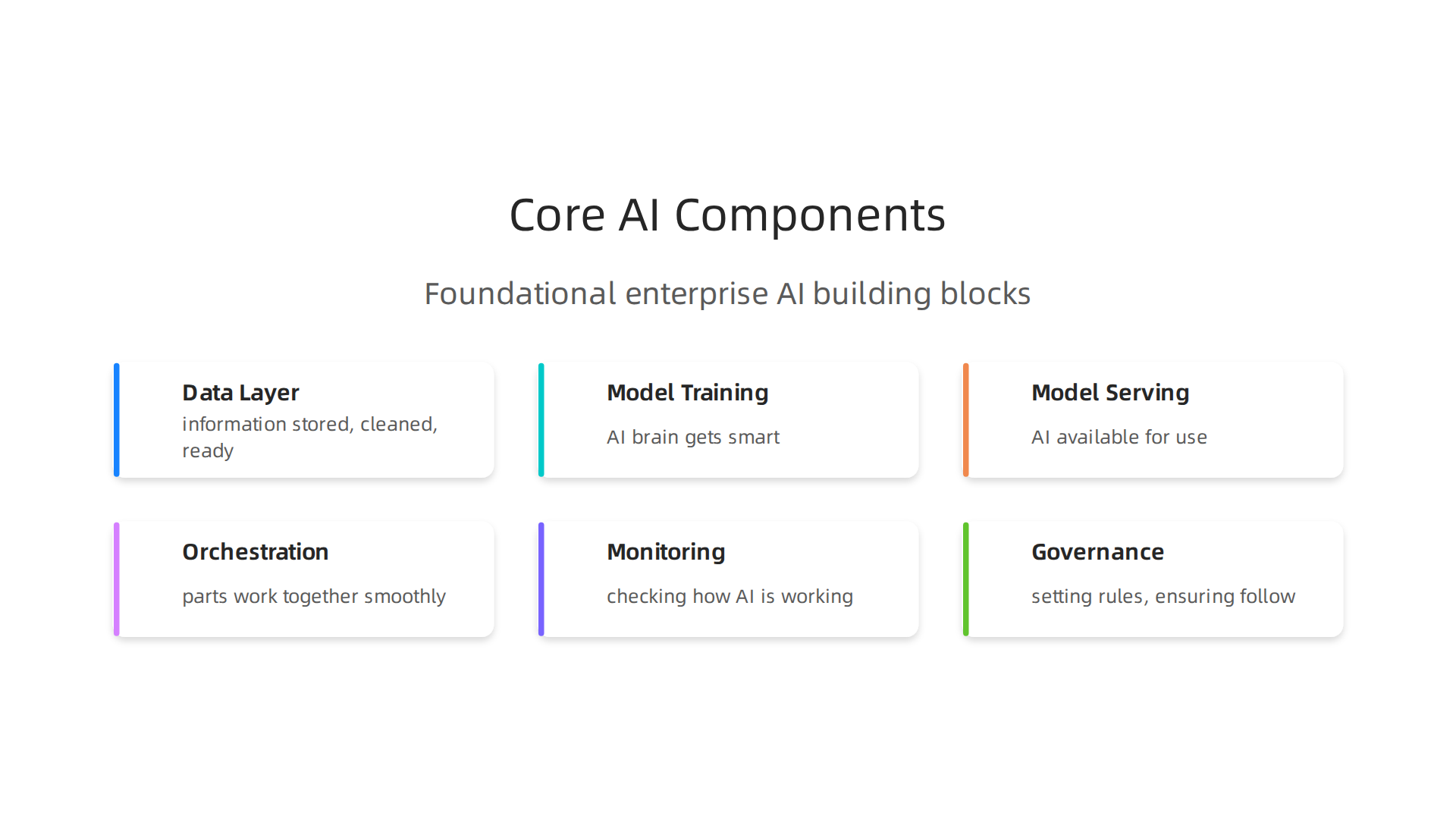
The Data Layer
Every AI system needs good data. This part of the system is like a big library where all the information is stored, cleaned up, and made ready for the AI to use. It’s super important to have strong data foundations for AI to learn from. This includes making sure the data is accurate and secure. For more on getting your data ready, you can explore mastering data foundations and data literacy for AI leadership.
Model Training
This is where the AI "brain" gets smart. Companies use their clean data to teach AI models to find patterns and make predictions. This step can involve a lot of computing power, especially for advanced ai software development. Getting this right is key to how well your AI tools will perform.
Model Serving
Once an AI model is trained, it needs to be put to work. Model serving is about making the trained AI available for use, like a smart helper that gives answers or takes action when needed. It’s how your ai systems actually deliver value to your business operations.
Orchestration
Think of orchestration as the conductor of an orchestra. It makes sure all the different parts of your ai systems work together smoothly. This is especially important when you’re using many different AI models or when AI needs to work with other computer programs.
Monitoring
Even after AI is running, you need to watch it closely. Monitoring means checking how well the AI is working, if it’s making good decisions, and if there are any problems. This is important for keeping ai systems safe and fair. For example, risk assessments are a must for high-impact AI tools, and their findings should be used to improve how things are run CIO 2185.1C, Accelerating Responsible Use of Artificial …. Also, checking things like metrics and warning signs for AI systems is part of good management ENTERPRISE AI.
Governance
This is about setting the rules and making sure everyone follows them. Governance for ai systems covers how decisions are made, who is responsible for what, and how to handle ethical questions.

It’s about being responsible with ai for developers and other teams. If you want to dive deeper into making sure your AI efforts are handled correctly, read more about navigating the future of AI ethical governance and smart enterprise adoption.
Design Choices: Speed, Size, and Sharing
When you build ai systems, you have to make some important choices:
- Scalability: Can your AI system grow with your business? If more people start using it, will it still work well?
- Latency: How fast does your AI system respond? For some tasks, like
content intelligenceor real-time help, speed is very important. - Multi-tenant: Can different parts of your company or even different customers use the same AI system without getting in each other’s way? This is key for big businesses with many teams.
Making good choices here means your ai systems can serve your company’s needs both today and in the future.
Making good choices for your AI system’s speed, size, and sharing abilities is just one part of the puzzle. The real magic for reliable AI happens when you have a smart plan for your data. Think of it this way: your AI system is only as good as the data you feed it. So, a strong data strategy and careful data engineering are a must. This means setting up clear rules for data, making sure it’s top-notch, and handling it wisely throughout its journey.
Data Governance and Lineage
Data governance is about setting the rules for how your company uses its data. It makes sure that everyone knows where the data comes from, who can use it, and how it should be handled. This helps keep your ai systems fair and secure. A good governance plan also includes "data lineage," which is like a map showing the full history of your data. It tracks where data starts, how it changes, and where it goes. This "data legacy" helps you see how AI was trained and makes sure you can check things later if needed, supporting reproducibility and auditing for AI training Scalable Data Governance Models for AI-Powered Computing. For businesses, this full history is key for trust and understanding your ai powered software development.
Data Quality Controls and Labeling Strategies
For AI to work well, the data needs to be clean and accurate. Data quality controls are checks that ensure the data is complete, correct, and ready for use. This includes making sure numbers are in the right format and all the important pieces of information are there.
When we talk about "labeling strategies," we mean the way humans help AI learn by tagging or categorizing data.

For example, if you’re building an AI that identifies cats in pictures, people would label pictures that contain cats. Doing this correctly and consistently helps reduce errors and risks in your AI models. Automated checks for data completeness and types also help create strong ML models The Feature Store Advantage for Accelerating ML. Using good data validation tools can act as a gatekeeper for your data, making sure only good data gets in Data Validation for Enterprise AI. If you want to dive deeper into how good data drives AI success, check out smart data solutions drive AI powered business growth.
Data Access and Feature Stores
Giving the right people and ai for developers teams easy but safe access to data is vital. This means setting up systems that allow them to get the data they need without causing problems.
Here’s where "feature stores" come in handy. Imagine a shared library for all the special bits of data (called "features") that your AI models use. A feature store is a central place where these features are stored, managed, and shared. It ensures that all your AI models use the exact same definition and version of a piece of data, whether for training or for real-time use. This helps a lot with ai software development by making models more dependable. Feature stores are central spots that keep features uniform and reliable across training and when the AI is actually being used The Feature Stores in Streamlining MLOps Workflows.
Managing Training/Serving Data Drift
One big challenge for ai systems is "data drift." This happens when the data the AI sees in the real world starts to change from the data it was trained on. For example, if your AI was trained on pictures of cars from 2020, but now it’s seeing new car models in 2026, its performance might drop.
Feature stores help manage this by making sure the data used for training and the data used when the AI is running live are consistent. This means you use the same feature values for both, which helps prevent problems and makes your AI more reliable in the real world Architecture Of A Feature. Keeping data consistent is important for making sure your AI models work as they should.
Want to stay informed on the biggest changes and challenges in AI, including how businesses are tackling data for reliable outcomes?
The AI Newsletter Worth Reading
After you’ve got your data all ready, the next big step is getting your AI models out into the world and making sure they keep working well. This part is called "Model Ops," which is short for "Model Operations." It’s like managing the whole life of your AI model, from when you first use it to when it gets updated or retired. This is super important for reliable ai systems.
Deploying AI Models Safely
Getting an AI model from your computer to real-world use needs a good plan. Think of it like building a new road. You don’t just open it up all at once. You test it, maybe let a few cars on it, and then open it fully.
One helpful idea here is called CI/CD for models. This means "Continuous Integration" and "Continuous Delivery." It’s a fancy way of saying you have a smooth, automatic way to test and update your AI models often and safely. This process helps teams of ai for developers work faster and makes sure new models are ready without a lot of manual steps. For smoother deployment, packaging your models and all their needed parts into something called a "container" is a good idea, as it makes them easy to move around different computer systems Architecturally Significant MLOps Guidelines for ML Model ….
When you’re ready to use a new AI model, you don’t always want to swap out the old one right away.
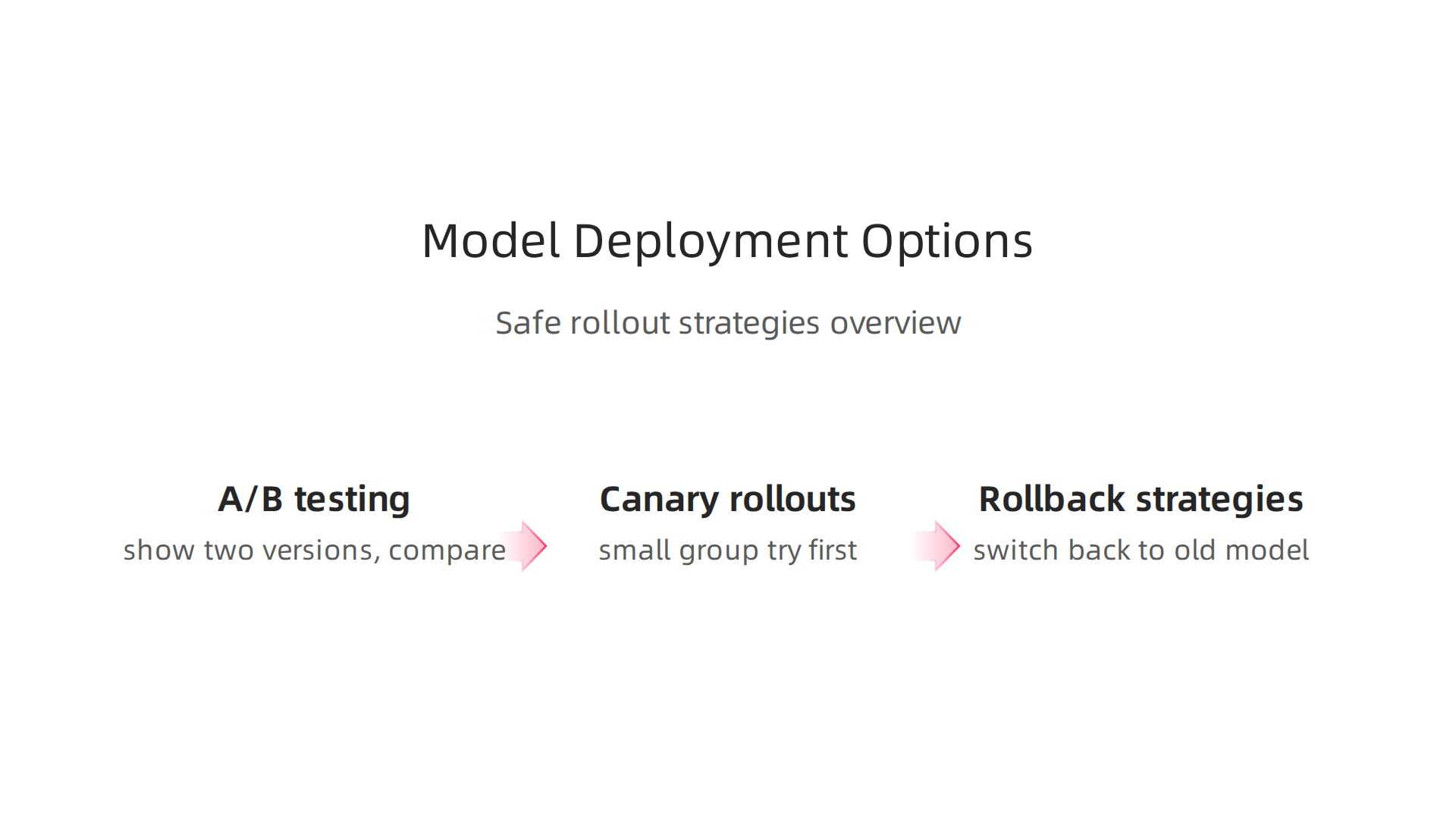
Here are some smart ways to do it:
- A/B testing: This is like showing two different versions of your AI to different groups of people at the same time. You can see which one works better without changing things for everyone.
- Canary rollouts: You let a very small group of users try the new AI first. If it works great for them, you slowly give it to more and more people. This way, if there’s a problem, only a few people are affected.
- Rollback strategies: This is your emergency plan. If a new AI model causes problems, you need a quick way to switch back to the old, working model. This prevents big issues for your users or business.
These steps help make sure that when you update your ai powered software development, it’s done carefully. Good practices help design reliable and precise machine learning systems Machine Learning Model Deployment and Monitoring in …. For more on how AI products come to life, consider learning about The 2026 AI Product Development Lifecycle.
Keeping an Eye on Your AI: Monitoring and Alerts
After your AI model is live, your job isn’t done. You need to watch it closely. This is called monitoring. It’s like checking the pulse of your AI to make sure it’s healthy and performing as it should. Many companies don’t monitor their models enough, but it’s crucial ML-Enabled Systems Model Deployment and Monitoring.
Here are important things to track:
- Data drift: Remember how data can change over time? You need to keep checking if the real-world data the AI sees is still like the data it learned from. If not, the AI might start making mistakes. Robust monitoring helps manage this Deployment Monitoring of Machine Learning Models.
- Performance: Is the AI still doing its job well? For example, if it’s supposed to find certain items, is it finding them accurately and quickly? You need to set clear goals for how well your
ai systemsshould work. - Fairness metrics: This is about making sure your AI isn’t accidentally biased against certain groups of people. It’s important to track this to ensure your AI treats everyone fairly.
- Alerting thresholds: These are like tripwires. If any of your monitoring signals go past a certain point (like performance dropping too much or data changing too quickly), an alarm goes off.

This tells your team that something needs attention right away to meet your business’s service promises (SLAs).
These monitoring steps, along with clear rules for human checks, are part of making sure AI systems are used responsibly and comply with rules ARTIFICIAL INTELLIGENCE: An Accountability Framework for Federal Agencies and Other Entities. Keeping track of key metrics and reporting them is a best practice for ai software development AI Governance Implementation Checklist.
Managing AI models well, from deployment to constant monitoring, is what keeps your AI useful and safe in 2026. This ongoing care is a big part of successful content intelligence and other AI applications.
Want to stay informed on the biggest changes and challenges in AI, including how businesses are tackling data for reliable outcomes? The AI Newsletter Worth Reading
Managing AI models well, from deployment to constant monitoring, is what keeps your AI useful and safe in 2026. This ongoing care is a big part of successful content intelligence and other AI applications.
Security, compliance, and governance for enterprise AI
Once your AI systems are running, keeping them secure and following all the rules is super important. Think of it like a bank. It’s not enough to just open for business; you also need strong vaults and clear rules to protect everyone’s money. This is especially true for AI in big companies.
Protecting Your AI from Threats
When we talk about security for AI, we’re looking at all the ways something bad could happen.
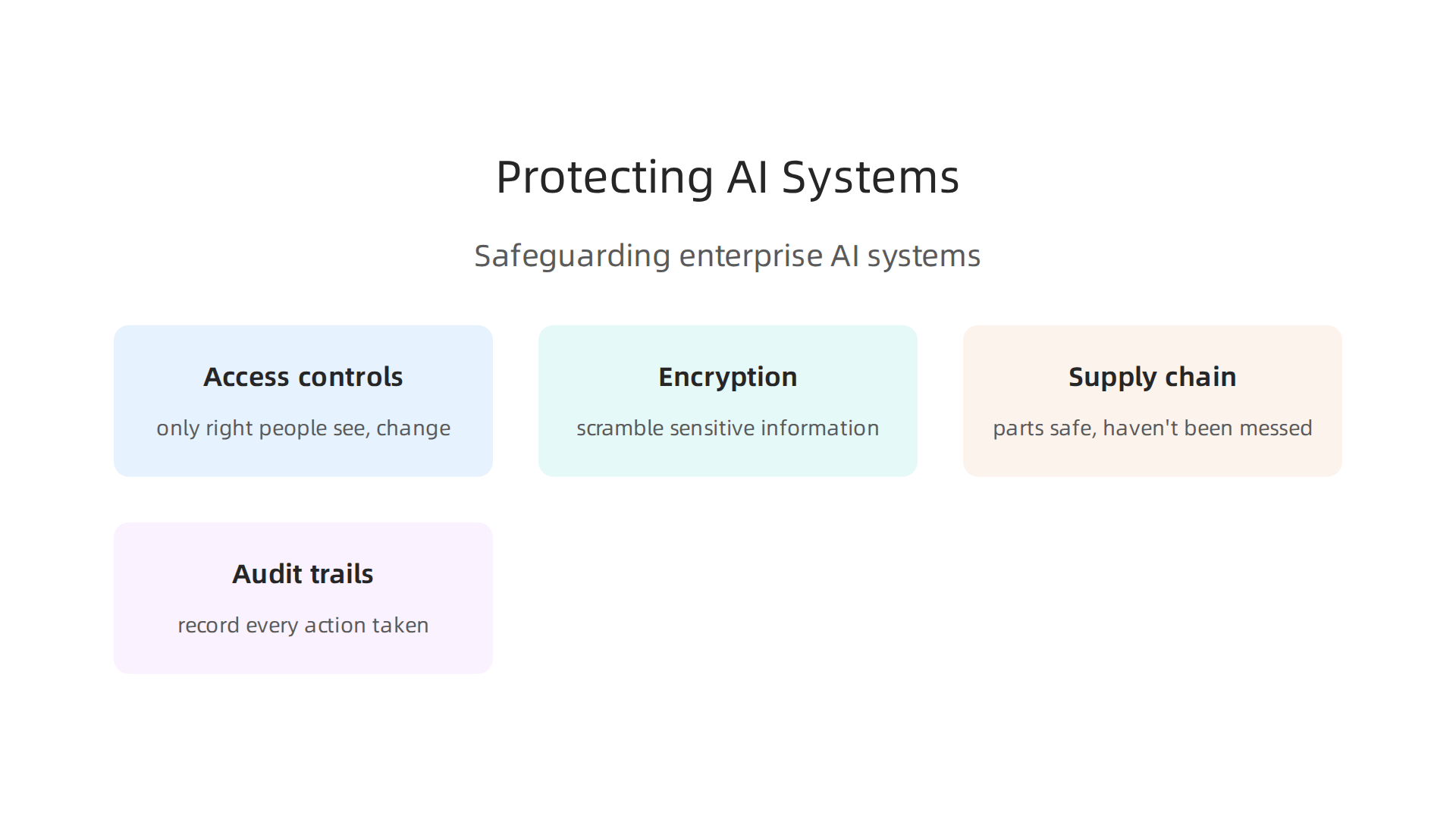
This is called a "threat model." We need to think about:
- Who can access what? This means setting up "access controls." Only the right people should be able to see or change your AI models and the data they use.
- Keeping data secret: Just like you lock your doors, "encryption" helps scramble sensitive information so only those with the key can read it. This is vital for the data that trains and feeds your AI.
- Where does your AI come from? Your AI might be built using many different parts from various sources. This is called the "supply chain." You need to know if all those parts are safe and haven’t been messed with.
- Leaving a paper trail: "Audit trails" are like a logbook. They record every action taken on your AI systems, like who accessed it and when. This helps you track things down if there’s a problem or if you need to show that you followed proper steps.
Designing secure AI systems requires a focus on these measures from the start Machine Learning Model Deployment and Monitoring in …. It’s a key part of responsible AI powered software development.
Following the Rules: Compliance and Governance
Beyond security, AI also needs to follow many rules. This is called "compliance." Different industries and regions have different laws about privacy, data use, and how AI can make decisions. For example, laws protect people’s personal information, so your AI must handle that data very carefully.
To make sure your company follows these rules, you need "governance processes." These are clear steps and policies that guide how your AI is designed, built, and used. They help make sure your AI systems are fair, safe, and transparent. This includes having checkpoints that require a human to approve things, especially before important actions are taken MODEL AI GOVERNANCE.
Here’s how to make compliance and governance work well for your ai software development:
- Make it part of the plan: Don’t wait until the end to think about rules. Build compliance checks into every step of creating and using AI.
- Set up clear roles: Everyone on the team needs to know who is responsible for what. This helps ensure accountability.
- Use checklists and frameworks: Tools like an AI Governance Readiness Checklist can help make sure you’re covering all your bases.
- Keep records: Always document your AI models, how they were trained, and what decisions they make. This helps with audits and showing that you’re following rules. You can also learn more by reading about The Leaders Playbook for AI Governance in 2026.
- Regular reviews: Rules and technologies change. So, you need to regularly check if your AI governance plans are still good enough for 2026 and beyond.
Putting these ideas into practice helps protect your business and your customers. It ensures that your AI is not just smart, but also responsible and trustworthy. Robust governance can lead to stable AI Governance Control Stack for Operational Stability.
After making sure your AI systems are secure and follow all the rules, the next big step is choosing the right tools and partners to build and run them. This means picking the best vendors and platforms that fit your company’s needs and budget. It’s a key part of smart ai software development in 2026.
How to Pick the Best AI Partners
When you’re looking for vendors and platforms for your ai systems, there are several important things to think about:
- How easy is it to connect everything? This is called "integration ease." You want new AI tools to work smoothly with your existing computer systems and data. If it’s hard to connect, it can slow down your projects and cost more money.
- Can it grow with you? This is "extensibility." As your company gets bigger or changes its goals, your AI tools should be able to change too. You want a platform that can add new features or handle more work without needing to be completely rebuilt.
- What’s the full cost? Don’t just look at the price tag. Think about the "Total Cost of Ownership" (TCO). This includes not only the price of the software but also costs for setting it up, training your team, making sure it’s secure, and keeping it running. A full TCO model looks at many costs like infrastructure, data work, security, and human oversight Enterprise AI TCO 2026 – Blog – AgamiSoft.
- What promises does the vendor make? These are "Service Level Agreements" (SLAs). They tell you how much uptime you can expect (how often the service will be working) and how quickly problems will be fixed. Good SLAs mean you can trust the service to be there when you need it for your [ai powered software development].
- What’s their plan for the future? Look at the "vendor roadmaps." This shows what new things the vendor plans to add or improve in their AI platforms. You want a partner who is always getting better and keeping up with the latest AI breakthroughs 2026 that actually matter.
Choosing Your AI Solution: Build, Buy, or Manage?
When it comes to building your [ai systems], you typically have three main choices:
- Managed Platforms (Buying a ready-made service): These are AI tools offered by big companies like Microsoft or Google. They handle all the tough technical stuff for you.
- Pros: Easy to start, less work for your team, usually reliable.
- Cons: Can be more expensive over time, less control over how things work. Sometimes, a single, all-in-one platform can be very costly, even if it offers many services Enterprise AI Vendor ROI – Platform Integration vs. Best-of-Breed Math.
- Open-Source Stacks (Using free code and building it yourself): These use code that’s free for everyone to use and change. Your team builds the system from the ground up.
- Pros: You have full control, can be cheaper for software licenses.
- Cons: Requires a lot of skilled people to set up and maintain, can take more time.
- Custom-Built Solutions (Making something totally new): Your team designs and builds a unique AI system just for your company.
- Pros: A perfect fit for your exact needs, can give you an edge over competitors.
- Cons: Very expensive, takes a lot of time, and needs a large team of [AI for developers]. For most big companies, buying a SaaS (software as a service) vendor solution can lead to 60-75% lower TCO compared to building it in-house over three years Enterprise AI Total Cost of Ownership: Hidden Costs & Budget Planning 2026.
The choice depends on your budget, your team’s skills, and how specific your needs are. For some tasks like [content intelligence], a managed platform might be perfect, while other special needs might call for a custom build.
Staying informed about these choices and the latest advancements is crucial for leaders. Get clear daily AI updates from The AI Newsletter Worth Reading.
Building smart AI systems means more than just picking good tools. It also means having the right people organized in the right way to make those tools work and keep them running smoothly. In 2026, companies are finding smart ways to build their teams for success.
How Companies Organize for AI Success
There are a few main ways big companies set up their teams to handle AI:
- Centralized AI Platform Teams: Imagine a special team that builds and manages all the main AI tools and services that everyone else in the company can use. They create a "platform" for others to build on. This helps make sure all AI projects use similar tools and follow the same rules, making ai software development easier for everyone. This way of working can help bring together different parts of the business under one AI plan, as explained in a report on rewiring the enterprise operating model for AI scale.
- Embedded Machine Learning Engineers: Sometimes, AI experts, called machine learning engineers, work directly within different business teams. For example, an AI expert might join the team that makes new marketing campaigns. This helps those teams use AI for their specific needs, like improving [content intelligence]. This setup means the AI talent is right where the business problems are.
- Centers of Excellence (CoE): A CoE is like a special club of experts. They don’t build all the AI themselves, but they share knowledge, set best practices, and offer training to others. They make sure everyone knows how to use AI wisely and safely. This helps many teams across the company learn and grow their AI skills. An Enterprise AI Operating Model Report 2026 shows how important these clear structures are.
Skills, Processes, and How We Measure Success
No matter how teams are set up, some things are always important for successful [ai systems].
First, you need the right skills. This includes people who understand data, people who can build AI models (these are often called [AI for developers]), and people who can manage projects that use AI. Companies are looking for specific skills and experience to fill AI roles in 2026, so knowing what’s needed is key for those looking to build their careers or their teams. Learn more about AI jobs 2026: the skills, certifications, and portfolio that get you hired.
Second, good processes are a must. This means having clear steps for how AI projects start, how they are built, how they are tested, and how they are used. It also means having strong rules for navigating the future of AI: ethical governance and smart enterprise adoption to make sure AI is used fairly and responsibly. Many companies are still figuring this out, with a report from Deloitte in 2026 finding that while many organizations are using AI, fewer have fully changed their operations to match it.
Third, we need to measure if our AI efforts are actually working. These are called Key Performance Indicators or KPIs. They can include things like how much money AI saves, how much faster work gets done, or how much happier customers are. Good KPIs help leaders see the real value of their [ai powered software development] and decide where to invest next. You can find many ways to measure success, including over 30 board-ready metrics for AI programs. By watching these numbers, companies can make sure their AI journey is going in the right direction.
Summary
This article gives business leaders a practical guide to designing, deploying, and operating enterprise AI systems in 2026. It breaks down a reference architecture into core layers—data, model training, serving, orchestration, monitoring, and governance—and explains why each is essential for reliable AI outcomes. The guide emphasizes strong data foundations, lineage, and feature stores to prevent drift and ensure reproducibility, plus CI/CD, canary rollouts and rollback plans for safe model ops. It covers security, access controls, audit trails, and compliance best practices so AI remains trustworthy and auditable. You’ll also get help choosing between managed platforms, open-source stacks, or custom builds, and practical team models (central platform teams, embedded ML engineers, CoEs) to scale AI. After reading, executives will understand what to prioritize—data quality, monitoring, governance, vendor evaluation, and KPIs—to turn AI experiments into measurable business value.