

Why this brief matters: cut through the noise on AI trends and investments
It’s 2026, and the world of Artificial Intelligence (AI) is moving at a blinding speed. Every day brings news of new tools, fresh ideas, and huge investments. For leaders, founders, and anyone trying to make smart choices, this rush of information can feel like a tidal wave. It’s hard to tell what’s truly important from what’s just hype.
Think about it: keeping up with all the different AI breakthroughs, how companies are using them, and where the big money is going takes a lot of time. Many people struggle with information overload when trying to understand AI.

It becomes tough to find reliable information that helps make decisions about strategy and investments. In 2025, for example, venture funding for AI reached an incredible $225.8 billion, showing just how much money is pouring into this area.
This means nearly half of all venture funding went into AI alone AI Statistics & Trends 2026: Market, Adoption & Growth Data. This fast pace only continues into 2026.
This brief is here to help you cut through all that noise. We know you need clear, solid facts to guide your choices. That’s why we promise to give you a simple, evidence-driven look at the big things happening in AI this year. You’ll get to understand the key trends, see where investments are really going, and spot the important signals to watch for. We will help you sort through the vast landscape of innovation, from cutting-edge developments in Silicon Valley artificial intelligence to new approaches like Lightchain AI and the work of companies like Zensar Technologies. This includes high-level insights often reported by trusted sources like Bloomberg AI.
We will deliver a concise roadmap that shows you what truly matters. Our goal is to make sure you have the trusted insights you need to stay ahead.
For even more clear, daily updates on AI and technology, consider subscribing.
The AI Newsletter Worth Reading
State of the AI market in 2026: macro signals and adoption indicators
In 2026, we see a clear picture of the Artificial Intelligence market. There are big signs, or "macro signals," that tell us where things are headed. We also look at how companies are actually using AI, which shows us if the demand is real and lasting.
One big signal is how much money is still going into AI. While 2025 saw record funding, 2026 is all about smart investments that lead to real products and profits. Big technology companies are spending billions to build up their AI systems, which shows they believe AI is here to stay. However, some experts like those reporting in the Digital economy 2026 executive summaries are also talking about whether AI investments are growing too fast. This means leaders need to be careful with their choices. News from sources like Bloomberg AI often highlights these financial trends, giving us a clearer view of the market’s health.
What’s even more important than money flow is how many businesses are actually using AI every day. In 2026, there’s a big change happening. Companies are moving from just trying out AI projects to really putting them to work.

This means AI is no longer just an idea; it’s becoming a key part of how businesses operate. We see a shift from simply experimenting with AI to fully adopting it and building the necessary infrastructure AI Adoption Trends: 2024-2026 Data. Companies are looking for ways to use AI for AI strategy for executives to get real value.
To truly understand AI adoption, we need to look at specific signs.
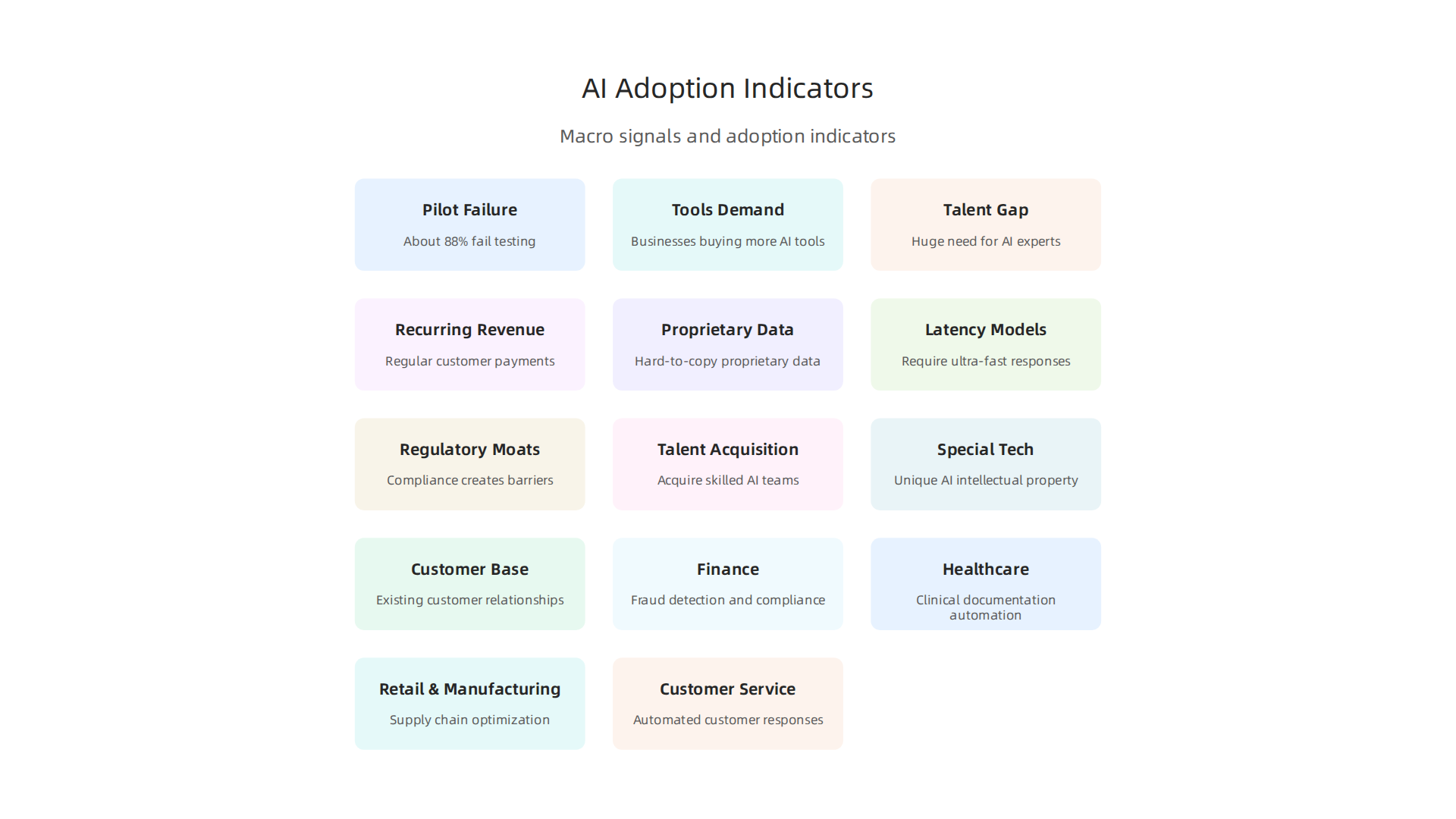
One important sign is how many AI test projects, called "pilots," actually turn into full-blown products. Unfortunately, about 88% of AI pilots never make it past the testing phase AI Agent Adoption 2026: 120+ Enterprise Data Points. This shows that moving from a good idea to a working tool is hard. Yet, for the projects that do succeed, we see clear patterns. Businesses are buying more AI tools, and there’s a huge need for people who know how to work with AI. The lack of enough AI experts is still a big problem for many companies in 2026 The State of AI in the Enterprise – 2026 AI report. This need for skilled workers means that for true AI leadership, it’s vital for professionals to focus on mastering data foundations and data literacy for AI leadership. Companies like Zensar Technologies are actively working to develop and apply AI solutions, reflecting these important market and talent trends.
Venture funding trends: who’s investing and where capital is flowing
Following the strong push for companies to adopt AI, let’s look at how all these amazing Artificial Intelligence ideas get money to grow. In 2026, the world of AI funding is super active. A huge amount of money, about $242 billion, went to AI companies in just the first three months of 2026.
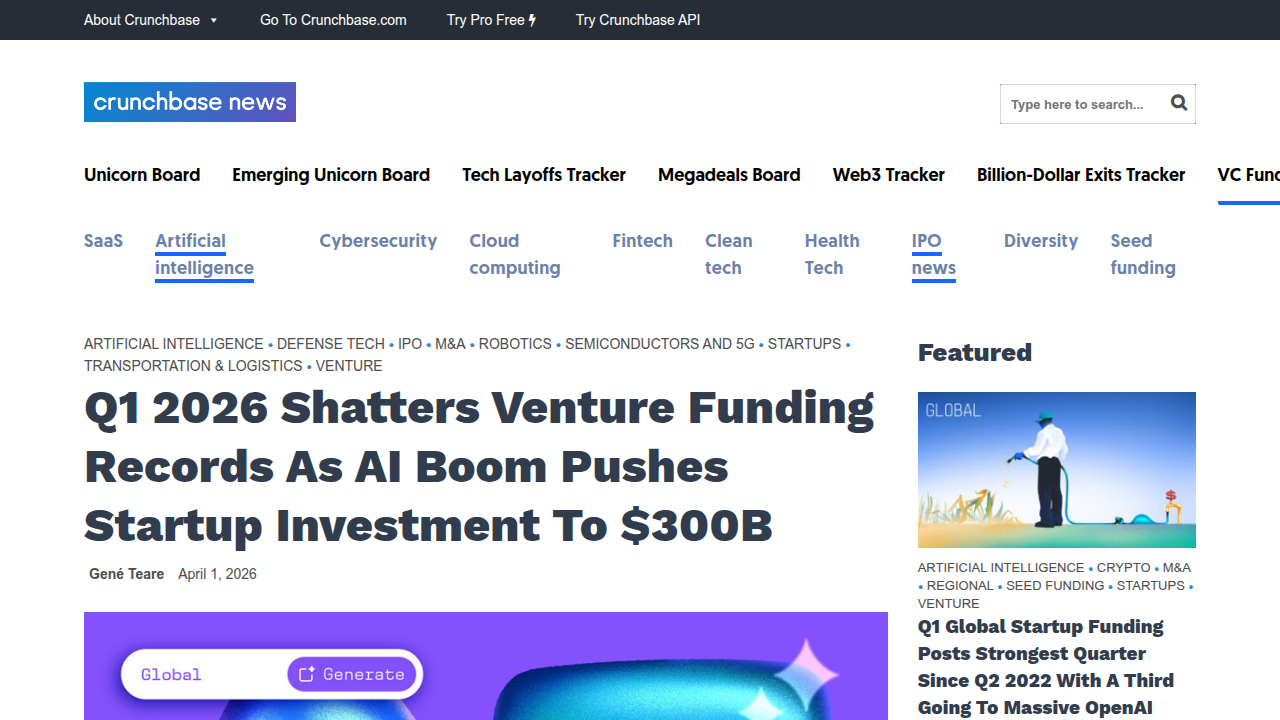
This was a massive 80% of all the money invested in new businesses globally during that time Q1 2026 Shatters Venture Funding Records As AI Boom …. News sources like Bloomberg AI often report on these big funding numbers.
When we look closely at where this money goes, we see some interesting things. There are different stages of funding, like "seed stage" for brand new ideas and "late stage" for companies that are already bigger. Most of the deals, meaning the number of times money was given out, were in the seed stage. For example, over 4,400 seed deals happened between 2023 and early 2026 AI Startup Funding Stages: Complete Breakdown (2023-2026). This shows lots of new AI ideas are getting a first boost.
However, the really big money, the largest amounts of capital, are going to companies in their later stages. Late-stage funding reached about $246.6 billion in the first quarter of 2026. This was a huge jump, more than double what it was last year AI Venture Funding 2026: Where the $242 Billion Went. It tells us that investors, including those in Silicon Valley artificial intelligence hubs, are willing to put massive sums into companies that are already proven and ready to grow even bigger.
Investors are also very interested in specific parts of AI. For example, companies that make special computer chips for AI, sometimes called "pure-play AI chip companies," have received a lot of money. They got over $8 billion in funding from 2024 to 2026, with most deals being very large AI Chip Startup Funding 2024-2026. This shows a clear focus on the foundational technology that makes AI possible. While we see some exciting new areas like Lightchain AI getting attention, the big trend is smart money going to later-stage companies or those building key AI components.
These trends mean that while innovation is still happening at the early stages, investors are looking for strong, clear paths to success. If you’re looking to understand the job market that comes with all this funding, it helps to see what jobs will AI replace in 2026.
Investor appetite: sectors, business models, and signals of defensibility
So, if investors are pouring money into AI, what exactly makes an AI company stand out to them? It’s not just about having a cool idea. Smart investors, often those in silicon valley artificial intelligence circles, look for specific things that show a company can make money and stay strong for a long time.

Many investors are drawn to companies that make AI tools for other businesses, often called "enterprise AI." These tools can be very helpful for many tasks. For example, in the first part of 2026, about 80% of new or updated business software already had some AI built in AI Agent Adoption 2026: 120+ Enterprise Data Points. Most businesses also prefer to buy these AI solutions instead of building them from scratch AI Adoption & Impact Study: AI in the Enterprise June 2026 …. This makes business models like "Software as a Service" (SaaS), where companies pay a regular fee for AI software, or specialized "vertical automation" (AI made for specific industries like healthcare or finance) very appealing to investors. Companies that sell access to their powerful AI models, known as "model-as-a-service," are also very popular.
What makes an AI company "defensible"? This means it’s hard for others to copy or compete with it.
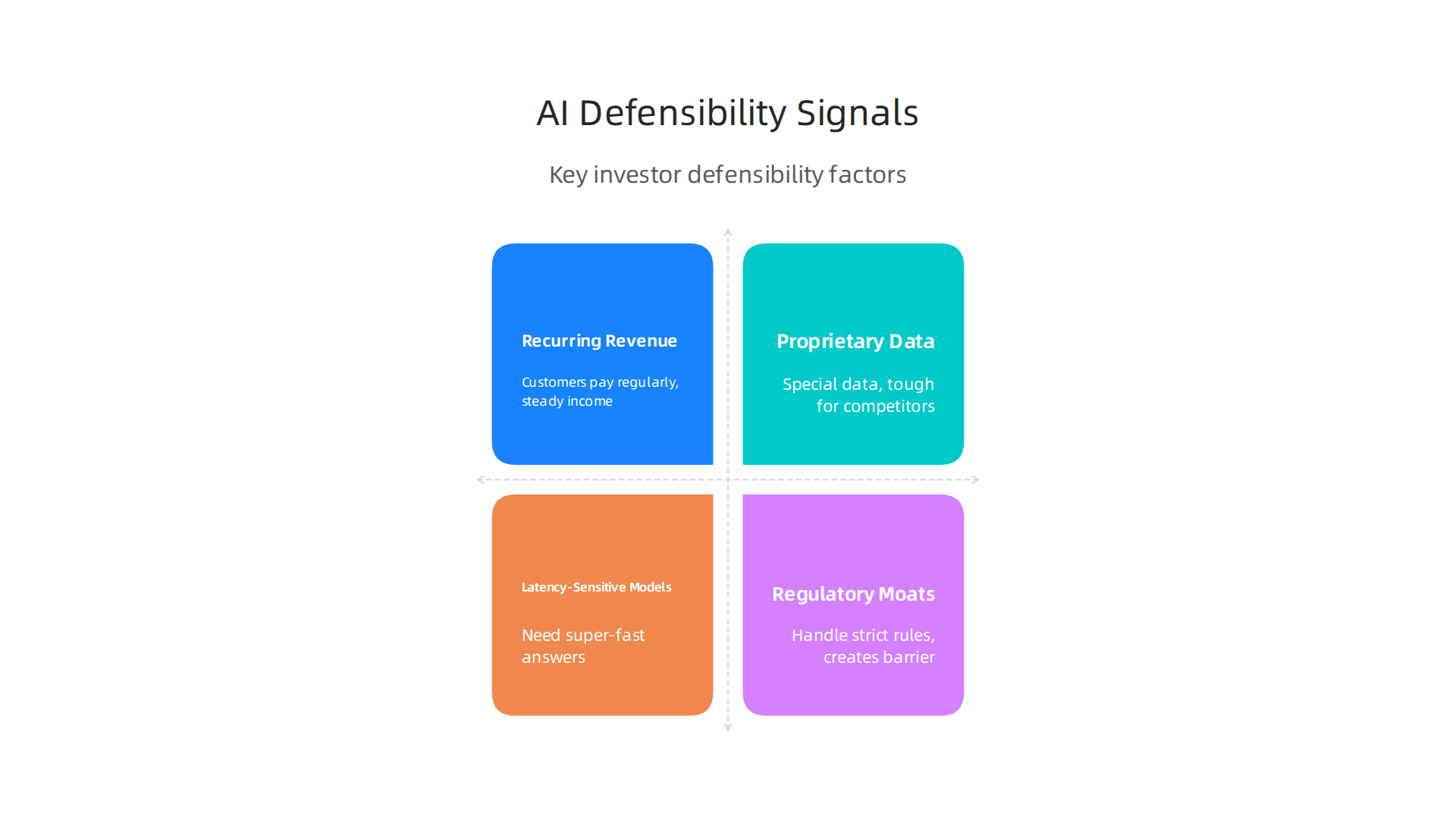
Investors love to see things like:
- Recurring revenue: This means customers pay regularly, like a monthly subscription. It shows a steady income for the company and makes its future earnings more predictable.
- Proprietary data: If a company has its own special data that helps its AI work better than anyone else’s, that’s a huge plus. This unique information is tough for competitors to get or create.
- Latency-sensitive models: These are AI models that need to give answers super fast, almost instantly. If an AI needs to be quick, like for real-time trading or immediate decisions, it’s hard to make a competing product that’s just as fast and good. Understanding how to pick the fastest OpenAI model for low latency AI shows how important speed can be.
- Regulatory moats: Some industries, like healthcare or finance, have many strict rules. If an AI company can handle these rules well and follow all the laws, it creates a "moat" around its business. Other companies might find it too hard to jump through all those hoops to compete.
Understanding these investor interests helps us see the full picture of the AI market in 2026. If you want to stay informed about these fast-moving trends and more, you’ll find The AI Newsletter Worth Reading to be a great resource.
After seeing what makes an AI company attractive to investors, it’s also important to look at what happens when these companies are bought or go public. This is how investors get their money back, and often, much more! These events, called "exits" or "M&A" (Mergers and Acquisitions), show us how well the AI market is really doing.
In 2026, we are seeing many AI companies being acquired. Why do bigger companies want to buy smaller AI firms? Usually, it’s for three main reasons:
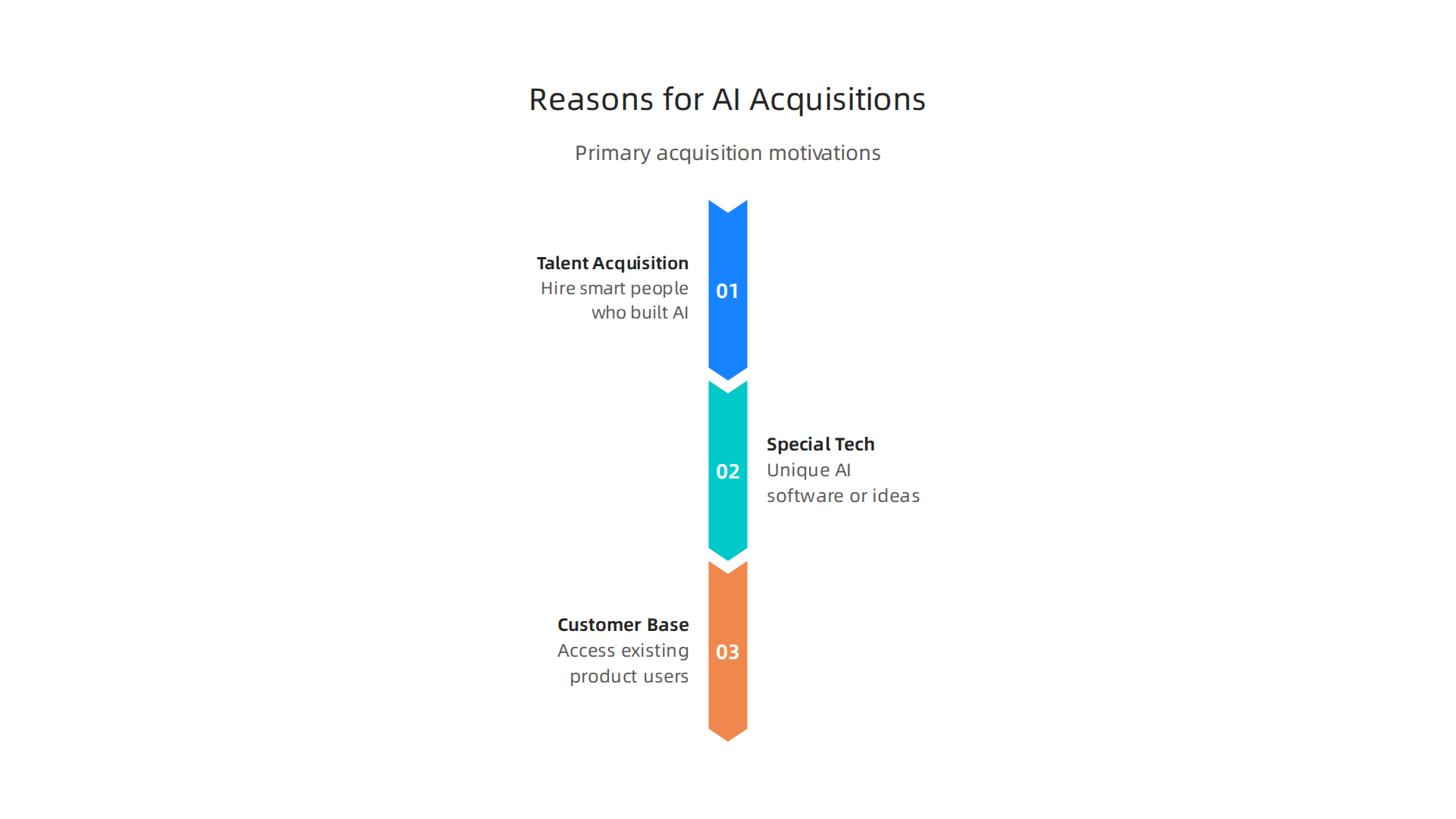
- Talent: They want to hire the smart people who built the AI.
- Special Tech (IP): They want the unique AI software or ideas that the smaller company created.
- Customers: They want the customers who already use the smaller company’s AI tools.
How much a company is bought for tells us if investors’ early bets paid off. For example, in the first three months of 2026, about $242 billion went into AI companies globally, setting new records for venture funding in the sector Q1 2026 Shatters Venture Funding Records As AI Boom …. This huge amount of money flowing in shows that investors are very hopeful about future payouts. A big part of this funding, about $246.6 billion, was for companies in later stages, meaning they were closer to being bought or going public AI Venture Funding 2026: Where the $242 Billion Went.
We also watch how public companies that use or create AI are doing on the stock market. Their performance acts like a weather vane for investor feelings about AI. If big tech companies with strong AI products, like those often talked about on bloomberg ai reports, are doing well, it signals strong confidence. This public market performance helps everyone understand if the excitement around AI is real and lasting.
The growth in funding for AI startups has been very strong, with global AI startup funding crossing $130 billion in 2026. This is a big jump from $97 billion in 2025 AI Startup Funding Report 2026: What the Numbers Actually Say. Companies like Zensar Technologies or others developing cutting-edge solutions, perhaps even a lightchain ai initiative, are closely watched as potential targets for larger firms looking to enhance their AI capabilities.
To learn more about the companies shaping this rapid growth, you can explore the AI companies 2026 the giants and disruptors driving the industry.
Big companies are not just buying smaller AI firms; they are also using artificial intelligence in their own businesses every day. This is called enterprise adoption. In 2026, we see AI being used in many different ways across various industries. It is changing how companies work and make decisions.
Think about how different industries are using AI:
- Finance: Banks and financial groups use AI to spot fraud and make sure they follow rules. For example, some big financial services firms have seen a 20% drop in fraud by using AI, and their reports are more correct Enterprise AI Adoption: State of Generative AI in 2026. This helps keep money safe.
- Healthcare: AI helps doctors and hospitals with things like clinical documentation. This means AI can help write down patient notes or manage records, making work faster and more accurate. To learn more about how AI is changing healthcare, read about doctor AI in 2026.
- Retail and Manufacturing: Companies like Walmart use AI to manage their supply chains and keep track of products. This helps them know what to order and where to send it, so shelves stay stocked and customers are happy. AI can cut down on empty shelves by 30% and make deliveries quicker Enterprise AI Adoption: State of Generative AI in 2026.
- Customer Service: Many businesses use AI to help with customer questions. This means bots or AI programs can answer common questions quickly, letting human helpers focus on harder problems. In fact, customer support automation is a top use for AI, with 62% of companies using it Enterprise AI Adoption Statistics 2026.
When companies decide to bring AI into their business, they have to figure out the best way to get it. Most companies choose to "buy" AI solutions rather than "build" them from scratch. About 8 out of 10 organizations prefer to buy AI tools instead of making their own AI Adoption & Impact Study: AI in the Enterprise June 2026 …. This often means using Software as a Service (SaaS) products, where they pay a fee to use AI tools online. Sometimes, they need custom integrations to make the new AI tools work perfectly with their existing systems.
For an AI project to be successful, it usually starts with a small test, called a pilot. If the pilot works well, companies then bring it into full use. Key people like executives and project leaders decide if the AI is truly helping. They look at things like how much money it saves, how much faster things get done, or how much happier customers are. These clear results help show that the AI is worth keeping and growing. For more on making smart choices, you can explore how to choose enterprise generative AI platforms for 2026 business impact. Overall, about 80% of business applications updated in early 2026 now have some AI built into them AI Agent Adoption 2026: 120+ Enterprise Data Points. This shows how much AI has become a part of everyday business.
Geopolitics, Regulation, and Systemic Risk: What Investors Must Watch
While businesses are quickly adding AI to their daily work, governments around the world are also paying close attention. They are worried about how powerful AI can be and what it means for national safety and fair business. This means new rules and laws are coming out, which can change how investors look at AI companies.
One big area of focus is export controls. This is when a country decides what kind of technology its companies can sell to other countries, especially those seen as rivals. For example, the US government has started to control how advanced AI models and the ways to access them can be shared across borders.
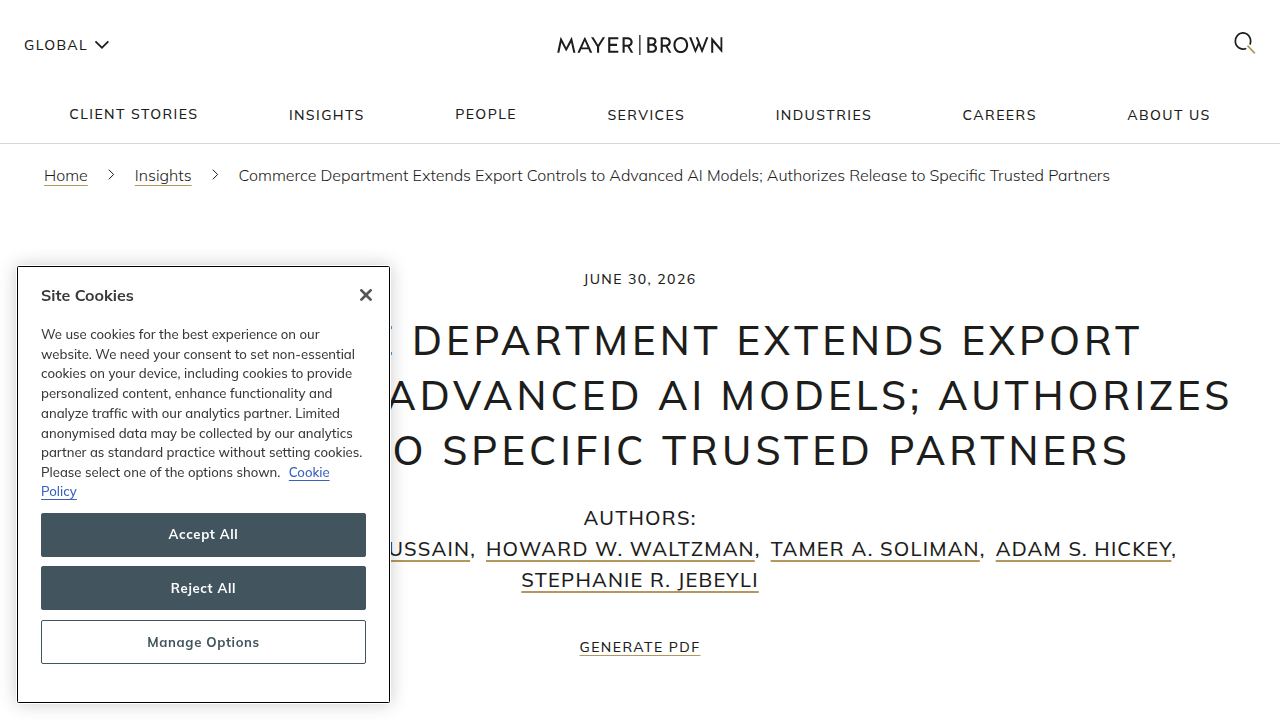
These rules are even for super-fast AI chips and other important parts that make AI work. Back in December 2024, and then again in early 2025, the US government made updates to these rules, especially for AI technology. These controls aim to make sure certain AI technologies don’t fall into the wrong hands. For more details, you can read about the Commerce Department extends export controls to advanced AI models.
These policy changes can greatly affect how companies do business. If you are a company in Silicon Valley artificial intelligence, these rules might limit who you can sell your amazing new AI tools to. This can change how much money a company can make and where it can find the best workers. It also impacts deals between companies in different countries. For example, a company might want to send its specialized Lightchain AI system to a new market, but new export rules could make that very hard or even stop it completely.
Investors, like those who follow Bloomberg AI news, need to watch these changes closely. Governments are also creating national AI plans, like the America’s AI Action Plan, which helps guide how AI is used and developed in their own country. These plans can open up new chances for growth or create new challenges. For instance, the US has also aimed to promote the export of American AI technology, trying to balance control with economic growth. Companies like Zensar Technologies, which help other businesses with their tech, must keep up with these rules to give good advice to their clients. Understanding how governments are shaping the AI world is a key part of making smart investment choices in 2026. If you want to understand how countries are thinking about AI strategy, explore artificial intelligence and national security.
Technical breakthroughs, benchmarks, and implications for capital allocation
While governments set rules for AI, the actual power and quick changes in AI technology are just as important for investors. These technical leaps directly affect how much money startups need and how risky or promising an investment might be.
One big trend is how AI models are growing. They are getting much bigger and smarter. For example, AI models got much better in 2025, showing big jumps in understanding language, reasoning, coding, and math skills. As of March 2026, new AI models are being released much faster, almost one important update every three days in early 2026, compared to every six months in 2024 AI Breakthroughs in 2026: March Update. These very powerful models often cost a lot to build and run. This makes it challenging for smaller silicon valley artificial intelligence startups to compete with giant tech companies that have huge budgets.
Another important change is "multimodal AI." This means AI models can now work with different kinds of information at once, like reading text, seeing pictures, and hearing sounds. This ability makes AI tools much more useful, from creating new content to making smart assistants. You can learn more about how to pick the right AI tools for your business by exploring picking the right top AI platforms for business growth in 2026.
Despite the high costs of big models, there are also breakthroughs in making AI more efficient. This means the cost of running AI is dropping fast, sometimes by ten times each year for the same level of ability AI Trends (July 2026). This helps more companies, even smaller ones, use advanced AI without spending a fortune.
Investors keep a close eye on "benchmarks," which are like tests that show how well an AI model performs. These tests help to measure an AI’s skills in different areas, such as the widely known MMLU test for general knowledge. For example, some leading models like Gemini 3.1 Pro and Claude Opus 4.6 show very high scores on MMLU in February 2026, often above 90% AI Benchmarks in 2026: The Complete Guide to MMLU, …. There are also websites like LiveBench.ai that compare different AI models.
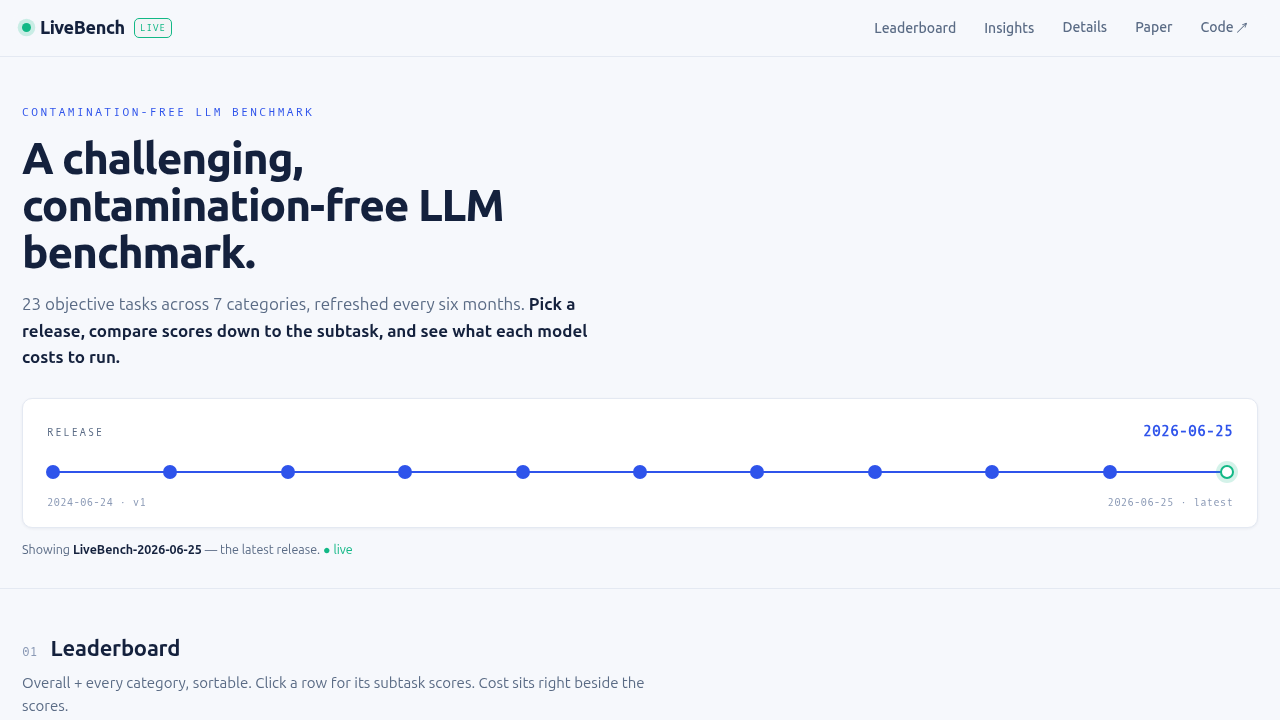
However, a high score on a test doesn’t always mean an AI will work perfectly in the real world. Investors looking at bloomberg ai news need to understand this difference. They have to decide if a company’s advanced Lightchain AI system is truly special and hard for others to copy (defensibility). They also need to know if the company has enough money to keep improving its technology (runway) because AI is changing so fast. Keeping up with these quick changes and what they mean for business is key to smart investing in 2026.
To stay on top of daily AI updates and gain deeper insights, subscribe to The AI Newsletter Worth Reading.
Summary
This brief cuts through 2026’s AI noise to give leaders and investors a clear, evidence-driven view of what matters now: where capital flows, which technical advances change value, how businesses actually adopt AI, and which regulatory and geopolitical risks to track. It reviews market signals—massive early-2026 funding, a surge in later-stage capital, and widespread embedding of AI across software—while noting practical barriers like high pilot failure rates and talent shortages. The article explains investor preferences (recurring revenue, proprietary data, latency advantages, regulatory moats), highlights sector use cases from finance to healthcare, and maps how technical benchmarks and model costs affect allocation decisions. Read it to learn how to spot durable opportunities, evaluate startups and platforms, and prioritize the operational and policy signals that drive smarter AI strategy and investment choices.