

In 2026, it feels like news about artificial intelligence and machine learning comes out every single day. For smart people trying to keep up with work and new ideas, this can feel like too much information all at once. It’s hard to know what is truly important and what will really help you in your job or business.
The truth is, artificial intelligence (AI) and machine learning (ML) are not just buzzwords. They are powerful tools that are changing how we do almost everything. AI is about making computers able to do smart things that usually need a human brain. This includes thinking, learning, solving problems, and even being creative Artificial Intelligence – Stanford Emerging Technology Review. Machine learning is a big part of AI. It’s how computers learn to do tasks by looking at lots of data, instead of being told every single step What is AI? – Purdue Engineering.
These technologies matter a lot right now. They can help businesses work better, discover new things through powerful analytical intelligence, and even change how we create art or plan for the future. Staying informed about the latest AI research helps professionals make good choices. But with so much happening, finding clear, trustworthy information is a real challenge.

That’s where this guide comes in. We want to give you a clear, easy-to-understand look at artificial intelligence and machine learning. This article will help you learn the basics, see how these tools can be used in real life, and show you what steps you can take next. It’s all about cutting through the noise so you can focus on what truly drives progress. If you’re looking for an easy way to understand the rapidly changing world of AI, you might find it helpful to Unlock AI Potential: Your 2026 AI Course for Beginners Roadmap.
We know you’re busy, and your time is valuable. That’s why we’ve put together this simple guide. For even more daily updates that cut through the noise, remember to check out The AI Newsletter Worth Reading.
Core definitions: AI, ML, deep learning, and related terms
Now that we know a bit about what artificial intelligence (AI) and machine learning (ML) are in general, let’s dive deeper into what these terms really mean.
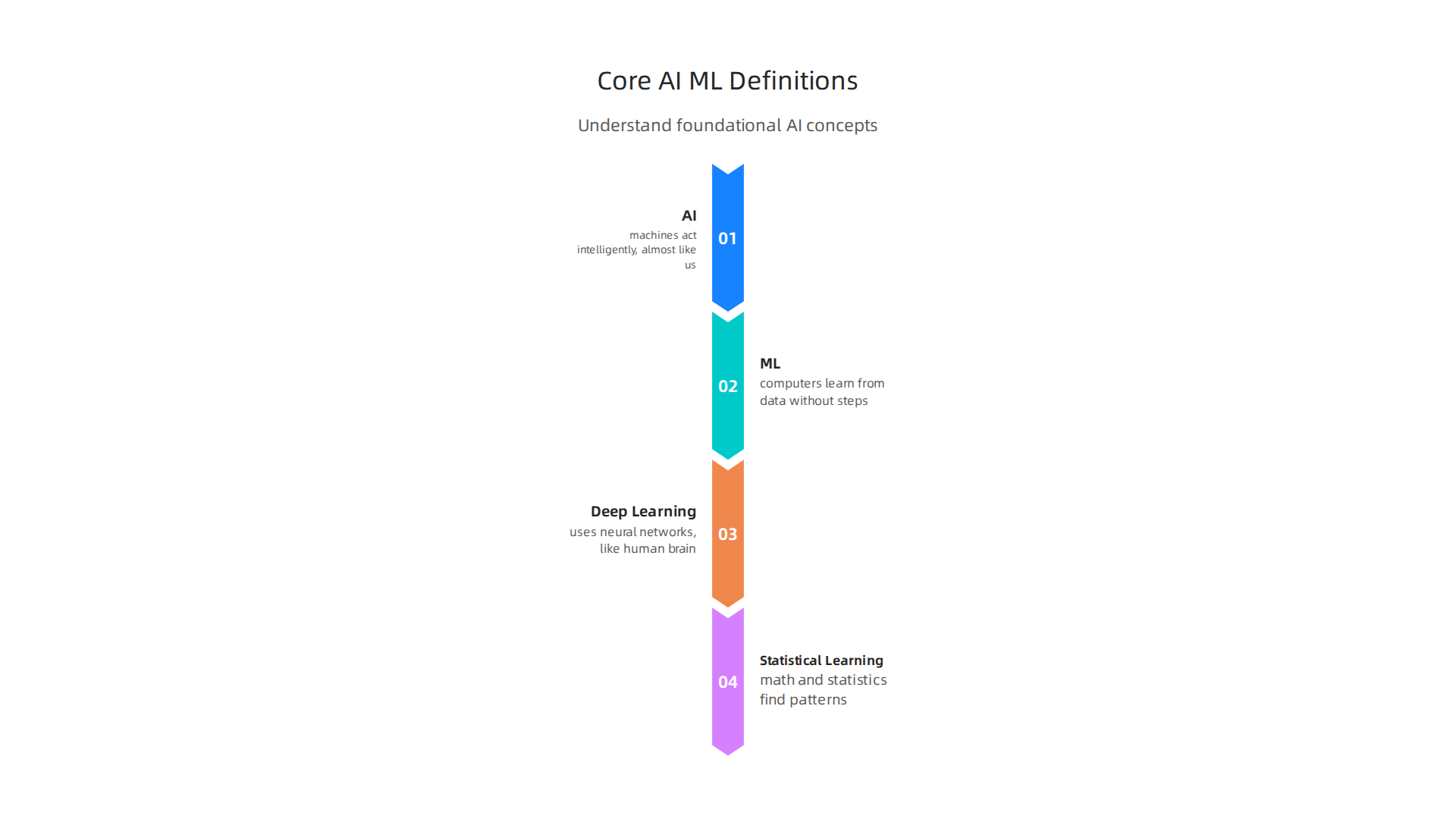
It’s like learning the different parts of a big, exciting machine. Understanding these core definitions will help you talk about AI better and know when each term truly matters.
Artificial Intelligence (AI)
Think of AI as the big, overall goal. It’s when a computer or machine can do things that usually need human smarts. This means it can think, learn, solve problems, and even create new things. AI is about making machines act intelligently, almost like us. This broad idea covers a lot of ground, from simple programs that follow rules to very complex systems that can learn on their own.
Machine Learning (ML)
Machine learning is a key way to achieve AI. It’s a method where computers learn from data without being told every single step. Instead of giving a computer a list of rules for every situation, you give it lots of examples. The computer then finds patterns in these examples and learns to make decisions or predictions on its own. It’s like teaching a child by showing them many pictures of cats until they can point out a cat they’ve never seen before. Many experts see machine learning as a specific part of artificial intelligence ai_ia.pdf. This field helps computers improve their skills by gaining experience, just like people do AI FreeBook.pdf. If you want to dive deeper into how machines learn, exploring mastering practical machine learning for data science in 2026 can be a great next step.
Deep Learning
Deep learning is a special kind of machine learning. It uses something called neural networks, which are computer systems built to work a bit like the human brain. These networks have many layers that process information. Because of these many layers, deep learning can find very complex patterns in huge amounts of data. This makes it really good at tasks like understanding speech, recognizing faces, or figuring out what’s in a picture. It’s how we get some of the most advanced AI tools we see today.
Statistical Learning
You might also hear the term "statistical learning." This is very closely related to machine learning. It uses math and statistics to find relationships and patterns in data. Many of the tools and methods used in machine learning come from statistical learning. So, when you’re looking at how to make an AI that learns from data, you’re often using ideas from statistical learning too. It’s a way that artificial intelligence uses different methods to mimic how we think Machine Learning in Artificial Intelligence. A strong grasp of mastering data foundations and data literacy for AI leadership is key to understanding these concepts.
When Definitions Matter
Sometimes, people use "AI" and "machine learning" almost like they mean the same thing, especially in everyday conversations. When you hear about a "smart" app or tool, people might just call it "AI."
However, when you’re working with these technologies, like building systems or talking to other professionals, being precise with your words is important.
- If you’re building a new tool that uses deep learning for image recognition, you’d specify "deep learning" because it tells people exactly how the AI is learning.
- If you’re discussing how to get useful insights from business data using models that learn from historical trends, you’re focusing on analytical intelligence, which often uses machine learning techniques.
Knowing the difference helps you choose the right tools and strategies for your goals. It helps you understand exactly what a system can do and how it does it. This precision is especially important for anyone asking how to choose what is the best AI for your needs.
Now that you have a good grasp of what artificial intelligence (AI) and machine learning (ML) mean, let’s take a quick look back. It’s helpful to see how these big ideas grew over time to become the powerful tools we use in 2026. Understanding their past helps us see how fast things are changing today.

From Early Ideas to Modern AI and ML
The journey of artificial intelligence and machine learning isn’t a straight line. It’s more like a winding path with many exciting discoveries and a few quiet times.
The Beginning: Dreams of Thinking Machines
Long ago, people dreamed of machines that could think. But the real start of AI as a field came in the mid-1950s. A smart person named John McCarthy even gave it the name "artificial intelligence" at a special meeting in 1956 Artificial Intelligence – Fraunhofer IPK. In these early days, researchers tried to make computers follow rules, like a checklist, to solve problems. It was like teaching a computer step-by-step how to play chess.
Around the same time, Arthur Samuel introduced the idea of "machine learning" in 1959. He described it as giving computers the power to learn on their own through experience, instead of being told every single thing to do Introduction to Artificial Intelligence ( PDFDrive ). This was a very big step.
Quiet Times and New Beginnings
Sometimes, the progress in AI slowed down. These periods are sometimes called "AI winters." This happened because computers weren’t powerful enough, and we didn’t have enough data to truly teach them complex things. But even in these quieter times, researchers kept working. They were building the foundations for what would come next.
The Rise of Machine Learning
As computers got faster and we started collecting more and more data, especially in the 1990s and 2000s, machine learning really began to shine. Instead of trying to give computers all the rules, we gave them lots of examples. The computers learned from these examples to find patterns and make predictions. This was a big shift. Suddenly, making an AI that could learn from what it saw and heard became much more possible. This focus on learning from data changed how we approach AI research.
The Age of Deep Learning and Rapid Progress
In recent years, especially from the 2010s to today in 2026, we’ve seen amazing leaps forward. This is largely thanks to three key things:
- More Computing Power: Computers became incredibly fast, especially with special chips called GPUs, which are great for complex calculations.
- Huge Amounts of Data: We now have access to massive datasets from the internet and many other sources. This is like giving the AI a giant library to learn from.
- Smarter Algorithms: New ways of building machine learning models, like deep learning with neural networks, allowed computers to learn even more complex patterns.
These three changes created a perfect storm for rapid progress. They allow for quick testing and improvements, which means new artificial intelligence and machine learning tools are created at an amazing speed. If you want to keep up with how fast AI is moving today, it’s good to get regular updates.
Stay informed on the latest AI advancements with The AI Newsletter Worth Reading.
This fast pace means that what was once a dream for AI is now a part of our everyday lives. Understanding these historical shifts helps us appreciate the innovations we see in 2026. For a deeper look into the people and groups making waves, consider reading about Discover Influential AI People and Organizations Shaping 2026.
After looking at how artificial intelligence and machine learning have grown over time, let’s now peek under the hood. It’s helpful to understand the basic building blocks and how these smart systems actually learn and get better. This will show us how to make an AI that can solve real-world problems.
Technical foundations: core models, learning paradigms, and evaluation
At the heart of artificial intelligence and machine learning are different ways computers learn and the types of "brains" or models they use.
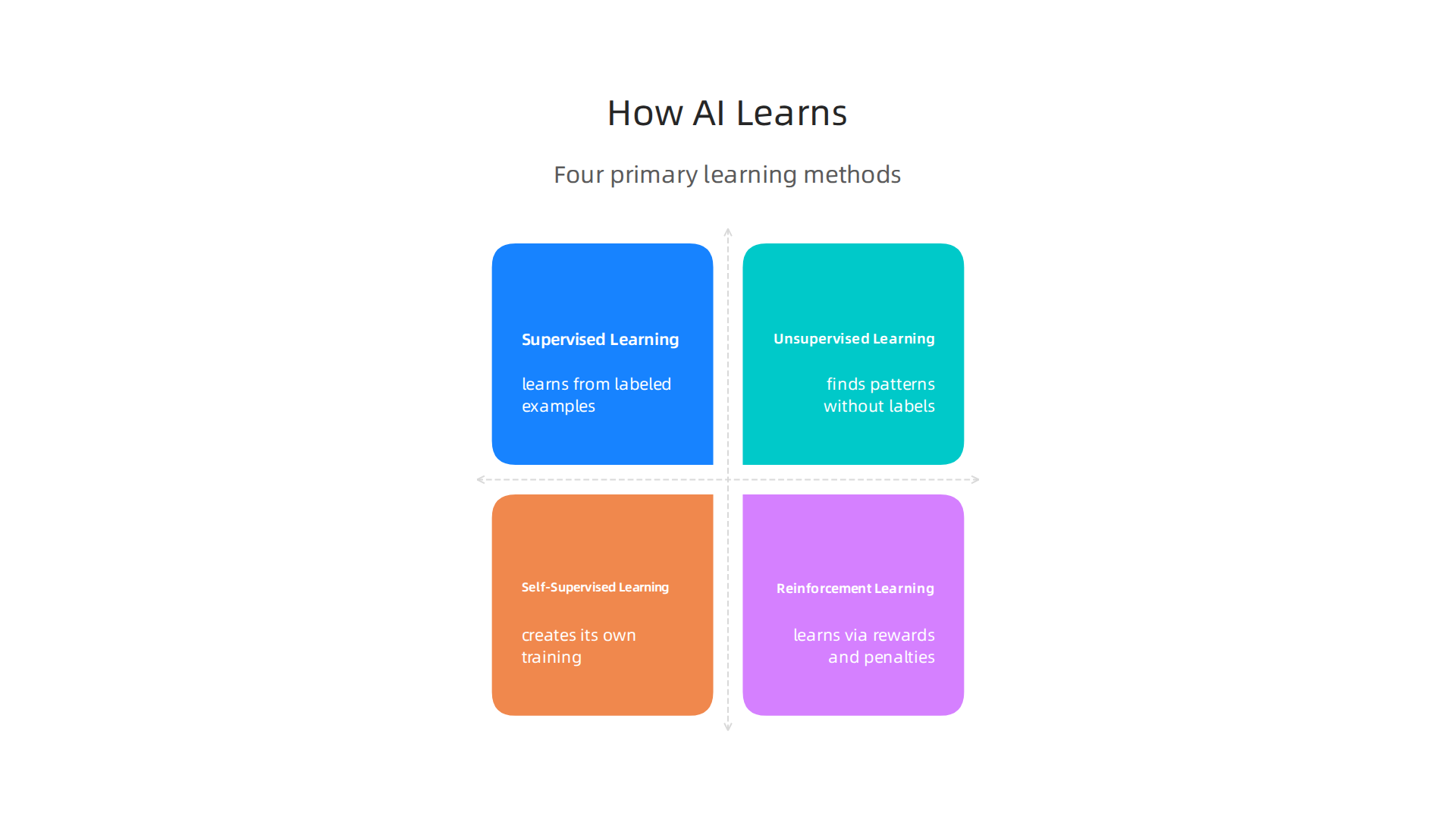
Think of these as different schools of thought for teaching a computer.
How AI and Machine Learning Systems Learn
There are a few main ways artificial intelligence and machine learning systems are taught:
- Supervised Learning: This is like a student learning from a teacher. The computer gets lots of examples with the right answers. For instance, if you want a computer to spot cats in pictures, you show it many pictures and tell it, "This is a cat," or "This is not a cat." The computer then learns to tell the difference on its own.
- Unsupervised Learning: Here, the computer is like an explorer. It gets a lot of information but no clear answers. Its job is to find hidden patterns, groups, or structures in the data all by itself. Imagine giving it a pile of mixed toys and asking it to sort them into types without telling it what a "car" or a "doll" is.
- Self-Supervised Learning: This is a bit clever. The computer creates its own "homework" from the data it already has. For example, it might try to guess a missing word in a sentence. Since the full sentence is there, the computer can check its own answer and learn. This method helps it understand things like language very well.
- Reinforcement Learning: This is like training a pet with rewards. The computer tries different actions to reach a goal and gets "rewards" for good choices and "penalties" for bad ones. Over time, it learns which actions lead to the best outcomes, just like a program learning to play a video game.
These different learning methods are key to how AI research moves forward and how we build systems with analytical intelligence.
Key Types of AI Models
Once we pick a learning method, we need to choose the right "brain" for our AI. These are called models, and they vary in how they work:
- Simple Models (Linear and Tree-Based):
- Linear models make decisions based on straight lines or simple rules. They are easy to understand and work well for simple problems, like predicting a house price based on its size.
- Tree-based models work like a flowchart, asking a series of yes/no questions to reach a decision. Think of them as a "choose your own adventure" story for data. These are often used for telling apart different types of data Machine Learning Algorithms: The Complete 2026 Guide.
- Complex Models (Neural Networks and Transformers):
- Neural networks are inspired by the human brain. They have many layers of "neurons" that work together to find very complex patterns. They are great for things like recognizing faces or understanding speech.
- Transformers are a newer, very powerful type of neural network that are excellent at understanding language and creating text. They are behind many of the large artificial intelligence and machine learning tools we see in 2026.
Choosing the right model means thinking about how complex the problem is, how much data you have, and how quickly you need the AI to learn. For those interested in improving their skills with these models, learning more about Mastering Practical Machine Learning for Data Science in 2026 can be very helpful.
How We Know if AI Models are Good
After building an AI model, we need to know if it works well. This is called "evaluation."

We use special tests, known as benchmarks, to measure how good an AI is at its job. These benchmarks help us compare different AI models and see their strengths and weaknesses. In 2026, new benchmarks are constantly being created to push AI systems to be even better, especially for complex tasks AI Benchmarks 2026: Top Evaluations and Their Limits. These tests help show the technical performance of AI models today Technical Performance | The 2026 AI Index Report. Understanding these foundations helps you choose the best tools for your needs. If you’re trying to figure out the right AI for a specific task, it helps to understand How to Choose What Is the Best AI for Your Needs.
Now that we know how artificial intelligence and machine learning are built and how they learn, let’s look at where we actually use these smart tools every day. You might be surprised at how much they’re already helping across many different jobs and businesses.
Where AI & ML are applied today: high-impact use cases across industries
Artificial intelligence and machine learning are changing many parts of our world in 2026. From helping doctors to making shopping easier, these technologies are finding their way into almost every industry.
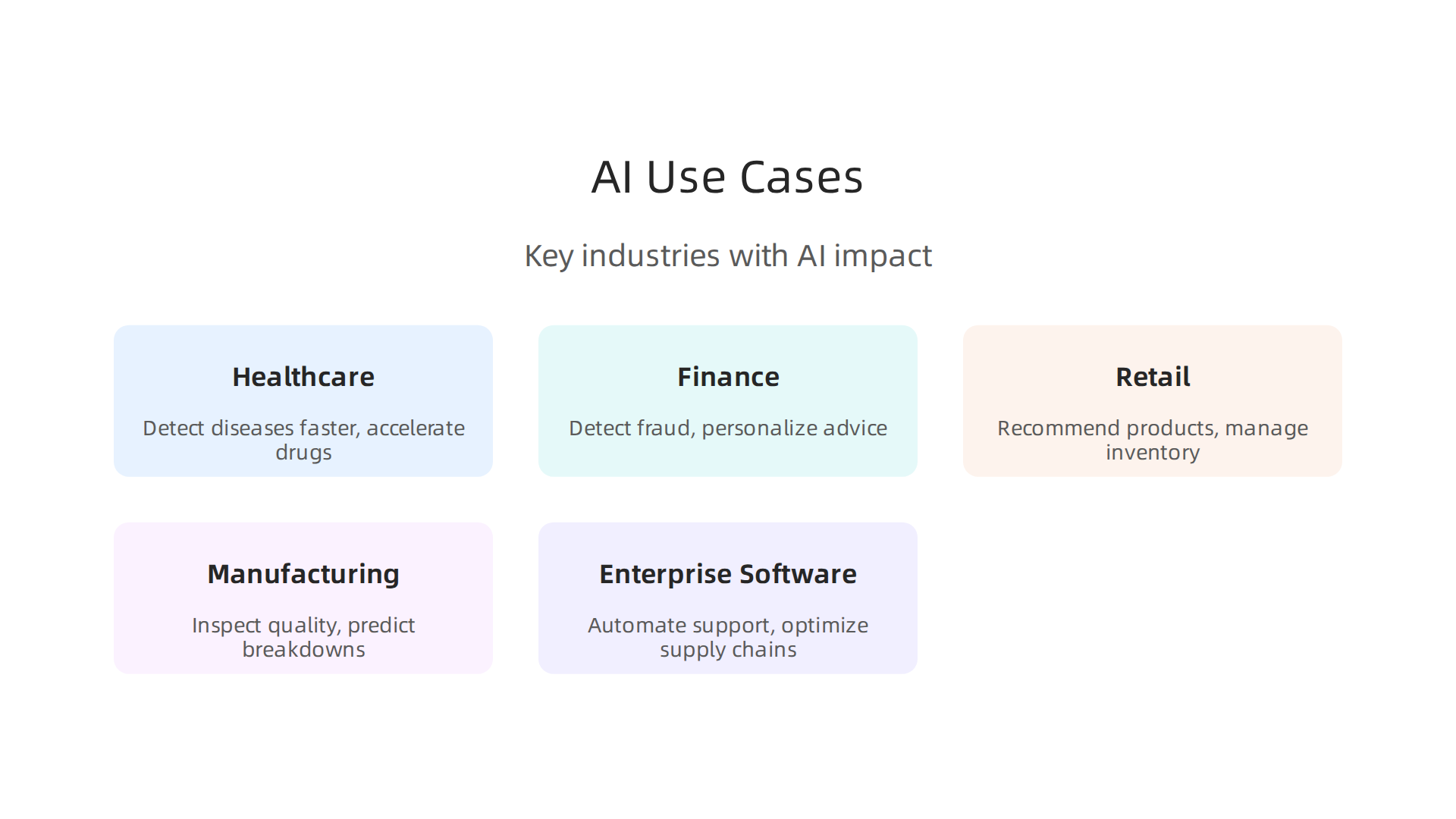
Here are some top examples of where they are making a big difference:
- Healthcare: AI is a powerful tool in medicine. It helps doctors find diseases faster and more accurately, sometimes even before symptoms appear. It also speeds up the search for new medicines and helps create special treatment plans for each patient. This kind of analytical intelligence helps improve health for many people. If you’re curious about how AI is changing medicine, you might want to read about Doctor AI in 2026 How Artificial Intelligence is Transforming Healthcare Today.
- Finance: In banking and finance, artificial intelligence and machine learning are used to spot unusual transactions that might be fraud. They also help banks give better, more personal advice to customers and manage money risks. This helps keep our money safe and makes financial services smarter.
- Retail: Have you ever noticed how online stores suggest things you might like? That’s AI at work! In retail, AI helps recommend products, manage how much stuff is in stock, and even create more personal shopping experiences. It makes shopping smoother and more enjoyable.
- Manufacturing: Factories use AI for many things. It can check products for flaws, predict when machines might break down so they can be fixed before stopping production, and make sure everything runs smoothly. This helps factories make better products and waste less.
- Enterprise Software: Many companies use AI in their computer programs. This can be for making customer support better, helping with supply chain management, or organizing large amounts of information. In 2026, many businesses are seeing real value from using AI in their daily work, with a report showing meaningful impact from current uses across all sectors Global AI Pulse Q1 2026.
How organizations pick and measure AI projects
With so many ways to use artificial intelligence and machine learning, how do companies decide which projects to start? They usually look at two main things:
- Business Impact: How much good will the AI project do for the company? Will it save money, make more money, or make customers happier? Companies want to see a clear benefit.
- Feasibility: Is it actually possible to build this AI project? This involves looking at if they have the right data, if the technology is ready, and how hard it will be to put into action.
By weighing these two things, businesses can choose AI projects that are most likely to work and bring a good return on investment (ROI). Many use a special plan or framework to help them pick the best projects AI Use Case Prioritization Framework for Business Value and Feasibility. It’s all about making smart choices to get the most out of ai research and development. To keep up with all the exciting advancements in AI and how they’re being used, make sure you’re getting the latest insights.
Get clear daily AI updates from The AI Newsletter Worth Reading.
After choosing the best artificial intelligence and machine learning projects for growth, it is also very important to think about the problems and questions that can come with them. Just like any powerful tool, AI needs to be handled with care. Here, we look at some big challenges, risks, and important rules for using AI in a fair and safe way.

Challenges, risks, and ethics: data, bias, governance, and regulation
Using artificial intelligence and machine learning can bring many good things, but it also comes with its own set of problems. It is vital to understand these issues to make sure AI helps everyone fairly and safely.
Keeping AI on the right track: important risks
There are two main kinds of risks when we talk about AI: those related to how the AI works, and those about how it affects people and society.
1. Operational Risks (How AI Works)
- Bad Data In, Bad AI Out: Artificial intelligence learns from data. If the data used to train an AI is messy, wrong, or not complete, the AI won’t work well. This is why having good, clean data is so important. Sometimes, there is not enough useful data for training, which makes things harder for AI research and development efforts. For example, some studies point out challenges with limited data available for training in many applications. It’s also key to have strong practices for handling and labeling data so it’s ready for AI, as highlighted by guidelines for accelerating responsible use of artificial intelligence.
- Changing Worlds: What if the world changes after an AI has learned something? For example, an AI that predicts traffic might get confused if suddenly everyone starts working from home. This is called "distributional shift," and it means the AI might not be as useful anymore because its old learning doesn’t fit the new situation.
- Tricking the AI: Sometimes, people try to fool AI systems on purpose. This is called an "adversarial attack." It could mean showing an AI a picture that looks normal to us but makes the AI think it’s something else. These attacks can cause problems for important systems.
2. Socio-Ethical Risks (How AI Affects People)
- Bias and Fairness: One of the biggest concerns is that AI can be unfair. If an AI learns from data that shows old prejudices or unfair treatment of certain groups of people, the AI will learn those biases too. Then, the AI might make unfair decisions, like denying a loan or a job to someone based on their background instead of their actual skills. Understanding these risks is crucial for leaders, and you can learn more about AI models and female bias.
- Privacy: Artificial intelligence often needs a lot of personal information to work well. This brings up questions about how to protect people’s privacy. Who owns the data? How is it stored? How do we make sure it is not used in ways that harm individuals? Making sure personal data is protected is a key part of using AI responsibly.
Making sure AI is used well: governance and regulation
Because of these risks, companies and governments are working hard to set up rules and guidelines for AI. This is called AI governance and regulation.
- Clear Rules: In 2026, many organizations are putting together plans to manage AI. They are setting clear goals and making sure there are ways to be accountable for how AI systems are used. For instance, the US government has outlined practices for an accountability framework for federal agencies and calls for agencies to identify key officials to lead AI adoption and manage risks.
- Fairness and Transparency: Governments want AI to be fair, to protect people’s privacy, and to be easy to understand. They are creating rules that say AI systems should assess and fix any unfairness or discrimination they might cause. This includes making sure people are given proper notice and clear information about how AI impacts them and their privacy, as detailed in guidance from the Office of Management and Budget.
- Always Changing: The world of AI is moving fast, so rules and laws about it are always being updated. The goal is to encourage new ideas (ai research and how to make an ai better) while also keeping people safe. For leaders who want to guide their organizations, learning about the leaders playbook for AI governance in 2026 can be very helpful.
Building trust and making sure AI is used responsibly means thinking about these challenges from the very start of any project. It’s about designing analytical intelligence systems that are not just smart, but also safe, fair, and open.
Building trust and making sure artificial intelligence and machine learning are used responsibly means thinking about these challenges from the very start of any project. It’s about designing analytical intelligence systems that are not just smart, but also safe, fair, and open. Now, let’s look forward to the exciting future of AI and how to keep up with all the new ideas without feeling overwhelmed.
Looking ahead: trends, resources, and how to stay current without burnout
The world of artificial intelligence and machine learning is always changing. It moves so fast that it can be hard to keep up. But staying informed is key if you want to use these powerful tools well. We will talk about ways to stay current and some big trends to watch for in 2026.
Staying informed without getting tired
It is easy to feel lost in all the news and updates about AI. There’s a lot of information out there! To avoid getting too tired from trying to read everything, it helps to find good, reliable sources and ways to manage them.
Here’s how you can stay updated:
- Pick trusted sources. Look for news and reports from well-known groups, universities, and big companies that have a good track record. These sources often give clear, honest information. For example, reports from organizations like MIT Sloan Management Review can offer AI Trends in 2026: Key Insights for Leaders.
- Focus on what matters to you. You don’t need to know every small detail. Think about what parts of AI really help your work or interests. This helps you ignore the noise and find the "signal" or important information.
- Use curated summaries. Many people and groups put together the most important AI news into easy-to-read summaries. This can save you a lot of time. For example, a good AI newsletter can give you a quick look at big changes in the field, like those covered in the AI 360 Pulse – Industry Trends, Intelligence and Impact, …. If you’re looking for clear daily AI updates, you can Get clear daily AI updates from The Deep View Newsletter.
Big trends to watch in 2026
As we move through 2026, several key areas in artificial intelligence and machine learning are really standing out.
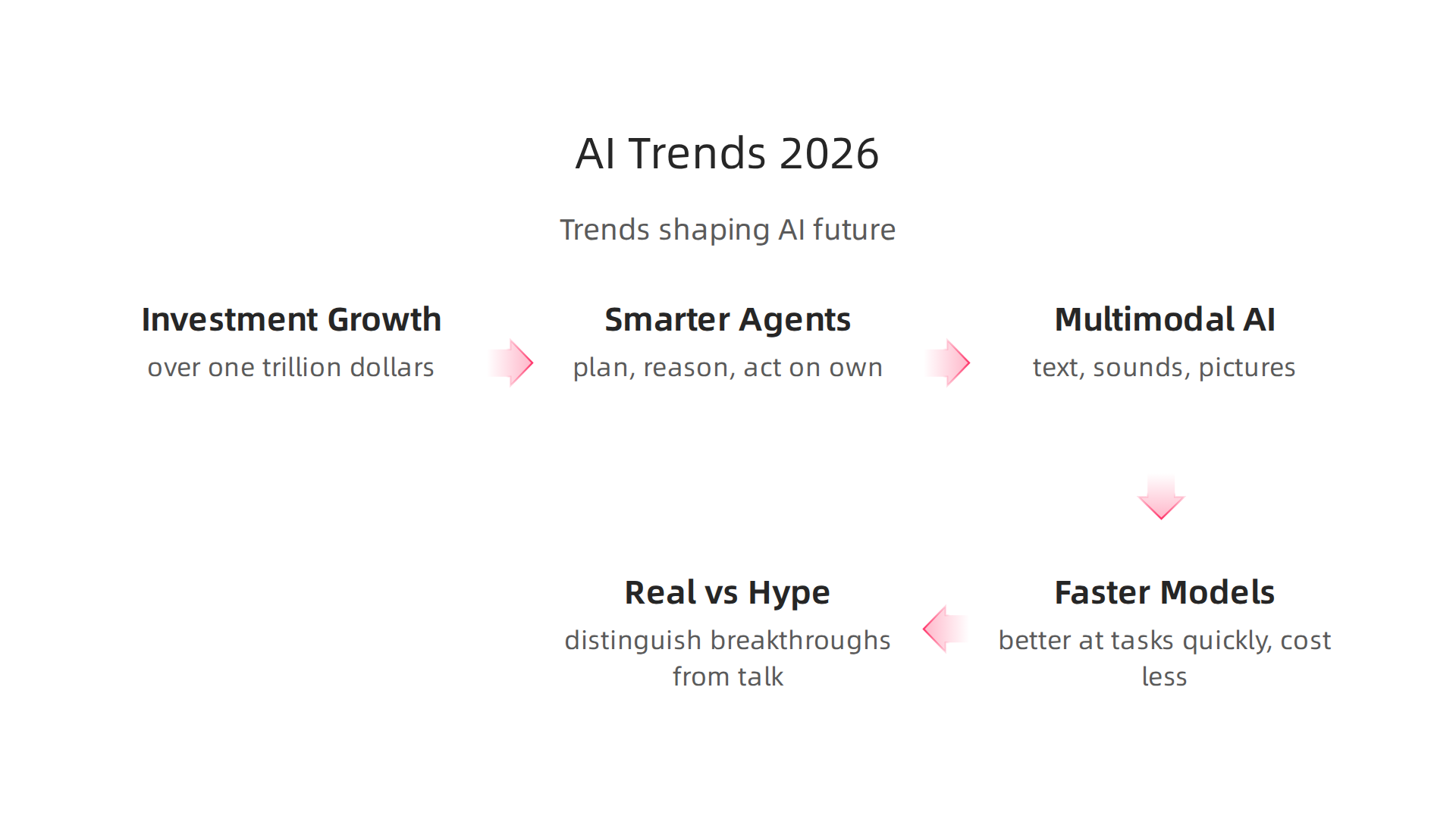
- More Money, More Growth: There’s a lot of money going into AI. Experts think that global investment in AI could go over one trillion dollars in 2026. This means more AI research and new AI tools will be developed. Businesses are seeing real value from using AI across many areas. You can dive deeper into these shifts by reading about Decoding AI Trends 2026: Breakthroughs, Investment, and Governance.
- Smarter AI Agents: One big area of growth is "agentic AI." This is about making AI systems that can plan, reason, and act on their own to complete complex tasks, not just simple ones. While still developing, these agents are expected to change how we do things in customer support, supply chain, and even cybersecurity.
- Seeing and Hearing AI: We’re also seeing more "multimodal analysis" where AI can understand and work with different types of information at once. This means AI that can process text, sounds, and pictures all together to get a fuller understanding, as noted in reports about AI in Equity Research: Tools, Workflows & Applications (2026).
- Faster and Cheaper Models: AI models are getting better at doing tasks quickly and costing less to run. This helps more companies and people use AI. It means that what used to be a big project for how to make an ai is now becoming more possible for many.
- Real vs. Hype: With all the new things happening, it’s important to tell the difference between what’s truly a big step forward and what’s just a lot of talk. Look for AI breakthroughs that show real, proven results and solve actual problems, not just cool ideas that don’t do much. Understanding The AI Breakthroughs in 2026 That Actually Matter can help you decide what’s worth paying attention to.
By keeping an eye on these trends and choosing your information sources wisely, you can stay smart about artificial intelligence and machine learning without getting overwhelmed.
Summary
This guide gives a clear, practical introduction to artificial intelligence and machine learning for busy professionals who need to separate hype from useful insight. It defines core terms—AI, ML, deep learning, and statistical learning—then traces how the field evolved and why recent advances (more data, faster compute, smarter algorithms) matter. The article explains main learning paradigms and model types, shows where AI delivers real business impact across industries, and offers a simple framework for choosing and measuring projects. It also covers operational and socio-ethical risks like poor data quality, bias, adversarial attacks, and the governance steps leaders should take. Finally, the guide highlights 2026 trends, ways to stay informed without burnout, and learning resources so readers can pick the right tools, projects, and courses for their goals.