Why ElevenLabs AI Matters Now More Than Ever
The AI voice market is heating up fast. By 2026, the global AI voice generators market is expected to hit around $8.4 billion, building on a massive surge from the year before. ElevenLabs sits right at the center of this boom. Their technology powers everything from YouTube voiceovers to customer service bots, and the numbers keep climbing. According to recent market data, the AI voice generators market size in 2026 is projected to grow at a staggering rate, making it one of the most exciting spaces in artificial intelligence.
Here’s the problem: Voice AI is evolving so fast that it’s hard to separate real breakthroughs from noise. Every week brings a new model, a new feature, a new claim about what voice can do. Even professionals who follow AI closely can feel overwhelmed. Tools like Forethought AI are rewriting customer service, Seamless AI is changing how sales teams work, and Vantagepoint AI is applying voice to financial trading signals. The landscape shifts constantly.
That’s why this guide exists. We’ll cover everything you need to know about ElevenLabs AI in 2026: how the core technology works, what pricing looks like, who the biggest competitors are, and the ethical questions that matter. We’ve pulled together research from industry reports, hands-on testing, and real user feedback. Whether you’re a content creator, a developer, or a business leader, you’ll walk away with a clear picture of where ElevenLabs fits in the voice AI revolution.
And if you want to keep up with AI developments daily, we’ve got you covered.

The AI Newsletter Worth Reading delivers clear, no‑fluff updates straight to your inbox.
Before we dive into the technical details, let’s look at the key players challenging ElevenLabs in 2026. For a broader perspective on tools reshaping business, check out our guide to the best AI tools for businesses that deliver a real productivity advantage.
What is ElevenLabs AI? Core Technology and Architecture
To really understand what makes ElevenLabs AI stand out, you need to look under the hood. Founded in 2022 by former Google machine learning engineers, the company set out with a clear mission: make AI speech sound genuinely human. By 2026, that mission has grown into a full platform. The company now describes itself as an ElevenLabs AI voice infrastructure provider, offering tools for text-to-speech, voice cloning, sound effects, and conversational agents.
The core technology relies on advanced transformer architectures. These are the same kind of models that power tools like ChatGPT, but trained specifically on audio data rather than text. When you type a sentence into ElevenLabs, the model breaks down your words into smaller pieces called tokens. It then predicts how a human voice would naturally say those words, including pauses, emotion, and emphasis. The result is a waveform that sounds nothing like the robotic voices from just a few years ago.
ElevenLabs offers several key models. Their text-to-speech engine is the most well known. It can generate speech in 32 languages with emotional depth that adapts to context. Voice cloning lets you create a digital copy of any voice using just a short sample. And their sound effects model can generate audio from text descriptions, which is huge for video creators and game developers.
The processing pipeline from text input to audio output happens in milliseconds. First, the system uses a cascade-based architecture to handle speech recognition, reasoning, and speech generation separately. This approach keeps latency low, even for complex requests. For a deeper look at how different AI companies compare, see our list of AI companies shaping the industry in 2026.
The really clever part is how ElevenLabs handles context. The model doesn’t just read words. It reads the meaning behind them. A question gets a rising tone at the end. An excited sentence gets energy. A sad line gets softness. That level of nuance is what separates ElevenLabs from older text-to-speech tools.
ElevenLabs Text-to-Speech: Multilingual Voice Synthesis
So what can you actually do with all that ElevenLabs AI technology? The text-to-speech feature is the star of the show, and it works across more than 30 languages. According to the ElevenLabs AI voice platform overview from NEA, these models generate human-like speech in 32 languages with native-level quality. That means a listener in Tokyo hears Japanese that sounds like it came from a local. A user in Berlin gets crisp, natural German. No robotic accent. No awkward phrasing.
Three main voice styles stand out depending on what you need:
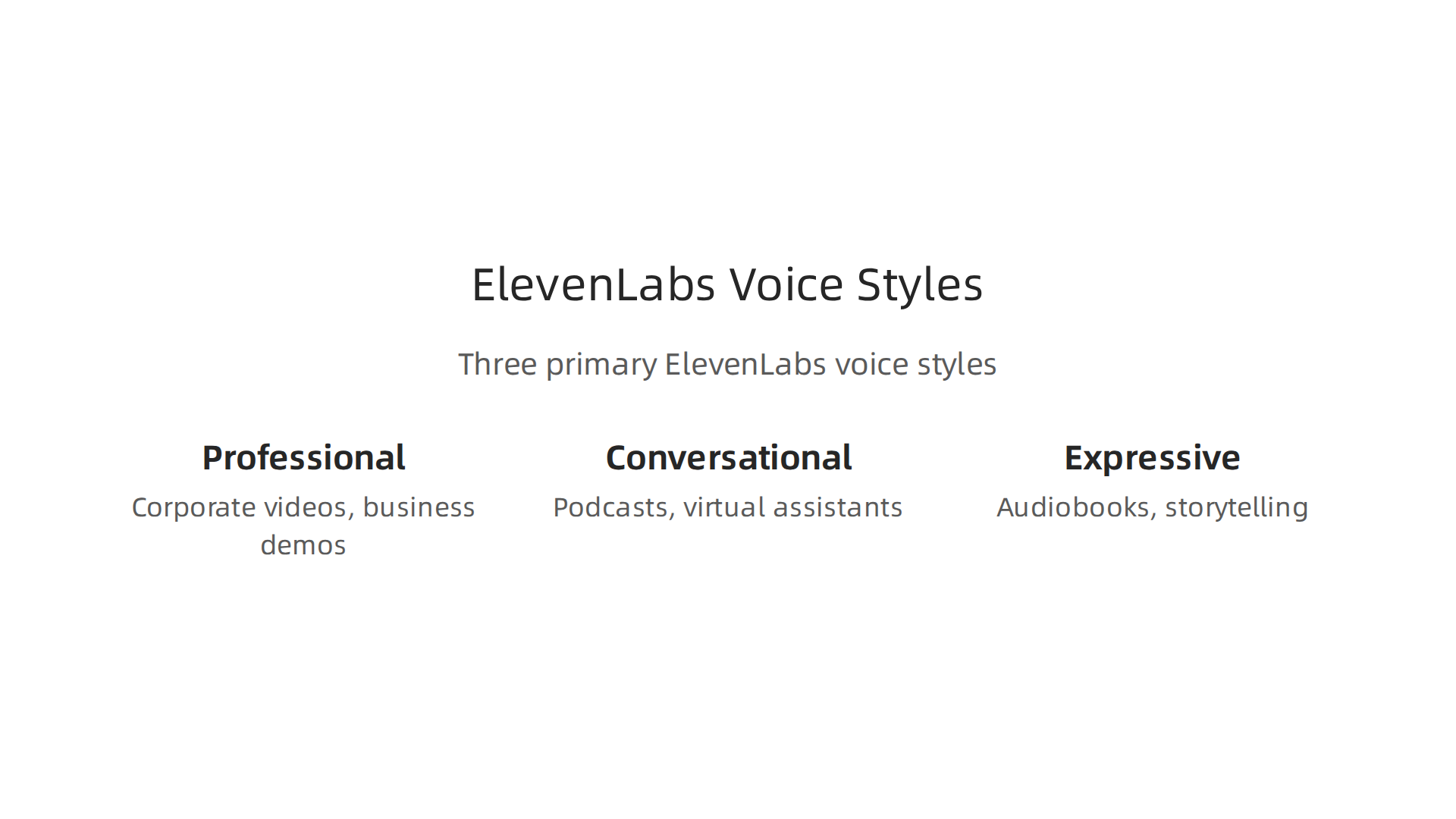
| Style | Best For | What It Sounds Like |
|---|---|---|
| Professional | Corporate videos, business demos | Clear, confident, neutral tone |
| Conversational | Podcasts, virtual assistants | Relaxed, natural, with pauses and rhythm |
| Expressive | Audiobooks, storytelling | Emotional range, dramatic delivery |
Think about the use cases. E-learning platforms use these voices to create multilingual course content without hiring voice actors for every language. Podcasters generate host voices in seconds. Accessibility tools convert text to speech for visually impaired users.

The quality is so good that it’s hard to tell a real human from the AI.
If you are building video content or interactive experiences, you might also want to explore some of the best AI tools for businesses that deliver a real productivity advantage in 2026 to see how voice fits into a bigger toolkit.
The real magic is that you don’t need technical skills. You paste your script, pick your voice, and hit generate. The ElevenLabs AI handles the rest, including emotion, pacing, and pronunciation.
And if staying up to date with tools like this matters to you, here is a simple way to keep learning without the noise. The AI Newsletter Worth Reading sends you clear daily AI updates so you never miss the next breakthrough.
Voice Cloning and Generative Voice AI: Capabilities and Limits
Here is where ElevenLabs AI really wows people. Voice cloning lets you create a digital copy of a real voice. You can use your own voice or get permission to clone someone else’s. But not all cloning works the same way.
Two main types exist: Instant Voice Cloning and Professional Voice Cloning.
Instant cloning needs only one to five minutes of clear audio. You upload a short sample, and the AI builds a voice model fast. Professional cloning is much more demanding. For the best results, you need at least 30 minutes of clean audio, and three hours is even better. According to the professional voice cloning documentation from ElevenLabs, this method creates a near-perfect replica of the original speaker. The trade-off is simple: more audio means higher accuracy.
Zero-shot cloning is when the AI can mimic a voice with almost no training data. Few-shot cloning uses a small set of samples to learn the voice patterns. In practice, ElevenLabs Instant Voice Cloning works like zero-shot for short clips, while Professional Voice Cloning is a few-shot approach. The quality difference is noticeable. A short sample can produce a decent clone, but it might miss subtle emotional cues or unique speech habits.
Real-time voice conversion is another powerful feature. You can speak into a microphone and have your voice transformed into the cloned voice instantly. This works for live streaming, gaming, or virtual meetings. The latency is very low, so the conversation feels natural.
How accurate are these clones? ElevenLabs measures similarity scores and detection rates. Users report that with enough training audio, the clone sounds nearly identical to the original. One user on LinkedIn found that with just 10 minutes of audio, the results were impressive with natural pacing and correct emphasis. The AI handles technical terms and emotional range well. But the clone is not perfect. Very subtle sounds, like breaths or laughs, can still give it away.
If you want to understand how voice cloning fits into the bigger picture of what AI can do in 2026, check out the ai breakthroughs in 2026 that actually matter. It covers the most impactful AI developments across many fields.
The limits of voice cloning come down to data quality and consent. You need clean audio without background noise. And you must have permission to clone a voice. ElevenLabs has safety measures in place to prevent misuse, but the technology is so powerful that responsible use matters a lot.
ElevenLabs for Content Creators: Podcasting, Audiobooks, and Dubbing
But for content creators who respect those limits, the payoff from ElevenLabs AI is huge. Three areas stand out in 2026: automated dubbing, audiobook narration, and full production workflows.
Automated dubbing is a game-changer. You upload a video or audio file, and ElevenLabs syncs the new voice to the original speech timing. The AI matches lip movements and emotional tone across languages. According to the deep dive into ElevenLabs voice cloning features, the platform supports over 29 languages. This means a podcast host can release episodes in Spanish, French, and Japanese without rerecording anything. The voice stays consistent. The pacing matches. Listeners get a natural experience in their own language.
Audiobook narration is where ElevenLabs really shines. The AI can differentiate between characters in a story. It shifts pitch and emotion to match dialogue. A narrator can clone their own voice and then direct the AI to read chapters with the right emotional range. Creators report that with 10 minutes of training audio, the results include natural pacing and correct emphasis even on technical terms. One user shared impressive results showing the AI handled complex vocabulary well. The tool gives independent authors the power to produce professional audiobooks without hiring a voice actor.

Real-world production results back this up. Content creators on platforms like YouTube and TikTok use ElevenLabs to produce hours of daily content. A Reddit user reported making $200 by cloning their own voice for narrated content. The quality was good enough to keep listeners engaged. Another review noted that ElevenLabs offers over 1,000 diverse voices and accurate voice cloning for any project.
If you are building a content business with these tools, you might want to check out the best AI tools for businesses that deliver a real productivity advantage in 2026. It covers other platforms that pair well with ElevenLabs workflows.
The bottom line is simple. For podcasters, authors, and video creators, ElevenLabs AI cuts production time from days to hours. The technology is mature enough for serious use in 2026. Just remember to use clean audio and always get proper consent before cloning anyone’s voice.
Want to stay ahead of these AI shifts? Get clear daily AI updates from The Deep View Newsletter.
ElevenLabs Pricing and Plans: Free vs Pro vs Enterprise
Now that you have seen what ElevenLabs AI can do for content creation, let us talk about cost. The platform offers several pricing tiers in 2026. Each one matches a different level of use.
The Free plan costs nothing. It gives you 10,000 credits per month. That works out to about 10 minutes of high-quality text to speech. You get access to core features like basic voice cloning and standard voices. It is perfect for testing the tool before you spend any money.
The Starter plan runs at $5 per month. You get 30,000 credits and access to more voice options. The Creator plan at $22 per month is where things get serious. You get 121,000 credits and commercial rights. This means you can use the audio in paid products, ads, or client work. It is the sweet spot for independent podcasters and small content businesses.
The Pro plan costs $99 per month. It includes 500,000 credits and premium features like 44.1kHz PCM audio output. This is for agencies or creators producing lots of content daily. If you need even more, the Scale plan at $330 per month offers 2 million credits. For a full breakdown of every plan and its features, check out the ElevenLabs Pricing in 2026 Every Plan Tested and Broken Down guide.
Enterprise plans are fully custom. You get dedicated support, a service-level agreement, and custom AI voice models trained on your own data. Pricing depends on volume and specific needs. Companies deploying ElevenLabs AI at scale across teams typically go this route.
If you are building a serious content operation in 2026, understanding pricing helps you move from testing to production without surprises. A well-chosen plan lets you focus on creating instead of watching the credit counter.
To keep exploring how AI platforms fit into a broader business strategy, take a look at this guide on picking the right top AI platforms for business growth in 2026.
ElevenLabs API: Developer Integration and Use Cases
Once you have chosen the right plan, the real power of ElevenLabs AI opens up through its API. The API lets you build voice generation directly into your own apps, websites, and workflows. Instead of using the web dashboard to create audio one file at a time, you can automate everything.
The core API endpoints cover three main areas. The text to speech endpoint takes written text and returns high quality audio. You can control voice, speed, and emotion. The voice cloning endpoint lets you create custom voices from short audio samples. And the streaming endpoint delivers audio in real time, which means no waiting for the full file to generate before playback starts.
ElevenLabs AI provides SDKs for Python, Node.js, and standard REST integration. If you work in Python, you can install the library with pip and have TTS running in a few lines of code. Node.js developers get the same ease. And if your stack uses something else, the REST API works with any programming language that can make HTTP requests. In 2026, the company has also introduced a pay as you go model for API usage, making it more accessible for developers building at any scale. You can read more about the updated pricing in their announcement on lowered API costs.
So what do people actually build with this? Three real-world use cases come up most often.
Chatbots and voice assistants use the streaming API to generate spoken responses in real time. The voice sounds human, not robotic. Interactive voice response or IVR systems for customer support use the same approach. Callers hear a natural voice instead of the old monotone options. And accessibility tools for users who cannot read screens benefit hugely from high quality text to speech built right into the software.
For developers building AI-powered products, learning to integrate APIs like this is a core skill. If you want to understand how to move from idea to working product, our guide on the AI product development lifecycle covers the full process.
One more thing. The AI space moves fast, and keeping up with new API features and voice models can feel like a full time job. That is why staying informed matters. If you want clear daily updates on AI breakthroughs and developer tools, subscribe to The AI Newsletter Worth Reading. It delivers the most important news straight to your inbox so you can focus on building.
ElevenLabs vs Competitors: Market Analysis 2026
ElevenLabs AI did not become the voice AI leader by accident. But it also does not own the entire market. Several strong competitors offer real alternatives, and picking the right platform depends on what you actually need.

The main competitors fall into two groups. Developer-focused platforms like Play.ht, WellSaid Labs, and Cartesia compete on API pricing, latency, and language coverage. Enterprise tools like Respeecher and Resemble AI focus on voice cloning security, compliance, and air-gapped deployment. And the big cloud providers Amazon Polly and Microsoft Azure Speech offer TTS as part of larger ecosystems, which matters if you already run infrastructure with them.
So how does ElevenLabs stack up on the things that matter most?
Voice quality remains ElevenLabs strongest advantage. The company consistently tops community benchmarks like the TTS Arena for naturalness and emotional range. Play.ht and WellSaid come close, but many users report that ElevenLabs still sounds more human across more use cases. The complete list of ElevenLabs competitors shows just how crowded this space has gotten in 2026.
On language support, ElevenLabs covers over 30 languages with native quality voices. Amazon Polly and Microsoft Azure match that number, but the voice quality varies more. For multilingual content, ElevenLabs tends to win on consistency.
Pricing tells a different story. ElevenLabs can get expensive at scale, especially for commercial use with voice cloning. Competitors like Play.ht and Cartesia offer lower per-character rates when you need high volume. WellSaid Labs also competes heavily on cost-per-character and licensing terms. So if budget is your main concern, the 7 best ElevenLabs alternatives compared for 2026 give you cheaper options that still sound good.
API quality and developer experience are where ElevenLabs really pulls ahead. The streaming endpoint, low latency, and easy SDKs make it hard to beat for real time voice applications. Inworld AI notes that Cartesia has faster time to first audio, but ElevenLabs leads on overall voice quality and reliability.
Industry adoption tells you something too. ElevenLabs is the most widely used third party TTS API among AI startups and content creators in 2026. The cloud providers have deeper enterprise reach. But for pure voice AI quality, ElevenLabs still holds the crown.
If you are researching which AI platforms to bet your next project on, staying current on the competitive landscape matters. For clear daily updates on AI tools, models, and market shifts, get the AI Newsletter Worth Reading delivered to your inbox.
Ethical Considerations and Best Practices for AI Voice
But choosing a voice AI platform is not just about voice quality and price. You also have to think about ethics. As ElevenLabs AI and other voice tools get more realistic, the risk of misuse grows right along with the power.
Voice cloning technology lets you recreate anyone’s voice with just a short sample. That is amazing for creators. But it also opens the door to deepfake scams and identity theft. Bad actors can impersonate a family member, a boss, or a public figure without consent. That is why voice consent matters. You should never clone someone’s voice without their clear permission. Platforms that build in safety features help. For example, some companies now offer built-in deepfake protection and built-in watermarking to track where audio came from.
Governments are paying attention too. The EU AI Act sets strict rules for high risk AI systems, and voice cloning falls into that category. Proposed US legislation also aims to criminalize non consensual deepfakes and require clear labels on AI generated content. These regulations push the whole industry to be more transparent.
So what should you look for in a voice AI platform? Start with these best practices:
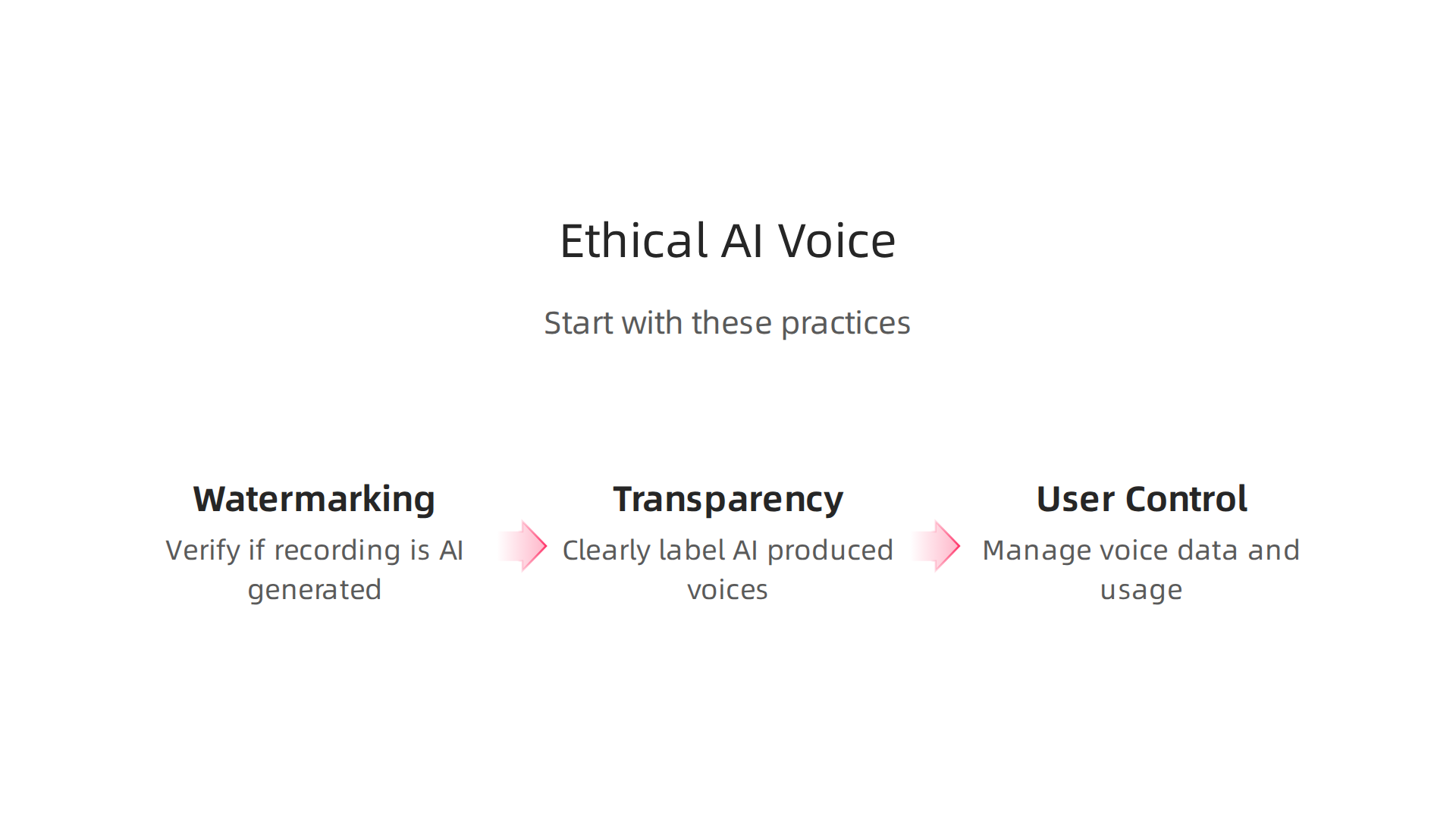
- Watermarking. Good platforms embed invisible markers in audio so you can verify if a recording is real or AI generated.
- Transparency. The best tools clearly label AI produced voices and tell users when they are hearing synthetic speech.
- User control. You should be able to manage your voice data, delete it when you want, and control how it is used.
Forethought AI and Vantagepoint AI are also working on ethical safeguards. But the responsibility does not just sit with companies. Every developer and content creator who uses these tools needs to follow basic consent rules. If you clone a voice, get permission first. If you share AI generated audio, label it. If you spot misuse, report it.
For a deeper look at how to handle these issues responsibly, check out this article on the risks of unregulated AI systems. Staying safe while using powerful voice tools is everyone’s job.
Summary
This article explains why ElevenLabs is a leading voice AI platform in 2026, unpacking its core transformer-based technology, multilingual text-to-speech, and advanced voice cloning features. It details practical use cases for content creators—automated dubbing, audiobook narration, and daily production workflows—while highlighting the differences between instant and professional cloning, real-time voice conversion, and limits tied to data quality and consent. The guide also breaks down pricing tiers from a free plan up to custom enterprise agreements, and shows how developers can integrate ElevenLabs via easy SDKs and streaming APIs. You’ll get a clear comparison with competitors on quality, language coverage, and cost, plus a checklist of ethical safeguards such as watermarking and transparency. After reading, you’ll understand when ElevenLabs is the right choice, how to deploy it responsibly, and where to look for cheaper or more enterprise-ready alternatives.