

Why practitioners need a clear playbook for how to use AI
In 2026, it feels like artificial intelligence (AI) is everywhere. New AI tools and discoveries pop up almost every day. This can be exciting, but it also means there’s a huge amount of information to keep up with. For people who want to use AI in their jobs, it’s really hard to know what’s truly helpful and practical right now. You might feel lost in all the hype, wondering which AI model actually makes a difference or how to properly measure the artificial intelligence cost estimation for new projects.

This fast pace and information overload make it tough to figure out the best way to use AI. Many companies are trying out AI, but few are truly scaling it to get the most value. For example, a 2026 survey about AI in manufacturing found that while most manufacturers get value from AI, only a small number have truly put AI to work across all their processes. This shows a big challenge in moving from trying out AI to actually using it every day to make things better, like improving how things are made or doing quality checks.
That’s why having a clear plan is so important. You need simple ways to understand how to use AI effectively, not just for today, but for the future too. This guide will give you easy-to-follow steps, real examples of how other companies are using AI successfully, and clear checkpoints to make sure your AI efforts are working. We want to give you proof you can trust and clear advice you can act on right away.
To help you cut through the noise and stay informed about the latest AI news and breakthroughs, we recommend checking out The AI Newsletter Worth Reading.
It offers clear daily updates to keep you ahead.
Learning how to pick the right AI tools and understand their impact is key. If you’re looking to build your skills, finding the best courses can make a big difference. You can explore options to unlock your AI potential and select the right learning path for your career goals.
Manufacturing: Predictive maintenance and quality control that reduce downtime
The idea of using AI for big tasks might seem new, but in factories, it is already making a real difference. Many companies are still learning how to use AI widely. However, in manufacturing, we are seeing clear examples of how to use AI to keep machines running and products perfect.
One of the best ways manufacturers are using AI in 2026 is for predictive maintenance. Imagine a machine that tells you it’s about to break down before it actually stops working. That’s what predictive maintenance does. It works by putting small sensors on factory equipment. These sensors collect lots of data like how much a machine vibrates, its temperature, or how much power it uses. An AI model then looks at all this sensor data. It can spot tiny changes or patterns that human eyes might miss.
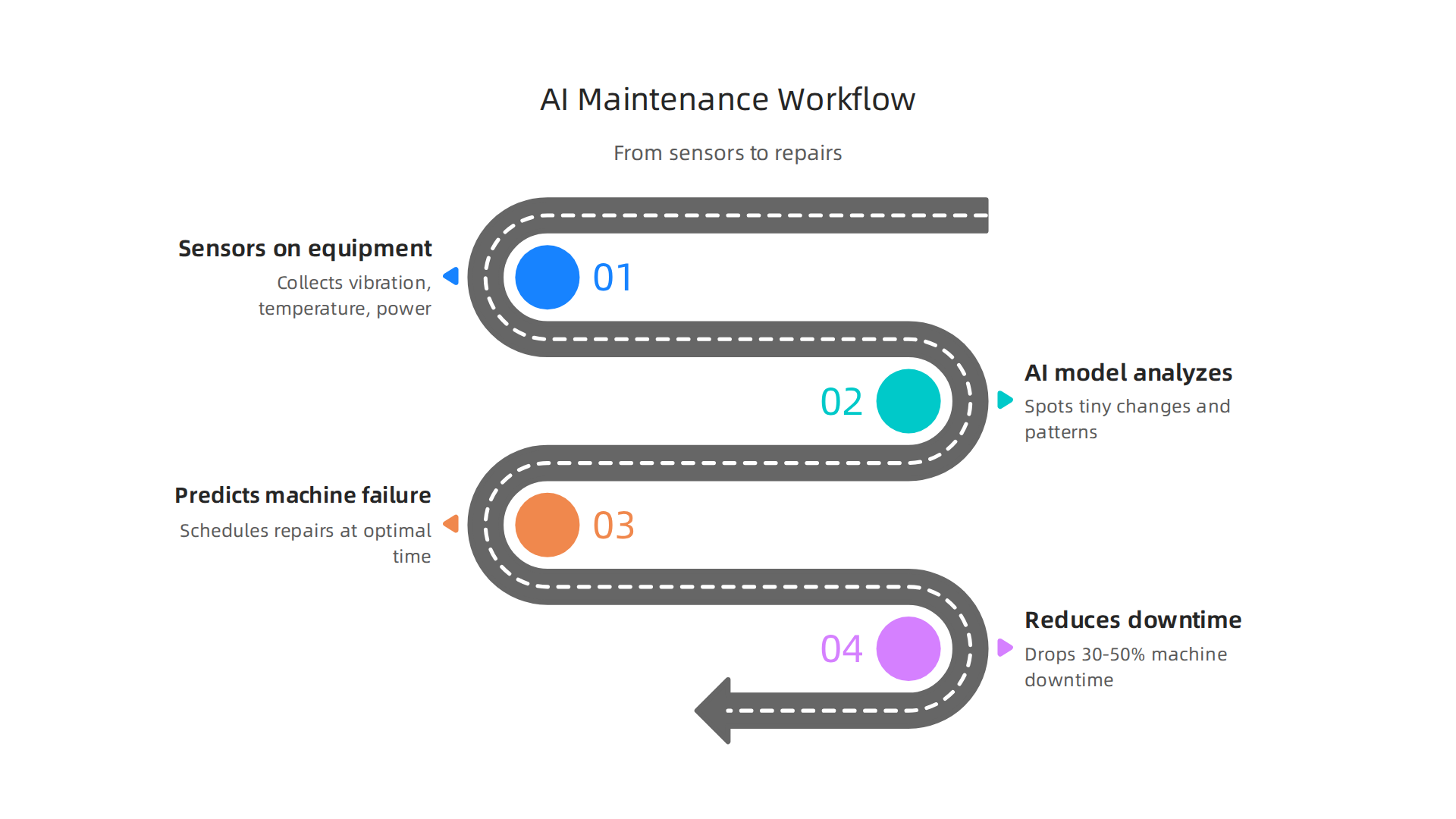
These patterns tell the AI that something is going wrong, even before anyone notices a problem.
Because the AI can predict when a machine might fail, factories can schedule repairs at the best time. This stops machines from breaking down unexpectedly. It also means less time when production has to stop, which is called downtime. Actually, factories using AI for predictive maintenance have seen a huge drop of 30% to 50% in machine downtime. They also extend the life of their machines by 20% to 40% compared to older ways of fixing things based on a set schedule, according to 2026 data on industrial AI performance Industrial AI Statistics 2026: ROI, Adoption & Downtime Data.
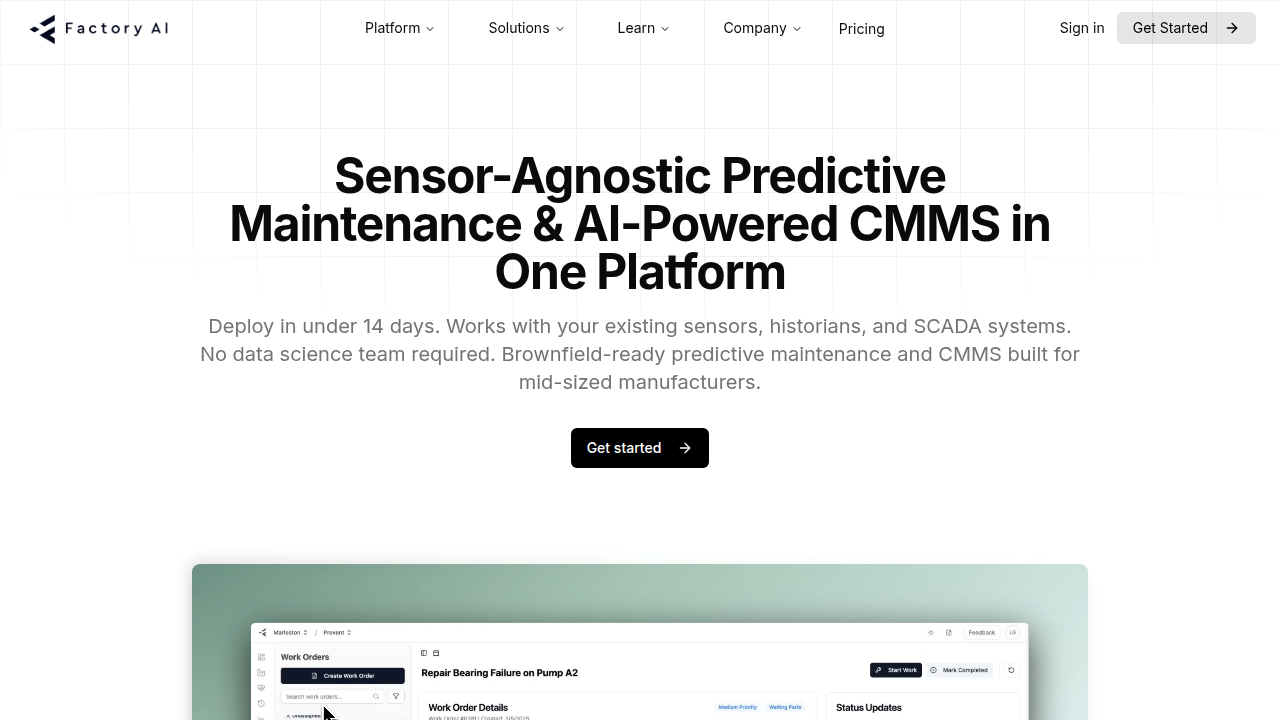
This smart use of AI helps save a lot of money and keeps things moving smoothly. In fact, predictive maintenance is one of the most common ways AI is used in factories today, with 58% of plants running it AI in Manufacturing Statistics 2026 – Presenc AI.
Another key area where AI shines is quality control. Think about products coming off a conveyor belt. How do you make sure every single one is made correctly? It’s hard for people to check every item perfectly, especially when things move fast. Here’s where computer vision comes in. Computer vision is a type of AI that lets computers "see" and understand images. Cameras are set up on the production line to take pictures or videos of products. Then, an AI model trained on good and bad examples can quickly look at each item. It can find even tiny defects or things that don’t look right. This is called anomaly detection.
This AI-powered inspection system can check every product at very high speeds, much faster and more accurately than a human could. It can detect defects with over 99% accuracy AI Use Cases in Manufacturing — 2026 Guide. By using computer vision, companies can make sure only top-quality products leave the factory. This helps improve the overall quality of products and reduces waste from mistakes. To learn more about how this technology works, you can check out our guide on how image artificial intelligence works. This field AI application is a powerful way to keep quality high and customers happy.
Both predictive maintenance and quality control show how to use AI not just for small tests, but for real-world changes that make factories better and more efficient in 2026.

These applications highlight the practical side of scaling AI efforts, ensuring that artificial intelligence cost estimation leads to clear returns. When considering how to choose the right AI tools for your business, focusing on these types of proven applications can make a big difference in seeing real business growth.
Just like AI is making factories smarter, it is also bringing big changes to healthcare. In 2026, hospitals and researchers are finding new ways how to use AI to help doctors, make diagnoses, and find new medicines faster.
Diagnostics and Triage: Helping Doctors, Not Replacing Them
One of the most important ways AI helps in healthcare is with diagnostics. This means finding out what illness a person has. AI models can look at lots of patient data very quickly. This includes medical images like X-rays or MRI scans. An AI model can spot tiny signs of disease that might be hard for a human eye to see. For example, AI can help find early signs of cancer in scans or identify eye diseases from pictures of the retina. This helps doctors make a diagnosis sooner and start treatment faster.
AI also plays a role in triage, which is how medical staff decide which patients need help most urgently. Imagine a busy emergency room. An AI system can analyze a patient’s symptoms and health history to suggest how severe their condition might be. This helps nurses and doctors prioritize who needs to be seen first.
It is really important to know that AI tools in healthcare are there to help doctors, not to take their place. They offer something called clinical decision support. This means the AI gives more information and suggestions, but the final decision always comes from a trained medical professional.

This ensures that human care and judgment remain central. In 2026, there are also new rules to make sure AI in healthcare is used safely and fairly. For example, the EU AI Act classifies AI systems in clinical settings as "high risk," meaning they need extra checks and careful use to protect patients Ethical and Regulatory Frameworks for Artificial Intelligence in Healthcare.
To learn more about how AI is changing patient care, check out our guide on Doctor AI in 2026.
Speeding Up Drug Discovery
Finding new medicines takes a very long time and costs a lot of money. This process can take over a decade and cost billions of dollars for just one drug. But AI is starting to change this. AI can look through millions of different chemical compounds and predict which ones might work best to treat a disease.
This speeds up the early steps of drug discovery, known as preclinical screening. Instead of testing countless substances one by one in labs, an AI model can filter out the most promising ones. This helps researchers focus their efforts and resources on compounds that have a higher chance of success. This reduces the artificial intelligence cost estimation that goes into early drug development. By helping to identify potential drug candidates much faster, AI is making it possible to bring new treatments to people more quickly. This field AI application shows how cutting-edge technology can help tackle some of the biggest health challenges.
Staying informed about these fast changes in AI can be tough.
If you want to keep up with all the new AI models, research, and important developments, make sure to Get clear daily AI updates from The Deep View Newsletter.
Just like AI helps doctors save lives, it also helps keep our money safe and makes financial decisions smarter. In 2026, the finance world is using AI in many important ways, from spotting tricky scams to helping decide who gets a loan.
Catching Fraud
One of the big problems in finance is fraud. This is when someone tries to cheat people or companies out of money. It is a huge challenge to find these dishonest actions among millions of daily transactions. This is where an AI model really shines. AI can look at vast amounts of data very quickly. It learns what normal financial behavior looks like. Then, if something unusual or suspicious happens, the AI can flag it right away. For example, if your credit card is suddenly used to buy something expensive in a far-off country you have never visited, an AI system can spot this as an abnormal pattern and alert you or your bank. This quick action can stop fraud before it causes big losses. This shows one powerful way how to use AI to protect consumers and businesses.
Smarter Credit Decisions
When you ask for a loan, like for a house or a car, banks need to decide if you are likely to pay it back. This is called credit scoring. Traditionally, banks look at things like your payment history and how much debt you have. Now, AI adds another layer of smart thinking. An AI model can look at even more information and find hidden connections that human experts might miss. This means banks can make fairer and more accurate decisions about loans. It helps them understand the risk better, which can be good for both the bank and the person asking for the loan. This kind of field AI application helps make financial services more accessible and reliable.
Automated Trading
In the stock market, decisions need to be made very fast. Prices change in seconds, and millions of trades happen every day. This is a perfect area for AI to help with algorithmic decisioning. AI systems can watch market trends, news, and other important signals from all over the world. They can then make trading decisions much faster than a person ever could. This can help investors buy and sell at the best times, even when the market is moving quickly. For professionals who deal with complex financial data, understanding tools that analyze this information is key. If you want to dive deeper into how technology helps analyze money matters, you might find our article on AI Data Analytics 2026 Trends That Deliver Real Results helpful.
Important Considerations for AI in Finance
While AI brings many benefits to finance, there are also important things to think about.
- Model Risk: Just like any tool, AI models can make mistakes. If an AI model is used for important decisions, we need to be sure it is working correctly and not causing new problems.
- Explainability: Sometimes, an AI model’s decision can be hard to understand. We need to know why the AI made a certain recommendation, especially when it affects people’s lives, like with a loan application. This is about making sure the AI is fair and transparent.
- Compliance: The finance world has many strict rules and laws. AI systems must follow all these rules. This means they need extra checks and careful use to protect everyone involved. Exploring the boundaries and challenges in this area can be insightful for anyone wondering about AI Without Restrictions: Innovation, Risks, and the Fight for Control.
Using AI in finance needs careful planning and oversight. But when done right, it can lead to a safer, faster, and more efficient financial system for all.
Moving from how AI protects our money, let us look at another place where AI is making a big difference: shopping and online stores. In 2026, AI is changing how we buy things, helping businesses understand what we want and making sure products are always in stock.
Personalization and Smarter Shopping
Have you ever wondered how online stores suggest exactly what you might like? That is an AI model at work. These models learn from your past purchases, what you have looked at, and even what other people with similar tastes like. This helps stores show you products you are more likely to buy. This kind of personalization is a key example of how to use AI to make shopping more fun and help businesses grow. It also helps companies keep customers coming back, improving what they call customer lifetime value.
Predicting What People Want (Demand Forecasting)
It is a big problem for stores to have too much of something no one wants, or not enough of something everyone wants. AI solves this by predicting what people will buy. An AI model can look at many things like past sales, holidays, weather, and even news trends. This helps stores know how much of each product to order. This is called demand forecasting, and it is a smart field AI application that stops waste and makes sure shelves are never empty. Businesses looking to grow often leverage these insights, and finding the right technology is key for picking the right top AI platforms for business growth in 2026.
Making Deliveries Smooth (Supply-Chain Optimization)
After knowing what to buy, stores need to get products from where they are made to where they are sold. This whole journey is called the supply chain. AI helps make this journey smoother and cheaper. It figures out the best routes for delivery trucks, manages warehouse space, and even predicts possible delays. This way, products arrive on time and at the lowest possible cost, improving what is known as artificial intelligence cost estimation for logistics. This is another great example of how to use AI to make business operations more efficient. Many businesses rely on a variety of AI tools to achieve these benefits, with several excellent platforms available in 2026, according to lists like the Top 10 AI Tools in May 2026 – Ranked and Reviewed.
From knowing what you want before you do, to making sure it is always available, AI is truly reshaping retail and e-commerce. It helps businesses serve customers better and run their operations more smoothly. Staying updated on these fast changes is important for anyone in business today. For more detailed insights into the rapid changes in AI, consider subscribing to The AI Newsletter Worth Reading.
Beyond making shopping smarter, AI is also changing how businesses run their daily tasks behind the scenes. In 2026, companies are finding new ways for how to use AI to make work faster and easier for everyone. This shift is happening thanks to powerful computer programs called Large Language Models (LLMs) and smart automation. These tools help businesses deal with information better and get more work done.
Smarter Answers and Faster Work
Imagine you have a big question at work, like "What is our company’s policy on remote work?" Instead of searching through many documents, an AI model can give you a quick, correct answer. This is often done using something called retrieval-augmented generation. It means the AI takes your question, looks through your company’s private documents, and then uses that information to give you a helpful answer. This helps everyone find facts much faster, reducing the time it takes to get an answer and boosting how much work people can do. It’s a great example of how to use AI to make knowledge work much more efficient.
Automating Daily Tasks
Another big help for businesses is process automation. Many daily tasks, like sorting emails, filling out forms, or scheduling meetings, are repetitive. AI can take over these tasks, doing them quickly and without mistakes. This frees up people to focus on more creative and important work that needs human thinking. This kind of automation is a strong field AI application that improves how smoothly a company runs. By automating these processes, businesses can also get better at artificial intelligence cost estimation for their operations, as tasks become more predictable and cheaper to complete. For companies looking to make these changes, understanding how to manage their AI tools is key, often requiring insights into enterprise AI tooling in 2026.
Keeping AI Safe and Accountable
When businesses use AI for important internal work, it is very important that these AI model systems are secure and that their actions can be checked. This means companies need special ways to use LLMs within their existing tools and workflows. They need to make sure sensitive company information stays private and that the AI’s decisions can be understood and reviewed if needed. For example, businesses log what the AI does and how it makes decisions. This is part of a larger practice called MLOps, which focuses on running AI systems well. Setting up such systems requires careful planning, as outlined in guides like MLOps Best Practices: Deploying ML Models at Scale in 2026. To make sure these AI answers are always correct and trustworthy, businesses might even use tools that act like the most accurate AI detector to check the quality and honesty of the AI’s work. This helps keep everything transparent and reliable.
Putting AI into daily business operations requires a clear plan. It’s not enough to just know how to use AI; you also need a step-by-step roadmap to make sure your AI projects are successful and trustworthy.

This journey involves careful choices about which AI model to use, how to manage it, and how to keep it safe and fair.
The AI Implementation Roadmap
When a business decides to use AI, they should follow a clear path. This helps them move from a good idea to a working AI system that provides real value.
- Identify the Use Case and Value: First, figure out a specific problem AI can solve. For example, maybe you want to improve customer service or automate a boring task. You need to know what success looks like and how much value the AI will bring. This is also where you might begin your
artificial intelligence cost estimationto see if the project makes financial sense. - Develop and Prove the AI Model: Next, you create or pick an
AI modelthat fits your needs. You’ll test it out with real data to make sure it works well. This "proof of value" step confirms that your chosen AI can actually deliver on its promises. - Move to Production with MLOps: Once the AI model works well in tests, it needs to be put into action for everyday use. This process is called MLOps, which stands for Machine Learning Operations. It’s about turning a test model into a stable, running system. Key practices include keeping track of different versions of your models and data, and setting up automated ways to test and deploy changes. According to experts, tracking every experiment and using version control for pipelines and training code are important MLOps best practices in 2026 when deploying ML models at scale 1.
- Monitor, Maintain, and Govern: After the AI is live, the work isn’t over. You need to constantly watch it to ensure it keeps working correctly, stays fair, and follows all rules. This continuous oversight is vital for reliable outcomes.
MLOps Patterns, Observability, and Performance
To keep an AI model running smoothly and reliably, businesses rely on a set of practices known as MLOps. This isn’t just a technical detail; it’s a core part of how to use AI responsibly and effectively.
- MLOps Patterns: These are like blueprints for how to manage AI systems. They include things like how to store and manage your data, how to train your AI models, and how to update them without causing problems. For example, systems should be set up to log raw inputs and outputs for every inference, allowing for replays and debugging if issues arise 2.
- Observability: This means being able to see and understand what your AI system is doing at all times. It involves watching many things, such as:
- Data Drift: Checking if the new data coming into the AI is different from the data it was trained on. If the data changes too much, the AI might start making wrong decisions. Continuously monitoring input data distribution is crucial, as data drift indicates that real-world data no longer resembles the training data 3.
- Model Performance Decay: Making sure the AI model’s accuracy doesn’t get worse over time. If it does, it might need to be retrained with new data.
- Prediction Logging: Keeping a record of every decision the AI makes. This helps you understand why it made certain choices and makes it easier to fix mistakes. It’s recommended to instrument all production models with prediction logging to a centralized data store, including model version identifiers and timestamps on every record 4.
- Performance SLAs (Service Level Agreements): These are agreements that set clear expectations for how well your AI system should perform. They define things like how fast the AI should respond, how accurate its answers should be, and how often it can be unavailable. This helps everyone know what to expect from the
field AIsystem.
Governance for Ethical and Legal Use
Beyond technical performance, how to use AI also involves strict rules and ethical guidelines, especially in sensitive areas like healthcare. Governments and organizations around the world are setting up new rules for AI. For instance, the World Health Organization (WHO) has issued guidance on the ethics and governance of AI for health, focusing on principles like protecting human well-being and ensuring transparency 5. In the US, the Department of Health and Human Services (HHS) has its own strategy for AI. These rules ensure that AI is used safely and fairly, especially when dealing with sensitive information or making important decisions. Using tools that act like the most accurate AI detector can help ensure the AI’s output is reliable and unbiased, aligning with these important governance requirements.
Staying on top of these fast changes and knowing how to properly set up and manage AI systems is key for any business in 2026. For more daily insights into the world of AI, consider subscribing to The AI Newsletter Worth Reading. It offers clear updates to help you navigate the evolving AI landscape.
Summary
This article explains why every practitioner and business needs a clear, practical playbook for using AI in 2026, showing how to move from pilots to production with real value. It walks through high-impact, field-proven uses—like predictive maintenance and computer-vision quality control in manufacturing, diagnostic support and faster preclinical screening in healthcare, fraud detection and smarter credit decisions in finance, and personalization plus demand forecasting in retail. The guide also covers how knowledge workers benefit from LLMs and automation, and why MLOps, observability, and governance are essential for reliability and compliance. Readers will learn a step-by-step roadmap—identify use cases, prove value, deploy with MLOps, then monitor and govern—plus concrete metrics and examples to estimate costs and measure ROI. Practical tips help you choose tools and platforms, avoid common pitfalls, and ensure ethical, auditable AI in production.