

Why this guide matters for anyone targeting data analyst entry level jobs
Getting a job as a data analyst can feel exciting, but also a bit confusing. In 2026, the world of data analytics is changing quickly. New tools and ways of working, especially with artificial intelligence, mean that what companies look for in new hires is always shifting. For many people hoping to start their careers, finding clear information can be a big challenge. There are so many paths into data analyst entry level jobs, from different kinds of college degrees like B.Tech Artificial Intelligence and Data Science job opportunities to online courses and self-taught skills. This can lead to a lot of information overload for anyone trying to figure out their next steps.
It’s easy to get lost in all the advice. You might wonder, "What exactly is data analytics, and how do I get started?" Or, "What skills do I really need for data science and artificial intelligence jobs that are just starting out?" This guide is here to help clear things up. We want to give you a straightforward, evidence-based map of the job market for data analyst entry level jobs.
We’ll look at the different kinds of roles you can aim for, the important skills you need to learn, and the best ways to get noticed by hiring managers. For example, experts agree that a strong resume is key. It should show off your skills with different tools and any results you’ve achieved, even if it’s from a school project, as highlighted in guides for Data Analyst Resume Examples for 2026. Making sure you have projects to show off your abilities is also really important for entry-level positions, as many recommend creating a project if you are just starting out in data analysis to build your Entry-level data analyst portfolio.
This guide will give you clear, realistic next steps so you can confidently start your journey toward a rewarding career in data analytics. If you want to stay ahead in the fast-moving world of AI and technology, make sure you’re getting the latest insights.
Get clear daily AI updates from The AI Newsletter Worth Reading.
Ready to dive deeper into what is data analytics and how it fits into today’s job market? Keep reading to learn more about breaking into this exciting field.
1) Overview: Current state of the data science and data analyst job market
The good news for anyone looking at data analyst entry level jobs is that companies really need people who can understand data.

In 2026, many different businesses are looking for new data helpers. You’ll find lots of opportunities in big cities where tech companies are, but also in many other places and industries. For example, banks, stores, and healthcare places all want to use data better to make smart choices. A report from early 2026 showed that the need for people with these skills is still very strong across the board, especially in fields connected to modern tech and AI advancements, according to the January Data Science Job Market Report (2026).
When you look for data analyst entry level jobs, you might see different names for the same kind of work. It’s important to know this so you don’t miss out on a good chance. Some common job titles include "data analyst," which is what we’ve been talking about. But you might also see roles called "junior data scientist," "analytics associate," or even "business intelligence analyst." These jobs all deal with data but might focus on slightly different tasks. For example, a junior data scientist might do more advanced math and building of smart systems, while an analytics associate might focus more on making reports that help managers. Understanding these different names can help you search smarter. It can also help you understand the small differences in what you might do each day. If you’re interested in similar careers, you can also learn more about entry level data science jobs in 2026.
What about how much you can earn? For data analyst entry level jobs, the pay can be different based on where you live, the company you work for, and the skills you bring. But generally, in 2026, new data analysts can expect a good starting salary. Most entry-level data analysts in the United States make somewhere between $60,000 and $75,000 a year, with some places paying even more, as shown in the Data Analyst Salary 2026, From $70K Entry to $130K Senior guide. This shows that starting a career in data analytics is a smart move for your future. To truly make the most of this growing field, understanding how to succeed as a data analyst in 2026 is key.
When you’re looking for data analyst entry level jobs, it’s easy to get confused by all the different job names. Even though many roles sound similar, they often focus on different tasks. Knowing these differences can help you pick the right path and show employers you have the skills they want.
Let’s look at some common entry-level roles:
Data Analyst
This is often the most direct path into understanding what is data analytics. A person in this role mainly looks at past data to understand what happened and why. They make reports and dashboards to show important findings to others. For example, a data analyst might find out why sales went down last month. Key tools for data analyst entry level jobs include spreadsheets like Excel, SQL for getting data from databases, and tools like Tableau or Power BI for making visuals. In fact, many job postings for entry-level data analyst positions highly value skills in SQL and Excel, along with one business intelligence tool like Tableau or Power BI Entry-Level Data Analyst Jobs: How to Get Hired With No …. Another report says that SQL, Excel, and BI tools are the most important skills for new data analysts in 2026 The Exact Skills to Learn for an Entry-Level Data Analyst (In ….
Junior Data Scientist
A junior data scientist often does more advanced work than a data analyst. While both roles deal with data, a data scientist might build special computer programs called models that can predict future events or help make smart choices. They might use programming languages like Python or R much more often. These roles are a step towards data science and artificial intelligence jobs. If you’re interested in what a data scientist does, you can learn more about what does a data scientist do. This job requires a stronger background in math and computer science.
Analytics Associate
This role is quite similar to a data analyst but might be more focused on specific business problems. An analytics associate often works closely with different teams, like marketing or operations, to help them use data better. They might spend more time translating complex data findings into simple advice that business teams can use to reach their goals. The tools they use are often the same as a data analyst: Excel, SQL, and data visualization tools.
What Skills Do Employers Expect?
For most data analyst entry level jobs, employers want to see proof of your skills. They care a lot about hands-on experience, which means having projects you can show. Here’s a quick look at the skills that are most important for entry-level roles in 2026:
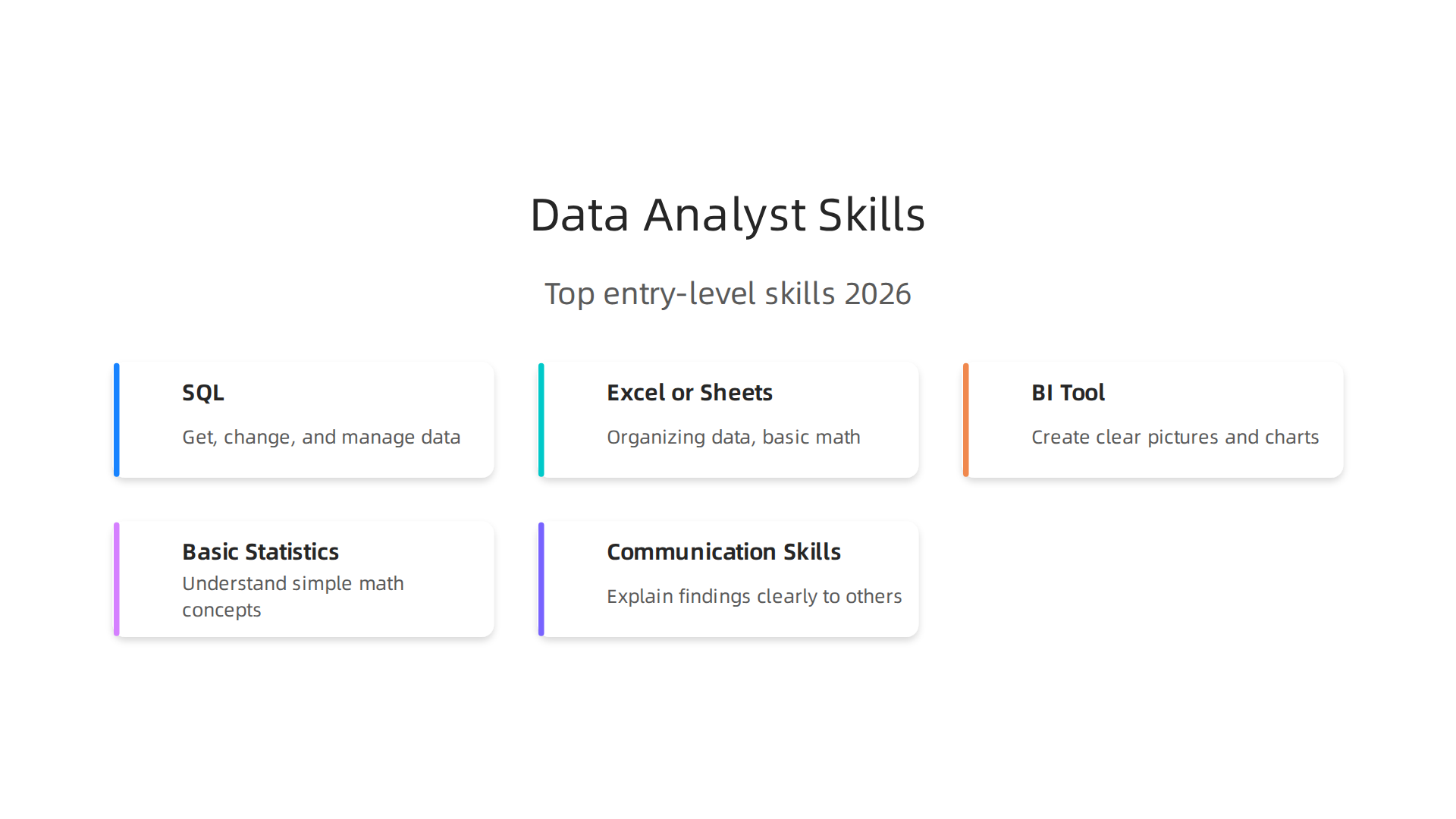
- SQL (Structured Query Language): This is super important. You’ll use it to get, change, and manage data in databases. Most job postings for data analysts ask for this Entry-Level Data Analyst Job (May 2026 Guide).
- Excel or Google Sheets: Knowing how to use spreadsheets well for organizing data and doing basic math is a must.
- One Business Intelligence (BI) Tool: Tools like Tableau or Power BI help you create clear pictures and charts from data. These visuals make it easier for people to understand the data.
- Basic Statistics: Understanding simple math concepts helps you make sense of the numbers.
- Communication Skills: Being able to explain your findings clearly to others is just as important as the technical skills What Employers Look for When Hiring Junior Data Analysts.
While Python is helpful, it is not always a must-have for entry-level data analyst jobs, though it becomes very important for junior data scientist roles. For those aiming for b.tech artificial intelligence and data science job opportunities, a deep understanding of programming is usually required.
To land these roles, employers aren’t just looking for certifications. They want to see what you can actually do. This means having a portfolio with projects that show off your skills. If you want to stay updated on all the big changes happening in AI and technology, which often relate to data roles, consider subscribing.
Get clear daily AI updates from The AI Newsletter Worth Reading.
Getting hired for data analyst entry level jobs means showing you have the right mix of talents. It’s not just about knowing facts. It’s about being able to use tools and think smartly to solve problems. Let’s look closer at the key skills you’ll need.
Core Technical Skills
For new data analysts, some tools and ways of thinking are super important. These are the skills that help you work with data every day.
- SQL (Structured Query Language): We talked about this before, and it’s truly a must-have. You use SQL to talk to databases, asking them for the information you need. But it’s not just basic questions. Employers in 2026 often want you to know how to do more complex tasks like using "window functions" or "CTEs" to make your data work better and faster Data Analyst Skills (2026): The Real Hiring Bar, Honestly.
- Python or R Basics: While not always required for your very first data analyst role, knowing a little Python or R can help a lot, especially if you want to grow into data science and artificial intelligence jobs. These languages let you do more advanced things with data, like making special programs to clean messy data or build models. In fact, more jobs are starting to ask for Python skills, even for entry-level positions N4 – A Longitudinal Analysis of Job Skills for Entry-Level Data Analysts.
- Spreadsheet Modeling (Excel or Google Sheets): Knowing your way around spreadsheets is still very important. You’ll use them for organizing, simple calculations, and sometimes even creating basic reports. They are a good starting point for understanding data before moving to more complex tools.
- Data Cleaning: Real-world data is often messy. It might have errors, missing pieces, or information that isn’t formatted right. Being able to clean this data is a huge skill. It means getting the data ready so you can actually use it for analysis. This step is a big part of what is data analytics in practice.
- Data Visualization Principles: Once you’ve analyzed data, you need to show what you found in a clear way. This means creating good charts, graphs, and dashboards. Understanding how to make visuals that tell a story quickly and easily is key for anyone in data. Employers expect you to turn raw data into something understandable Entry Level Data Analyst Jobs: How to Start in 2026.
To really get a handle on all these parts of data work, it helps to understand the basics. You can learn more about Data 101 Core Data Fundamentals For AI Professionals.
Complementary Skills that Boost Your Hireability
It’s not just about the technical stuff. How you use those skills and work with others is just as vital for data analyst entry level jobs.
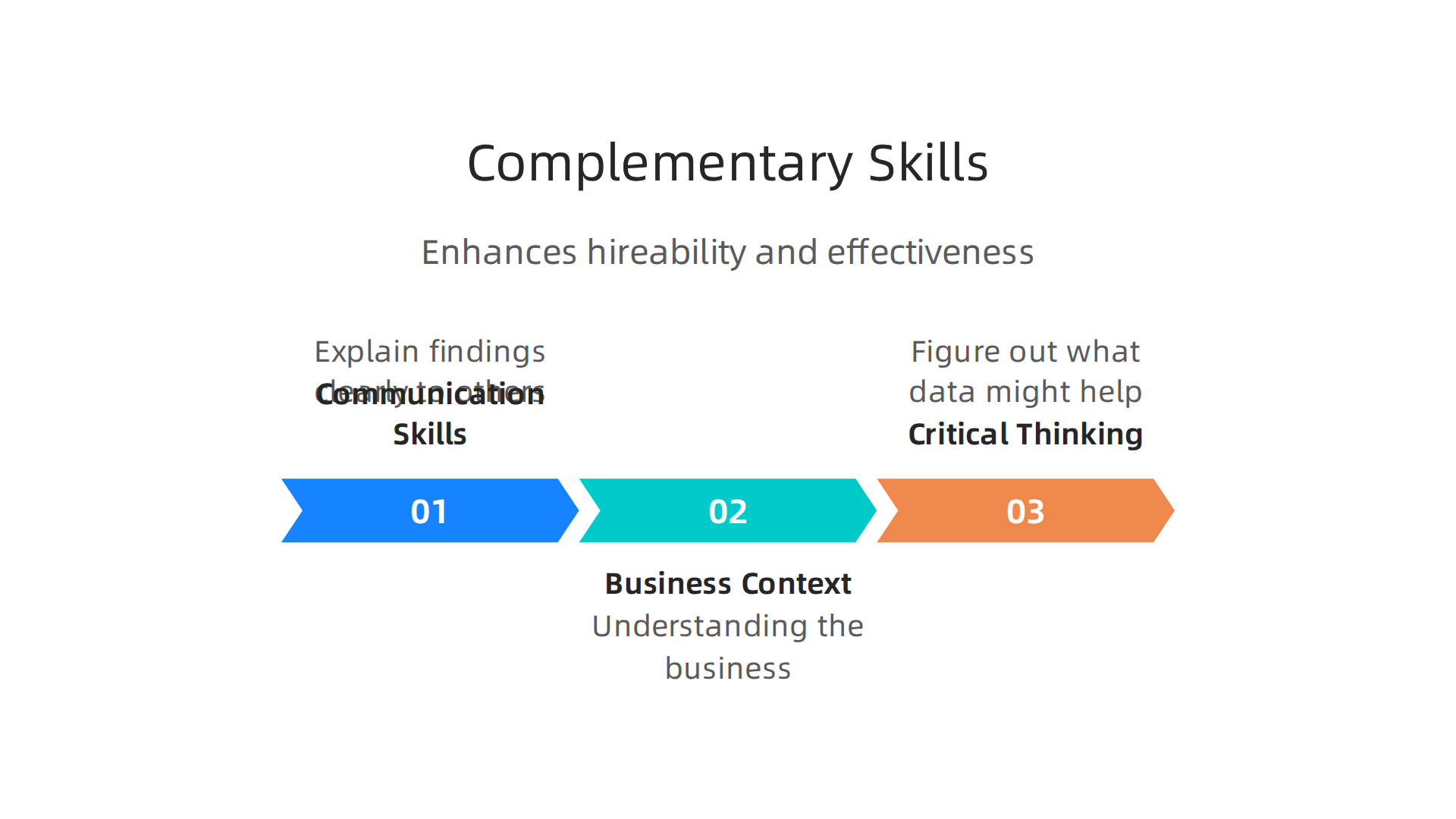
- Communication Skills: You might be a wizard with numbers, but if you can’t explain what they mean to someone who isn’t a data expert, your findings won’t help much. Being able to talk and write clearly about data is a top skill employers look for Key Characteristics of Entry-Level Data Analytics Professionals. This means turning complex data ideas into simple advice that anyone can understand.
- Business Context and Domain Knowledge: This sounds fancy, but it just means understanding the business you are working for. For example, if you’re analyzing sales data for a clothing store, it helps to know about how clothes are sold, what customers usually buy, and what times of year are busiest. This helps you ask the right questions and find answers that truly help the business.
- Critical Thinking and Problem-Solving: Data analysts are like detectives. You need to be able to look at a problem, figure out what data might help, and then use that data to find solutions. This also means being able to spot mistakes or strange things in data and figure out why they are there.
These soft skills, combined with your technical know-how, make you a well-rounded candidate for any data analyst entry level job. They show that you can not only work with data but also make a real difference with it. If you want to dive deeper into how to stand out, explore how to Succeed As A Data Analyst In 2026.
Now that you know what skills you need, you might be asking: how do I actually get one of these data analyst entry level jobs? There are a few main paths people take to start their career in data.
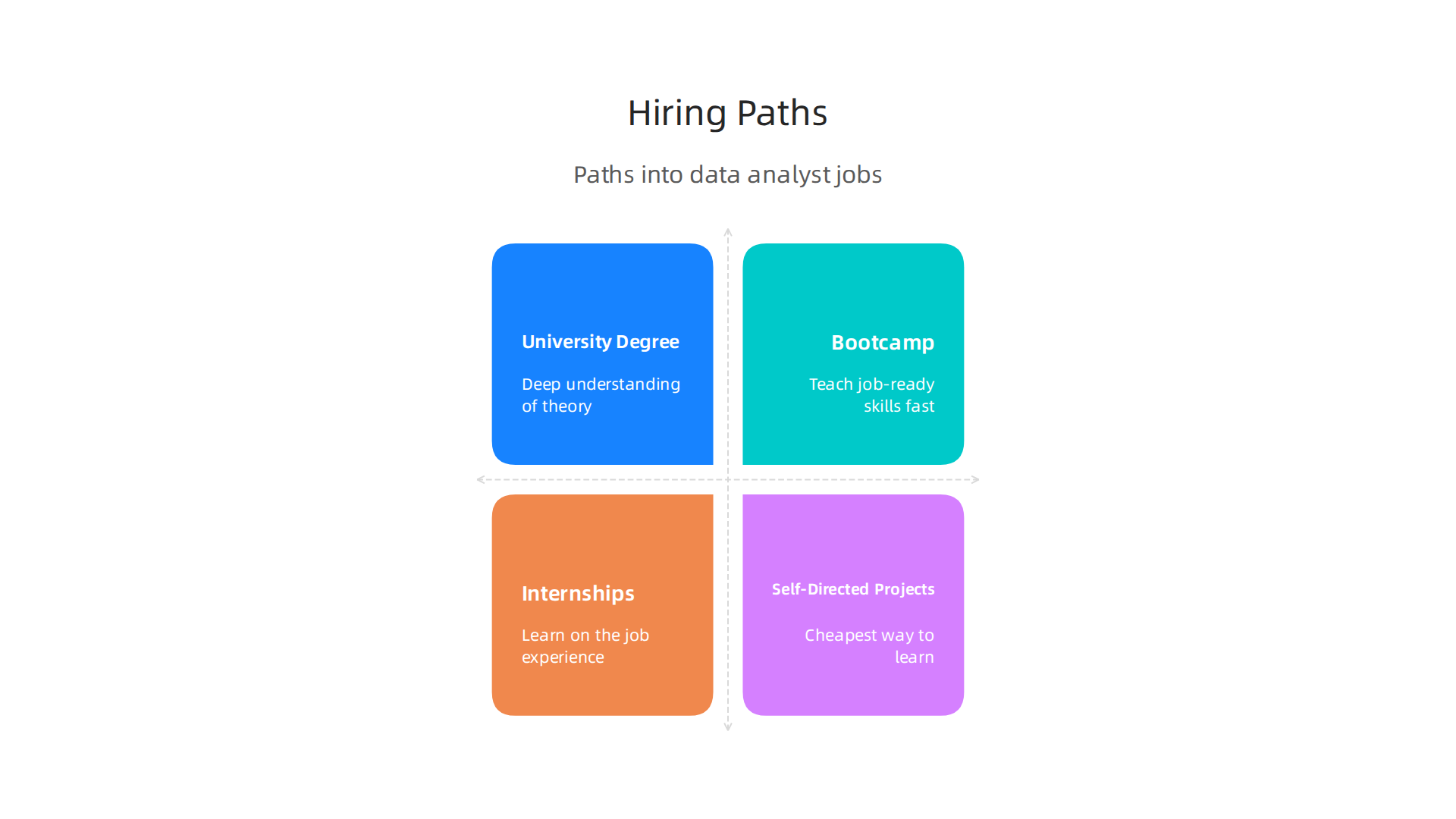
Each path has its own good and bad points, and employers often look at them a bit differently.
Formal Education: University Degrees
Many people think a university degree is the only way to get a good job. For data analyst roles, a bachelor’s degree in fields like Data Science, Statistics, or Computer Science can be very helpful Entry Level Data Analyst: What Is It? and How to Become One?.
- Pros: A degree gives you a strong, deep understanding of theory and many different subjects. It also offers good networking chances. You might get to learn about advanced topics that prepare you for future data science and artificial intelligence jobs.
- Cons: Degrees take a long time to finish, usually four years or more. They can also be very expensive. For some data analyst entry level jobs, employers might value practical skills more than a long list of academic achievements.
Quick Learning: Bootcamps
Data analytics bootcamps are intensive courses designed to teach you job-ready skills fast, often in a few months. These programs focus heavily on practical application and the specific tools you’ll use every day. Many people wonder if a data science bootcamp is worth it for their AI career in 2026.
- Pros: Bootcamps are much faster than degrees, letting you enter the job market sooner. They often have high job placement rates. For example, some top programs report 70% to 89% of graduates finding relevant jobs within six months Best Data Analytics Bootcamps 2026 and The 5 Best Data Analytics Bootcamps in 2026. Many employers even treat bootcamp training like real work experience The 5 Best Data Analytics Bootcamps in 2026.
- Cons: Bootcamps can still be costly, though usually less than a full degree. The quality can vary a lot, so it’s important to research programs carefully. It’s also a very intense learning period. You can learn more about how these programs measure up in terms of outcomes in this overview of Data Analytics Bootcamp Results UK.
Real-World Practice: Internships
Internships are short-term jobs where you learn on the job. They are extremely valuable for anyone seeking data analyst entry level jobs because they give you actual work experience.
- Pros: Internships provide real-world experience, build your professional network, and give you a foot in the door. Many interns get offered full-time jobs after their internship. Around 65% of interns at big tech companies get full-time offers Data Analyst Internships: How to Find and Land One in 2026.
- Cons: Internships can be very competitive to get. Also, the overall conversion rate from intern to full-time hire has recently seen a slight decrease, with about 53% of interns converting to full-time roles in 2023-2024 Internship ROI Statistics: Conversion Rates, Salary Impact.
Learning on Your Own: Self-Directed Projects
This path means learning the skills by yourself, often through free online courses, tutorials, and building your own projects.

This is a great way to understand what is data analytics by doing.
- Pros: It’s often the cheapest way to learn. You can focus on exactly what you need and build a portfolio of projects that show off your skills directly to employers. Many employers care more about what you can do than where you learned it What Employers Look for When Hiring Junior Data Analysts. They want to see 2-3 projects using real data sets Entry-Level Data Analyst Jobs: How to Get Hired With No….
- Cons: It requires a lot of self-discipline and motivation. You might miss out on structured learning or easy ways to network. It can also be hard to know if you’re learning the right things without a guide.
What Employers Really Look For
In 2026, employers hiring for data analyst entry level jobs are very clear. They want to see that you can actually do the work. This means having a strong portfolio of projects that show your skills in SQL, Excel, and a business intelligence tool like Tableau or Power BI Entry-Level Data Analyst Jobs: How to Land Your First Role?. While a degree can help, proof of your abilities through projects and internships is often key. Only a small percentage of data analyst job postings are truly open to entry-level candidates, about 3.6% in August 2026, so making your application stand out is important Data Analyst job market report — August 2026 — Apiva.
No matter which path you choose, showing what you can do is most important. Stay informed about the latest trends in data and AI to keep your skills sharp.
Get clear daily AI updates from The Deep View Newsletter. The AI Newsletter Worth Reading
No matter which path you choose to learn, showing what you can do is most important for landing data analyst entry level jobs.

This means having a strong portfolio, a clear resume, and connecting with the right people. Let’s look at how to make these tools work for you.
Building a portfolio, resume, and network that recruiters actually notice
Designing Portfolio Projects That Show What You Can Do
Your data portfolio is a collection of your best work. It’s like a show-and-tell for employers. They want to see what you can truly do, not just what you know. For an entry-level data analyst, a good portfolio should have at least two to three solid projects Data Analyst Portfolio: What to Include and How to Ship It ….
Here’s what makes a project stand out:
- Solve a Real Problem: Instead of just practicing tools, pick a problem a real company might have. Think about questions like "How can we make our customers happier?" or "Where are we losing money?" Framing your projects this way shows you understand business, not just code Data Analyst Portfolio Projects That Actually Get You Hired (2026).
- Use Real Data: Employers love to see you work with messy, real-world data, not just perfect datasets from a textbook. Publicly available datasets are a great place to start.
- Show the Whole Story: Each project should take the recruiter through your entire process. This means showing how you:
- Cleaned the Data: Real data is messy. Show how you prepared it.
- Analyzed It: Share your SQL queries or code examples.
- Made Visuals: Create clear charts or dashboards using tools like Tableau or Power BI.
- Found Answers: What important things did you learn from the data?
- Made Recommendations: What advice would you give a company based on your findings? This shows you understand the impact of what is data analytics.
- Where to Keep Your Portfolio: You can put your projects on platforms like GitHub or Tableau Public, or even create a simple website. Just make sure the link is easy to find on your resume Building a Data Analytics Portfolio: What to Include and Where to Start.
Crafting a Resume That Gets Noticed
For data analyst entry level jobs, your resume needs to be clear and focused. It should be about one page long Data Analyst Resume Examples for 2026 (With Real Bullet …).
Make sure to include these sections:
- A Short Summary: At the top, write 2-3 sentences about who you are, what tools you use, and what kind of impact you want to make.
- Skills: List your technical skills (SQL, Excel, Python/R, Tableau, Power BI) and soft skills (problem-solving, communication).
- Projects: This is where your portfolio shines! Briefly describe your projects, focusing on the problem you solved and the results you achieved. Even if you don’t have paid experience, good projects show off your skills for data science and artificial intelligence jobs.
- Experience: Include any internships, volunteer work, or past jobs where you used data, even a little bit.
- Education and Certifications: List your degrees, bootcamps, or any relevant data analytics certifications. Many entry-level data analyst resume examples for 2026 show certifications can be a big plus Entry Level Data Analyst Resume Examples for 2026.
Remember to put the link to your online portfolio right at the top of your resume, usually with your contact information Data Analyst Resume Examples & Samples (2026 Format).
Practical Outreach: Networking and Applications
Finding data analyst entry level jobs isn’t just about applying online. It’s also about connecting with people.
- Optimize Your LinkedIn Profile: Make sure your LinkedIn profile is complete and matches your resume. Use keywords that recruiters would search for. Join data analytics groups and share interesting articles or insights.
- Targeted Applications: Instead of sending out hundreds of generic applications, focus on jobs that truly fit your skills and interests. Customize your resume and cover letter for each role. Show you’ve researched the company and understand what they do.
- Informational Interviews: Reach out to people working in data analytics and ask if they’d be willing to chat for 15-20 minutes. This isn’t about asking for a job directly. It’s about learning about their career path, getting advice, and building your network. Many data analysts are happy to share their experiences.
The data analyst job market in 2026 is still growing, with demand for roles supporting reporting and operations January Data Science Job Market Report (2026). Standing out means doing more than just sending in a resume. It means showing genuine interest and proven ability.
To keep up with the fast-moving world of AI and data, you need to stay informed.
Get clear daily AI updates from The Deep View Newsletter. The AI Newsletter Worth Reading
Salary expectations, negotiation tips, and early-career advancement
Knowing about AI and data is great, but it’s also smart to think about what you can earn and how you can grow. Let’s talk about money expectations for data analyst entry level jobs and how to move up in your career.
What to Expect for Your First Salary
In 2026, if you’re looking for data analyst entry level jobs, you can expect a good starting salary. Across the United States, the average pay for an entry-level data analyst is around $68,487 to $73,501 per year, as reported by different sources Entry Level Data Analyst Salary, Entry Data Analyst Salary, Hourly Rate (July 01, 2026) in the United States. Many entry-level roles for people with 0-2 years of experience typically fall within the $58,000 to $75,000 range Data Analyst Salary 2026: Real Ranges by Level & City.
But this number can change quite a bit depending on where you live and the type of company you work for.
- Big Cities vs. Smaller Towns: If you’re in a major tech hub like San Francisco or New York City, your starting salary might be higher, possibly reaching $70,000 to $95,000 Data Analyst Salary Guide 2026: What You Should Actually ….
- Different Industries: Companies in banking, retail, or healthcare systems might offer around $52,000 to $65,000 to start. However, tech companies often pay more for similar roles Data Analyst Salary Guide (2026): Entry to Senior Comp.
Factors like your specific skills, your education, and how strong your portfolio is can also impact your offer. If you want to dive deeper into what data analytics really means and how it’s used, you can explore guides on what is data analytics a clear guide to understanding and using data in 2026.
Smart Ways to Negotiate Your Offer
When you get a job offer, it’s okay to negotiate. Here are some simple tips:
- Do Your Homework: Know the typical salary ranges for data analyst entry level jobs in your area and industry. This gives you a strong base for asking.
- Highlight Your Value: Remind the employer about your skills, your projects, and how you can help solve their problems. Show them why you’re a great fit.
- Be Confident and Polite: Ask for what you believe you’re worth, but always do it respectfully.
- Look Beyond Just Salary: Think about the whole package. This includes things like health benefits, paid time off, and chances to learn new skills. Sometimes, a great benefits package can be worth more than a slightly higher salary.
Planning for Early-Career Advancement
Once you land your first role, the journey doesn’t stop. The first 12 to 24 months are key for growing your career.
- Keep Learning: The world of data and AI changes fast. Always look for new tools or advanced analytics techniques to master. Maybe you could check out discover your free ai course with certificate for career growth in 2026 to expand your skills.
- Find a Mentor: A seasoned data analyst can give you advice, guide you through challenges, and help you see new opportunities.
- Take on More: Volunteer for tougher projects. Show that you’re eager to learn and ready for more responsibility.
- Improve Soft Skills: Being a good data analyst isn’t just about technical skills. Being able to explain your findings clearly and work well with others is super important.
- Consider Certifications: Getting more certifications can show your commitment and boost your skills. For example, looking into top data analytics certifications in 2026 for ai careers can point you to valuable credentials.
- Look to the Future: As you gain experience, you might find yourself interested in data science and artificial intelligence jobs or even specific b.tech artificial intelligence and data science job opportunities. Building a strong foundation as a data analyst is an excellent stepping stone for these advanced roles.
Summary
This guide explains how to break into data analyst entry-level jobs in 2026 by mapping the current market, the roles you might see, and the concrete skills employers want. It covers core technical abilities like SQL, Excel and a BI tool, the growing importance of Python for data science roles, and the complementary soft skills—communication, business context, and problem-solving—that make candidates stand out. The article compares learning paths (degrees, bootcamps, internships, and self-directed projects), and shows how to build a portfolio, craft a one-page resume, and do targeted networking that leads to interviews. It also reviews realistic salary ranges and simple negotiation tactics, plus early-career steps to accelerate promotion into data science or AI work. Throughout, the guide focuses on practical, employer-focused actions—projects, measurable results, and clear presentation—so readers leave knowing what to learn, how to show it, and how to apply with confidence.