

Why Swiss tech matters for global AI innovation
Staying ahead in the fast-moving world of artificial intelligence can feel like a big challenge in 2026. Every day, there are new discoveries, tools, and ideas. For busy AI experts, investors, and product leaders, finding the truly important information is key. This is where Switzerland, a small country with a big impact, comes into play. Its unique approach to technology, often called swiss tech, is quietly shaping the future of AI.
Switzerland has special strengths that make it a powerhouse for new AI ideas. It has world-class research schools, like ETH Zurich, which ranks number one globally for deep tech startups founded by its students since 2020. This shows how strong their education system is at creating new businesses The-2026-European-Deep-Tech-Report | Swiss Business Hub France.
The country also focuses heavily on "deep tech." This means they work on very advanced technologies that need lots of research and development. In fact, Switzerland puts 63% of all its venture capital, which is money from investors, into deep tech companies. This is more than any other country in the world, even ahead of big players like China and the United States Swiss Deep Tech Report 2026. This strong funding helps new companies grow and bring groundbreaking AI solutions to life, including in areas like quantum artificial intelligence lab projects and edge intelligence.
For you, an AI professional, investor, or product leader, understanding swiss tech means you can spot new trends and opportunities.

It helps you learn about the latest breakthroughs without getting lost in too much information. By looking at how Switzerland fosters innovation, you gain valuable insights into where the AI world is heading. This helps you make smart choices for your investments, products, and overall business strategy. If you want to dive deeper into making sense of the complex AI landscape, learning about the bigger picture is important. You can find out more about decoding AI trends 2026 to help guide your decisions.
To keep up with these fast changes and get clear daily AI updates, consider subscribing.
The AI Newsletter Worth Reading
Current landscape: Swiss tech clusters, hubs, and institutional strengths
To truly grasp how swiss tech drives global AI innovation, it helps to look at where all this exciting work happens. Switzerland isn’t just one big tech hub. Instead, it has several key areas, or clusters, each with its own focus.
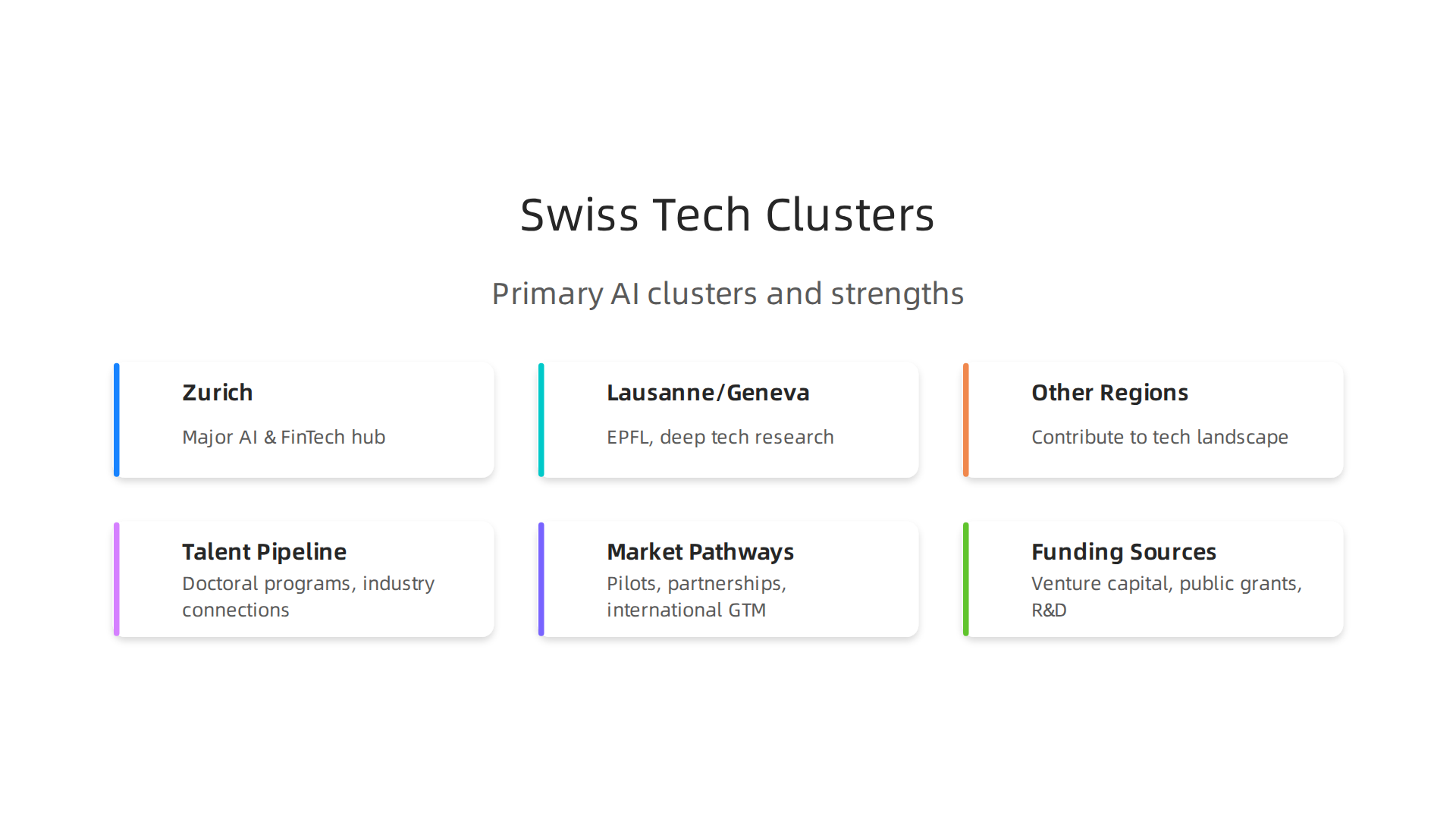
These clusters are supported by strong schools and research places.
Key Swiss Tech Clusters
- Zurich: This city is often seen as the heart of Swiss innovation. It’s a major spot for both artificial intelligence and financial technology, also called FinTech. Zurich has the most FinTech companies in Switzerland, even in 2026, making it a busy center for new ideas in finance [IFZ FinTech Study 2026]. The canton of Zurich also leads in AI nonprofits, research and development centers, and other AI hubs, showing its strong focus on artificial intelligence [AI in Switzerland Report].
- Lausanne and Geneva: These cities in the French-speaking part of Switzerland are also very important. Lausanne is home to EPFL (Swiss Federal Institute of Technology Lausanne), another world-class university known for its deep tech research. Geneva, with its international connections, plays a role in various tech fields.
- Other Regions: While Zurich, Lausanne, and Geneva are prominent, other areas like Central Switzerland also contribute to the tech landscape. However, it’s interesting to note that there isn’t one single, huge AI cluster across the whole country, but rather many connected areas working on different parts of AI [Artificial Intelligence in Central Switzerland].
Institutional Strengths Powering Innovation
The backbone of swiss tech’s success comes from its strong institutions.
- World-Class Universities: Schools like ETH Zurich and EPFL are not just places for learning. They are global leaders in research. These universities are constantly working on advanced topics, from the basics of AI to cutting-edge areas like quantum AI and Bayesian artificial intelligence for strategic decisions. This strong academic base feeds new ideas and skilled people into the tech world.
- Federal Research Institutes: Beyond universities, Switzerland also has federal institutes that focus on specific research areas. These places often work hand-in-hand with businesses to turn new discoveries into real-world products.
- Innovation Parks and Incubators: Switzerland has many innovation parks. These are special places where new companies, often called startups, can grow. They offer support, office space, and connections to experts and investors. This helps new deep tech companies, including those working on things like edge intelligence, to develop their ideas and bring them to market. Edge intelligence involves making smart decisions right where data is collected, like in smart devices, instead of sending everything to a central cloud.
Together, these clusters and institutions create a powerful environment where new AI technologies can thrive, ensuring Switzerland remains a key player in the global innovation scene.

Research & talent pipeline: universities, labs, and workforce development
The strength of swiss tech isn’t just about having great schools; it’s also about how these schools act as powerful engines for new ideas and smart people. They create a strong pipeline, moving research from labs into the real world and training the next generation of AI experts.
Top Universities and Research
Switzerland’s universities are major hubs for advanced AI research. Places like ETH Zurich and EPFL are not just teaching students; they are also leading the way in new discoveries. For example, the ETH AI Center regularly publishes new findings in artificial intelligence, showing how busy they are with cutting-edge work [Publications – ETH AI Center]. In Zurich, many research institutions are deeply involved in AI, covering everything from basic ideas to how AI can be used in businesses [Research & Labs | Zürich AI]. These universities are like giant laboratories, always exploring new frontiers, even in complex areas like advanced forms of artificial intelligence.
The country actually stands out globally for having a high number of AI researchers and developers. In 2026, Switzerland led the world in "AI talent density," meaning it has more AI experts per person than many other places [Switzerland tops the 2026 Stanford AI Index for AI talent density]. This shows just how strong its focus on developing skilled people in this field is.
Growing the Workforce
The system for growing new talent in Switzerland is very good at feeding skilled people into companies and startups.
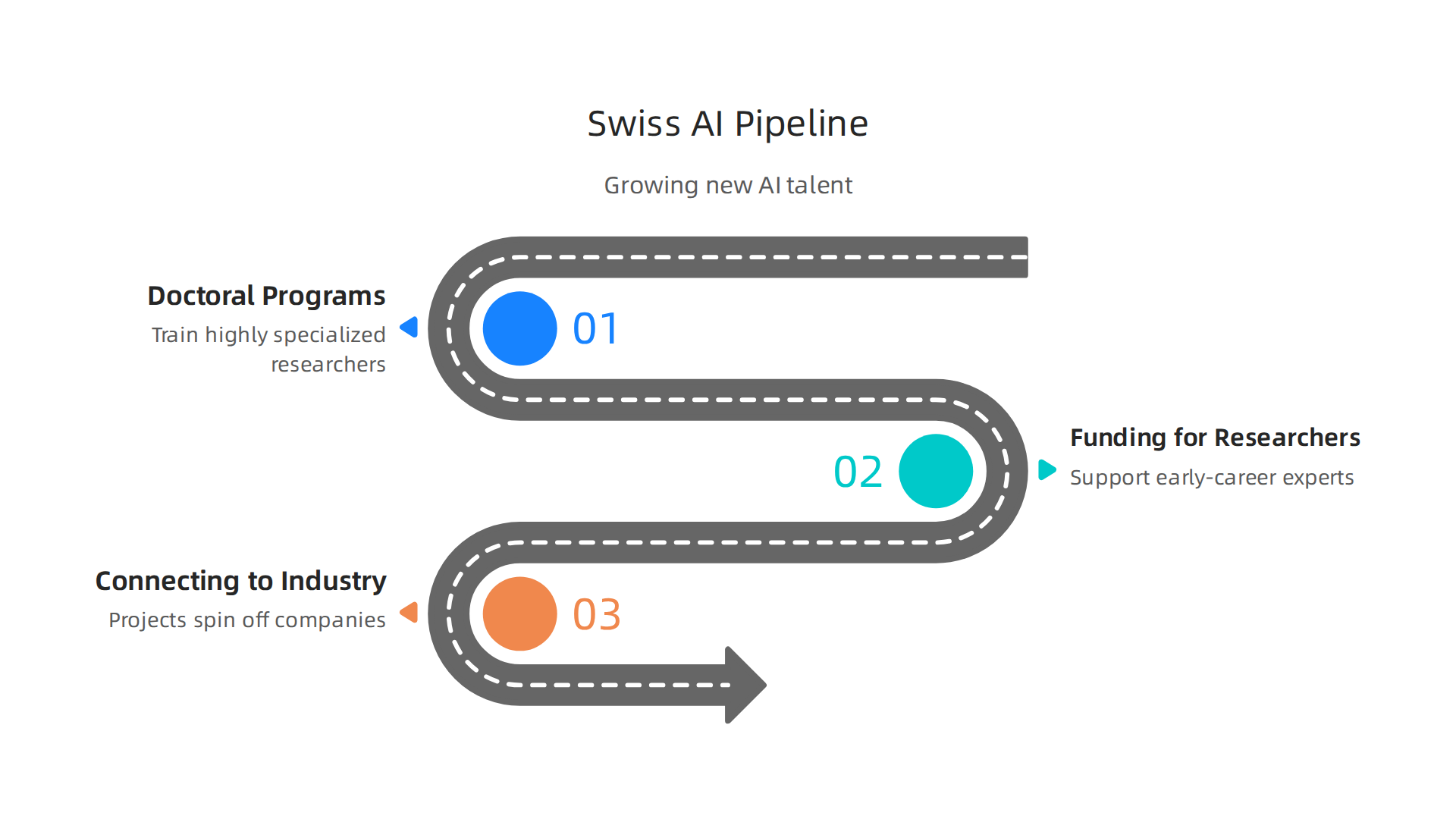
This process starts early and continues through advanced studies.
- Doctoral Programs: Many students go on to get their PhDs. These doctoral programs are very important because they train highly specialized researchers. Organizations like swissuniversities work to support these programs and even help students move around for their studies, making sure they get the best training [P-1 Doctoral Education (2021–2024) – swissuniversities]. This high-level education helps create experts who can handle complex topics, like developing new ways for AI to understand and classify data.
- Funding for Researchers: The Swiss National Science Foundation also offers help to young researchers, including those who have finished their doctorates. They provide money to help these early-career experts continue their studies or even work abroad to gain more experience [Early-career researchers]. This support ensures that the brightest minds can keep pushing the boundaries of what’s possible in AI.
- Connecting to Industry: Many university projects and research spin off into new companies. Students often do internships at companies, bringing their fresh knowledge and skills directly into the workforce. This close connection between schools and businesses means that new deep tech ideas, like those involving edge intelligence, can quickly move from a classroom idea to a real-world product. Graduates from these programs are well-prepared for the many AI jobs 2026 available today.
Overall, the way Switzerland educates its people and supports its research labs creates a constant flow of innovation and talent. This strong pipeline is a key reason why swiss tech continues to be a big player in shaping the future of artificial intelligence.
Want to keep up with all the big changes happening in AI?
The AI Newsletter Worth Reading delivers clear daily updates from The Deep View Newsletter right to your inbox.
The strong education and research system in Switzerland does not just create smart people and new ideas. It also helps turn these ideas into real businesses. This is where startups and growing companies, also called scaleups, come in. They take new AI discoveries from the lab and bring them to the market.
Types of Swiss AI Startups
Swiss tech companies in AI often fall into a few main groups:
- Deep Research Spinouts: Many startups come directly from universities like ETH Zurich and EPFL. These are called spinouts because they "spin out" of academic research. They build on very advanced science to create new things. For example, a company called RIVR, which made wheeled robots for delivery, started at ETH Zurich before Amazon bought it in March 2026 [Amazon Acquires RIVR]. Another ETH Zurich spin-off is building an automated smart factory in Switzerland [Search and find]. These spinouts often work on complex areas, perhaps even looking at how quantum AI and Bayesian artificial intelligence for strategic decisions could change industries.
- Enterprise AI Vendors: These companies make AI tools and software that other businesses use. They help companies become more efficient or offer new services. For example, Squirro, a Swiss company, offers powerful generative AI platforms for businesses, helping them with search and insights [The Swiss Startup News channel]. In Zurich alone, there were 287 active AI startups in early 2026, showing how busy this area is [The State of Zürich’s AI Ecosystem in 2026]. Companies like Beekeeper also provide AI-powered solutions for managing large workforces [Top 10 AI Companies In Switzerland For 2026 | Expert Guide]. Some of these vendors might specialize in things like varonis data discovery and classification to help companies manage their information better.
- Specialized Hardware and Software: Other startups focus on very specific AI needs, like improving medical devices or creating special software. A medical device startup in Lausanne used AI coding tools to make their work faster, reducing development time by 40% in six months [AI and Innovation in Swiss Startups: Accelerating with Artificial …]. This shows how specialized AI can help companies drive 2026 business growth with smart technologies strategic priority.
How Innovations Reach the Market
Swiss AI startups use clear steps to bring their new ideas to customers and grow their businesses:
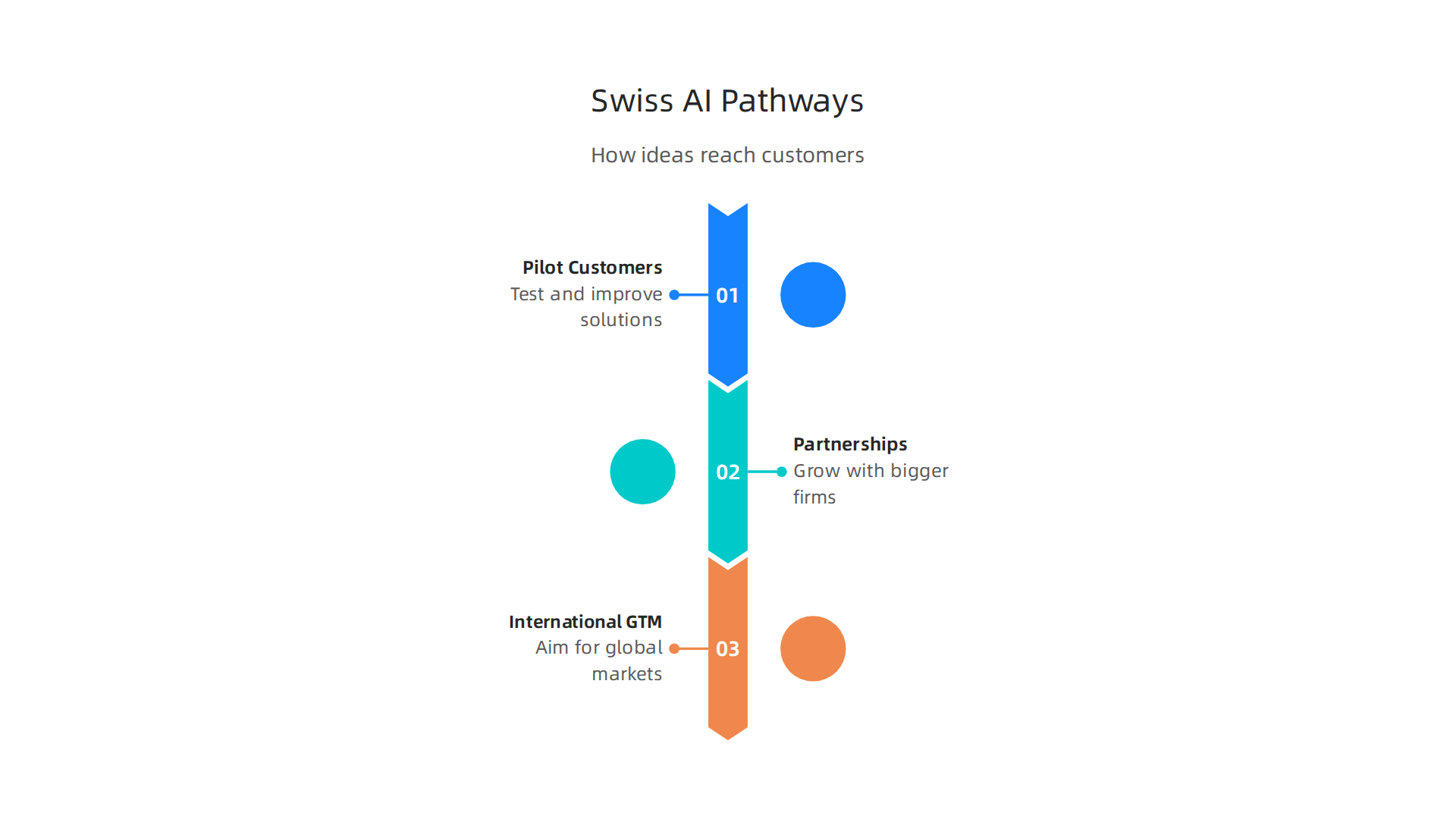
- Pilot Customers: Often, startups work with their first few customers to test and improve their AI solutions. This helps them show that their product works well in the real world. Many Swiss companies, including small and medium-sized businesses, are using AI for things like automating accounting tasks and classifying documents [AI Digital Transformation for Swiss SMEs – Agence IA PME Suisse].
- Partnerships with Larger Firms: Working with bigger companies is a common way for swiss tech startups to grow. These partnerships can help them reach more customers or get more resources. For instance, the Spanish platform Wallapop partnered with Swiss AI company Albatross to improve its discovery features for users [AI start-ups: numerous and successful, but still young]. Microsoft for Startups Switzerland also runs an accelerator program, helping new AI companies connect and grow [Microsoft for Startups Switzerland announces third cohort of its AI …]. Building strong partnerships is key to how Switzerland can make a big impact in AI in 2026 [How Switzerland can shape AI in 2026].
- International Go-to-Market: Swiss startups also aim to sell their products beyond Switzerland. Many work to enter markets around the world. Organizations like Kickstart Innovation help connect startups with larger companies for such growth, showing success in areas like fintech and healthtech [Ten years of Kickstart Innovation – Organizer]. This focus on wider markets helps ensure that Swiss AI innovations can make a global impact. In 2026, investment in AI startups in Switzerland has grown a lot, highlighting their importance [EY Start-Up Barometer Switzerland 2026 Significant …].
These steps help new ideas move from a laboratory to a successful business, making swiss tech a key player in the global AI market.
Swiss tech’s path from laboratory ideas to market success relies heavily on strong financial backing, smart partnerships, and a clear legal environment.

These three things help ensure that AI innovations can grow and make a real impact.
Funding, industry collaboration, and regulatory context
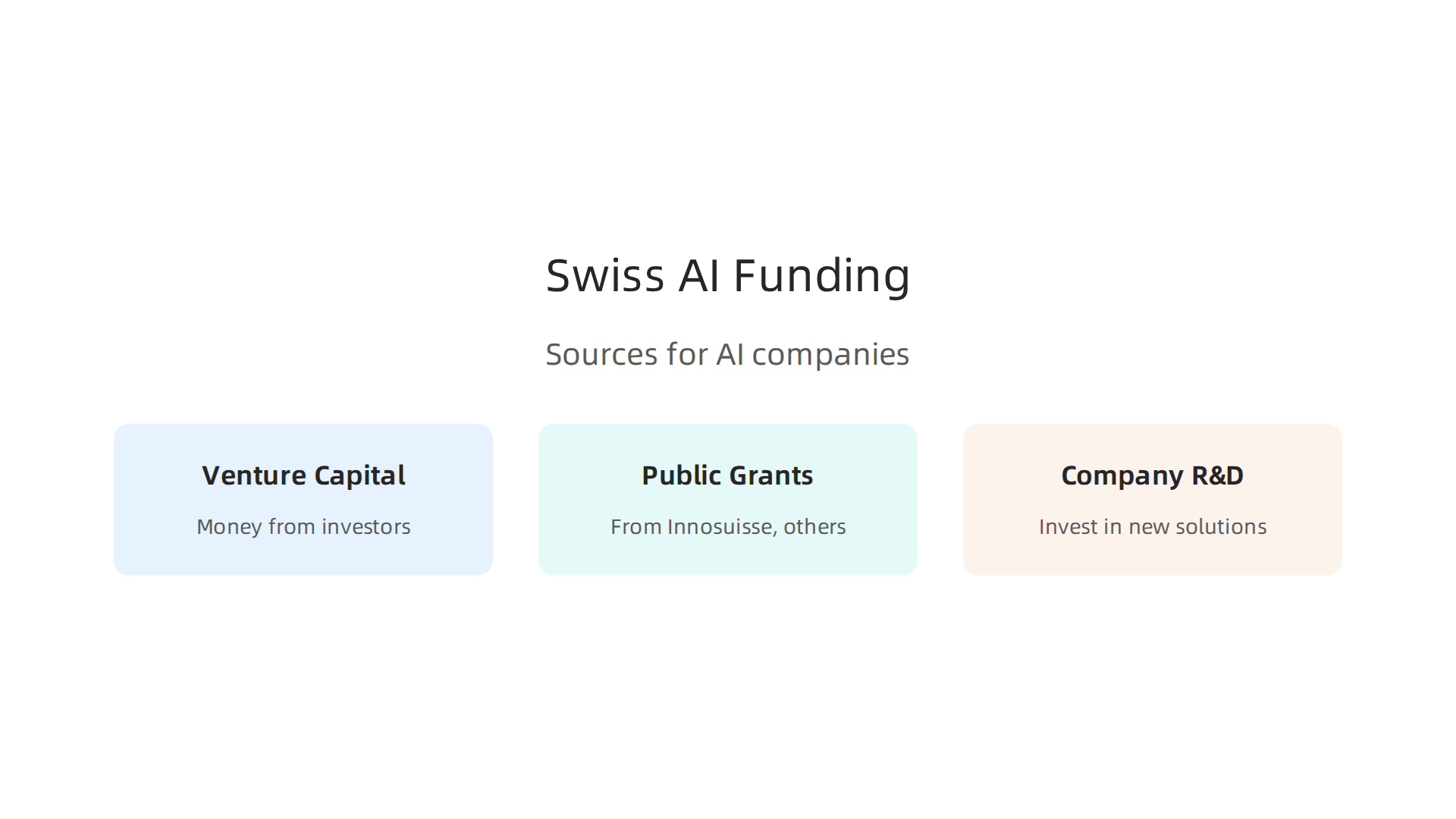
Making new AI ideas into successful businesses needs money. In Switzerland, AI companies get funds from different places.
Where the Money Comes From
One major source is Venture Capital (VC). This is money from investors who believe in new companies. In 2025, Swiss AI startups saw a lot of investment, with over CHF 1.2 billion across different stages of company growth [AI Funding Rounds Tracker — Zürich & Switzerland 2025-2026]. This shows how important AI companies are becoming in Switzerland. In fact, AI startups made up 32% of all new company funding rounds in 2025 [EY Start-Up Barometer Switzerland 2026 Significant …]. In 2026, these investors are looking for strong, profitable companies, especially those in DeepTech and AI [Swiss SME Funding 2026: VC Trends & Valuation Reset]. If you are interested in how these funding trends affect companies, you might want to read more about AI companies 2026 types revenue models and growth drivers.
Besides private investors, public grants also play a big role. The Swiss Innovation Agency, Innosuisse, gives out over CHF 250 million each year to support new ideas, including many early-stage AI projects in Zurich [AI Funding & Venture Capital in Zürich]. The Swiss Federal Council has a special plan called the National AI Strategy. This plan helps bring together research, education, and businesses in AI. It also offers multi-year funding to grow the AI community, support companies, and create AI hubs across the country [Success Factors & Examples]. There are even special large grants from programs like the Swiss AI Initiative – Large Grants for big AI projects that need powerful computing resources.
Companies themselves also invest a lot in Research and Development (R&D). They work with universities and startups to create new AI solutions. This teamwork helps push the limits of what AI can do, leading to advanced ideas like those found in a Decoding AI trends 2026 breakthroughs investment and governance report.
Rules for AI: Staying Safe and Fair
When it comes to rules, Switzerland takes a careful approach. As of 2026, Switzerland does not have one big "AI law" like some other countries [AI and Data Protection in Switzerland: Duties, Contracts …]. Instead, it uses existing laws that apply to all kinds of technology. This is called a "technology-neutral" approach [AI Regulation Switzerland, 2026 Status and Outlook · SIDD Insights].
The country relies on laws already in place, like the Federal Data Protection Act, which has been used for AI-related data since September 2023 [Current data protection legislation is directly applicable to AI]. This act helps make sure that when AI systems use personal information, they do so in a safe and private way. The Swiss government has said it won’t create a broad, EU-style AI law in the short term, but it is working on a new draft proposal for AI rules by the end of 2026. This draft will cover important topics like making sure AI is clear about how it works (transparency), protecting data, ensuring fairness (non-discrimination), and having proper checks and balances (oversight) [AI laws and regulations in Switzerland| CMS Expert Guide].
Switzerland also signed an international agreement called the Council of Europe AI Convention in September 2024. This convention will be included in Swiss law, mainly affecting government use of AI. Any new laws will mostly focus on specific areas where needed and ensure that basic human rights, especially data protection, are upheld [AI, Machine Learning & Big Data Laws 2026 | Switzerland].
These funding methods and careful rules help swiss tech continue to grow in the AI world. They make sure that new AI projects are not only innovative but also responsible. Staying informed about these rapidly changing areas is crucial for anyone in the tech industry. For clear daily updates on AI and technology, you might want to get The AI Newsletter Worth Reading.
Swiss tech companies do not just stay within their borders. They reach out and work with partners all over the world. This helps them grow, learn new things, and share their special skills. This global teamwork is a big reason why swiss tech is so strong in artificial intelligence (AI) and other advanced fields.
Working Together Globally
Swiss businesses and research groups know that working with others makes them better. They team up with big companies and research centers in other countries. For example, Swiss AI firms often join forces with European partners to develop AI responsibly on a large scale [Swiss Companies Embrace EU AI Frameworks: Innovation Without …]. This also includes working closely with countries like South Korea on deep tech and space technologies [Switzerland and South Korea partnership].
Also, top Swiss universities like ETH Zurich and EPFL work with famous schools like Stanford University in the US. They are even creating new AI models together that focus on helping people, not just making money [Stanford HAI and Swiss National AI Institute Form Alliance to …]. The Swiss AI Initiative also connects with UN groups and other international researchers, making Switzerland a global hub for AI know-how [Swiss AI Initiative]. Such partnerships help Switzerland stay a global leader in innovation [Dalith Steiger Interview: AI, Innovation Collaboration, Switzerland]. Experts say that in 2026, strengthening these connections with major global tech firms and fast-growing digital markets like India and Singapore is key for Switzerland to shape AI’s future [How Switzerland can shape AI in 2026].
Bringing in and Sharing Talent
For swiss tech to keep its "edge intelligence," it needs talented people. Switzerland welcomes skilled workers from around the globe to its AI centers and also sends its own experts abroad to learn and share. Events like the Swiss Swedish Innovation Initiative bring together innovators from different countries to discuss industrial changes and new ideas [SWII2026: Industrial Transformation through Cross-Border …]. This flow of talent and ideas is super important. It makes sure that Switzerland’s innovation stays fresh and competitive on the world stage [Switzerland’s Edge In Global Innovation]. If you’re wondering how companies manage their AI plans across borders, you might find it helpful to look at an [Enterprise AI Adoption Executive Roadmap for Strategic Business Value].
How Swiss Tech Reaches the World
Swiss companies use different ways to grow their business outside of Switzerland. They might:
- Partner with other companies: This is like two friends working together to make something bigger and better.
- Buy other companies (acquisitions): Sometimes, a Swiss company buys a foreign company to get its products, customers, or talent.
- Export products and services: This means selling what they make directly to customers in other countries.
The Swiss government helps with this through programs like Swissnex, which helps Swiss innovation reach places like San Francisco, a big tech hub [Swissnex Annual Report 2025: Strengthening Switzerland’s Global …]. All these efforts ensure that the cool things made by swiss tech don’t just stay in Switzerland but make a real impact all over the world.
Swiss tech does not just stop at its borders. It works with others around the world, especially in artificial intelligence. This means exciting chances for people who work with AI, those who put money into it, and leaders who create new products. Let’s look at what you should watch out for and how you can join in this fast-moving field.
What this means for AI professionals, investors, and product leaders
If you’re an AI professional, an investor, or a product leader, Swiss tech offers many strong signals that show it’s a good place to look for new opportunities.

What to Look For in Swiss AI
When you are thinking about Swiss AI, here are some important things to consider:
- Strong Technical Skills: Switzerland has some of the best universities and research places in the world, like ETH Zurich and EPFL. These schools are at the forefront of AI research. They constantly put out new papers and make big steps in AI, including advanced areas. For example, you can see all the new ideas coming from places like Research & Labs | Zürich AI and the publications from the ETH AI Center. This shows their high level of technical maturity.
- Lots of Smart People: Switzerland is known for having many AI experts. In 2026, it topped the list for having the most AI researchers and developers per person globally Switzerland tops the 2026 Stanford AI Index for AI talent density. The country also helps young smart people grow their skills in AI through programs for P-1 Doctoral Education and other advanced studies AI in Higher Education. They even offer special support for Early-career researchers to study abroad or stay in Switzerland.
- Clear Rules and Support: Switzerland works closely with European rules on AI, making sure that new AI is developed in a safe and ethical way. This creates a stable place for businesses to grow. Many Swiss startups are already finding success with AI. For example, a medical device startup in Lausanne greatly reduced its development time using AI coding assistants AI and Innovation in Swiss Startups: Accelerating with Artificial …. This kind of success shows that the environment is right for innovation. If you want to understand how different companies approach their AI plans, you might want to learn about AI companies 2026 types revenue models and growth drivers.
How to Work with Swiss AI
For AI professionals, investors, and product leaders, here are some practical tips:
- Partner with Labs and Startups: Look into working with research groups at Swiss universities. Many startups come directly from these schools. For example, an ETH Zurich spin-off, RIVR, was acquired by Amazon in 2026 Amazon Acquires RIVR: How an ETH Zurich Lab Built the Robot …. Zurich alone had 287 active AI startups in early 2026 The State of Zürich’s AI Ecosystem in 2026. Programs like Microsoft for Startups Switzerland also help connect new AI companies with bigger partners Microsoft for Startups Switzerland announces third cohort of its AI …. This is great for finding new
edge intelligencesolutions. - Find Talented People: If you’re looking for top AI talent, Switzerland is a good place to start. Universities often have programs for PhD students and postdoctoral researchers that encourage them to move around and learn new things SNSF Postdoc.Mobility | UZH for Researchers. These programs help build a strong pool of skilled workers. Consider learning about navigating the future of AI ethical governance and smart enterprise adoption to get ready for working with diverse teams.
- Look for Deals and Investments: Swiss AI startups are getting a lot of attention. In 2026, there was a big increase in money invested in AI startups, with some companies getting tens of millions of Swiss Francs EY Start-Up Barometer Switzerland 2026 Significant …. This means there are real chances for investors. Companies are finding clever ways to use AI for things like managing finances and other business tasks AI Digital Transformation for Swiss SMEs – Agence IA PME Suisse. It’s always a good idea to stay informed about decoding AI trends 2026 breakthroughs investment and governance to make smart choices.
Swiss tech continues to be a driving force in AI, offering a fertile ground for growth and innovation for those ready to engage with its unique ecosystem.
Get clear daily AI updates from The Deep View Newsletter.
The AI Newsletter Worth Reading
Summary
This article explains why Swiss technology — driven by world-class universities, concentrated deep‑tech funding, and tightly linked research-to-market pathways — matters for global AI innovation in 2026. It maps Switzerland’s key clusters (Zurich, Lausanne, Geneva), institutional strengths (ETH Zurich, EPFL, federal research institutes), and the talent pipeline that produces high AI researcher density. The piece shows how spinouts, enterprise vendors, and specialized startups commercialize lab breakthroughs via pilots, partnerships, and international go‑to‑market strategies, supported by VC, public grants, and programs like Innosuisse. It also outlines Switzerland’s technology‑neutral regulatory stance and upcoming AI rulemaking, and highlights practical signals investors, product leaders, and AI professionals should watch. After reading, you’ll understand where Swiss AI opportunity sits, how innovations scale to market, and what to look for when evaluating talent, deals, or partnerships in the Swiss ecosystem.