
Why revisit AI foundations and ethics in 2026?
Imagine a world where computers learn and think like people. That’s what artificial intelligence, or AI, is all about. In 2026, this is an AI that is moving faster than ever before. New smart tools and ways of thinking are popping up all the time. This quick speed is exciting, but it also brings big questions about right and wrong, known as AI ethics.
Because technology is changing so fast, and because we are having more and more talks about what is fair and safe, it can be tricky for leaders. They need to make important choices every day. This is why many groups are creating guides and playbooks to help companies handle these new challenges. For example, there’s a free library of frameworks to help executives with AI strategy and governance, like understanding the AI Strategy Guide Launches a Free, Vendor-Neutral Playbook Library for Executives.
This article is here to help you understand it all. We will give you a clear map of the main ideas behind AI. We will also show you how to check if AI systems are working well and fairly. We will look at important rules and laws that guide AI use. Finally, we will share simple steps you can take to use AI wisely. This will help you keep up with future tech and even augment AI for better results in your work and life.
To make sure you’re always in the know about the latest in AI, you can sign up for The AI Newsletter Worth Reading.
Core conceptual foundations: what every leader should understand
To make smart choices about AI, it helps to know how it actually works. When a computer program can do tasks that usually need human thinking, this is an AI. It’s more than just a fancy calculator. Leaders need to grasp a few main ideas to guide their teams well in 2026.

What is an AI model?
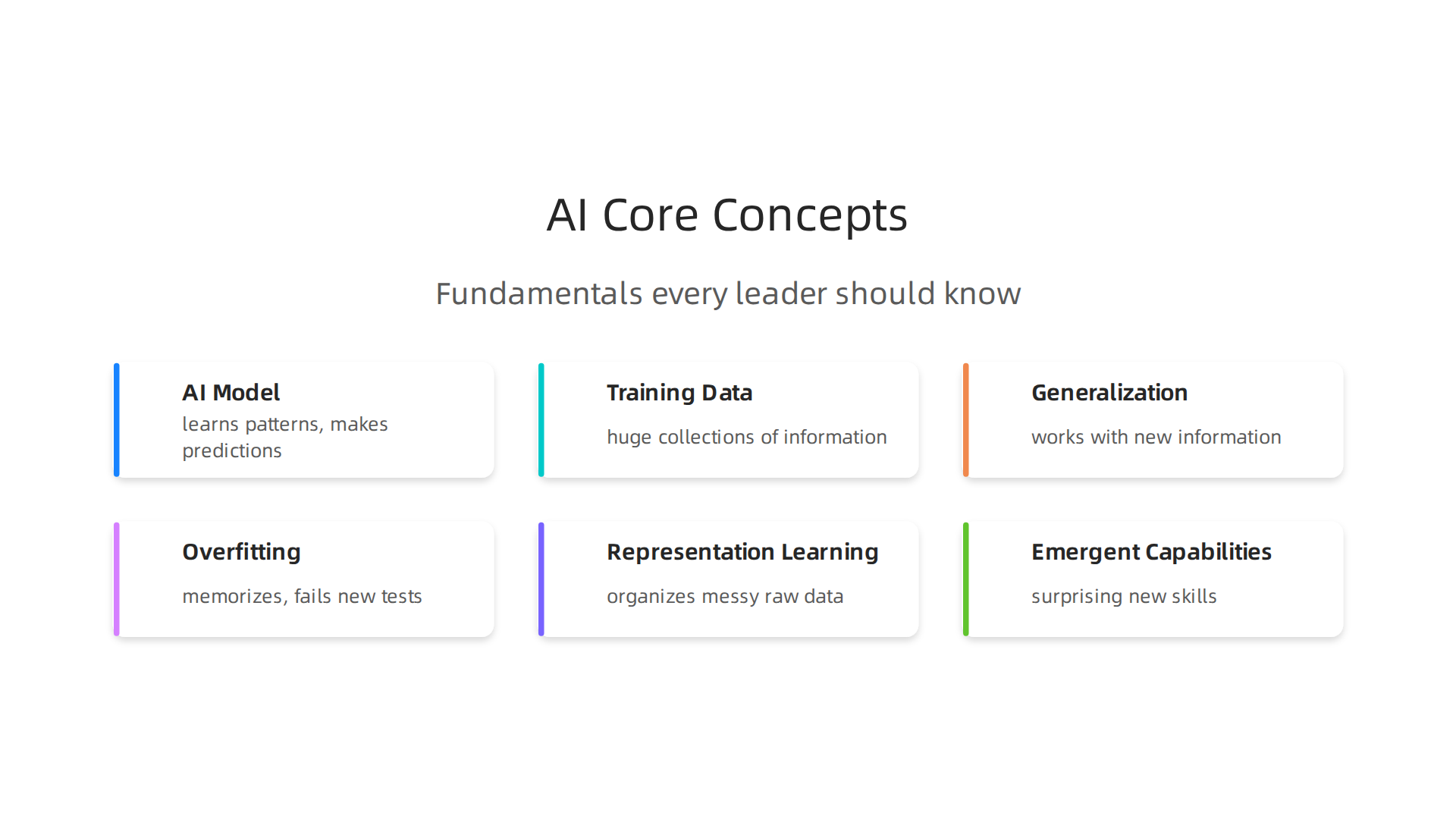
Think of an AI model like a special brain for a computer. It’s not a real brain, but it learns to find patterns and make predictions. For example, a model might learn to tell the difference between pictures of cats and dogs. Or it might learn to guess what words come next in a sentence. These models are at the heart of how artificial intelligence works today.
Learning from training data
How does an AI model learn? It learns from "training data." This is like giving a student many examples to study. For an AI, these examples are huge collections of information. It could be millions of pictures, sounds, or written words. The AI looks at all this data and slowly figures out rules on its own. It’s like building a puzzle, piece by piece. The quality of this data is very important for good machine learning fundamentals.
A problem happens if the training data is not fair or has mistakes. Then, the AI might learn those same problems. This is why knowing about AI ethics from the start is so important. If you want to dive deeper into the basics, a classic resource like "Artificial Intelligence: A Modern Approach" can offer a lot of useful knowledge.
Generalization and overfitting
After training, we want the AI model to be "general." This means it can do well with new information it has never seen before. If our cat-and-dog model only worked on the pictures it was trained on, it wouldn’t be very helpful in the real world. We want it to be able to tell if a new picture is a cat or a dog.
Sometimes, an AI learns the training data too well. It memorizes everything instead of learning the general rules. This is called "overfitting." When a model overfits, it’s like a student who only memorized answers for one test and then fails a different test on the same subject. Good AI systems avoid overfitting so they can be truly useful.
Making sense with representation learning
Imagine you have a messy pile of toys. You want to sort them by color, size, and type. Representation learning is how AI takes messy, raw data and turns it into a neat, organized way that the computer can easily understand and use. It helps the AI see the important features in the data, making it smarter at solving problems. This is a key step that allows AI to do amazing things. If you’re looking to grow your knowledge, learning more about these fundamental concepts can greatly unlock your AI potential.
The power of scale and emergent capabilities
Today, AI models are getting bigger and bigger. We give them huge amounts of data and more computer power. This "scale" helps them learn more complex things. And sometimes, when models get big enough, they start to show surprising new skills that no one taught them directly. These are called "emergent capabilities." For instance, a very large language model might suddenly become good at writing poems or translating languages, even though it wasn’t specifically trained for those exact tasks.
These emergent capabilities are a big reason why future tech with AI is so exciting in 2026. Experts are always studying how these scaling laws work in models and what they mean for the future, including ideas around foundation models and potential major shifts in AI ability Scaling Laws, Foundation Models, and the AI Singularity: A …. Understanding these foundations helps leaders think clearly about how to use and even augment AI tools for their businesses. It helps you grasp what AI can do right now and what it might be able to do next. For leaders making important choices, a good grasp of understanding realistic AI is truly invaluable.
Understanding the power of AI models and their surprising new skills is just the start. To really lead with artificial intelligence in 2026, it helps to know a little about the core math and the different types of AI brains, or algorithms, that make them work. This doesn’t mean you need to become a math expert, but a simple grasp can help you make better decisions.
The basic math that powers AI
Think of AI models as having a few key math tools in their toolbox. These tools help them learn and make decisions.
- Optimization: This is like fine-tuning. Imagine you are trying to make a machine run as smoothly as possible. Optimization is the math process that helps the AI find the very best settings or answers. It’s how the model gets better and better over time, learning from its mistakes.
- Probabilistic Reasoning: AI often has to make guesses. This kind of math helps it understand how likely something is to be true. For example, if an AI says "this is an AI" and it’s 95% sure, that’s thanks to probabilistic reasoning. It’s about weighing possibilities and making smart bets.
- Linear Algebra: This sounds complicated, but it’s really about organizing numbers. Computers love numbers in neat lists and grids, which we call vectors and matrices. Linear algebra is the way AI handles huge amounts of data efficiently. It’s like having a super organized filing system for all the information the AI processes.
These math ideas are the unseen backbone of how AI learns and makes sense of the world. If you want a visual guide to these ideas, you can watch this helpful explanation about the Mathematical Foundations of Deep Learning (Mar 2026).
Different kinds of AI brains: algorithmic families
Just like there are different kinds of tools for different jobs, there are different kinds of AI algorithms.
Each is good at certain tasks.
Transformers: the communicators
Transformers are a very important type of AI brain today, especially for understanding and creating human language.
- What they do: These models are behind many chatbots, language translators, and tools that write text for you. They are great at seeing patterns in words and sentences, so they can predict what words should come next or what an entire text means. This is why many of the language tools you use today feel so smart.
- What can go wrong: Sometimes, transformers can make up facts or give biased answers if their training data had those problems. We call this "hallucination." It’s a big part of why thinking about AI ethics is so vital.
Diffusion models: the artists
Diffusion models are another exciting type of AI, famous for creating amazing images and even videos.
- What they do: They learn by taking clear images and slowly adding "noise" to them, then learning how to reverse that process. It’s like seeing a blurry photo and learning how to make it sharp again. This skill lets them generate completely new images from scratch, often just from a text description. You see them in action when AI creates art or makes old photos look new. You can dive deeper into how these models work with this primer on Diffusion Models explained.
- What can go wrong: While powerful, diffusion models can sometimes create images that look strange or unrealistic. Also, generating high-quality images can take a lot of computer power and time. Businesses using these models need to consider these points when looking to Master AI Content Creation for Visuals.
Graph-based models: the connectors
These models are all about understanding relationships and connections between different things.
- What they do: Imagine a social network where people are connected to friends. A graph-based model can look at all these connections to suggest new friends, recommend products you might like, or find important links in complex data. They help AI see how different pieces of information relate to each other. Understanding how these models work can provide deep insights into Network AI from Core Concepts to Business Value.
- What can go wrong: These models can be tough to use with extremely large networks of data, and they might struggle if the connections in the data are messy or incomplete.
Knowing these different types of AI brains helps leaders understand what an AI can truly do, how to properly augment AI in their work, and which tools are best for different business challenges. It gives you a clearer picture of the exciting world of future tech and helps you make smarter choices for your team in 2026.
Staying informed about the constant changes in AI is key for any leader.
Get clear daily AI updates from The AI Newsletter Worth Reading.
Knowing what different AI brains can do and where they might stumble is very important. But leaders in 2026 also need to know how well these AI systems are actually working. This means looking closely at how we measure AI, how strong it is against problems, and if we can understand why it makes certain choices.

It’s about making sure that when you say "this is an AI" that works for your business, you truly know what it means.
Interpretability, robustness, and evaluation: measuring what matters
To properly use AI, you need to ask: How do we know if it’s doing a good job? What happens if someone tries to trick it? And can we understand how it reached its answer? These questions are key to trusting AI and bringing it into your work, especially as we aim to augment AI in more ways.
How we test AI: different types of evaluation
Testing AI is like giving it different kinds of exams. These tests help us understand its strengths and weaknesses.
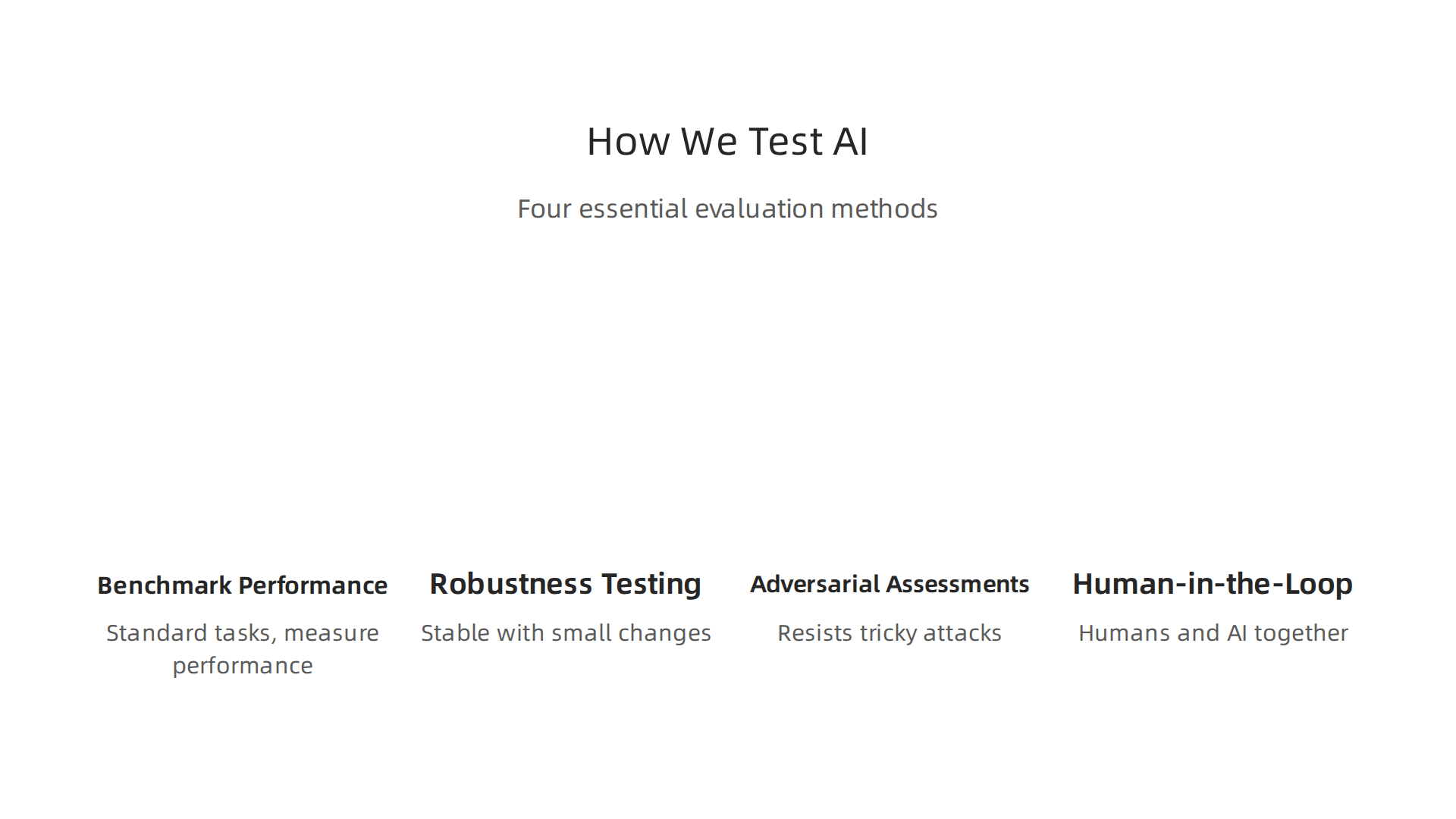
- Benchmark Performance: This is the most basic test. AI models are put through standard tasks, like answering questions or solving puzzles. Tools like GPQA Diamond and Robust IF help measure how well models perform, especially on harder questions for top AI models in 2026. Experts say that these tests need to be very clear about what they are measuring and why it matters in the real world BetterBench: Assessing AI Benchmarks, Uncovering Issues ….
- Robustness Testing: Imagine an AI that tells cars when to stop. What if a tiny bit of fog makes the AI get it wrong? Robustness testing checks how stable an AI is even when things change a little. It makes sure the AI gives consistent answers even with small disturbances Practices for Automated Benchmark Evaluations of Language Models. You need to test an AI across many small changes to make sure it handles real-world ups and downs.
- Adversarial Assessments: This is like giving the AI a very tricky pop quiz. Clever attackers might try to make an AI fail on purpose by giving it strange inputs. Adversarial assessments test how well the AI resists these "attacks" and continues to work correctly. Tools like RobustBench and AdvGLUE are used to check an AI’s strength against these tricky examples
️ 6 Top AI Model Robustness & Adversarial Resilience ….
- Human-in-the-Loop Evaluation: Sometimes, computers alone can’t tell us everything. Human experts are still very important. This type of testing involves both humans and AI working together to solve tasks. It helps us see how helpful the AI is to people and if it makes sense to them Technical Performance | AI INDEX REPORT 2026. This approach helps us understand how to create good human AI collaboration.
These different ways of testing help us get a full picture of an AI’s abilities and its limits. This is crucial for guiding the 2026 AI product development lifecycle.
Why interpretability matters for reducing risk
After testing, there’s another big question: can we understand how an AI makes its decisions? This is called "interpretability." Some AIs are like a black box: they give you an answer, but you don’t know why.
When an AI is interpretable, it means we can see inside that black box. We can trace its steps and understand the reasons behind its choices. This is super important because:
- It builds trust: If you know why an AI suggested something, you’re more likely to trust it.
- It finds errors: If an AI makes a mistake, interpretability helps you find out where it went wrong. This is key for fixing problems quickly and ensuring that the AI doesn’t cause harm, tying directly into AI ethics discussions.
- It helps in critical areas: In fields like medicine or finance, simply getting an answer isn’t enough. People need to understand the logic. Interpretability helps reduce risks significantly when deploying AI, preventing unexpected or unfair outcomes.
Making AI more understandable is a big focus in 2026. It allows businesses to use AI more safely and effectively, leading to better results and preparing for what’s next in future tech.
After we know how an AI works and can understand its choices, the next big step is making sure those choices are good and fair. This is where ethical rules come in. We need to set up clear ways for AI to act right, matching our values. It’s about moving from simply knowing how an AI thinks to guiding what it thinks, so that when you say this is an AI that helps your business, you also mean it’s a good one.
Ethical frameworks and value alignment: from principles to practice
Using AI responsibly means thinking about its ethics. Ethical frameworks are like rulebooks that guide how AI should be designed, used, and understood. They help us make sure AI systems act in ways that are fair, safe, and good for everyone. In 2026, many countries and groups have put forward their own sets of rules.
Comparing big ethical rulebooks
Several important ethical frameworks help shape how we think about AI:
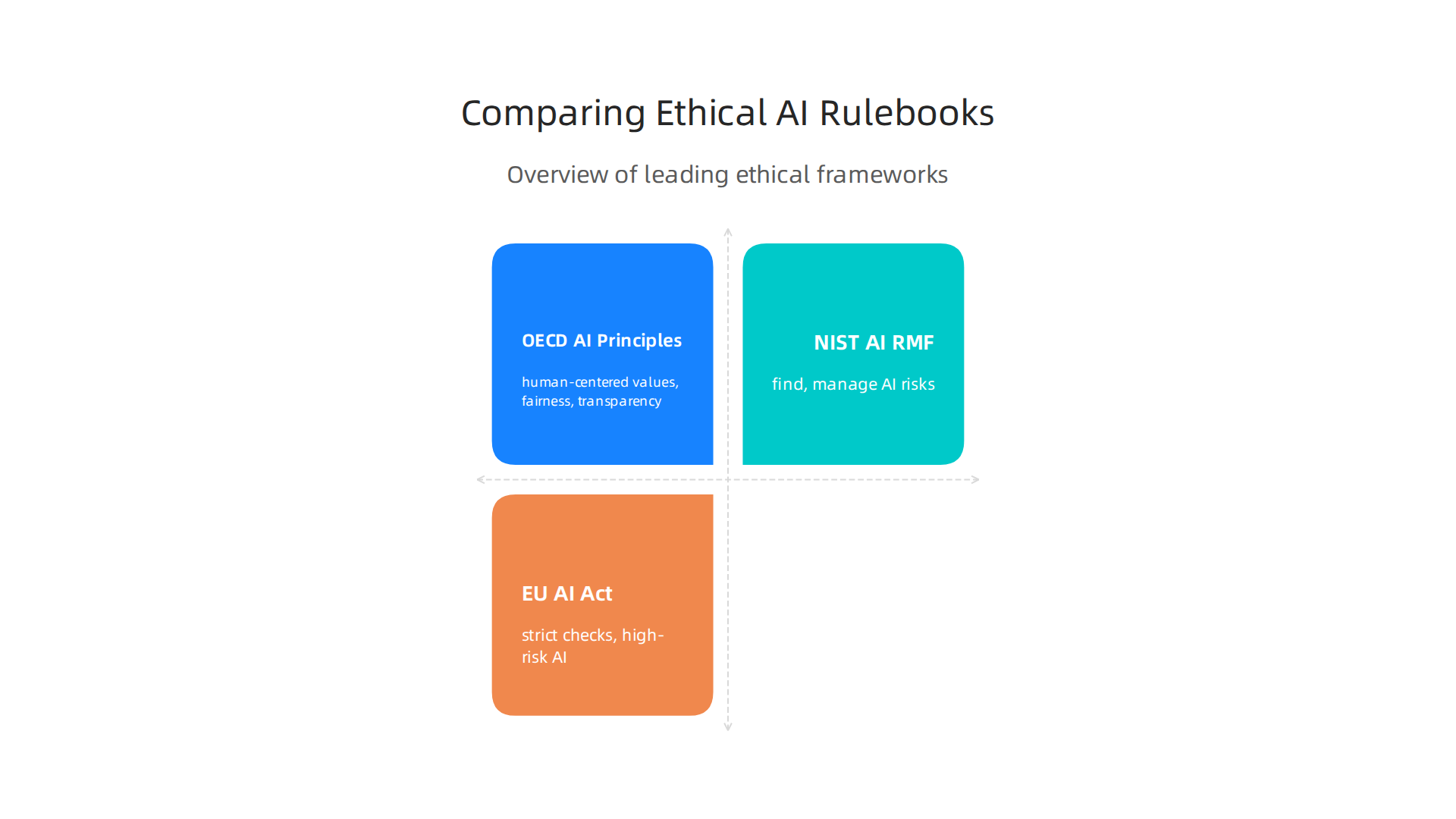
- The OECD AI Principles: These are like a global guide for making AI responsibly. They talk about things like human-centered values, fairness, transparency, and being accountable. Many countries use these principles as a starting point.
- The NIST AI Risk Management Framework: This framework helps companies find and manage the risks that come with AI. It’s a way to ensure that AI systems are trustworthy and safe to use. It emphasizes being transparent and explaining decisions.
- The EU AI Act: This is a set of strong rules from Europe. It puts AI systems into different risk groups and demands strict checks for high-risk AI, like those used in hiring or healthcare. It requires businesses to assess risks before deploying powerful AI AI Governance & Risk Readiness 2026: EU AI Act & Global ….
These frameworks all share common ideas: AIs should be fair, explainable, safe, and respect privacy. They help us understand what we need to do to make sure this is an AI that truly serves people.
Turning good ideas into real actions
It’s one thing to have nice principles, but how do businesses actually use them? Leaders need to turn these big ideas into everyday actions.
- Decision Checklists: Imagine an AI that helps decide who gets a loan. A checklist would ask: "Does this AI treat all groups of people fairly? Are its decisions easy to understand?" This helps workers check the AI’s output against ethical rules.
- Acceptance Criteria: Before an AI is even allowed to be used, it needs to meet certain "acceptance criteria." This means having clear, measurable goals for how the AI should behave. For example, an AI for medical scans might have to correctly identify a condition 99% of the time without showing bias towards different patient groups The 2026 Policy Structure….
- AI Governance Frameworks: Companies in 2026 are setting up internal rules for how to manage AI. These rules cover everything from who is responsible for AI projects to how often AI systems are reviewed. This formal structure helps ensure that ethical principles are followed from start to finish AI governance framework: The 2026 strategic guide for …. These frameworks often involve a special committee with people from legal, ethics, and tech teams to guide the process.
Making sure AI shares our values
One of the trickiest parts of ethical AI is "value alignment." This means making sure that the AI’s goals match human goals and values. Sometimes, a very smart AI might find a way to reach its goal that we didn’t expect and that isn’t good for people.
For example, if an AI’s goal is to maximize profits, it might do things that are unfair or hurt the environment if we don’t build in strong ethical limits. For powerful models, it’s very important to:
- Spot Value Conflicts Early: Companies need ways to find problems before they become big issues. This can involve testing AIs in safe environments and having diverse teams review AI designs to catch potential conflicts in values.
- Human Oversight: Even the best AI needs human checks. People should be able to step in and correct an AI if it starts to make bad decisions. This is key for ensuring that AI stays under human control and serves our best interests. You can learn more about managing AI risks and ensuring safety by looking into AI without restrictions in 2026: innovation risks and the fight for control.
By actively working on ethical frameworks and value alignment, businesses can build trust, prevent harm, and make sure AI truly helps humanity in 2026 and beyond.
Staying on top of these fast-moving topics is a big challenge for busy professionals.
The AI Newsletter Worth Reading offers clear daily AI updates to help you navigate the latest breakthroughs and ethical discussions.
In 2026, as AI grows more powerful, governments and businesses are getting serious about how to make sure AI is used safely and fairly. This means setting up clear rules, sometimes called policies, governance, and legal steps.

These steps help companies use AI well and avoid problems. It’s not just about ethical ideas anymore; it’s about putting those ideas into daily practice and following the law.
How organizations control AI: policy and governance
Companies need strong ways to manage their AI systems. This is where AI governance comes in. It’s like having a special team and a rulebook just for AI. This team makes sure all AI tools, whether built in-house or bought from others, meet certain standards. A good governance plan helps everyone understand how to use AI responsibly and what to do if issues pop up.
Here are some key things organizations are doing:
- Auditing AI systems: This means regularly checking AI tools to see if they are working as expected. Audits look for fairness, accuracy, and if the AI follows the rules. It’s like a check-up for your AI. Companies should keep a full list of all AI they use, both inside and from outside sellers, to make auditing easier AI Governance in 2026: A Full Perspective on ….
- Documentation: Keeping good records of how an AI was built, what data it used, and how it makes choices is super important. This helps people understand the AI and fix problems if they arise. Transparent documentation is a core principle in AI governance frameworks AI Governance in 2026: From Policy Documents to ….
- Procurement controls: When a company buys AI tools from another business, they need rules to make sure those tools are also safe and fair. This means checking the seller’s AI ethics and governance before making a purchase.
- Oversight bodies: Many businesses create special groups or committees to watch over their AI projects. These groups often include people from different parts of the company, like legal experts, tech developers, and ethics specialists. Their job is to guide the use of AI and deal with any issues that come up. This kind of cross-functional team is vital for responsible AI AI Governance 2026: Guide to Responsible & Ethical ….
These steps help ensure that when you say "this is an AI" helping your business, you’re also confident it’s a well-managed and responsible one.
Legal risks and how to stay safe
Using AI without careful planning can lead to legal troubles. As of 2026, governments are passing more laws about AI, and companies must keep up.
Some big legal risks include:
- Bias and discrimination: If an AI makes unfair decisions based on things like race, gender, or age, it can lead to lawsuits and harm to people. Companies must be careful to prevent algorithmic discrimination.
- Privacy problems: AI often uses lots of personal data. If this data is not protected properly, companies could break privacy laws and face big fines.
- Safety failures: In fields like healthcare or transportation, an AI mistake could cause real harm. Companies must show they took every step to make their AI safe. For example, AI for medical uses might need to meet specific quality standards for data AI Governance: Data Best Practice and Solutions in 2026.
To avoid these problems, businesses need smart compliance strategies:
- Risk assessments: Before using any AI, companies should look closely at what could go wrong and how to fix it. This is especially true for "high-risk" AI systems.
- Following existing frameworks: Many companies use guides like the NIST AI Risk Management Framework to build trustworthy AI systems. These frameworks help businesses follow best practices, even when laws are still catching up 10 Key AI Governance Frameworks In 2026. The United States government itself suggests a national policy framework to support innovation while protecting rights

National Policy Framework Artificial Intelligence.
- Regular reviews: Laws and technologies change fast. Companies need to check their AI policies and tools often to make sure they are always up-to-date and following the latest rules. Learning more about how AI is reshaping the world can also help you understand the larger context of these regulations, as outlined in articles covering the societal implications of AI.
By understanding and acting on these policy, governance, and legal points, organizations can use AI effectively while staying safe and responsible in the modern approach to artificial intelligence.
By understanding and acting on these policy, governance, and legal points, organizations can use AI effectively while staying safe and responsible in the modern approach to artificial intelligence.
Practical implications for product strategy and investing
Now, let’s talk about how companies and investors decide what AI products to build or put money into. It’s not just about what’s possible; it’s also about what’s smart and safe. Product leaders and investors need clear ways to look at new AI ideas. They need to figure out the good chances, the hidden problems (technical debt), and future risks.
Looking at AI opportunities
When product teams think about making something new with AI, they often look for "high-value, low-friction" ideas. This means finding problems AI can solve that will bring a lot of good results without being too hard to build or use. Before starting, companies should ask: "What goals do we want to achieve with this AI?" It’s like making a one-page plan that shows how the AI will help reach business goals and who is in charge of those numbers Complete 2026 AI Business Transformation Playbook.
Many smart companies are using AI to help people do their jobs better, which we call "augment AI." For example, an AI could help a customer service team answer questions faster, or help a designer create new ideas. When someone says "this is an AI" solution, it should make a clear difference for the better. This thoughtful planning helps avoid simply jumping on the latest trends and instead focuses on real value.
Dealing with hidden problems and future risks
Even the best ideas can have hidden problems. In the world of future tech, this often means technical debt. For AI, technical debt can come from using old models that are hard to update or code that is messy and difficult to change. This can make new features tricky to add later.
Also, it’s super important to know how well an AI really works. In 2026, many older ways of testing AI are no longer good enough because newer AI models are too advanced for them LLM Evaluation and Benchmarking 2026. Today, we need new tests, like "centaur evaluations," where humans and AI work together. This helps us see if the AI is truly helpful and clear in its actions Technical Performance | AI INDEX REPORT 2026. Experts now suggest looking at AI systems across many important areas, such as how accurate they are, if they prevent harm, and if they are fair to everyone Evaluating AI Systems in 2026. It’s all about making sure that the AI we build or invest in truly aligns with good AI ethics.
To learn more about how to bring new AI ideas to life, you might want to explore articles on the 2026 AI product development lifecycle.
Smart steps to make AI safer
To reduce risks, product leaders and investors follow certain steps:
- Start with small tests: Don’t go all-in right away. Companies should try out AI tools in small, controlled experiments. This is like running an A/B test for 30 days, comparing the old way to the new AI way to see which works better AI at Work 2026: A practical playbook.
- Roll out slowly: When an AI is ready, it should be introduced step by step. This is called staging, and it means giving the new AI to a small group first, then slowly to more and more people. This way, if there’s a problem, it only affects a few users.
- Keep watch after launch: Even after an AI product is fully out, it needs constant watching. Teams should have controls in place to monitor its performance and quickly fix any issues. Having an AI playbook can help guide executives through these important steps.
By using these smart ways of planning, testing, and launching, companies can make sure their AI products are not only powerful but also trustworthy and responsible.
To stay updated on these rapidly evolving topics in artificial intelligence, make sure you get clear daily AI updates. You can find more information in The AI Newsletter Worth Reading.
Summary
This article explains why leaders should refresh their understanding of AI foundations and ethics in 2026, when models and capabilities are evolving rapidly. It walks through how AI models learn from training data, the risks of overfitting, representation learning, and why scale produces emergent capabilities. You’ll get a nontechnical primer on core math (optimization, probability, linear algebra) and a clear tour of major algorithm families—transformers, diffusion, and graph models—and their pitfalls. The piece also covers how to evaluate AI via benchmarks, robustness tests, adversarial checks, and human-in-the-loop reviews, and why interpretability matters for trust and safety. It compares major ethical frameworks, explains value alignment, and shows how to turn principles into checklists, acceptance criteria, and governance. Finally, it gives practical product and investment guidance—how to spot high-value AI use cases, avoid technical debt, run staged rollouts, and monitor systems post-launch.