
Why this overview matters now (and what you’ll get)
In 2026, the world of Artificial Intelligence (AI) is moving at light speed. New ideas and breakthroughs pop up every day. It’s exciting, but it also means a lot of information. For people who make big decisions or lead product teams, it can feel like trying to drink from a firehose.

How do you know what’s truly important when there’s so much happening with new forms of credo technology and other advancements?
It’s a real challenge to sort through all the noise. Just look at the money flowing into AI. In 2025, private investment in AI in the U.S. hit an amazing $285.9 billion. This shows how fast things are growing, with generative AI leading the way. Companies like Blue River Technology, Ascend Technologies, and Amprius Technologies are constantly pushing what’s possible. But with so many players and so much happening, it’s hard to tell what’s a real game-changer and what’s just hype. You need a trusted guide to understand this powerful tech force.
That’s where this overview comes in. We promise to give you a clear, honest look at the world of AI. Think of it as your trusted guide, designed to help you separate the truly meaningful innovations from all the buzz. We will point out the important signals you need to watch. This will help you make smarter choices and stay ahead in a fast-changing world. You will get practical insights that help you understand the big picture.
If you’re looking to dive deeper into what’s happening, you can learn more by Decoding AI Trends 2026: Breakthroughs, Investment, and Governance.
To stay updated daily and cut through the endless stream of AI news, we recommend a reliable source.
The AI Newsletter Worth Reading delivers clear updates straight to your inbox.
To make smart choices about this powerful tech force, it helps to understand the different kinds of companies driving AI forward in 2026. The market is not just one big thing; it has clear categories. These categories show what each company focuses on, from the very basic building blocks of AI to tools that businesses use every day. Knowing these groups helps you see who is making real progress and who is just making noise.
Here are the main types of AI companies shaping the industry:
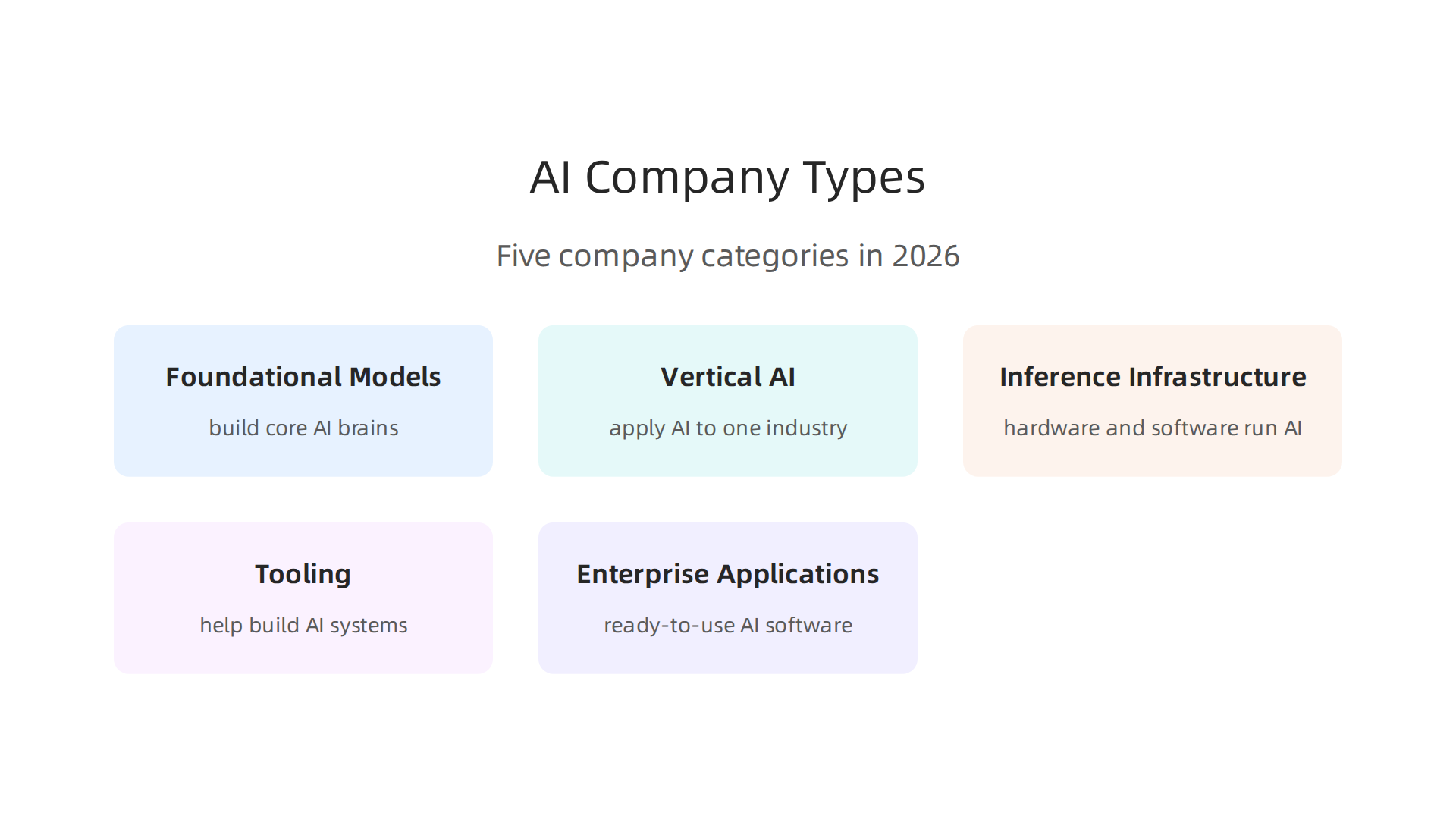
- Foundational Models: These companies build the core AI brains, like the large language models (LLMs) that can understand and create human-like text. Think of big names such as OpenAI, Anthropic, Google Gemini, and Meta Llama. They are in a race to make the best, most powerful AI models, which are a key type of credo technology fueling many other innovations AI Landscape Intelligence.
- Vertical AI: These firms apply AI specifically to one industry or problem. For example, some companies use AI just for healthcare, while others focus on finance or farming. Companies like Blue River Technology, Ascend Technologies, and Amprius Technologies are examples of businesses pushing limits in different areas.
- Inference Infrastructure: This group makes the hardware and software that helps AI models run quickly and cheaply. They are essential because powerful AI models need a lot of computing power. This includes specialized chips and cloud services.
- Tooling: These companies create tools that help other businesses build, test, and manage their own AI systems. They make it easier for others to use AI without having to start from scratch.
- Enterprise Applications: These are companies that make ready-to-use AI software for businesses. These applications help with things like customer service, data analysis, or automating tasks. More than seven out of ten organizations now use generative AI in their work Enterprise AI in 2026: Adoption Trends, Gaps & Strategic ….
Understanding these different groups is key for leaders. It helps you see where new investments are going and how companies fit into the larger AI picture. You can explore more about these players by checking out our guide to AI companies 2026.
Beyond categories, there are clear signs of true innovation versus mere hype. One strong signal is hiring trends. In 2026, the demand for AI talent is incredibly high, making it the tightest job market ever for venture-backed companies 2026 AI Hiring Report. When companies are investing heavily in talent, it often points to real growth and a belief in their core credo technology. Also, consistent funding rounds and meaningful partnerships with other big players show that a company has solid plans and real impact, not just big promises. For executives looking to use AI in their business, understanding the strategic steps is vital, and you can learn more about an enterprise AI adoption executive roadmap.
Now that we know the different kinds of AI companies, let’s look at how they make money and grow their businesses.

It’s not just about building cool tech; it’s about having a smart plan to earn money and get bigger. This helps tell the difference between a strong AI company and one that always needs more money to stay alive.
Most AI companies in 2026 use a few main ways to make money:
Recurring Revenue Models
Many AI companies work like a subscription service. You pay a regular fee, like every month or year, to use their AI tools. This is a common way for software businesses to make money.
- Consumer Subscription: This is for everyday people using AI tools, like a writing assistant or an image generator. Prices are usually low, from $10 to $25 a month Case Studies, By Model.
- Prosumer Subscription: This is for people who use AI in their work to earn money, like a graphic designer using AI to create art. The cost is a bit higher, around $25 to $100 per month Case Studies, By Model.
- Enterprise SaaS (Software as a Service): Big companies pay for AI tools that many of their staff can use. This often costs a lot more, with prices based on how many people use it or how much work the AI does.
Consumption-Based APIs
Some AI companies, especially those building the core AI brains (foundational models), charge based on how much you use their service. Think of it like paying for electricity; you pay for the power you consume. This is common for things called Application Programming Interfaces (APIs), where other companies connect their own apps to the AI’s smarts. This pay-as-you-go model is one of the top ways AI startups make money in 2026 [Five Revenue Models Keeping AI Startups Alive in 2026](https://startupik.com/five-revenue-models-keeping-ai-startups-alive-in 2026/).
Licensing and Enterprise Deployments
Other companies might license their AI models directly. This means another company pays a fee to use the AI’s code or design in their own products. For big businesses, AI companies also offer custom solutions and help set up the AI systems right inside the client’s own operations.
How AI Companies Grow
Growing a successful AI business isn’t just about revenue; it’s also about how efficiently a company makes and sells its products. In 2026, many AI startups are finding customers much faster than before. They are using smart plans to get new users and prove their value quickly Go-to-market strategies for AI startups in 2026.
Even with high revenues, many of the largest AI companies are still spending a lot on research and development, especially for training their advanced models. This means they are not always making a profit yet, even though they bring in a lot of money AI Revenue Leaderboard 2026: Anthropic $47B, OpenAI $33B. For businesses to be truly strong, they need good "unit economics." This means that for every new customer, they make more money than it costs to get that customer and serve them. One important measure is Customer Acquisition Cost (CAC), which is how much it costs to gain one new customer. Smart AI marketing can actually lower this cost by about 18% in 2026 by finding the right customers more easily AI in Marketing: Cut CAC 18% with 2026’s Top Trends.
To learn more about how to put AI to work in your own business to see real growth, check out our guide on how to use AI practical applications for business growth in 2026.
It can be hard to keep up with all the ways AI companies are growing and changing. If you want to stay informed about the latest moves in the AI world, we have something helpful for you.
Get clear daily AI updates from The AI Newsletter Worth Reading.
Even with smart money-making plans, a company’s deep technical strengths are what truly set it apart in the fast-moving AI world of 2026.
It’s not just about selling a service; it’s about building a better, faster, or safer AI than anyone else. These technical differences are often what gives a company a real edge and makes its offerings truly valuable.
How Technical Advances Create an Edge
When we talk about what makes one AI company shine, it comes down to a few key technical areas:
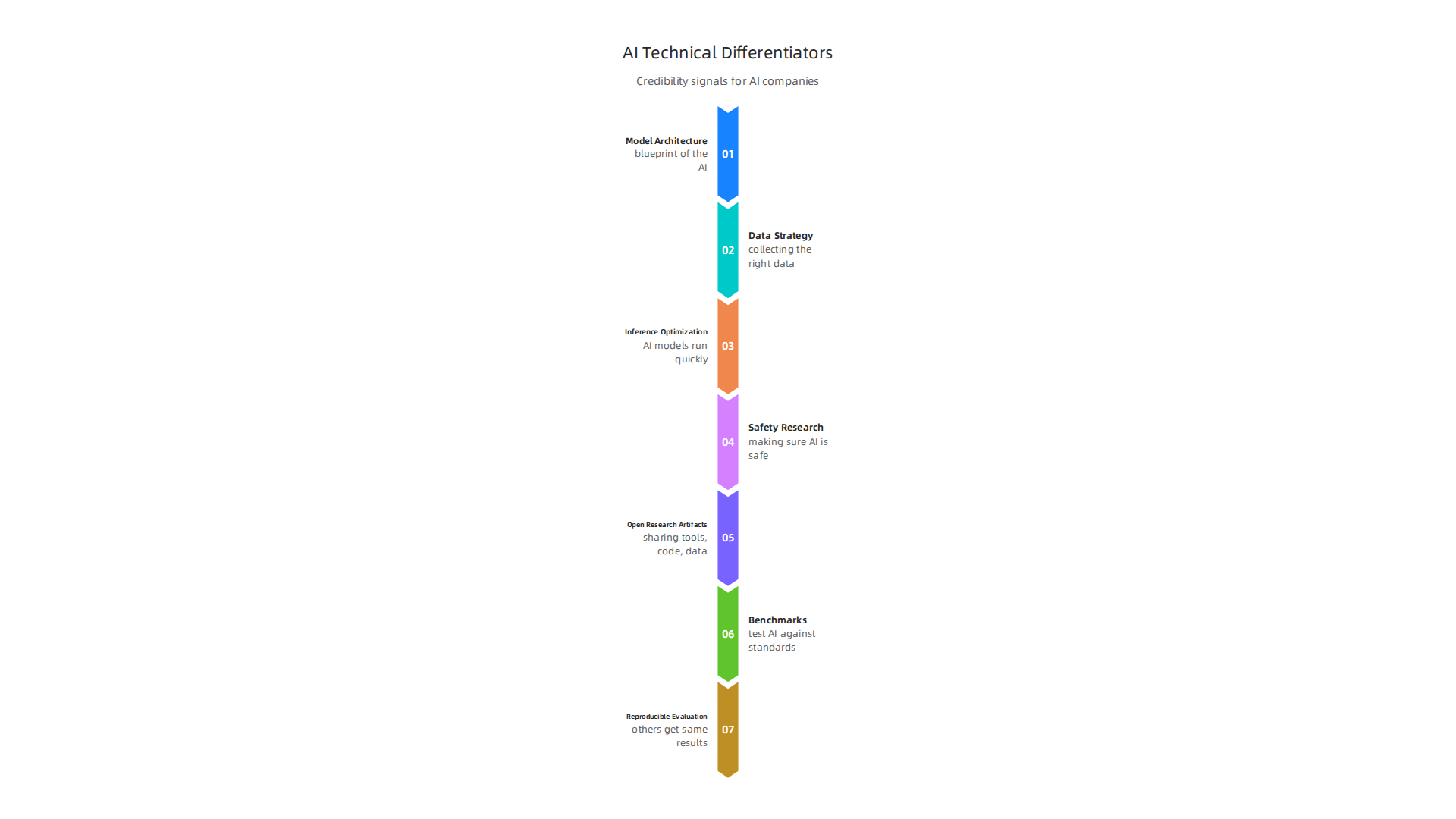
- Model Architecture: This is like the blueprint of the AI. How the AI model is designed can make it much better at learning, understanding, or creating. A clever architecture can lead to an AI that is more accurate, more creative, or better at specific tasks. Companies that come up with new and powerful ways to build their AI models often lead the pack.
- Data Strategy: AI needs data to learn, and the quality and amount of this data are super important. A strong data strategy means collecting the right data, cleaning it well, and using it smartly. This also includes how a company handles making sure data processing and model training can run smoothly at a large scale, which is crucial for any successful AI business today MLOps so AI can scale.
- Inference Optimization: This is about making AI models run very quickly and cheaply once they are built and ready to be used. Think of it like a sports car that not only performs well but also uses less gas. Companies that can make their AI respond faster and use fewer computer resources can offer more affordable services, giving them a big advantage. To learn more about how data helps AI grow, you can read about mastering data foundations for AI leadership.
- Safety Research: As AI becomes more powerful, making sure it’s safe and fair is a big deal. Companies that invest in safety research prevent their AI from making harmful mistakes or showing unfair biases. This builds trust and helps their technology be accepted by more people and businesses. Learning about how to guide AI in an ethical way is also part of navigating the future of AI ethical governance.
Some companies, like Blue River Technology, focused on very specific AI solutions, proving that specialized technical excellence can lead to great success. Others, like Ascend Technologies, prioritize robust and scalable platforms, showing the value of underlying strength.
Building Credibility with Clear Technical Signals
For an AI company to truly stand out and for its "credo technology" to be trusted, it needs to show its work. This is especially true for companies like Amprius Technologies or others in the cutting-edge tech force space, where innovation is key. Here’s a checklist of technical signals that increase credibility:
- Open Research Artifacts: This means sharing the tools, code, and data used in their research. When others can see and test how an AI was built, it makes the work more believable.
- Benchmarks: Companies should test their AI against standard "benchmarks." These are common tests that let everyone compare how well different AI models perform on the same tasks. This helps show their AI’s real capabilities in a way everyone can understand. The use of open benchmarks helps improve machine learning research Reproducibility in machine‐learning‐based research: Overview.
- Reproducible Evaluation: Can someone else get the same results if they follow the same steps? This is called reproducible evaluation. When an AI company can show that its findings can be checked and confirmed by others, it builds a strong foundation of trust. This is about being transparent and clear so others can verify the results themselves.
For an AI company to truly deliver on its promises and build trust, showing research is just the first step. The real magic happens when that research becomes a strong, dependable product or service. This journey from a clever idea in the lab to something customers use every day is called productization.

It needs a lot of careful work in engineering, data, and how the company runs things. This is where a company’s "credo technology" really gets to prove itself in the real world.
4) Productization: turning research into reliable products and services
Turning a smart AI idea into a product that works every time is a big job. It means taking the AI model, which might be like a test car, and making it into a safe, reliable family car that many people can drive. This requires special investments to make sure the AI runs smoothly for everyone.
Think about these key areas:
- Engineering for Stability: This is about building the AI system so it doesn’t break down, even when lots of people use it. It means adding automatic checks and ways to fix problems fast. Companies like Amprius Technologies, known for their advanced tech, understand that great research must be matched with strong engineering to be truly useful.
- Data Pipelines: AI needs a constant flow of good data to work. Imagine a river that feeds a powerful machine; the water needs to be clean and steady. Building good data pipelines means making sure data is collected correctly, cleaned up, and sent to the AI model without any hiccups. This also includes setting up systems to keep the AI learning and improving over time, a process often called MLOps, which is about making machine learning work reliably from start to finish What Still Breaks In Exactly….
- Operations and Monitoring: Once the AI product is out there, someone needs to watch it closely. This means making sure it’s always running, responding quickly, and not making mistakes. It’s like having a team of mechanics checking the AI engine all the time. Building automated pipelines for model training and deployment is very important for businesses in 2026 Enterprise AI in 2026: Navigating the Shift from Pilots to ….
How to Spot Strong AI Products
When an AI company truly masters productization, you’ll see clear signs:
- Service Level Agreements (SLAs): These are like promises a company makes about how well its AI product will perform. For example, an SLA might say the AI will be available 99.9% of the time. This shows they are confident in their "credo technology" and stand by its reliability.
- Constant Monitoring: Good AI products are always being watched. This isn’t just to fix problems, but also to make sure the AI is still fair and accurate. Companies that monitor their AI well can quickly spot if something is going wrong.
- Clear Data Pipelines: A well-made AI product has clear ways of handling data, from getting it in to using it and even forgetting it when needed. This ensures the AI learns correctly and protects important information. To understand more about how these systems are built, you can learn about The 2026 AI Product Development Lifecycle.
- Happy Customers and Real Results: The best sign of a strong AI product is when customers are truly happy and see real benefits. For example, a company might use AI to cut down how much it costs to get new customers. AI models are helping reduce these customer acquisition costs by about 18% in 2026, by finding the right people to target AI in Marketing: Cut CAC 18% with 2026’s Top Trends. This shows the AI is not just a cool idea, but a tool that brings real value.
Companies like Blue River Technology, known for specialized AI, and Ascend Technologies, which builds strong platforms, are great examples of how robust productization leads to success. Their focus on the tech force needed to deliver AI solutions reliably helps them stand out.
Want to stay informed about all the exciting breakthroughs in AI and technology? Get clear daily AI updates from The AI Newsletter Worth Reading.
When AI companies like Blue River Technology or Ascend Technologies show they can make great products, investors pay close attention. It’s not just about a clever idea anymore. Investors look for clear signs that a company’s "credo technology" is not just possible, but also very valuable and will make money.
Here’s what smart investors in 2026 really care about:

- Real-World Use and Growth: Investors want to see that the AI product is actually being used by customers and solving real problems. They look at how many customers are signing up, how often they use the product, and if the company is growing fast. This shows that the product has "commercial validation," meaning it’s wanted in the market. They don’t just want promises; they want to see the product in action and getting results.
- Strong Business Numbers: Beyond how many people use the product, investors check the money side of things. They look at how much money the company makes from each customer, how much it costs to get a new customer, and if the company can make a profit. These are key financial metrics. Venture capital is very interested in AI, with AI startups making up 65% of VC deal value through Q3 2025, showing strong investor belief in the field for 2026 and beyond Outlook 2026: Venture Capital | Insights – Greenberg Traurig, LLP.
- Repeatable Success (Reproducibility): For AI, this is super important. It means the AI model gives the same good results every time, even with new data or in different situations. Think of it like a recipe: it needs to work reliably every time you bake. Tools like the AI Reproducibility Index help measure how likely an AI study is to be reproduced. Investors want to see that the core "credo technology" is stable and predictable. Benchmarks like CORE-Bench: Fostering the Credibility of Published … also help foster the credibility of published AI research.
- Clear Path to Bigger Things (M&A and Exits): Investors also think about how they will get their money back and make more. This often happens when a bigger company buys the AI startup (M&A, or mergers and acquisitions) or when the company goes public. In 2026, AI is a major driver for mergers and acquisitions, with more capital and buyers than ever before AI M&A Trends 2026: Why Acquirers Pay Premium Multiples. Companies are looking for strong "tech force" and proven AI solutions. Large companies often buy smaller AI firms to gain new technology or to enter new markets quickly. The first quarter of 2026 saw private AI companies raise a huge amount, over $226 billion, showing a big jump in investment State of AI Q1’26 Report. This trend suggests that good AI companies, like Amprius Technologies or others with solid productization, are hot targets.
Staying on top of these trends is crucial for anyone involved in AI. If you’re looking to understand the bigger picture of AI investments and what makes companies succeed, exploring topics like Unpacking AI Trends and Investments 2026: Key Insights for Leaders can be really helpful.
6) Risks, Regulation, and Responsible AI for Companies
While the excitement around new AI like that from Blue River Technology or Ascend Technologies is high, companies also need to think about the rules and risks. Just like making sure your "credo technology" works well, you also need to make sure it’s safe, fair, and follows the law. This is called responsible AI.
In 2026, many new laws and guidelines are popping up all over the world. These rules are very important because they affect how AI products are made and sold. For example, the EU AI Act, which is a big set of rules in Europe, is bringing new requirements. These rules ask for more transparency and safety frameworks for AI systems, especially those that are "high-risk." Some of these transparency rules will start in August 2026, and companies will need to comply with them. Other parts, especially for standalone high-risk AI systems, have deadlines that go into December 2027 or even August 2028 for AI built into products like Amprius Technologies might use. This means companies need to start getting ready now to avoid problems later on. You can learn more about these requirements in the International AI Legal Landscape (2026) and 2026 AI Compliance: Upcoming Laws Every Organization Needs to Know.
It’s not just Europe. In the US, states like Colorado have their own AI laws, like the Colorado AI Act. This law, which takes effect in June 2026, asks companies to check their high-risk AI systems for fairness and to tell users when AI is involved. Other places like South Korea and California also have new rules about showing when AI creates content and how data is used. These trends show that across the globe, there’s a strong push for AI to be transparent and accountable. Understanding these global rules is a key part of Navigating the Future of AI: Ethical Governance and Smart Enterprise Adoption.
So, what kind of risks should leaders think about?
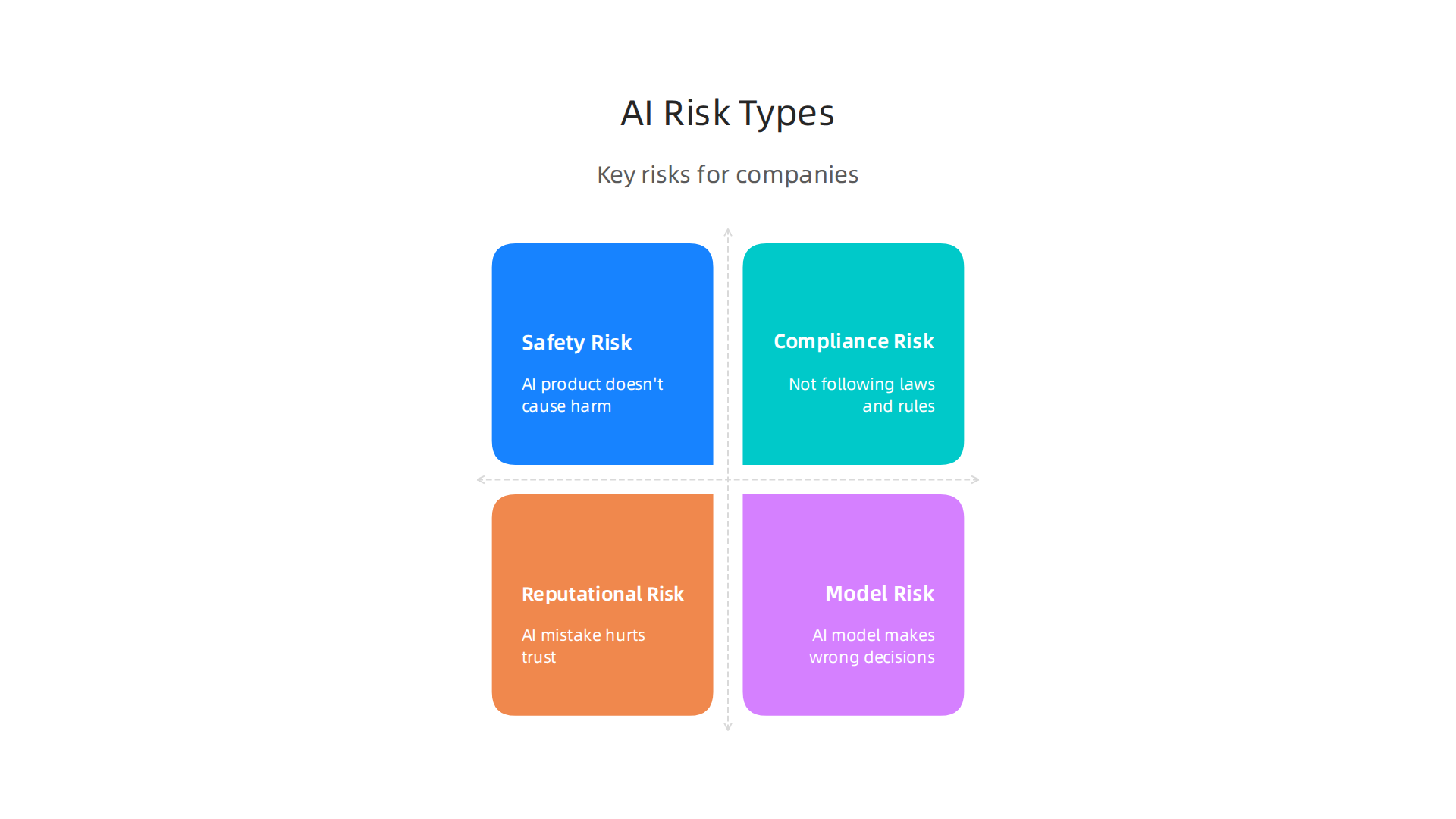
- Safety Risk: This is about making sure the AI product doesn’t cause harm. For example, an AI in a car must be very safe.
- Compliance Risk: This means the risk of not following the laws and rules, which can lead to big fines or losing customer trust.
- Reputational Risk: If an AI makes a mistake or is seen as unfair, people might stop trusting the company. This can hurt a company’s good name.
- Model Risk: This happens when the AI model itself doesn’t work as expected or makes wrong decisions, leading to bad outcomes.
Companies need a clear plan to handle these risks. They must make sure their "tech force" is aware of these new rules and build their AI products with safety and fairness in mind from the very start. Staying informed about these changes is really important for anyone working with AI. To get daily updates and deeper insights into the fast-changing world of AI, you can sign up for The AI Newsletter Worth Reading.
Summary
This article gives leaders and product teams a practical, big-picture guide to the AI landscape in 2026, showing how to separate meaningful innovation from hype. It explains the main company types—foundational models, vertical AI, inference infrastructure, tooling, and enterprise apps—and the common revenue models such as subscriptions, consumption-based APIs, licensing, and enterprise deployments. The piece describes the technical and commercial signals that indicate real progress (hiring, funding consistency, open research artifacts, benchmarks, and reproducibility), and it details how strong productization—engineering stability, data pipelines, monitoring, and SLAs—turns research into dependable offerings. You’ll learn what investors care about (growth, unit economics, reproducibility, and exit paths), the operational steps for scaling AI, and the compliance and safety risks leaders must manage under evolving laws like the EU AI Act. After reading, you’ll be able to assess AI vendors, spot credible tech versus marketing, and prioritize the technical and business checks to make smarter adoption or investment decisions.